Building Blocks
Sous-catégories appartenant à la catégorie "Building Blocks"
- Acides boroniques et dérivés de l'acide boronique(5.778 produits)
- Building Blocks Chiraux(1.243 produits)
- Building Blocks Hydrocarbonés(6.098 produits)
- Building Blocks organiques(61.036 produits)
205240 produits trouvés pour "Building Blocks"
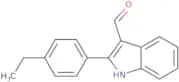
2-(4-Ethylphenyl)-1H-indole-3-carbaldehyde
CAS :Versatile small molecule scaffoldFormule :C17H15NODegré de pureté :Min. 95%Masse moléculaire :249.31 g/mol2,2-Dimethyl-4-pentenoic Acid
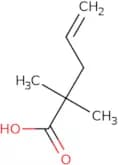
CAS :2,2-Dimethyl-4-pentenoic acid is a decarboxylating agent that converts the carboxylic acid group to an aldehyde. It is commonly used as a reducing agent in organic synthesis, especially for the conversion of esters and nitriles to alcohols and amines respectively. The synthesis of 2,2-dimethyl-4-pentenoic acid is achieved by reacting piperidine with propylene oxide. This reaction proceeds via a six-membered ring intermediate that decomposes to form the final product. The reaction can be catalyzed with peroxide or hydrogen peroxide, which leads to a high yield. 2,2-Dimethyl-4-pentenoic acid has been shown to be effective against hyperproteinemia and lipogenous disorders such as steatosis and cholestasis.
Formule :C7H12O2Degré de pureté :Min. 95%Masse moléculaire :128.17 g/mol3-[(Trimethylsilyl)oxy]oxane-3-carbonitrile
CAS :Versatile small molecule scaffold
Formule :C9H17NO2SiDegré de pureté :Min. 95%Masse moléculaire :199.32 g/molN-(3-Methoxyphenyl)prop-2-enamide
CAS :Versatile small molecule scaffold
Formule :C10H11NO2Degré de pureté :Min. 95%Masse moléculaire :177.2 g/mol2-Chloro-3,4-dihydronaphthalen-1(2H)-one
CAS :2-Chloro-3,4-dihydronaphthalen-1(2H)-one is a sulfoxide with significant antifungal activity. It has been shown to be effective against Candida albicans and other fungi, including Aspergillus niger and Mucor racemosus. It is commonly used as an electrolyte in electroluminescent devices, such as light emitting diodes (LEDs). The reaction time for the formation of 2-chloro-3,4-dihydronaphthalen-1(2H)-one from potassium sulfate is dependent on the acid catalyst used. Organic chemists have shown that the use of 2-chloro-3,4-dihydronaphthalen-1(2H)-one can inhibit leukotriene synthesis.
Formule :C10H9OClDegré de pureté :Min. 95%Masse moléculaire :180.63 g/mol4-(chloromethyl)-1-methyl-1H-imidazole hydrochloride
CAS :Produit contrôléVersatile small molecule scaffold
Formule :C5H8Cl2N2Degré de pureté :Min. 95%Masse moléculaire :167.03 g/molRef: 3D-SAA28930
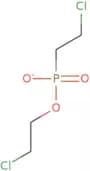
Produit arrêté(2-Chloroethoxy)(2-chloroethyl)phosphinic acid
CAS :Versatile small molecule scaffold
Formule :C4H8Cl2O3PDegré de pureté :Min. 95%Masse moléculaire :205.98 g/molRef: 3D-SAA37830
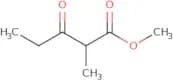
Produit arrêté2-Methyl-3-oxo-pentanoicacid methyl ester
CAS :The synthesis of 2-methyl-3-oxo-pentanoic acid methyl ester is accomplished by a three step process. The first step is the intramolecular condensation of 2,2-dimethylpropionic acid with acetone to form a 1:1 mixture of 3,4-dihydroxybutyl and 4,4-dihydroxybutyl esters. The second step is the selective transesterification of the 3,4-dihydroxybutyl ester with benzaldehyde. This reaction provides an optically pure 2-methyl-3-oxo-pentanoic acid methyl ester as the major product. The third step is an aldol condensation between the ketone from the second step and acetone to produce another optically pure 2,2 dimethylpropionic acid methyl ester.Formule :C7H12O3Degré de pureté :Min. 95%Masse moléculaire :144.17 g/molRef: 3D-SAA42212
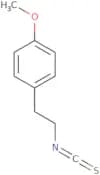
Produit arrêté1-(2-Isothiocyanatoethyl)-4-methoxybenzene
CAS :Versatile small molecule scaffold
Formule :C10H11NOSDegré de pureté :Min. 95%Masse moléculaire :193.27 g/moltert-Butyl N-{4-ethynylbicyclo[2.2.2]octan-1-yl}carbamate
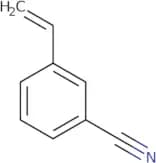
CAS :Versatile small molecule scaffoldFormule :C15H23NO2Degré de pureté :Min. 95%Masse moléculaire :249.35 g/mol3-Ethenylbenzonitrile
CAS :3-Ethenylbenzonitrile is an organic compound that can be prepared by photolysis of 2-bromobenzonitrile in the presence of a nonpolar solvent. It is also synthesized by laser induced exciplex reaction between benzene and ethylene. 3-Ethenylbenzonitrile has a conformation that is dependent on the polarity of the solvent. In polar solvents, it adopts a bent structure while in nonpolar solvents, it adopts a linear structure. The molecule undergoes cyclobutane formation and then reacts with electron acceptors such as cations to form intermediates. These intermediates react with other molecules to form products.
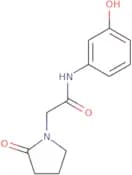
Formule :C9H7NDegré de pureté :Min. 95%Masse moléculaire :129.16 g/molN-(3-Hydroxyphenyl)-2-(2-oxopyrrolidin-1-yl)acetamide
CAS :Produit contrôléN-(3-Hydroxyphenyl)-2-(2-oxopyrrolidin-1-yl)acetamide is a research tool that is used as an activator or ligand to study the function of receptors, ion channels and other proteins. It binds to cell surface receptors and activates them by mimicking the endogenous ligands. This compound has been shown to be a high purity reagent with protein interactions.Formule :C12H14N2O3Degré de pureté :Min. 95%Masse moléculaire :234.25 g/molRef: 3D-SRB80883
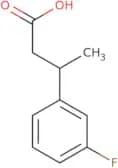
Produit arrêté3-(3-Fluorophenyl)butanoic acid
CAS :Versatile small molecule scaffold
Formule :C10H11FO2Degré de pureté :Min. 95%Masse moléculaire :182.19 g/moltert-Butyl N-[1-(4-aminophenyl)ethyl]carbamate
CAS :Versatile small molecule scaffold
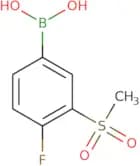
Formule :C13H20N2O2Degré de pureté :Min. 95%Masse moléculaire :236.31 g/mol4-Fluoro-3-(methanesulfonyl)phenylboronic acid
CAS :Versatile small molecule scaffold
Formule :C7H8BFO4SDegré de pureté :Min. 95%Masse moléculaire :218.02 g/mol7-Oxa-1-azaspiro[3.5]nonan-2-one
CAS :Versatile small molecule scaffold
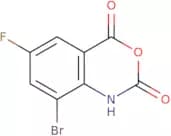
Formule :C7H11NO2Degré de pureté :Min. 95%Masse moléculaire :141.17 g/mol8-Bromo-6-fluoro-2,4-dihydro-1H-3,1-benzoxazine-2,4-dione
CAS :Versatile small molecule scaffold
Formule :C8H3BrFNO3Degré de pureté :Min. 95%Masse moléculaire :260.02 g/mol3-Chloro-N-[2-(4-methyl-1,3-thiazol-5-yl)-2-oxoethyl]propanamide
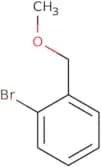
CAS :Versatile small molecule scaffoldFormule :C9H11ClN2O2SDegré de pureté :Min. 95%Masse moléculaire :246.71 g/mol1-Bromo-2-(methoxymethyl)benzene
CAS :1-Bromo-2-(methoxymethyl)benzene is a boronic acid that is used in the synthesis of palladium complexes. It is synthesized by reacting 1-bromobenzene with methanol and methoxymethyl chloride. The 1-bromo-2-(methoxymethyl)benzene has been used as a ligand for palladium complexes, which are often used to catalyze organic reactions, such as the metathesis reaction. Synthetic methods have been developed to produce the compound and NMR spectra have been obtained to provide kinetic data on these reactions.
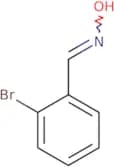
Formule :C8H9BrODegré de pureté :Min. 95%Masse moléculaire :201.06 g/mol2-Bromobenzaldoxime
CAS :2-Bromobenzaldoxime is a biologically active molecule that has been shown to have significant physiological activities. It is an aldehyde, which is metabolized by the liver or kidneys into the corresponding alcohol, 2-bromoethanol. 2-Bromobenzaldoxime has been shown to be synthesized from diethyl ether and potassium phosphate in the presence of amino acids. The reaction proceeds with dehydration of the intermediate bromohydrin to form an aldoxime. This molecule can be used as a pharmaceutical drug for various diseases such as diabetes mellitus, hypertension, and inflammation.
Formule :C7H6BrNODegré de pureté :Min. 95%Masse moléculaire :200.03 g/mol

![3-[(Trimethylsilyl)oxy]oxane-3-carbonitrile](/_next/image/?url=https%3A%2Fstatic.cymitquimica.com%2Fproducts%2F3D%2Fthumb-webp%2FRDC77065.webp&w=3840&q=75)


![tert-Butyl N-{4-ethynylbicyclo[2.2.2]octan-1-yl}carbamate](/_next/image/?url=https%3A%2Fstatic.cymitquimica.com%2Fproducts%2F3D%2Fthumb-webp%2FSGC55140.webp&w=3840&q=75)
![tert-Butyl N-[1-(4-aminophenyl)ethyl]carbamate](/_next/image/?url=https%3A%2Fstatic.cymitquimica.com%2Fproducts%2F3D%2Fthumb-webp%2FTAB08668.webp&w=3840&q=75)
![7-Oxa-1-azaspiro[3.5]nonan-2-one](/_next/image/?url=https%3A%2Fstatic.cymitquimica.com%2Fproducts%2F3D%2Fthumb-webp%2FDHA24292.webp&w=3840&q=75)
![3-Chloro-N-[2-(4-methyl-1,3-thiazol-5-yl)-2-oxoethyl]propanamide](/_next/image/?url=https%3A%2Fstatic.cymitquimica.com%2Fproducts%2F3D%2Fthumb-webp%2FCHC38015.webp&w=3840&q=75)