Building Blocks
Cette section contient des produits fondamentaux pour la synthèse de composés organiques et biologiques. Building blocks sont les matériaux de départ essentiels utilisés pour construire des molécules complexes à travers diverses réactions chimiques. Ils jouent un rôle crucial dans la découverte de médicaments, la science des matériaux et la recherche chimique. Chez CymitQuimica, nous offrons une gamme diversifiée de building blocks de haute qualité pour soutenir vos recherches innovantes et projets industriels, en vous assurant de disposer des composants essentiels pour une synthèse réussie.
Sous-catégories appartenant à la catégorie "Building Blocks"
- Acides boroniques et dérivés de l'acide boronique(5.778 produits)
- Building Blocks Chiraux(1.242 produits)
- Building Blocks Hydrocarbonés(6.098 produits)
- Building Blocks organiques(61.059 produits)
199580 produits trouvés pour "Building Blocks"
Trier par
Degré de pureté (%)
0
100
|
0
|
50
|
90
|
95
|
100
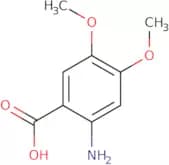
2-Amino-4,5-dimethoxybenzoic acid
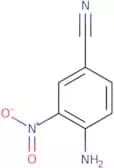
CAS :<p>2-Amino-4,5-dimethoxybenzoic acid is a potent antitumor agent that inhibits the growth of tumor cells. It has been shown to inhibit the production of epidermal growth factor (EGF) and plays a role in the inhibition of tumor cell proliferation in vitro. 2-Amino-4,5-dimethoxybenzoic acid has also been shown to have photochemical properties and can be activated by light. This compound can be used as an indicator for gravimetric analysis because it reacts with diazonium salts and produces a colored product. 2-Amino-4,5-dimethoxybenzoic acid is also reactive and may be used in Suzuki coupling reactions. This chemical compound is chemically related to other inhibitors such as mcf7 and suzuki coupling reactions.</p>Formule :C9H11NO4Degré de pureté :Min. 95%Couleur et forme :Beige PowderMasse moléculaire :197.19 g/mol4-Amino-3-nitrobenzonitrile
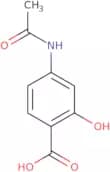
CAS :<p>4-Amino-3-nitrobenzonitrile is an organic compound that is used as a precursor in the synthesis of drugs to treat infectious diseases. 4-Amino-3-nitrobenzonitrile has been shown to have potent activity against Leishmania species, including L. major and L. braziliensis. It binds to sulfoxides by a nitro group and forms a covalent bond with the sulfoxide. This results in the formation of an intramolecular hydrogen bond between the nitro group and the sulfoxide, which prevents it from forming hydrogen bonds with other molecules. Gel permeation chromatography can be used for analytical determination of this drug. 4-Amino-3-nitrobenzonitrile has also been studied using chemosensors and in vivo studies, showing that it can be used to inhibit protozoa such as Giardia lamblia, Entamoeba histolyt</p>Formule :C7H5N3O2Degré de pureté :Min. 98%Couleur et forme :PowderMasse moléculaire :163.13 g/molN-Acetyl-4-aminosalicylic acid
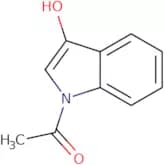
CAS :<p>N-Acetyl-4-aminosalicylic acid is an active site directed probe for the detection of salicylic acid. It has a fluorescence emission maximum at 370 nm and a fluorescence quantum yield of 0.93. N-Acetyl-4-aminosalicylic acid can be used to analyze samples, such as wastewater and human urine, which contain salicylic acid. The probe is protonated in the presence of salicylic acid and then binds to the acceptor in the sample with a bimodal distribution. The fluorescence resonance energy transfer (FRET) process between the donor and acceptor leads to an increase in fluorescence intensity that can be detected by electrophoresis methods. This probe also has a conformational change when it binds to its target, which allows for easy separation from other components in the sample by size exclusion chromatography.</p>Formule :C9H9NO4Degré de pureté :Min. 95%Couleur et forme :Slightly Brown PowderMasse moléculaire :195.17 g/molN-Acetyl-3-hydroxyindole
CAS :<p>N-Acetyl-3-hydroxyindole is a colorless liquid that inhibits the activity of enzymes such as butyric acid, active methylene, and acyl halides. It is also used to inhibit the enzyme eosinophil peroxidase in clinical tests. N-Acetyl-3-hydroxyindole has been shown to be an efficient method for high-throughput analysis of enzymatic reactions. This chemical can be immobilized on porous supports and used to measure enzyme activities. N-Acetyl-3-hydroxyindole has been shown to have therapeutic effects in clinical data with a potent inhibitor of eosinophil peroxidase.</p>Formule :C10H9NO2Degré de pureté :Min. 95%Couleur et forme :Orange PowderMasse moléculaire :175.18 g/mol5-Acetyl-2-aminobenzonitrile
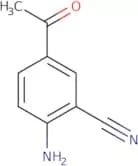
CAS :<p>5-Acetyl-2-aminobenzonitrile is a versatile building block that can be used as an intermediate in the synthesis of a wide range of chemicals. It has been used to produce pharmaceuticals and other useful compounds, including research chemicals and speciality chemicals. 5-Acetyl-2-aminobenzonitrile is also a useful reagent for the production of organic products. The compound is available at high purity levels.</p>Formule :C9H8N2ODegré de pureté :Min. 95%Couleur et forme :White PowderMasse moléculaire :160.17 g/molDipropyl ether
CAS :<p>Dipropyl ether is a reagent that is used in organic synthesis as a reaction component or building block for the preparation of complex compounds. It is also known to be an intermediate in the production of propylene oxide, which is used in the production of polyurethane. Dipropyl ether has been shown to be useful as a research chemical and speciality chemical. This compound has CAS number 111-43-3 and can be prepared by reacting diethyl ether with propene, acetone, or chloroform.</p>Formule :C4H9NO2SMasse moléculaire :135.19 g/mol2-Aminobenzophenone
CAS :2-Aminobenzophenone is a molecule that is the product of the reaction between 2-benzoylbenzoic acid and diazonium salt. The molecule has a coordination geometry, which means it exhibits two N-N bonds. The molecule also has two amines, which are reactive groups that can form covalent bonds with other molecules. This molecule has been used for asymmetric synthesis in a number of reactions, such as the reaction between methyl ethyl ketones and phosphorus pentoxide to form picolinic acid. The mechanism of this reaction is as follows: +PCl5 → PCl3 + Cl 2CHC6H5 + PCl5 → (CHC6H5)2PCl2 + HCl The nitrogen atoms in the amine group undergo an addition reaction with phosphorus pentoxide to form an intermediate, which then reacts with the chloride ion to form picolinic acid.Formule :C13H11NODegré de pureté :Min. 95%Couleur et forme :PowderMasse moléculaire :197.23 g/mol2-Chloro-4-trifluoromethylbenzoic acid
CAS :<p>2-Chloro-4-trifluoromethylbenzoic acid is a chemical compound with the formula CHClFO. It can be obtained by deprotonation of 2,4,6-trichlorobenzoic acid with butyllithium and subsequent reaction with chlorotrifluoromethane. The product has two regioisomers, one in which the chlorine atom is attached to the para position on the benzene ring and the other in which it is attached to the ortho position. Substituents such as alkyl groups or lithium reagents can affect both reactivity and selectivity. The halogen substituent can also be replaced by other functional groups to make derivatives of this compound.</p>Formule :C8H4ClF3O2Degré de pureté :Min. 95%Couleur et forme :PowderMasse moléculaire :224.56 g/molCyclohexane-1,2-dione
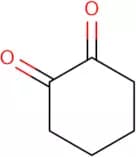
CAS :<p>Cyclohexane-1,2-dione is a natural compound that can be found in kidney beans and other plants. It has been shown to inhibit the growth of tumor cells in vitro. Cyclohexane-1,2-dione binds to DNA polymerase, preventing replication and transcription. This reaction mechanism is similar to that of the rifamycins. Cyclohexane-1,2-dione has also been shown to bind enzymes such as nitrite ion reductase with high affinity and inhibit their activity. Cyclohexane-1,2-dione is chemically stable and does not react with metal ions or form stable complexes with biological molecules. The redox potentials for this molecule are -0.42 V (5/6) under aerobic conditions and -0.52 V (5/6) under anaerobic conditions.</p>Formule :C6H8O2Degré de pureté :Min. 96.5%Couleur et forme :PowderMasse moléculaire :112.13 g/mol5-Amino-2-nitrobenzoic acid
CAS :<p>5-Amino-2-nitrobenzoic acid is a versatile compound that can be used as a reagent, a reaction component, or as a useful scaffold in research. It reacts with alcohols to produce esters and amides. The high quality of this chemical makes it suitable for use in many different reactions. CAS No. 13280-60-9</p>Formule :C7H6N2O4Masse moléculaire :182.14 g/molRef: 3D-A-6803
1kgÀ demander100gÀ demander250gÀ demander500gÀ demander2500gÀ demander-Unit-ggÀ demander2-(Azidomethyl)pyridine
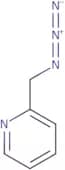
CAS :<p>2-(Azidomethyl)pyridine (2-AP) is an organopalladium complex with a molecular weight of 206.2 g/mol. It has been used in magnetic resonance spectroscopy and has been shown to bind to all-trans retinoic acid, which is an active metabolite of vitamin A. 2-AP has also been shown to inhibit the growth of cancer cells by binding to the glycan on cell surfaces. The copper complex has been shown to have anti-inflammatory properties and can inhibit the activity of enzymes such as cyclooxygenase and lipoxygenase, which are involved in inflammatory responses. 2-AP is a second-order rate constant for the exothermic reaction between hydrogen peroxide and azide ion, which produces nitrous oxide ((NO)) and water molecules.</p>Formule :C6H6N4Degré de pureté :Min. 95%Couleur et forme :Brown PowderMasse moléculaire :134.14 g/mol4-Anisylchlorodiphenylmethane
CAS :<p>4-Anisylchlorodiphenylmethane is a trifluoroacetic acid derivative of diphenyl sulfoxide. It is activated by hydrochloric acid and hydrogen chloride to form the corresponding anisyl chlorodiphenylmethane chloride. This compound has a high resistance to nucleophilic attack, with a reaction solution that is resistant to nucleophiles such as water, amines, alcohols, and carboxylic acids. 4-Anisylchlorodiphenylmethane can be synthesized from uridine and acetic acid in the presence of diphenyl sulfoxide and a base. The reaction is then heated at reflux for 24 hours. 4-Anisylchlorodiphenylmethane binds to DNA as well as RNA templates in vitro and can be used for linear regression analysis of DNA sequences. It also has inhibitory effects on cell growth in culture.</p>Formule :C20H17ClODegré de pureté :Min. 95%Couleur et forme :White PowderMasse moléculaire :308.8 g/mol2-Acetyl cyclohexanone
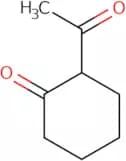
CAS :2-Acetylcyclohexanone is a chemical compound that belongs to the group of aryl halides. It is used as a raw material in the production of other chemicals, such as ethylene diamine and acetic anhydride. The reaction mechanism of 2-acetylcyclohexanone is mainly via nucleophilic substitution with hydrochloric acid or trifluoroacetic acid. The reaction with acetic anhydride or ethylene diamine has been shown to be through an acetylation reaction. 2-acetylcyclohexanone can be synthesized by reacting acetaldehyde with sodium cyclopentadienide in the presence of hydrochloric acid, followed by elimination of hydrogen chloride by heating. This compound has two tautomers: keto and enol.Formule :C8H12O2Degré de pureté :Min. 95%Couleur et forme :Colorless Clear LiquidMasse moléculaire :140.18 g/mol5-Amino-1-pentanol
CAS :<p>5-Amino-1-pentanol is a chemical compound that has been shown to stimulate angiogenesis, which is the process of developing new blood vessels from pre-existing ones. It is not currently approved for use in humans and has only been tested on mice. 5-Amino-1-pentanol stimulates angiogenesis by binding to the vascular endothelial growth factor receptor 2 (VEGFR2) protein, which is involved in regulating blood vessel formation. This drug also suppresses cancer gene expression and selectively binds to DNA polymerase α. The amide group of 5-amino-1-pentanol reacts with trifluoroacetic acid to form an amine, which then reacts with water vapor to form a hydroxyl group. This reaction solution can be used as a diagnostic tool for detecting the presence of amines or other nitrogenous compounds.</p>Formule :C5H13NODegré de pureté :Min. 94%Couleur et forme :Colorless Yellow PowderMasse moléculaire :103.16 g/molcis-4-Chloro-3-nitrocinnamic acid
<p>Cis-4-Chloro-3-nitrocinnamic acid is an aromatic organic compound with potential utility in biochemical research and synthesis. This compound is typically derived from synthetic chemical processes involving chlorination and nitration reactions on cinnamic acid derivatives. Its molecular structure, characterized by both chloro and nitro functional groups, allows it to interact in unique ways with various biochemical pathways and molecular frameworks.</p>Formule :C9H6ClNO4Degré de pureté :Min. 95%Couleur et forme :White PowderMasse moléculaire :227.6 g/mol2-Amino-5-bromopyrazine-3-carboxylic acid
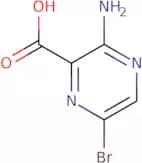
CAS :2-Amino-5-bromopyrazine-3-carboxylic acid is an organic compound that belongs to the group of boronic acids. It has a molecular weight of 138.14 and a melting point of 198°C. The compound has been characterized by x-ray crystallography, revealing its molecular structure. 2-Amino-5-bromopyrazine-3-carboxylic acid is soluble in water and can be isolated from the reaction mixture using conventional methods such as recrystallization. The compound reacts with alkyl halides through cross coupling reactions to form pyridyl compounds. This reagent is used for Suzuki, Miyaura, and other cross coupling reactions with high yield.Formule :C5H4BrN3O2Degré de pureté :Min. 95%Couleur et forme :Brown PowderMasse moléculaire :218.01 g/mol5-Amino-1H-imidazole-4-carboxamide
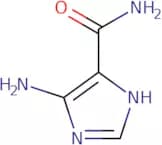
CAS :<p>5-Amino-1H-imidazole-4-carboxamide is a potent inhibitor of inosine monophosphate dehydrogenase (IMPDH). This enzyme converts inosine 5'-monophosphate (IMP) to xanthosine 5'-monophosphate (XMP) and is essential for the synthesis of purines. By inhibiting IMPDH, 5-amino-1H-imidazole-4-carboxamide prevents the formation of XMP, which leads to the depletion of purines, thereby inhibiting DNA synthesis. In addition to its role as an anti-inflammatory agent, this drug has been shown to reduce disease activity in bowel disease patients by reducing nitrate reductase activity. The molecule has also been shown to inhibit protein kinases such as PKC and MAPK/ERK kinases.</p>Formule :C4H6N4ODegré de pureté :Min. 95%Couleur et forme :PowderMasse moléculaire :126.12 g/mol4-Amino-2,6-dimethylpyrimidine
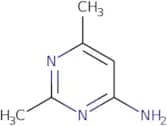
CAS :<p>4-Amino-2,6-dimethylpyrimidine (4ADMP) is an organic solvent that inhibits the enzyme acetylcholinesterase. It has been shown to be a potent and selective inhibitor of human immunodeficiency virus type 1 (HIV-1) replication in vitro. 4ADMP is a prodrug that undergoes reduction to form a reactive intermediate that binds to the active site of acetylcholinesterase and inhibits its activity. The nitrogen atom in 4ADMP stabilizes the intermediate and prevents it from reacting with other proteins. This agent also has muscarinic M1 receptor agonist activity, which may be due to its ability to allosterically modulate the receptor and increase the affinity for acetylcholine.</p>Formule :C6H9N3Degré de pureté :Min. 95%Couleur et forme :PowderMasse moléculaire :123.16 g/mol6-Amino-2-pyridinecarboxylic acid
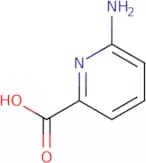
CAS :6-Amino-2-pyridinecarboxylic acid is a potentiating agent that belongs to the class of cyclic peptides. It has been shown to have anti-leukemic activity and can be used for the treatment of leukemia. The mechanism of action is not yet fully understood, but it may involve hydrogen bonding interactions with other molecules or cavities in proteins. 6-Amino-2-pyridinecarboxylic acid forms stable complexes with halides and intramolecular hydrogen bonds. This drug also has quantum theory effects, including a short lifetime in solution and an increase in fluorescence intensity when excited with light at low energies.Formule :C6H6N2O2Degré de pureté :Min. 95%Couleur et forme :PowderMasse moléculaire :138.12 g/mol4-Acetamidobenzoic acid
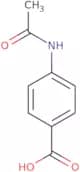
CAS :<p>4-Acetamidobenzoic acid is an aromatic organic compound that is a precursor to many pharmaceuticals, such as acetaminophen, amoxicillin, dapsone, and sulfonamide. It is an intermediate in the formation of 4-hydroxybenzoic acid from benzoic acid. This molecule is also a component of some types of plastics. The chemical's structure and properties are determined by its coordination geometry, which consists of four nitrogen atoms and one hydroxyl group. 4-Acetamidobenzoic acid has been shown to inhibit the growth of certain bacteria by interfering with their metabolic activity. It has also been found to be active against several infectious diseases such as malaria and tuberculosis. The mechanism behind its effectiveness may be due to the fact that it inhibits bacterial fatty acid synthesis or prevents the production of ATP in mitochondria cells.br>br><br>br>br><br>The reaction solution was heated for 20 minutes at 100</p>Formule :C9H9NO3Couleur et forme :White PowderMasse moléculaire :179.17 g/mol