


Building Blocks
Cette section contient des produits fondamentaux pour la synthèse de composés organiques et biologiques. Building blocks sont les matériaux de départ essentiels utilisés pour construire des molécules complexes à travers diverses réactions chimiques. Ils jouent un rôle crucial dans la découverte de médicaments, la science des matériaux et la recherche chimique. Chez CymitQuimica, nous offrons une gamme diversifiée de building blocks de haute qualité pour soutenir vos recherches innovantes et projets industriels, en vous assurant de disposer des composants essentiels pour une synthèse réussie.
Sous-catégories appartenant à la catégorie "Building Blocks"
- Acides boroniques et dérivés de l'acide boronique(5.778 produits)
- Building Blocks Chiraux(1.242 produits)
- Building Blocks Hydrocarbonés(6.098 produits)
- Building Blocks organiques(61.059 produits)
199580 produits trouvés pour "Building Blocks"
Trier par
Degré de pureté (%)
0
100
|
0
|
50
|
90
|
95
|
100
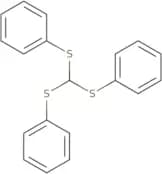
Tris(phenylthio)methane
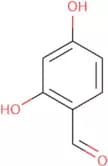
CAS :<p>Tris(phenylthio)methane is a formylating reagent that reacts with ethyl formate to produce the nitro compound. It is used in the preparation of β-amino acids and as an asymmetric synthesis catalyst. Tris(phenylthio)methane can be used as a polymerization initiator for metathesis reactions, such as the Suzuki reaction. It has been shown to be a good nucleophile and polymerizing agent when combined with hydrochloric acid or silver trifluoromethanesulfonate. Tris(phenylthio)methane may also react with chloride in the presence of base to produce phosphoric acid esters.</p>Formule :C19H16S3Degré de pureté :Min. 95%Couleur et forme :Off-White PowderMasse moléculaire :340.53 g/mol2,4-Dihydroxybenzaldehyde
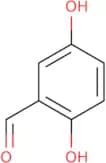
CAS :<p>2,4-Dihydroxybenzaldehyde (2,4DBA) is a copper complex that has been shown to have biological properties. This compound has been studied in biological studies and is classified as group p2 on the periodic table. It is a redox potential of -0.95 V and can undergo intramolecular hydrogen bonding with itself or with other molecules to form hydrogen bonds. Hydroxyl groups are found on 2,4DBA and can coordinate with the nitrogen atoms found on penicillin-binding proteins or acetylcholinesterase inhibition. The coordination geometry of 2,4DBA is tetrahedral and its methyl ethyl group is also found on this molecule.</p>Formule :C7H6O3Degré de pureté :Min. 98 Area-%Couleur et forme :White PowderMasse moléculaire :138.12 g/mol2,5-Dihydroxybenzaldehyde
CAS :<p>2,5-Dihydroxybenzaldehyde is a compound that can be used as an antioxidant. It is also a precursor for the synthesis of benzalkonium chloride. 2,5-Dihydroxybenzaldehyde reacts with p-hydroxybenzoic acid to form 2,5-dihydroxyphenylacetic acid and benzoic acid. The reaction mechanism of 2,5-dihydroxybenzaldehyde has been studied in detail using hl-60 cells and has been shown to be significant cytotoxicity. The hydroxyl group in this molecule creates a hydrogen bond with the carbonyl group in p-hydroxybenzoic acid and the two react together to form products. This reaction is catalyzed by Michaelis–Menten kinetics and proceeds via an electrochemical detector. Nitrogen atoms are not present in this molecule but do exist in benzalkonium chloride, which is synthesized from 2</p>Formule :C7H6O3Degré de pureté :Min. 95%Couleur et forme :Yellow PowderMasse moléculaire :138.12 g/mol3,4-Dihydroxybenzoic acid
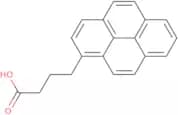
CAS :Dietary polyphenolFormule :C7H6O4Degré de pureté :Min. 95%Couleur et forme :PowderMasse moléculaire :154.12 g/mol1-Pyrenebutyric acid
CAS :<p>1-Pyrenebutyric acid is a sodium salt that belongs to the group of polymerase chain reaction (PCR) reagents. It is used in PCR as a fluorescent probe for detecting the presence of dinucleotide phosphate and covalent linkages. 1-Pyrenebutyric acid has been shown to be a potential biomarker for electrochemical impedance spectroscopy and can be used as an optical sensor for optimal concentration. This compound has also been used in biological studies to detect the presence of human immunoglobulin, which binds to it with high affinity. 1-Pyrenebutyric acid undergoes a phase transition at a temperature between -190 and -195 degrees Celsius, which makes it useful as a fluorescence dye.</p>Formule :C20H16O2Degré de pureté :Min. 95%Couleur et forme :Off-White PowderMasse moléculaire :288.34 g/mol3,5-Dihydroxybenzoic acid
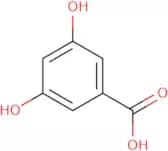
CAS :<p>3,5-Dihydroxybenzoic acid is a phenolic compound that belongs to the class of aromatic compounds. It is an inhibitor of the enzyme 3-hydroxyphenylpyruvate dioxygenase and is used in the treatment of obesity. It has been shown to have a low potency for inhibiting this enzyme, although it does not inhibit other enzymes such as p-hydroxybenzoate hydroxylase. 3,5-Dihydroxybenzoic acid binds to human serum albumin through hydrogen bonding interactions and can inhibit the absorption of dietary phenols by binding to them. This compound also acts as a protocatechuic acid structural analog and has been shown to be hydrated in solution.</p>Formule :C7H6O4Degré de pureté :Min. 95%Couleur et forme :White PowderMasse moléculaire :154.12 g/molMethyl 6-hydroxyhexanoate
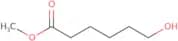
CAS :<p>Methyl 6-hydroxyhexanoate is a reaction intermediate in the synthesis of glycol ethers and polycarboxylic acids. It is also used as a precursor for monoclonal antibodies for cancer therapy. Methyl 6-hydroxyhexanoate reacts with metal ions to form hydrogen bonds, which are important in the stabilization of the covalent bond between the two compounds. This reaction is catalyzed by an enzyme called lipase. The rate of this reaction is increased by adding glycosidation, which increases the number of hydrogen bonding sites on the compound. Methyl 6-hydoxyhexanoate can also be produced from methyl hydroxy and glycol ethers through a reaction that involves metal ion, glycosidation, and a lipase. The antigenicity of methyl 6-hydroxyhexanoate can be altered by changing its carboxyl group to a benzyl group.</p>Formule :C7H14O3Degré de pureté :Min. 95%Masse moléculaire :146.18 g/molLevoglucosenone
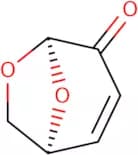
CAS :<p>Levoglucosenone is a molecule that inhibits the reaction mechanism of glycosidic bond formation. It is used in biochemical research to study reactions that involve surface methodology, such as hydroxyl group formation and zirconium oxide deposition. Levoglucosenone can be used to inhibit the acid formation that occurs during the reaction between nitrite ion and a chiral compound. The reactant solution can be activated by adding levoglucosenone to it, which will then inhibit the reaction. Sample preparation for these types of experiments involves dissolving the reactant solution in water and adding ammonium hydroxide to it, followed by adding a small amount of levoglucosenone.</p>Formule :C6H6O3Degré de pureté :Min. 95%Couleur et forme :Clear LiquidMasse moléculaire :126.11 g/molLinoleic acid - liquid
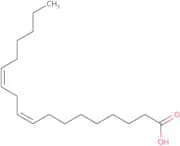
CAS :<p>Linoleic acid is a type of essential fatty acid that is found in vegetable oils. It is the most predominant polyunsaturated fatty acid and can be classified as either a cis- or trans-isomer. Linoleic acid has been shown to have inhibitory properties against bowel disease, polymerase chain reaction (PCR) analysis, and disease activity. Linoleic acid may also be used as an analytical method for determining levels of linoleate, linoleic acid, or p-hydroxybenzoic acid in body proteins. The inhibition of cancer cell proliferation by linoleic acid may be due to its ability to inhibit the production of signal peptide or 3t3-l1 preadipocytes.</p>Formule :C18H32O2Degré de pureté :94 To 96%Couleur et forme :Colorless Clear LiquidMasse moléculaire :280.45 g/mol5-Iodo-2,4-dimethoxypyrimidine
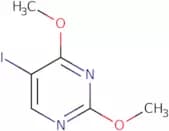
CAS :5-Iodo-2,4-dimethoxypyrimidine is a chemical compound that can be used as a ligand for palladium. It is selective for alcohols and carbinols. The compound has been shown to catalyze the desilylation of organic halides and oxidized alcohols with high yields. 5-Iodo-2,4-dimethoxypyrimidine can also be used in the synthesis of carbohydrates and vinyl acetate. The yield of dehydrohalogenated products was found to be high when 5-iodo-2,4-dimethoxypyrimidine was used as a catalyst.Formule :C6H7IN2O2Degré de pureté :Min. 95%Couleur et forme :PowderMasse moléculaire :266.04 g/molN-(1-Cyano-1-methylethyl)-2-methylpropanamide
CAS :N-(1-Cyano-1-methylethyl)-2-methylpropanamide is a chemical that is used in pharmaceutical dosage. It is a prodrug of aminopropiophenone, which has been shown to be useful for the treatment of depression. This chemical is readily soluble in water and hydrochloric acid, but insoluble in trifluoroacetic acid or hydrophilic interaction chromatography. N-(1-Cyano-1-methylethyl)-2-methylpropanamide has been shown to bind to chloride ions, amines, and dodecyl groups.Formule :C8H14N2ODegré de pureté :Min. 95%Couleur et forme :PowderMasse moléculaire :154.21 g/mol3,5-Dihydroxybenzoic acid methyl ester
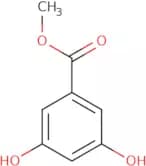
CAS :<p>3,5-Dihydroxybenzoic acid methyl ester is a potent tyrosinase inhibitor that has been shown to be effective in inhibiting the production of melanin. 3,5-Dihydroxybenzoic acid methyl ester is an active ingredient in skin lightening products and has been shown to be more potent than kojic acid, arbutin and ascorbic acid. The reaction mechanism of 3,5-Dihydroxybenzoic acid methyl ester is stepwise with hydroxybenzoic acid (HBA) being the first substrate. HBA reacts with iron oxides to form a ferric hydroxide intermediate that undergoes gelation reactions with chloride ions. This results in a molecule containing three ether linkages, which are responsible for its inhibitory activity on the enzyme tyrosinase.</p>Formule :C8H8O4Degré de pureté :Min. 95%Couleur et forme :PowderMasse moléculaire :168.15 g/mol5,6-Dichloroindole
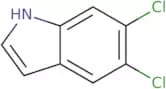
CAS :<p>5,6-Dichloroindole is a chemical compound that contains a functional group with acidic properties. The compound has been shown to inhibit the activity of bafilomycin A1, which is an inhibitor of vacuolar ATPase. This inhibition leads to an increase in intracellular phosphate levels and an accumulation of lysosomal membrane proteins. 5,6-Dichloroindole has also been found to inhibit bone resorption in gramine-fed rats. It also has anti-inflammatory effects and inhibits the growth of zoobotryon pinnatum cells and algal cells. 5,6-Dichloroindole can be used as a molecular descriptor for predicting the presence or absence of bryozoan species in a sample.</p>Formule :C8H5Cl2NCouleur et forme :PowderMasse moléculaire :186.04 g/mol2-(2-(2-Chloroethoxy)ethoxy)ethanol
CAS :<p>2-(2-(2-Chloroethoxy)ethoxy)ethanol (CETOI) is a coumarin derivative that is used as an additive in the fabrication of polyurethane. Magnetic resonance spectroscopy has shown that CETOI can be used as a probe to study amide groups by its ability to form hydrogen bonds with amide groups. This chemical can also be used in regenerative medicine and cyclic peptides. Azobenzene monomers have been shown to inhibit viral replication, including influenza virus, through the formation of covalent bonds with phosphate groups on dsDNA.</p>Formule :C6H13ClO3Degré de pureté :Min. 95%Couleur et forme :Colorless Clear LiquidMasse moléculaire :168.62 g/mol2-(1-Methyl-4-oxo-1,4-dihydro-5H-pyrazolo[3,4-d]pyrimidin-5-yl)acetohydrazide
CAS :Produit contrôlé2-(1-Methyl-4-oxo-1,4-dihydro-5H-pyrazolo[3,4-d]pyrimidin-5-yl)acetohydrazide is a fine chemical that is a versatile building block in the synthesis of complex compounds. It is also a useful intermediate for the synthesis of pharmaceuticals and agrochemicals. CAS No. 938018-24-7Formule :C8H10N6O2Degré de pureté :Min. 95%Masse moléculaire :222.2 g/molDMDM hydantoin, 50% min aqueous solution
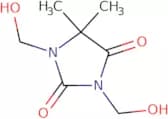
CAS :DMDM Hydantoin is a preservative that is used in the production of many products, including personal care products and pharmaceuticals. DMDM Hydantoin is an antimicrobial agent that inhibits microbial growth by interfering with the microorganism's cell membrane. This chemical also has a low toxicity to humans and other mammals. It has been shown to inhibit the growth of bacteria in wastewater treatment plants and can be used to prevent the spread of infectious diseases. It also has antibacterial properties against some strains of Staphylococcus aureus, such as methicillin-resistant strains (MRSA). DMDM Hydantoin is often found in hair conditioners, shampoos, and other cosmetic products. It can be absorbed through the skin or ingested orally. Although it is not classified as carcinogenic, it may cause contact dermatitis or alopecia areata because of its ability to inhibit prostaglandin synthesis in animal studies.Formule :C7H12N2O4Degré de pureté :(%) Min. 50%Couleur et forme :Clear LiquidMasse moléculaire :188.18 g/mol2,9-Dimethyl-1,10-phenanthroline
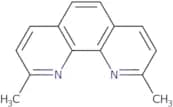
CAS :Chelating agent used to detect aqueous copper ions by electrochemiluminescenceFormule :C14H12N2Degré de pureté :Min. 98 Area-%Couleur et forme :Yellow PowderMasse moléculaire :208.26 g/molAgaric acid
CAS :<p>Agaric acid is a high-quality, versatile chemical that is used as an intermediate in many organic and biochemistry reactions. It is also used as a reagent for the isolation of metals such as silver and gold. As a complex compound, it has many uses, including being a useful building block in the synthesis of various drugs. Agaric acid can be used to produce other chemicals such as speciality chemicals or research chemicals</p>Formule :C22H40O7Masse moléculaire :416.56 g/molRef: 3D-A-3920
1gÀ demander5gÀ demander250mgÀ demander500mgÀ demander2500mgÀ demander-Unit-ggÀ demandertrans-Isoferulic acid
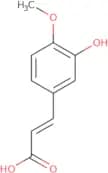
CAS :<p>Trans-iso-ferulic acid is a bioactive phenolic compound that has been shown to have antioxidant and anti-inflammatory properties. It is produced by the metabolism of ferulic acid in the body and can be found in plant cell walls. Trans-iso-ferulic acid has been shown to act as an antimicrobial agent against bacterial strains such as Escherichia coli, Bacillus cereus, Staphylococcus aureus, Klebsiella pneumoniae, Pseudomonas aeruginosa, and Candida albicans. It also has locomotor activity and has been shown to reduce the severity of cardiac disorders. Trans-iso-ferulic acid works by blocking the synthesis of fatty acids which are necessary for energy storage and making regulatory proteins that control metabolism. Trans-iso-ferulic acid also binds to anion radicals which may scavenge free radicals that are formed during oxidative stress. This process prevents lipid peroxidation from occurring which reduces inflammation caused</p>Formule :C10H10O4Degré de pureté :Min. 95%Masse moléculaire :194.18 g/molBis[rhodium(±,±,±',±'-tetramethyl-1,3-benzenedipropionic Acid)]
CAS :<p>Bis[rhodium(±,±,±',±'-tetramethyl-1,3-benzenedipropionic Acid)] is a reagent that can be used in catalytic organic synthesis. Bis[rhodium(±,±,±',±'-tetramethyl-1,3-benzenedipropionic Acid)] is a stable compound that does not react with most organic solvents. It also has high solubility in many organic solvents. This reagent is toxicological and should be handled with care.</p>Formule :C32H40O8Rh2Degré de pureté :Min. 95%Couleur et forme :PowderMasse moléculaire :758.48 g/mol




![2-(1-Methyl-4-oxo-1,4-dihydro-5H-pyrazolo[3,4-d]pyrimidin-5-yl)acetohydrazide](/_next/image/?url=https%3A%2Fstatic.cymitquimica.com%2Fproducts%2F3D%2Fthumb-webp%2FNMB01824.webp&w=3840&q=75)

![Bis[rhodium(±,±,±',±'-tetramethyl-1,3-benzenedipropionic Acid)]](/_next/image/?url=https%3A%2Fstatic.cymitquimica.com%2Fproducts%2F3D%2Fthumb-webp%2FUHB05089.webp&w=3840&q=75)