Building Blocks
Cette section contient des produits fondamentaux pour la synthèse de composés organiques et biologiques. Building blocks sont les matériaux de départ essentiels utilisés pour construire des molécules complexes à travers diverses réactions chimiques. Ils jouent un rôle crucial dans la découverte de médicaments, la science des matériaux et la recherche chimique. Chez CymitQuimica, nous offrons une gamme diversifiée de building blocks de haute qualité pour soutenir vos recherches innovantes et projets industriels, en vous assurant de disposer des composants essentiels pour une synthèse réussie.
Sous-catégories appartenant à la catégorie "Building Blocks"
- Acides boroniques et dérivés de l'acide boronique(5.778 produits)
- Building Blocks Chiraux(1.242 produits)
- Building Blocks Hydrocarbonés(6.098 produits)
- Building Blocks organiques(61.098 produits)
199594 produits trouvés pour "Building Blocks"
Trier par
Degré de pureté (%)
0
100
|
0
|
50
|
90
|
95
|
100
8-Bromoadenine
CAS :<p>8-Bromoadenine is a nucleophile that reacts with electrophiles to form adducts. 8-Bromoadenine has been shown to induce DNA strand breaks and oxidative damage in vitro, which may be due to its ability to react with DNA bases and form intramolecular hydrogen bonds. 8-Bromoadenine has also been shown to cause inflammatory bowel disease in mice by increasing the production of proinflammatory cytokines. 8-Bromoadenine induces Toll-like receptor 4 (TLR4) signaling, which leads to enhancement of radiation response. This drug can also be used as the monosodium salt for treating cancer, although it only has a limited number of sequences that can be synthesized.</p>Formule :C5H4BrN5Degré de pureté :Min. 95%Couleur et forme :White PowderMasse moléculaire :214.02 g/molArg-Gly-Asp TFA salt
CAS :<p>Arg-Gly-Asp TFA salt is a molecule that is used as a prodrug, meaning it is inactive until it has been converted to the active form. It has been shown to be effective when injected subcutaneously or intramuscularly and is hydrophilic. Arg-Gly-Asp TFA salt has been shown to have problematic effects on polymerization when exposed to heat. The molecule has an active form that can be absorbed into the body through injection sites and then hydrolyzed by esterases or glucuronidases, oxidized by cytochrome P450 enzymes, reduced by glutathione reductase, or conjugated with glucuronic acid. Arg-Gly-Asp TFA salt also specifically binds to markers expressed at high levels in Mycobacterium tuberculosis strains (e.g., ESX-1 secretion system protein) and inhibits cell growth in culture.</p>Formule :C12H22N6O6·C2HF3O2Degré de pureté :Min. 95%Couleur et forme :PowderMasse moléculaire :460.36 g/mol6-Amino-9H-purine-9-propanoic acid
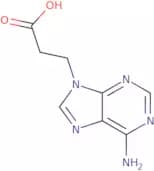
CAS :<p>6-Amino-9H-purine-9-propanoic acid is an acid lactam that belongs to the class of dihedral molecules. It is a colorless solid that crystallizes in plates, which have been shown to have a strong affinity for ammonium ions. 6-Amino-9H-purine-9-propanoic acid has been shown to be a substrate for the enzyme purine nucleoside phosphorylase, which catalyzes the phosphorolysis of nucleosides with the release of inorganic phosphate and ribose 5'-phosphate. The molecule can also react with electron radiation to form gamma rays, which may lead to its use as a molecular probe.</p>Formule :C8H9N5O2Degré de pureté :Min. 95%Couleur et forme :PowderMasse moléculaire :207.19 g/molN-Nitrosodibenzylamine
CAS :<p>N-Nitrosodibenzylamine is a chemical compound that has genotoxic effects. It is used as an analytical method to identify the presence of amines and to measure their concentration, as well as in the preparation of sodium salts. N-Nitrosodibenzylamine was found to cause damage to DNA in animals and cells in culture. The matrix effect, which is the difference in response between a sample contained in an organic solvent and one contained in water, was investigated using multi-walled carbon nanotubes (MWCNTs). The results showed that MWCNTs produce a significant matrix effect when compared with other solvents. This study also showed that MWNTs have a higher capacity for nitrosamine adsorption than do other solvents.</p>Formule :C14H14N2ODegré de pureté :Min. 96 Area-%Couleur et forme :Off-White PowderMasse moléculaire :226.27 g/molIsopropyl 4-hydroxybenzoate
CAS :<p>Isopropyl 4-hydroxybenzoate is a preservative that is used in cosmetics, pharmaceuticals, and other household products. It can be found in a wide range of products, including moisturizers, shampoos, conditioners, hair sprays, sunscreens, skin lotions and creams. Isopropyl 4-hydroxybenzoate has been shown to inhibit the growth of bacteria by binding to their cell walls. This compound also has been shown to have an antimicrobial effect against fungi and yeast in vitro assays. A number of toxicological studies have been conducted on this compound with no observed adverse effects on animals at doses up to 2,000 mg/kg body weight. The activity index for this compound is low; therefore it does not appear to be carcinogenic or mutagenic. Analytical methods for quantifying this preservative are available in the literature.</p>Formule :C10H12O3Degré de pureté :Min. 95%Couleur et forme :PowderMasse moléculaire :180.2 g/mol4-Bromo-2-fluoropyridine
CAS :<p>4-Bromo-2-fluoropyridine is a heterocyclic amine that belongs to the class of cannabinoid type. It has been shown to be stereoselective, and can be used as a sulfamidate in biomolecular studies. 4-Bromo-2-fluoropyridine is activated by chloride and nucleophilic, which are properties that make it useful for functional groups. The fluorine atom on this molecule also makes it reactive, making it possible to use the substance as an enantiopure catalyst for organic reactions.</p>Formule :C5H3BrFNDegré de pureté :Min. 98 Area-%Couleur et forme :Colorless Clear LiquidMasse moléculaire :175.99 g/mol4-Bromoindole
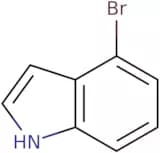
CAS :<p>4-Bromoindole is a model compound that serves as a building block for the synthesis of pharmaceutically important compounds. 4-Bromoindole has been shown to have high catalytic rates for the oxidative coupling of zirconium oxide. This compound can also be used in asymmetric synthesis because it is able to form both R and S enantiomers in moderate yield. The reaction mechanism is thought to involve a nucleophilic attack by bromide on the carbonyl group, followed by elimination of hydrogen bromide from this intermediate. 4-Bromoindole can be synthesized in three ways: (1) via an oxidative coupling reaction with ZrOCl2 and H2O2; (2) via an oxidative coupling reaction with ZrOCl2 and HBr; or (3) by reacting 4-bromoaniline with CuSO4 and Mn(NO3)2.</p>Formule :C8H6BrNDegré de pureté :Min. 95%Couleur et forme :Brown Yellow Clear LiquidMasse moléculaire :196.04 g/mol6-Bromoindole
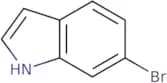
CAS :<p>6-Bromoindole is a synthetic compound that has been shown to have significant anticancer activity in animals. 6-Bromoindole shows cytotoxicity against cervical cancer cells and has been shown to be active against leukemia cells, with the potential for use as a therapeutic agent for both solid tumor cancers and hematological malignancies. The synthesis of 6-bromoindole is based on an asymmetric Friedel-Crafts reaction, which uses hydrochloric acid as a catalyst. This product also shows significant antibacterial activity and has been found to be effective against LPS-stimulated RAW264.7 cells.</p>Formule :C8H6BrNDegré de pureté :Min. 95%Couleur et forme :PowderMasse moléculaire :196.04 g/mol4-Bromo-2-hydroxybenzaldehyde
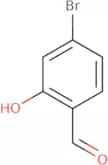
CAS :<p>4-Bromo-2-hydroxybenzaldehyde is a chemical compound that is used in the synthesis of azides. It has a molecular formula of C6H5BrO, a diameter of 197.037 pm, and a structural formula of CHBrO. 4-Bromo-2-hydroxybenzaldehyde can be prepared by reacting bromine with hydroxybenzaldehyde in the presence of an amine catalyst. This product has been shown to have synergistic effects when used in combination with other anticancer agents such as aminopyrimidines, coumarin derivatives, or 2-(4'-hydroxyphenyl) benzoxazole. The photophysical properties of 4-bromo-2-hydroxybenzaldehyde are characterized by its fluorescence emission at 272 nm and its absorption at 270 nm. This product also shows low detection levels in human liver tissue samples, which may be due to its high water sol</p>Formule :C7H5BrO2Degré de pureté :Min. 95%Couleur et forme :White PowderMasse moléculaire :201.02 g/mol2-Iodothiazole
CAS :<p>2-Iodothiazole is a molecule that contains two iodine atoms. It is an isomeric compound of thiourea and 2-thiazolidine. The nucleophilic attack by the amide group on the magnesium leads to the formation of a magnesium amide complex, which can be hydrolyzed to get valine. This reaction can also be catalyzed by palladium complexes or vitamin B1, which results in one molecule of 2-iodothiazole being produced for each molecule of magnesium amide complex. The halides and diazonium salt are used as oxidizing agents in this reaction. 2-Iodothiazole can be synthesized from primary amines and iodides or halides. 2-Iodothiazole has been shown to inhibit bacterial growth by inhibiting RNA synthesis (ribosome binding) in bacteria such as Mycobacterium tuberculosis and Mycobacterium avium complex, but not in</p>Formule :C3H2INSDegré de pureté :Min. 95%Couleur et forme :Yellow PowderMasse moléculaire :211.03 g/mol1-Bromo-2-methoxy-3-nitrobenzene
CAS :<p>1-Bromo-2-methoxy-3-nitrobenzene is a high quality chemical that is used as a reagent and building block in organic synthesis. It is also a versatile intermediate and can be used in the synthesis of complex compounds. This chemical has been shown to have anti-inflammatory properties, which may be due to its inhibition of prostaglandin synthesis.</p>Formule :C7H6BrNO3Degré de pureté :Min. 95%Couleur et forme :PowderMasse moléculaire :232.03 g/mol2-[3-(4-Methylphenyl)-1,2,4-oxadiazol-5-yl]acetonitrile
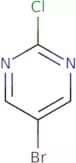
CAS :<p>Heterocycle with nitrile functional handle</p>Formule :C11H9N3ODegré de pureté :Min. 95%Couleur et forme :PowderMasse moléculaire :199.21 g/mol5-Bromo-2-chloropyrimidine
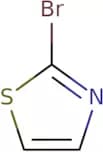
CAS :<p>Intermediate in the synthesis of macitentan; building block</p>Formule :C4H2BrClN2Degré de pureté :Min. 95%Couleur et forme :White PowderMasse moléculaire :193.43 g/mol2-Bromothiazole
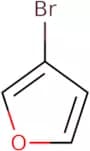
CAS :<p>2-Bromothiazole is an anticancer agent that can be prepared by coupling of 2-bromo-1,2-dithiolane and thiourea. This chemical has been found to be effective against a number of cancers in both animal and human studies. It is also used as a reagent in the industrial preparation of pesticides and dyes. 2-Bromothiazole is highly reactive with nucleophiles such as amines, alcohols, and phenols, which makes it a powerful catalyst for cross-coupling reactions. It can be used to make other organic compounds that have not been available from commercial sources due to its high reactivity. The compound's anti-inflammatory properties may be related to its ability to inhibit prostaglandin synthesis by inhibiting cyclooxygenase activity.</p>Formule :C3H2BrNSDegré de pureté :Min. 95%Couleur et forme :PowderMasse moléculaire :164.02 g/mol3-Bromofuran
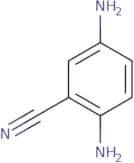
CAS :<p>3-Bromofuran is a synthetic chemical that can be used to treat cancer, specifically as an anti-cancer agent. 3-Bromofuran has been shown to inhibit the growth of tumour cells in culture. It also selectively inhibits antigen expression and induces apoptosis in tumour cells. 3-Bromofuran is synthesized by a Sharpless asymmetric dihydroxylation of hippuric acid and efficiently undergoes cross coupling reactions with electron deficient polyatomic molecules such as organoaluminium compounds. The major metabolite of 3-bromofuran is 3,4-dihydroxybenzoic acid (3,4-DHBA), which has been found to have antiviral and antibacterial properties.</p>Formule :C4H3BrODegré de pureté :Min. 95%Couleur et forme :Clear LiquidMasse moléculaire :146.97 g/mol2,5-Diaminobenzonitrile
CAS :<p>2,5-Diaminobenzonitrile is a chemical compound with the molecular formula C6H5N3. It is a white crystalline solid that is insoluble in water and soluble in organic solvents such as acetone, chloroform, and ether. 2,5-Diaminobenzonitrile has been shown to be an effective monomer for polymer synthesis due to its stability and high densities. This chemical also has the ability to undergo hydrogen bonding and form hydrogen peroxide when heated to a temperature of 100 °C. The thermal isomerization of 2,5-diaminobenzonitrile can be slowed by adding other amines or nitrites.</p>Formule :C7H7N3Degré de pureté :Min. 95%Couleur et forme :PowderMasse moléculaire :133.15 g/mol2-Aminoacridone
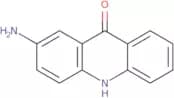
CAS :<p>2-Aminoacridone is a fluorescent dye. The applications of 2-Aminoacridone are extensive in biochemical and analytical research. It is commonly employed in glycoprotein and glycoconjugate studies, leveraging its high sensitivity and specificity in detecting saccharide structures. Researchers utilize this dye in various assays, including high-performance liquid chromatography (HPLC) and electrophoresis, to analyze carbohydrate content and structure. Its role is critical in advancing our understanding of carbohydrate-related biological processes, such as cell signaling and disease pathogenesis, facilitating developments in both diagnostics and therapeutic strategies.</p>Formule :C13H10N2ODegré de pureté :Min. 95%Couleur et forme :PowderMasse moléculaire :210.23 g/mol2-Benzofurancarboxylic acid
CAS :<p>2-Benzofurancarboxylic acid is a potent antimicrobial agent that inhibits the growth of bacteria by binding to amines, carthamus tinctorius, coumarin derivatives, and reaction mechanism. It has been shown to be effective against several types of cancer cells and autoimmune diseases. 2-Benzofurancarboxylic acid binds reversibly to the active site of an enzyme with high affinity for amines, carthamus tinctorius, coumarin derivatives, and reaction mechanism. This binding prevents the enzyme from performing its normal function.<br>2-Benzofurancarboxylic acid has also been shown to inhibit bacterial growth in a microgravity environment and was found to be more effective than its analogs in a molecular docking analysis.</p>Formule :C9H6O3Degré de pureté :Min. 98 Area-%Couleur et forme :PowderMasse moléculaire :162.14 g/mol4-Aminobenzoic acid
CAS :<p>4-Aminobenzoic acid is a chemical compound that can be used as an antibacterial agent in wastewater treatment. It has been shown to be effective against Aerobacter aerogenes and other bacteria. 4-Aminobenzoic acid is a basic compound with an aromatic ring and four amine groups. It is often used in the synthesis of polymers, pharmaceuticals, dyes, and pigments. The polymerase chain reaction (PCR) technique uses 4-aminobenzoic acid as a cofactor for DNA synthesis. Electrochemical impedance spectroscopy (EIS) is another application of this chemical compound in which it acts as a redox mediator in the electrical circuit. 4-Aminobenzoic acid also has been shown to have toxic effects on bowel disease cells, which may be due to its ability to react with nucleophilic groups on cell surfaces or by inhibiting the production of essential proteins or enzymes within the cells</p>Formule :C7H7NO2Degré de pureté :Min. 98 Area-%Couleur et forme :PowderMasse moléculaire :137.14 g/mol4-Bromopyrimidine hydrobromide
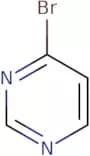
CAS :<p>4-Bromopyrimidine hydrobromide is a synthetic analog of phenylpyrimidine. It has been shown in vivo to lower the blood glucose levels of diabetic patients by inhibiting the activity of phosphoenolpyruvate carboxykinase, which is involved in the conversion of glucose to pyruvate. 4-Bromopyrimidine hydrobromide also inhibits the synthesis of glycogen and lowers serum triglycerides in both db/db mice and normal mice. The drug has not been evaluated for its effects on other metabolic parameters such as cholesterol or insulin resistance. 4-Bromopyrimidine hydrobromide may have potential as an anti-obesity drug because it reduces food intake and weight gain in db/db mice.</p>Formule :C4H3BrN2•HBrDegré de pureté :Min. 95 Area-%Couleur et forme :Slightly Yellow PowderMasse moléculaire :239.9 g/mol






![2-[3-(4-Methylphenyl)-1,2,4-oxadiazol-5-yl]acetonitrile](/_next/image/?url=https%3A%2Fstatic.cymitquimica.com%2Fproducts%2F3D%2Fthumb-webp%2FICA59900.webp&w=3840&q=75)