Building Blocks
Cette section contient des produits fondamentaux pour la synthèse de composés organiques et biologiques. Building blocks sont les matériaux de départ essentiels utilisés pour construire des molécules complexes à travers diverses réactions chimiques. Ils jouent un rôle crucial dans la découverte de médicaments, la science des matériaux et la recherche chimique. Chez CymitQuimica, nous offrons une gamme diversifiée de building blocks de haute qualité pour soutenir vos recherches innovantes et projets industriels, en vous assurant de disposer des composants essentiels pour une synthèse réussie.
Sous-catégories appartenant à la catégorie "Building Blocks"
- Acides boroniques et dérivés de l'acide boronique(5.778 produits)
- Building Blocks Chiraux(1.243 produits)
- Building Blocks Hydrocarbonés(6.097 produits)
- Building Blocks organiques(61.052 produits)
201390 produits trouvés pour "Building Blocks"
Trier par
Degré de pureté (%)
0
100
|
0
|
50
|
90
|
95
|
100
4-Acetamidobenzoic acid
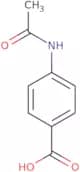
CAS :4-Acetamidobenzoic acid is an aromatic organic compound that is a precursor to many pharmaceuticals, such as acetaminophen, amoxicillin, dapsone, and sulfonamide. It is an intermediate in the formation of 4-hydroxybenzoic acid from benzoic acid. This molecule is also a component of some types of plastics. The chemical's structure and properties are determined by its coordination geometry, which consists of four nitrogen atoms and one hydroxyl group. 4-Acetamidobenzoic acid has been shown to inhibit the growth of certain bacteria by interfering with their metabolic activity. It has also been found to be active against several infectious diseases such as malaria and tuberculosis. The mechanism behind its effectiveness may be due to the fact that it inhibits bacterial fatty acid synthesis or prevents the production of ATP in mitochondria cells.br>br> br>br> The reaction solution was heated for 20 minutes at 100Formule :C9H9NO3Couleur et forme :White PowderMasse moléculaire :179.17 g/mol5,6-Difluoro-1H-indole-3-carboxylic acid
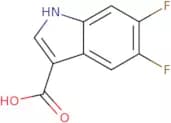
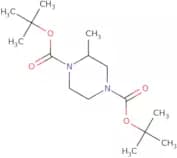
CAS :Versatile small molecule scaffoldFormule :C9H5F2NO2Degré de pureté :Min. 95%Couleur et forme :PowderMasse moléculaire :197.14 g/mol1,4-Di-tert-butyl 2-methylpiperazine-1,4-dicarboxylate
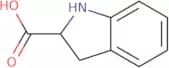
CAS :Versatile small molecule scaffoldFormule :C15H28N2O4Degré de pureté :Min. 95%Couleur et forme :PowderMasse moléculaire :300.39 g/molIndoline-2-carboxylic acid
CAS :<p>Indoline-2-carboxylic acid is a photophysical molecule with an absorption maximum at 518 nm. It has been shown to inhibit the activity of enzymes such as cyclooxygenase, lipoxygenase, and monoamine oxidases. This compound has been found to be effective in the treatment of cancer cells. Indoline-2-carboxylic acid is also used in pharmaceutical preparations, where it binds to enantiomers of other molecules and inhibits their biological activity. Indoline-2-carboxylic acid reacts with hydrochloric acid to form allyl carbonate and amide.</p>Formule :C9H9NO2Degré de pureté :Min. 97 Area-%Couleur et forme :PowderMasse moléculaire :163.17 g/mol5H,6H,7H-Cyclopenta[b]pyridin-2-amine
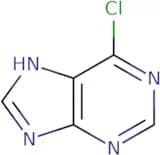
CAS :<p>5H,6H,7H-Cyclopenta[b]pyridin-2-amine is a fine chemical that can be used as a building block in organic synthesis. It is also useful as a reagent and speciality chemical. 5H,6H,7H-Cyclopenta[b]pyridin-2-amine has been shown to be an effective intermediate for the production of complex compounds with versatile scaffolds. This compound is also a useful reactant in organic reactions. 5H,6H,7H-Cyclopenta[b]pyridin-2-amine has a molecular weight of 200.28 g/mol and CAS number 146331-19-3.</p>Formule :C8H10N2Degré de pureté :Min. 95%Couleur et forme :PowderMasse moléculaire :134.18 g/mol6-Chloropurine
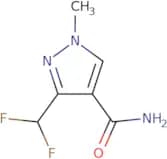
CAS :<p>6-Chloropurine is an isothiouronium salt that is metabolized by the enzyme thiopurine methyltransferase to its active form, 6-methylthioinosine. It has been shown to inhibit the growth of bacterial cells in culture by binding to their adenine nucleotide. 6-Chloropurine inhibits the synthesis of purines and pyrimidines, which are involved in DNA replication and RNA synthesis. 6-Chloropurine has been shown to have cytotoxic effects on certain human carcinoma cell lines and may be used as a chemotherapeutic agent for these types of cancer. The drug has also been shown to have high values with aerobacter aerogenes, which is a bacterium that can cause lung infections.</p>Formule :C5H3ClN4Degré de pureté :Min. 99 Area-%Couleur et forme :Yellow PowderMasse moléculaire :154.56 g/mol3-(Difluoromethyl)-1-methyl-1H-pyrazole-4-carboxamide
CAS :<p>This drug is a pyrazole analog and is used as an insecticide. 3-(Difluoromethyl)-1-methyl-1H-pyrazole-4-carboxamide inhibits the growth of insects by interfering with their ability to synthesize fatty acids. The effective dose for this compound has been determined in rat hepatocytes. Target pest includes bromodomain proteins, which are proteins that regulate DNA transcription and replication. Control agents include n-oxide, fatty acid, and carbonyl group. Risk group includes prioritizing monoclonal antibodies, sequences, and heart disease</p>Formule :C6H7F2N3ODegré de pureté :Min. 95%Masse moléculaire :175.14 g/mol6-Chloro-2-cyano-3-nitropyridine
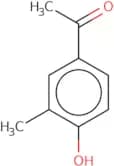
CAS :<p>6-Chloro-2-cyano-3-nitropyridine is a modified pyridine derivative that has been shown to be an antagonist of the adenosine receptors. 6-Chloro-2-cyano-3-nitropyridine blocks the binding of adenosine to A1 and A2A receptors, which leads to increased levels of cyclic AMP in cells. This compound can be used as an antiviral agent or as a component in the development of a new generation of drugs for the treatment of malaria. 6-Chloro-2-cyano-3-nitropyridine has also been shown to be active against HIV, inhibiting its replication and preventing viral assembly. The drug’s mechanism of action is not yet fully understood, but it may involve interference with viral replication by binding to sulfinyl groups on proteins required for virus assembly.</p>Formule :C6H2ClN3O2Degré de pureté :Min. 95%Couleur et forme :PowderMasse moléculaire :183.55 g/mol4'-Hydroxy-3'-methylacetophenone
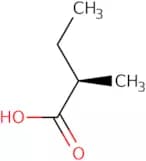
CAS :<p>4'-Hydroxy-3'-methylacetophenone is a chemical that has been shown to have antimycobacterial activity. This substance is an aldehyde with two hydroxyl groups and one methyl group. It has been shown to inhibit the growth of Mycobacterium tuberculosis in vitro by binding to κ-opioid receptors, which are proteins found on the outside of cells. 4'-Hydroxy-3'-methylacetophenone also inhibits mycobacteria through hydroxide solutions, chemical ionization, and vibrational spectroscopy.</p>Formule :C9H10O2Degré de pureté :Min. 95%Couleur et forme :White PowderMasse moléculaire :150.17 g/mol(R)-2-Methylbutyric acid
CAS :(R)-2-Methylbutyric acid is a synthetic compound that has the same stereoisomeric configuration as 2-methylbutyric acid. The difference in the two molecules is that the (R) form has a hydroxyl group on the alpha carbon, while 2-methylbutyric acid does not. This compound is stable under acidic conditions, but hydrolyzes to form butyric acid when exposed to basic conditions. It is used in industrial applications such as food production and as an intermediate in synthesizing other compounds such as tiglic acid or amido groups.Formule :C5H10O2Degré de pureté :Min. 95%Couleur et forme :Yellow PowderMasse moléculaire :102.13 g/mol5-[(Pyrrolidin-3-yl)methyl]-1H-1,2,3,4-tetrazole hydrochloride
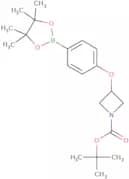
CAS :<p>Versatile small molecule scaffold</p>Formule :C6H12ClN5Degré de pureté :Min. 95%Couleur et forme :PowderMasse moléculaire :189.65 g/moltert-Butyl 3-(4-(4,4,5,5-tetramethyl-1,3,2-dioxaborolan-2-yl)phenoxy)azetidine-1-carboxylate
CAS :Tert-Butyl 3-(4-(4,4,5,5-tetramethyl-1,3,2-dioxaborolan-2-yl)phenoxy)azetidine-1-carboxylate is a high quality reagent that can be used as an intermediate in the synthesis of complex compounds. It has been shown to have various uses as a fine chemical or speciality chemical. Tert-butyl 3-(4-(4,4,5,5-tetramethyl-1,3,2-dioxaborolan-2-yl)phenoxy)azetidine 1 carboxylate is also a versatile building block and can serve as a reaction component.Formule :C20H30BNO5Degré de pureté :Min. 95%Couleur et forme :PowderMasse moléculaire :375.3 g/mol3-Indoleacetic acid potassium salt
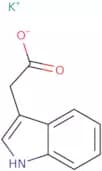
CAS :Plant hormone of the auxin class; promotes root growthFormule :C10H8NO2·KDegré de pureté :Min. 95%Couleur et forme :White PowderMasse moléculaire :213.27 g/molα-Me-D-Leu-OH
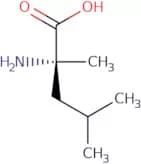
CAS :<p>a-Me-D-Leu-OH is a versatile building block that is used as a reagent in the synthesis of complex compounds, research chemicals, and speciality chemicals. It is also a useful scaffold for drug design. This chemical is also widely used as an intermediate in organic syntheses.</p>Formule :C7H15NO2Degré de pureté :Min. 95%Couleur et forme :PowderMasse moléculaire :145.2 g/mol3-Hydroxy-3-methyl-2,3-dihydro-1H-indol-2-one
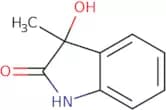
CAS :<p>3-Hydroxy-3-methyl-2,3-dihydro-1H-indol-2-one is a methylindole that is excreted in urine. It and its metabolites are produced from the metabolism of indolecarboxylic acid. 3-Hydroxy-3-methyl-2,3-dihydro-1H-indol-2-- one is a precursor to the synthesis of many other compounds through oxidation reactions. 3HMID may be involved in cell physiology and skatole production. It also participates in the metabolism of other compounds such as anthranilic acid, salicylic acid, and hydroxy group. 3HMID has been found to be an exogenous compound in skatole production.</p>Formule :C9H9NO2Degré de pureté :Min. 95%Couleur et forme :PowderMasse moléculaire :163.17 g/molMethyl 5-nitrosalicylate
CAS :Methyl 5-nitrosalicylate is a chemical compound that belongs to the group of 4-hydroxycoumarin derivatives. It is an inhibitor of the reaction between salicylic acid and nitrous acid, inhibiting the formation of 5-nitrosalicylic acid. Methyl 5-nitrosalicylate has shown inhibitory activity against various nitro compounds, including benzofurans. The inhibitory effect on oxidation reactions may be due to its ability to act as a ligand and form coordination complexes with metal ions such as copper, zinc, and iron. Methyl 5-nitrosalicylate also has anti-inflammatory properties that are due to its ability to inhibit prostaglandin synthesis by blocking cyclooxygenase enzyme activity. Methyl 5-nitrosalicylate can be synthesized in a few ways. One method includes reacting methyl salicylate with nitrous acid in the presence of lightFormule :C8H7NO5Degré de pureté :Min. 95%Couleur et forme :PowderMasse moléculaire :197.14 g/mol4-Hydroxybenzamide
CAS :<p>4-Hydroxybenzamide is a fatty acid with the hydroxyl group at the 4 position. It has been shown to inhibit the activity of human protein by interfering with hydrogen bonding and amide formation. The chemical structures of 4-hydroxybenzamide have been studied by electrochemical impedance spectroscopy (EIS) and found to be a competitive inhibitor of 1-hydroxy-2-naphthoic acid, an adenosine receptor antagonist, and p-hydroxybenzoic acid. This compound has also been shown to be acutely toxic in rats at high doses.</p>Formule :C7H7NO2Degré de pureté :90%Couleur et forme :PowderMasse moléculaire :137.14 g/mol2-Methyl-3-nitrobenzoic acid
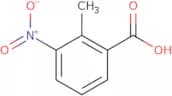
CAS :<p>2-Methyl-3-nitrobenzoic acid is a diketone that is used as a synthetic building block for the synthesis of fatty acid esters. This compound is also used to normalize butyric acid levels in blood, and has been shown to inhibit the formation of coumarin derivatives from nitrosalicylic acid. 2-Methyl-3-nitrobenzoic acid is an organic molecule with a molecular weight of 128.17 g/mol, and has four functional groups: two methyl groups, one carboxyl group, and one phenyl group. The compound reacts with a solution containing nitrite ions in an acidic environment to form nitrous acid (HONO) and 2-methylene-3-nitrobenzaldehyde (2MNB). 2MNB is soluble in water and has a solubility data of 0.0012 g/100 mL at 25 degrees Celsius.</p>Formule :C8H7NO4Degré de pureté :Min. 98 Area-%Couleur et forme :PowderMasse moléculaire :181.15 g/molMethyl 4-fluorobenzoate
CAS :<p>Methyl 4-fluorobenzoate is a potent inhibitor of human cancer cells. It inhibits tyrosine kinases by binding to an imidazole group and forms a ruthenium complex in the presence of sodium carbonate. Methyl 4-fluorobenzoate has shown inhibitory activity against the amination reaction catalyzed by sulfoxide reductase, which is important for the synthesis of nucleic acids. This inhibition may be due to its ability to reduce oxidized species of thiols, sulfoxides, and disulfides. Further studies are needed to elucidate the mechanism by which methyl 4-fluorobenzoate interacts with redox potentials and functional theory.</p>Formule :C8H7FO2Degré de pureté :Min. 95%Couleur et forme :Colorless Clear LiquidMasse moléculaire :154.14 g/mol1-(3-Sulfopropyl)pyridinium inner salt
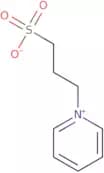
CAS :1-(3-Sulfopropyl)pyridinium inner salt (1SP) is a molecule that has been shown to bind to DNA. It is a potential drug target for the treatment of cancer, as it can cause cell lysis. 1SP binds to dsDNA and prevents the formation of stable base pairs, which leads to the lysis of cells. 1SP also has an effector protein activity that stimulates colony-stimulating factor production and induces apoptosis in human cells. This molecule has been shown to be effective against antimicrobial resistance bacteria such as methicillin resistant Staphylococcus aureus (MRSA). 1SP is capable of lysing bacterial cells in a process identical to that seen with mammalian cells. The mechanism by which this occurs is not yet clear but may involve surface methodology or sample preparation, both factors that have yet to be determined.Formule :C8H11NO3SDegré de pureté :(Hplc) Min. 99%Couleur et forme :White Off-White PowderMasse moléculaire :201.24 g/mol

![5H,6H,7H-Cyclopenta[b]pyridin-2-amine](/_next/image/?url=https%3A%2Fstatic.cymitquimica.com%2Fproducts%2F3D%2Fthumb-webp%2FWFA33119.webp&w=3840&q=75)

![5-[(Pyrrolidin-3-yl)methyl]-1H-1,2,3,4-tetrazole hydrochloride](/_next/image/?url=https%3A%2Fstatic.cymitquimica.com%2Fproducts%2F3D%2Fthumb-webp%2FNKD27200.webp&w=3840&q=75)