


Building Blocks
Cette section contient des produits fondamentaux pour la synthèse de composés organiques et biologiques. Building blocks sont les matériaux de départ essentiels utilisés pour construire des molécules complexes à travers diverses réactions chimiques. Ils jouent un rôle crucial dans la découverte de médicaments, la science des matériaux et la recherche chimique. Chez CymitQuimica, nous offrons une gamme diversifiée de building blocks de haute qualité pour soutenir vos recherches innovantes et projets industriels, en vous assurant de disposer des composants essentiels pour une synthèse réussie.
Sous-catégories appartenant à la catégorie "Building Blocks"
- Acides boroniques et dérivés de l'acide boronique(5.778 produits)
- Building Blocks Chiraux(1.243 produits)
- Building Blocks Hydrocarbonés(6.097 produits)
- Building Blocks organiques(61.052 produits)
201390 produits trouvés pour "Building Blocks"
Trier par
Degré de pureté (%)
0
100
|
0
|
50
|
90
|
95
|
100
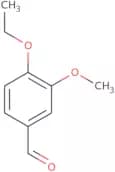
4-Ethoxy-3-methoxybenzaldehyde
CAS :<p>4-Ethoxy-3-methoxybenzaldehyde is an organic compound that can be found in plants, such as in the leaves of the nutmeg plant. It is a cleavage product of 4-hydroxycoumarin. 4-Ethoxy-3-methoxybenzaldehyde is a dicarboxylic acid by substructure and it has been shown to be an intermediate in the synthesis of ethylene acetal and hydrogen peroxide. It is also postulated to react with chloride to form 4-chloroacetophenone and chloride ions, which are then reacted with hydrogen peroxide to form hydrochloric acid. The acute toxicity of this compound has not been determined but it may cause toxic effects on extracellular cells, such as radical species. The toxicities of 4-ethoxy-3-methoxybenzaldehyde have been observed in biphenyl which causes skin irritation, liver toxicity, kidney damage, and respiratory irritation</p>Formule :C10H12O3Degré de pureté :Min. 95%Couleur et forme :PowderMasse moléculaire :180.2 g/molBis(trifluoromethane)sulfonimide lithium salt
CAS :Please enquire for more information about Bis(trifluoromethane)sulfonimide lithium salt including the price, delivery time and more detailed product information at the technical inquiry form on this pageFormule :C2F6LiNO4S2Masse moléculaire :287.09 g/molRef: 3D-Q-101273
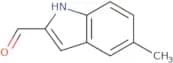
1kgÀ demander5kgÀ demander250gÀ demander500gÀ demander2500gÀ demander-Unit-kgkgÀ demander5-Methyl-1H-indole-2-carbaldehyde
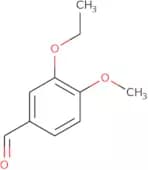
CAS :<p>Versatile small molecule scaffold</p>Formule :C10H9NODegré de pureté :Min. 95%Masse moléculaire :159.18 g/mol3-Ethoxy-4-methoxybenzaldehyde
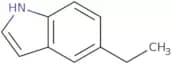
CAS :3-Ethoxy-4-methoxybenzaldehyde is a metabolite of the benzoquinone and 3-hydroxypropanoic acid pathway. It is an electron donor that serves as a substrate for fatty acid synthesis. This compound has been shown to have antiviral properties, as it inhibits the replication of influenza virus in vitro by interfering with viral RNA polymerase. It may also act as a regulatory molecule for uptake, although its precise role in this process is not yet known. 3-Ethoxy-4-methoxybenzaldehyde has been shown to be an optimal reactant with signal sequences from proteins, including biochemical pathways such as glycolysis and pentose phosphate shunt.Formule :C10H12O3Degré de pureté :Min. 95%Couleur et forme :White PowderMasse moléculaire :180.2 g/mol5-Ethylindole
CAS :5-Ethylindole is a granulatimide that is synthesized by the cross-coupling of ethylene and copper chromite in the presence of solvents and magnesium. The chemical reactions are performed at temperatures between room temperature and 50°C, depending on the desired product. 5-Ethylindole is used as an intermediate for other chemicals such as pharmaceuticals, fungicides, dyes, and pesticides. It can be used to produce chloroethanol, which is used in the synthesis of numerous compounds including pharmaceuticals and plastics. Chromatographic techniques are often used to isolate 5-Ethylindole from mixtures with other chemicals.Formule :C10H11NDegré de pureté :Min. 95%Masse moléculaire :145.2 g/molBenzyl methyl ether
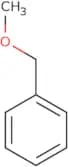
CAS :<p>Benzyl methyl ether is a colorless liquid with a sweet odor. It is used as an organic solvent in chemical reactions and as a solvent in the synthesis of pharmaceuticals, dyes, pesticides, and other organic compounds. Benzyl methyl ether has been shown to react with oxygen and light to produce benzoic acid. The reaction between benzyl methyl ether and glycol ether can be used for sample preparation prior to analysis using gas chromatography-mass spectrometry (GC-MS). GC-MS is often used for the identification of unknown substances in environmental samples. Benzyl methyl ether can also be used for chemical ionization (CI) in mass spectrometry.</p>Formule :C8H10ODegré de pureté :Min. 95%Masse moléculaire :122.17 g/mol4-Ethoxy-3-hydroxybenzaldehyde
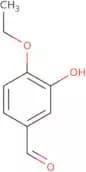
CAS :<p>4-Ethoxy-3-hydroxybenzaldehyde (4EHB) is a thioacetal that has been shown to be an effective precursor for the synthesis of many other molecules, such as combretastatin a-4. It is prepared by reaction of ethylmagnesium bromide and acetone. 4EHB has been shown to have antifungal properties in vitro, and can be used in the treatment of cancer cells. This compound is volatile and can be easily detected with headspace techniques. The functional group of this molecule is an alcohol group, which is found on the ring structure. Spectroscopic analysis shows that it has a carbonyl group with an OH group attached to it.</p>Formule :C9H10O3Degré de pureté :Min. 95%Couleur et forme :Colorless PowderMasse moléculaire :166.17 g/mol5-Bromoindole-2-carboxylic acid ethyl ester
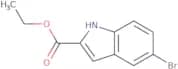
CAS :5-Bromoindole-2-carboxylic acid ethyl ester (5-BIEC) is a carboxamide antibiotic that inhibits the growth of gram-negative bacteria, including pneumoniae. 5-BIEC has been shown to have an inhibitory concentration (IC50) of 0.9 μM against Escherichia coli and other gram negative bacteria. It also has anti-proliferative effects on cancer cells, which may be due to its ability to inhibit DNA replication by binding to the beta subunit of DNA gyrase. 5-BIEC is currently being studied as a potential anticancer drug for the treatment of breast cancer, colon cancer, and leukemia.Formule :C11H10BrNO2Degré de pureté :Min. 98 Area-%Couleur et forme :PowderMasse moléculaire :268.11 g/molFuran-2-sulfonamide
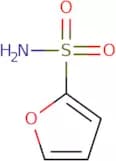
CAS :Furan-2-sulfonamide is a quinoline derivative that prevents HIV from entering the host cell. It inhibits the activation of toll-like receptor (TLR) by blocking the binding of TLR ligands to their receptors. Furan-2-sulfonamide has been shown to be effective in reducing inflammation in inflammatory bowel disease, inflammatory diseases, and pancreatitis. Furan-2-sulfonamide may also have anti-cancer effects by inhibiting the growth of cancer cells and inducing apoptosis. Furan-2-sulfonamide can be used as a part of pharmaceutical preparations for treating symptoms such as pain, nausea, vomiting, or diarrhea. This drug also inhibits matrix metalloproteinases (MMP), which are enzymes that break down collagen in the body. The inhibition of MMP leads to decreased breakdown of skin or bladder tissue and increased healing time in patients with these conditions.Formule :C4H5NO3SDegré de pureté :Min. 95%Couleur et forme :PowderMasse moléculaire :147.15 g/mol3-Phenylbutan-2-one
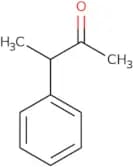
CAS :<p>3-Phenylbutan-2-one is a volatile oil that possesses bactericidal activity. 3-Phenylbutan-2-one has been shown to inhibit the growth of Enterobacter aerogenes and Bacillus subtilis at high concentrations by hydrogen bonding with the enzyme enolate anion, which is involved in the synthesis of fatty acids. 3-Phenylbutan-2-one also inhibits nitro group formation and ether extract production through steric interactions, thereby preventing bacterial cell wall synthesis. The antibacterial mechanism of 3-phenylbutan-2-one is due to its ability to react with steroid glycosides in intramolecular hydrogen transfer reactions.</p>Formule :C10H12ODegré de pureté :Min. 95%Couleur et forme :Clear LiquidMasse moléculaire :148.2 g/mol(3-Aminopropyl)(sulfamoyl)amine hydrochloride
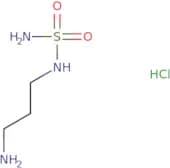
CAS :Versatile small molecule scaffoldFormule :C3H12ClN3O2SDegré de pureté :Min. 95%Couleur et forme :PowderMasse moléculaire :189.67 g/mol7-Ethylindole
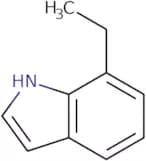
CAS :7-Ethylindole is a fatty acid with a cationic surfactant that belongs to the group of mesoporous materials. It has been synthesized by using chromatographic method and sample preparation techniques. The synthetic process is based on the protonation of 7-ethylindole. It undergoes dehydrogenation and activation energy, which is programmed in copper chromite. The chemical compositions are chloride, hydrogenated, and activated 7-ethylindole.Formule :C10H11NDegré de pureté :Min. 95%Masse moléculaire :145.2 g/mol(4-Azidophenyl)methanol
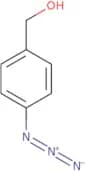
CAS :<p>4-Azidophenylmethanol is a nucleophilic amine that can be synthesized from the reaction of an azide with a methoxide. 4-Azidophenylmethanol can be used to generate nitro groups in organic synthesis. It has also been shown to have cytotoxic activity against prostate cancer cells and malignant brain cancer. 4-Azidophenylmethanol also has the ability to react with squamous carcinoma cells, forming methides and causing cell death. This chemical is stable at low temperatures and does not react with water.</p>Formule :C7H7N3ODegré de pureté :Min. 95%Couleur et forme :PowderMasse moléculaire :149.15 g/molEthyl 4-ethoxybenzoate
CAS :Ethyl 4-ethoxybenzoate is an antimicrobial agent that inhibits bacterial growth by interfering with the synthesis of DNA. It also has a genotoxic potential and can induce mutations in cells. Ethyl 4-ethoxybenzoate is used as an impurity in pharmaceutical drug production, such as solanum tuberosum extract, to prevent microbial contamination. It also has been shown to inhibit the growth of bacteria in cell cultures by binding to DNA and inhibiting DNA replication. Ethyl 4-ethoxybenzoate is used as a control agent for the detection of antibiotics in natural products, such as ethanol extracts from plants.Formule :C11H14O3Degré de pureté :Min. 97.5 Area-%Couleur et forme :Colorless Clear LiquidMasse moléculaire :194.23 g/mol3-Cyclohexyl-1,1-dimethylurea
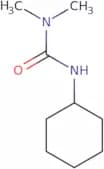
CAS :<p>3-Cyclohexyl-1,1-dimethylurea is a chemical compound that can be used in industrial processes. It is stable and controllable, but must be handled with care as it reacts with water. The compound does not react with cariprazine or any other drugs at room temperature. 3-Cyclohexyl-1,1-dimethylurea has been shown to be an effective reagent for the synthesis of amides from carboxylic acids.</p>Formule :C9H18N2ODegré de pureté :Min. 95%Couleur et forme :PowderMasse moléculaire :170.25 g/molEthyl 3,4,5-trimethoxycinnamate
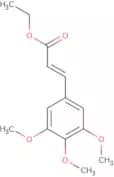
CAS :<p>Ethyl 3,4,5-trimethoxycinnamate is a cinnamic acid derivative that has significant cytotoxicity and anticancer activity. It inhibits the growth of Leishmania parasites by inhibiting the production of gamma-aminobutyric acid, which is essential for cell division and survival. Ethyl 3,4,5-trimethoxycinnamate has been shown to inhibit the growth of cancer cells in vitro by binding to DNA at dipole sites and disrupting the integrity of the molecule. This compound also has optical properties that may be due to its ability to absorb light in the blue region of the spectrum. The anti-cancer effects of ethyl 3,4,5-trimethoxycinnamate may be related to its ability to inhibit cell growth.</p>Formule :C14H18O5Degré de pureté :Min. 95%Couleur et forme :SolidMasse moléculaire :266.29 g/molTrimethylpyruvic acid
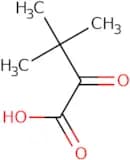
CAS :<p>Trimethylpyruvic acid is an organic compound that is a colorless liquid with a strong odor. It is produced by the oxidation of l-tert-leucine with hydrogen peroxide in the presence of sodium hydroxide. The molecule is chiral, which means it can exist as two different forms that have different physical and chemical properties. Trimethylpyruvic acid can be used for the synthesis of other molecules, including amides, carboxylic acids, and nucleotides. It also has photochemical properties and can be used in reactions that require heating or light.</p>Formule :C6H10O3Degré de pureté :Min. 95%Couleur et forme :Clear LiquidMasse moléculaire :130.14 g/molEthyl 3-hydroxybenzoate
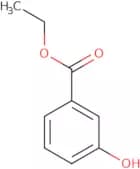
CAS :Ethyl 3-hydroxybenzoate is a preservative that has been shown to be effective against a variety of microorganisms, including gram-positive and gram-negative bacteria. It has been shown to bind with iron, which prevents it from interacting with tyrosinase, an enzyme necessary for the production of melanin. Ethyl 3-hydroxybenzoate also inhibits the activity of benzodiazepine receptor, which reduces the effects of benzodiazepines in the brain. This compound is used in some cosmetics as an antimicrobial agent and cosmetic preservative. The molecular descriptors for this compound are: Molecular Weight=165.07; Log P=0.5; H-bond acceptor count=3; H-bond donor count=2; rotatable bond count=2; hydrogen bond acceptor count=1; hydrogen bond donor count=2; polar surface area=79.90 Å2Formule :C9H10O3Degré de pureté :Min. 98.5 Area-%Couleur et forme :White PowderMasse moléculaire :166.17 g/mol3-tert-Butyl-4-hydroxybenzoic acid
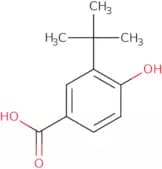
CAS :3-tert-Butyl-4-hydroxybenzoic acid is a phenolic compound that is found in the plant species of "Solanum xanthocarpum". It has antioxidant properties and has been shown to have anticancer activity in vitro. 3-tert-Butyl-4-hydroxybenzoic acid also inhibits the growth of human colon carcinoma cells. It is soluble in organic solvents and homopolymers at high temperatures, but insoluble at lower temperatures.Formule :C11H14O3Degré de pureté :Min. 95%Couleur et forme :PowderMasse moléculaire :194.23 g/mol4-Methoxy-6-methyl-2H,5H,6H,7H,8H-[1,3]dioxolo[4,5-G]isoquinoline
CAS :4-Methoxy-6-methyl-2H,5H,6H,7H,8H-[1,3]dioxolo[4,5-G]isoquinoline is an electron donor that has been shown to have an excitatory effect on cells. It has been used for the treatment of cancer and other diseases. 4-Methoxy-6-methyl-2H,5H,6H,7H,8H-[1,3]dioxolo[4,5-G]isoquinoline has been shown to have a cavity inhibiting effect in mice and also inhibits the growth of tumor cells in rats. This drug has been evaluated for clinical use in humans and is available as a granule formulation. The particle size of 4-Methoxy-6-methyl-2H,5H,6H,7H,8H-[1,3]dioxolo[4,5-G]Formule :C12H15NO3Degré de pureté :Min. 95%Couleur et forme :PowderMasse moléculaire :221.25 g/mol



![4-Methoxy-6-methyl-2H,5H,6H,7H,8H-[1,3]dioxolo[4,5-G]isoquinoline](/_next/image/?url=https%3A%2Fstatic.cymitquimica.com%2Fproducts%2F3D%2Fthumb-webp%2FAAA55010.webp&w=3840&q=75)