Building Blocks
Cette section contient des produits fondamentaux pour la synthèse de composés organiques et biologiques. Building blocks sont les matériaux de départ essentiels utilisés pour construire des molécules complexes à travers diverses réactions chimiques. Ils jouent un rôle crucial dans la découverte de médicaments, la science des matériaux et la recherche chimique. Chez CymitQuimica, nous offrons une gamme diversifiée de building blocks de haute qualité pour soutenir vos recherches innovantes et projets industriels, en vous assurant de disposer des composants essentiels pour une synthèse réussie.
Sous-catégories appartenant à la catégorie "Building Blocks"
- Acides boroniques et dérivés de l'acide boronique(5.778 produits)
- Building Blocks Chiraux(1.243 produits)
- Building Blocks Hydrocarbonés(6.098 produits)
- Building Blocks organiques(61.057 produits)
200710 produits trouvés pour "Building Blocks"
Trier par
Degré de pureté (%)
0
100
|
0
|
50
|
90
|
95
|
100
3-(2-Methoxyphenyl)propionic Acid
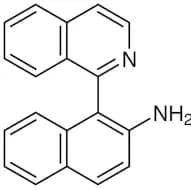
CAS :Formule :C10H12O3Degré de pureté :>98.0%(GC)(T)Couleur et forme :White to Almost white powder to crystalMasse moléculaire :180.201-(2-Amino-1-naphthyl)isoquinoline
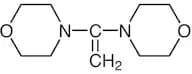
CAS :Formule :C19H14N2Degré de pureté :>98.0%(T)Couleur et forme :White to Orange to Green powder to crystalMasse moléculaire :270.341,1-Bis(morpholino)ethylene
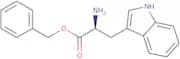
CAS :Formule :C10H18N2O2Degré de pureté :>97.0%(GC)(T)Couleur et forme :White to Orange to Green powder to lumpMasse moléculaire :198.27L-Tryptophan benzyl ester
CAS :<p>L-Tryptophan benzyl ester is an angiotensin converting enzyme (ACE) inhibitor that is used as a deodorant. It inhibits the action of ACE, which leads to the formation of angiotensin II and a decrease in blood pressure. L-Tryptophan benzyl ester also prevents the formation of metastases and reduces the risk of cancer cells spreading to other parts of the body. This drug also has solvating properties, which may lead to its ability to inhibit enzymes such as catalase and isomerase. L-Tryptophan benzyl ester has been shown to have antithrombotic effects by inhibiting platelet aggregation and reducing blood clotting time. The geometric isomers of this compound have different plasma concentrations than the optical isomers because they are not metabolised in the same way in humans.</p>Formule :C18H18N2O2Degré de pureté :Min. 95%Couleur et forme :White To Off-White SolidMasse moléculaire :294.35 g/mol3-Aminoquinuclidine dihydrochloride
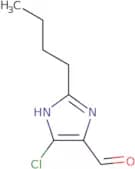
CAS :<p>3-Aminoquinuclidine dihydrochloride (3-AQDH) is a chiral quinuclidine derivative that is an acetylcholine receptor agonist. It has been shown to bind to the α7 nicotinic acetylcholine receptor with high affinity and selectivity. 3-AQDH has also been shown to crosslink the cholinergic receptor, which may lead to increased sensitivity of the receptor. The binding constants between 3-AQDH and the α7 nicotinic acetylcholine receptors are very high and it has been shown to be enantiopure in its synthesis. 3-AQDH also has a hydrophilic interaction chromatography profile, which separates it from other compounds. This agent may have potential use as a drug for treating Alzheimer's disease and Parkinson's disease due to its ability to inhibit acetylcholinesterase activity.</p>Degré de pureté :Min. 95%Couleur et forme :PowderMasse moléculaire :199.12 g/mol2-Butyl-4-chloro-1H-imidazole-5-carboxaldehyde
CAS :Glyoxal is a chemical compound that has shown to have bactericidal activity against human pathogens such as Mycobacterium tuberculosis, Helicobacter pylori, and Staphylococcus aureus. It is used in the synthesis of heterocyclic amines and can be found as an impurity in imidazole derivatives. Glyoxal is a broad-spectrum antimicrobial that has been shown to inhibit the growth of fungi and bacteria by reacting with functional groups on the microorganisms' cell walls. It reacts with bacterial cell walls by forming an intermediate molecule, which reacts with other molecules present in the microorganism's environment to form carbon dioxide, water, and glyoxal. The reaction time for glyoxal depends on temperature; higher temperatures will result in faster reactions. Techniques used to synthesize glyoxal include dehydration of oximes or by reaction with phosphorus oxychloride.Formule :C8H11ClN2ODegré de pureté :Min. 95%Couleur et forme :PowderMasse moléculaire :186.64 g/mol2-(Bromomethyl)-3-nitrobenzoic acid methyl ester
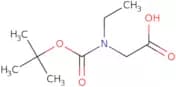
CAS :<p>2-(Bromomethyl)-3-nitrobenzoic acid methyl ester is a synthetic compound that is a byproduct of ammonium nitrate production. It is prepared by the reaction of 2-methyl-3-nitrobenzoic acid with bromine and methanol in the presence of palladium catalyst. The product is used to synthesize l-glutamic acid, which has many applications in industry.</p>Formule :C9H8BrNO4Degré de pureté :Min. 98 Area-%Couleur et forme :Off-White PowderMasse moléculaire :274.07 g/molBoc-N-Ethylglycine
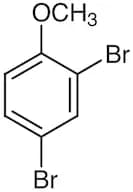
CAS :<p>Building block</p>Formule :C9H17NO4Degré de pureté :Min. 95%Couleur et forme :White PowderMasse moléculaire :203.24 g/mol2,4-Dibromoanisole
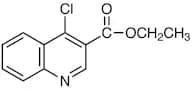
CAS :Formule :C7H6Br2ODegré de pureté :>98.0%(GC)Couleur et forme :White to Light yellow to Light red powder to crystalMasse moléculaire :265.93Ethyl 4-Chloroquinoline-3-carboxylate
CAS :Formule :C12H10ClNO2Degré de pureté :>98.0%(GC)(T)Couleur et forme :White to Orange to Green powder to crystalMasse moléculaire :235.673-Benzylthiazolium Bromide
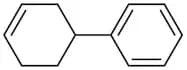
CAS :Formule :C10H10BrNSDegré de pureté :>98.0%(T)(HPLC)Couleur et forme :White to Light yellow powder to crystalMasse moléculaire :256.164-Phenyl-1-cyclohexene
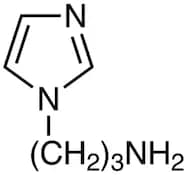
CAS :Formule :C12H14Degré de pureté :>96.0%(GC)Couleur et forme :Colorless to Light yellow to Light orange clear liquidMasse moléculaire :158.241-(3-Aminopropyl)imidazole
CAS :Formule :C6H11N3Degré de pureté :>97.0%(GC)Couleur et forme :Colorless to Almost colorless clear liquidMasse moléculaire :125.183-Bromo-5-hydroxypyridine
CAS :<p>3-Bromo-5-hydroxypyridine is a nicotinic acetylcholine receptor ligand that has been shown to be an analog of acetylcholine. It binds to the nicotinic acetylcholine receptors, which are found in the neuromuscular junction and autonomic ganglia. 3-Bromo-5-hydroxypyridine can be used as a probe for studying the function of acetylcholine receptors. This drug has also been shown to have anti-tumor activity in vivo and to inhibit the growth of tumor cells in vitro. 3-Bromo-5-hydroxypyridine inhibits cancer cell proliferation by binding to the cholinergic receptor on tumor cells and interfering with its function.</p>Formule :C5H4BrNODegré de pureté :Min. 95%Couleur et forme :PowderMasse moléculaire :174 g/mol6-Methyl-4-chromanone
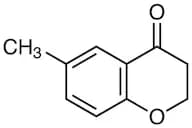
CAS :Formule :C10H10O2Degré de pureté :>98.0%(GC)Couleur et forme :White to Almost white powder to lumpMasse moléculaire :162.193-Methyl-N-methylbenzylamine
CAS :Formule :C9H13NDegré de pureté :>97.0%(GC)Couleur et forme :Colorless to Light yellow to Light orange clear liquidMasse moléculaire :135.21p-Xylylene Dithiocyanate
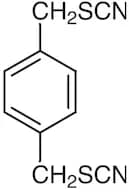
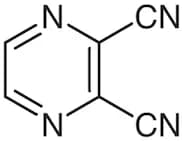
CAS :Formule :C10H8N2S2Degré de pureté :>98.0%(GC)Couleur et forme :White to Almost white powder to crystalineMasse moléculaire :220.312,3-Dicyanopyrazine
CAS :Formule :C6H2N4Degré de pureté :>99.0%(GC)Couleur et forme :White to Light yellow to Light orange powder to crystalMasse moléculaire :130.11Heptylnonyl Adipate (so called) [Plasticizer]
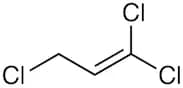
CAS :Degré de pureté :mixture of Heptylnonyl adipate, Diheptyl adipate, Dinonyl adipate(GC)Couleur et forme :Colorless to Almost colorless clear liquid1,1,3-Trichloro-1-propene
CAS :Formule :C3H3Cl3Degré de pureté :>98.0%(GC)Couleur et forme :Colorless to Light yellow clear liquidMasse moléculaire :145.41








![Heptylnonyl Adipate (so called) [Plasticizer]](/_next/image/?url=https%3A%2Fstatic.cymitquimica.com%2Fproducts%2F3B%2Fthumb-webp%2FA1388.webp&w=3840&q=75)