Building Blocks
Cette section contient des produits fondamentaux pour la synthèse de composés organiques et biologiques. Building blocks sont les matériaux de départ essentiels utilisés pour construire des molécules complexes à travers diverses réactions chimiques. Ils jouent un rôle crucial dans la découverte de médicaments, la science des matériaux et la recherche chimique. Chez CymitQuimica, nous offrons une gamme diversifiée de building blocks de haute qualité pour soutenir vos recherches innovantes et projets industriels, en vous assurant de disposer des composants essentiels pour une synthèse réussie.
Sous-catégories appartenant à la catégorie "Building Blocks"
- Acides boroniques et dérivés de l'acide boronique(5.778 produits)
- Building Blocks Chiraux(1.243 produits)
- Building Blocks Hydrocarbonés(6.098 produits)
- Building Blocks organiques(61.057 produits)
200710 produits trouvés pour "Building Blocks"
Trier par
Degré de pureté (%)
0
100
|
0
|
50
|
90
|
95
|
100
2-Methyl-4-nitropyridine-N-oxide
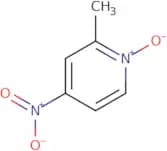
CAS :<p>2-Methyl-4-nitropyridine-N-oxide is an alkoxy radical that is a toxic chemical. It is used in the synthesis of other chemicals and drugs, as well as in diagnostic tests. 2-Methyl-4-nitropyridine-N-oxide is converted to its n-oxide form by hydrochloric acid. The molecule has two functionalities: one nucleophilic and one electrophilic. These functionalities allow it to undergo reactions with many different types of molecules, including ethylene acetal.</p>Formule :C6H6N2O3Degré de pureté :Min. 95%Couleur et forme :Yellow PowderMasse moléculaire :154.13 g/mol4-(4-Pyridyl)benzaldehyde
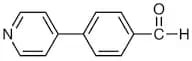
CAS :Formule :C12H9NODegré de pureté :>98.0%(GC)Couleur et forme :White to Orange to Green powder to crystalMasse moléculaire :183.21(S)-(-)-2-Acetoxypropionic Acid
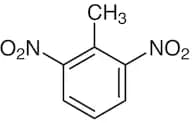
CAS :Formule :C5H8O4Degré de pureté :>98.0%(T)Couleur et forme :Colorless to Almost colorless clear liquidMasse moléculaire :132.122,6-Dinitrotoluene
CAS :Formule :C7H6N2O4Degré de pureté :>99.0%(GC)Couleur et forme :White to Orange to Green powder to crystalMasse moléculaire :182.142'-Hydroxy-4',5'-dimethylacetophenone
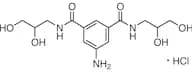
CAS :2'-Hydroxy-4',5'-dimethylacetophenone is a chalcone that is structurally similar to the catecholamines. It has been shown to inhibit bacterial growth in vitro and in vivo and to be active against both Gram-positive and Gram-negative bacteria. This compound also has antiviral activity, inhibiting the replication of herpes simplex virus type 1 (HSV-1) in cell culture. 2'-Hydroxy-4',5'-dimethylacetophenone also has antibacterial activity against Trichophyton mentagrophytes and Melaleuca alternifolia, an Australian tree that produces a range of bioactive compounds with antimicrobial properties. 2'-Hydroxy-4',5'-dimethylacetophenone binds to the enzyme phosphodiesterase, blocking the conversion of cyclic adenosine monophosphate (cAMP) into its inactive form cAMP hydrolysis product (cAMP). Inhibition of this enzymeFormule :C10H12O2Degré de pureté :Min. 95%Couleur et forme :Off-White To Yellow SolidMasse moléculaire :164.2 g/mol5-Amino-N,N'-bis(2,3-dihydroxypropyl)isophthalamide Hydrochloride
CAS :Formule :C14H21N3O6·HClDegré de pureté :>98.0%(HPLC)(N)Couleur et forme :White to Almost white powder to crystalMasse moléculaire :363.801-(Phenylsulfonyl)-1H-indole
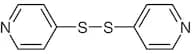
CAS :<p>1-Phenylsulfonyl-1H-indole is a synthetic, non-naturally occurring compound that belongs to the class of indole alkaloids. It is an asymmetrical molecule with a dihedral angle of 12.2° and a molecular weight of 226.11 g/mol. The compound has two benzyl groups that are attached to the phenylsulfonyl group at C4 and C5 positions, which are both hydrogen bonded to the indole group at C3 position. 1-Phenylsulfonyl-1H-indole is used as a starting material in organic reactions. It can be reacted with organolithium reagents to form sulfonamides or with Friedel–Crafts reaction to produce ketones.</p>Formule :C14H11NO2SDegré de pureté :Min. 95%Masse moléculaire :257.31 g/mol4,4'-Dipyridyl Disulfide
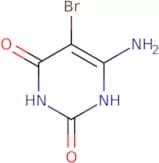
CAS :Formule :C10H8N2S2Degré de pureté :>97.0%(GC)(T)Couleur et forme :White to Light yellow to Light red powder to crystalMasse moléculaire :220.316-Amino-5-bromopyrimidine-2,4(1H,3H)-dione
CAS :6-Amino-5-bromopyrimidine-2,4(1H,3H)-dione (6ABPD) is a purine derivative that functions as an inhibitor of phosphorylase kinase. It has been shown to inhibit tumor growth in vivo and in vitro and is used as a therapeutic agent for the treatment of cancer. 6ABPD inhibits the production of phosphorylase kinase by binding to the enzyme's active site with noncompetitive inhibition. Inhibition of phosphorylase kinase leads to a decrease in the levels of ATP and thus decreases the availability of substrates for tumor cell growth and proliferation. 6ABPD also binds to thymidine kinase and inhibits its activity, which may account for some of its antitumor effects.Formule :C4H4BrN3O2Degré de pureté :Min. 95%Couleur et forme :PowderMasse moléculaire :206 g/mol3-Methyl-N-methylbenzylamine
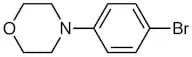
CAS :Formule :C9H13NDegré de pureté :>97.0%(GC)Couleur et forme :Colorless to Light yellow to Light orange clear liquidMasse moléculaire :135.214-(4-Bromophenyl)morpholine
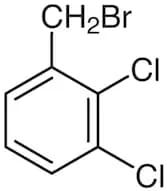
CAS :Formule :C10H12BrNODegré de pureté :>98.0%(GC)(T)Couleur et forme :White to Light yellow to Light orange powder to crystalMasse moléculaire :242.122,3-Dichlorobenzyl Bromide
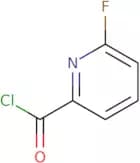
CAS :Formule :C7H5BrCl2Degré de pureté :>98.0%(GC)(T)Couleur et forme :White or Colorless to Light yellow powder to lump to clear liquidMasse moléculaire :239.926-Fluoropyridine-2-carbonyl chloride
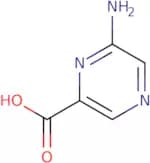
CAS :<p>6-Fluoropyridine-2-carbonyl chloride (6FC) is a versatile building block that is used in the synthesis of complex compounds. It is also a reagent for organic chemistry, research chemicals, and speciality chemicals. 6FC has been shown to be useful as a building block for the preparation of high quality and useful intermediates. The compound reacts with nucleophiles in good yields to produce amines, nitriles, alcohols, and carboxylic acids. 6FC can also be used as a reaction component in organic reactions. It has been shown to be an excellent scaffold for the synthesis of bioactive molecules such as amino acid derivatives and natural products.</p>Formule :C6H3ClFNODegré de pureté :Min. 95%Couleur et forme :White PowderMasse moléculaire :159.55 g/mol6-Amino-2-pyrazinecarboxylic acid
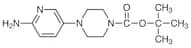
CAS :<p>6-Amino-2-pyrazinecarboxylic acid is a high quality reagent that is used as an intermediate for the synthesis of complex compounds. It is also a useful scaffold for the production of valuable speciality chemicals. This chemical is also used as a reaction component in research and development to produce versatile building blocks. 6-Amino-2-pyrazinecarboxylic acid has been shown to be useful for producing fine chemicals and speciality chemicals, which are often used in many industries.</p>Formule :C5H5N3O2Degré de pureté :Min. 95%Couleur et forme :Yellow To Brown SolidMasse moléculaire :139.11 g/moltert-Butyl 4-(6-Amino-3-pyridyl)piperazine-1-carboxylate
CAS :Formule :C14H22N4O2Degré de pureté :>98.0%(T)(HPLC)Couleur et forme :White to Yellow to Green powder to crystalMasse moléculaire :278.36Heptylnonyl Adipate (so called) [Plasticizer]
CAS :Degré de pureté :mixture of Heptylnonyl adipate, Diheptyl adipate, Dinonyl adipate(GC)Couleur et forme :Colorless to Almost colorless clear liquidAzathioprine
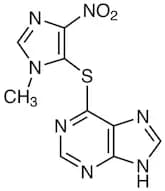
CAS :Formule :C9H7N7O2SDegré de pureté :>98.0%(T)(HPLC)Couleur et forme :Light yellow to Yellow to Green powder to crystalMasse moléculaire :277.26Trimethyl 1,3,5-benzene tricarboxylate
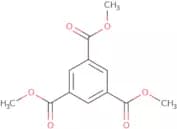
CAS :<p>Trimethyl 1,3,5-benzene tricarboxylate is a chemical compound that belongs to the group of polycarboxylic acids. It is used as a polymerization agent in the manufacture of ionic polymers. The first step in this process is cationic polymerization, which involves the reaction between trimethyl 1,3,5-benzene tricarboxylate and sodium citrate to form an ion pair. This process can be followed by hydrolysis with hydrochloric acid and sodium carbonate to release the carboxylate anion from the polymer chain and regenerate trimethyl 1,3,5-benzene tricarboxylate. Trimethyl 1,3,5-benzene tricarboxylate has been shown to have optical properties that depend on its molecular weight and metal surface interactions. It can also be used as a chelating agent for zinc diethyld</p>Formule :C12H12O6Degré de pureté :Min. 95%Couleur et forme :White PowderMasse moléculaire :252.22 g/mol2,2':6',2'-Terpyridine-4,4',4''-tricarboxylic acid
CAS :<p>2,2':6',2'-Terpyridine-4,4',4''-tricarboxylic acid is a model system that has been studied for its photochemical properties. In this molecule, there are two carboxyl groups and three pyridine rings. The molecule can be protonated easily by electron transfer to form a positively charged anion. This allows the molecule to undergo electron transfer reactions with other molecules in the presence of radiation or visible light. 2,2':6',2'-Terpyridine-4,4',4''-tricarboxylic acid absorbs photons easily and then transfers its energy to a nearby electron. The electron then passes on the energy to another molecule, which can produce a photocurrent.</p>Formule :C18H11N3O6Degré de pureté :Min. 95%Couleur et forme :Brown SolidMasse moléculaire :365.3 g/mol2-Amino-3-bromopyrazine
CAS :<p>2-Amino-3-bromopyrazine is a molecule that belongs to the class of pyrazoles. It has been synthesized and optimised for its diffraction properties. The active conformation of 2-amino-3-bromopyrazine has been determined by xanthate methylation and hydrobromide formation. This molecule has been synthesised using a variety of different methods, including an intramolecular hydrogen transfer reaction with methyl derivatives, as well as the use of xanthates. The physicochemical properties of this molecule have also been studied, yielding some interesting results.</p>Formule :C4H4BrN3Degré de pureté :Min. 95%Couleur et forme :PowderMasse moléculaire :174.01 g/mol






![Heptylnonyl Adipate (so called) [Plasticizer]](/_next/image/?url=https%3A%2Fstatic.cymitquimica.com%2Fproducts%2F3B%2Fthumb-webp%2FA1388.webp&w=3840&q=75)