Building Blocks
Sous-catégories appartenant à la catégorie "Building Blocks"
- Acides boroniques et dérivés de l'acide boronique(5.780 produits)
- Building Blocks Chiraux(1.241 produits)
- Building Blocks Hydrocarbonés(6.100 produits)
- Building Blocks organiques(61.024 produits)
205297 produits trouvés pour "Building Blocks"
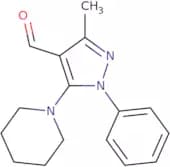
3-Methyl-1-phenyl-5-(piperidin-1-yl)-1H-pyrazole-4-carbaldehyde
CAS :3-Methyl-1-phenyl-5-(piperidin-1-yl)-1H-pyrazole-4-carbaldehyde (MPPC) is a crosslinked polymer that spontaneously forms nanoparticles. The Langmuir isotherm was used to characterize the parameters of this polymer. A chitosan gel, magnetic nanoparticle and thermodynamic techniques were used to study the characteristics of MPPC. The kinetic and endothermic studies were carried out using magnetic nanoparticles. This polymer has been shown to desorb from chitosan gels and magnetic nanoparticles, which can be useful for drug delivery applications.Formule :C16H19N3ODegré de pureté :Min. 95%Masse moléculaire :269.34 g/mol2-[4-(Hydroxymethyl)cyclohex-3-en-1-yl]propan-2-ol
CAS :2-[4-(Hydroxymethyl)cyclohex-3-en-1-yl]propan-2-ol is an isomer of alpha-terpineol. It is the major component of the essential oil from Litsea cubeba, an evergreen tree native to China, Taiwan and Thailand. Alpha-terpineol has been shown to have a broad spectrum of antimicrobial activity against various strains of intestinal bacteria. The methyl group in alpha-terpineol interacts with bacterial 16S ribosomal RNA, inhibiting protein synthesis. Alpha-terpineol also has hydroxylase activity that binds preferentially to hydroxylases in the intestines, which may be responsible for its antimicrobial effects.Formule :C10H18O2Degré de pureté :Min. 95%Masse moléculaire :170.25 g/mol4-Isopropylcyclohexylmethanol
CAS :4-Isopropylcyclohexylmethanol is a synthetic chemical that is used as a fragrance. It is found in plants such as Paeonia suffruticosa and is used in the synthesis of linalool oxide. 4-Isopropylcyclohexylmethanol has been shown to bind to histone proteins, which may have an effect on gene expression. This chemical also has a vapor pressure of 0.0013 mmHg at 25°C and can be detected by electrochemical method at a concentration of 10 ppm. 4-Isopropylcyclohexylmethanol has been shown to react with eugenol in benzene, forming methyl cinnamate and methyl ethyl alkanal.
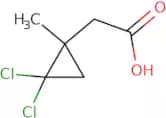
Formule :C10H20ODegré de pureté :Min. 95%Masse moléculaire :156.26 g/mol2-(2,2-Dichloro-1-methylcyclopropyl)acetic acid
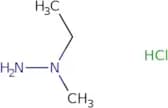
CAS :Versatile small molecule scaffoldFormule :C6H8Cl2O2Degré de pureté :Min. 95%Masse moléculaire :183.03 g/mol1-Ethyl-1-methylhydrazine hydrochloride
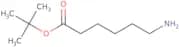
CAS :Versatile small molecule scaffoldFormule :C3H11ClN2Degré de pureté :Min. 95%Masse moléculaire :110.58 g/moltert-Butyl 6-aminohexanoate
CAS :tert-Butyl 6-aminohexanoate is a benzene derivative that is used as a spacer in organic synthesis. It reacts with potassium carbonate to form tert-butyl 6-aminocaproate and tert-butyl 2,6-dinitrophenolate. The tert-butyl group has an amino group at one end and a carboxylic acid group at the other end. This tertiary amine is made by reacting benzene with potassium hydroxide and adding 1-4c alkyl chloride. The tertiary amine functional group is reactive towards electrophilic aromatic substitution reactions, such as nitration or halogenation.
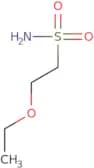
Formule :C10H21NO2Degré de pureté :Min. 95%Masse moléculaire :187.28 g/mol2-Ethoxyethane-1-sulfonamide
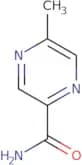
CAS :Versatile small molecule scaffoldFormule :C4H11NO3SDegré de pureté :Min. 95%Masse moléculaire :153.2 g/mol5-Methyl-2-pyrazinecarboxamide
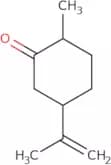
CAS :5-Methyl-2-pyrazinecarboxamide is a synthetic sulfa drug that inhibits the growth of mycobacterium avium, which is a bacterium found in the environment that can cause tuberculosis. 5-Methyl-2-pyrazinecarboxamide has been shown to have potent antitumor activity in tumor cell lines and has been shown to be effective against tuberculosis in mice. This molecule is synthesised from pyrazinoic acid, an organometallic compound, and sulfamethazine. The molecular descriptors obtained from this molecule are used to validate its anticancer activity in other tumor cells. The photophysical properties of this molecule have also been studied extensively.Formule :C6H7N3ODegré de pureté :Min. 95%Masse moléculaire :137.14 g/mol(2R,5R)-2-Methyl-5-(prop-1-en-2-yl)cyclohexan-1-one
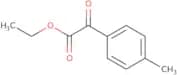
CAS :(2R,5R)-2-Methyl-5-(prop-1-en-2-yl)cyclohexan-1-one is an enantiomer of (2S,5S)-2-methyl-5-(prop-1-en-2-yl)cyclohexan -1 -one. It belongs to the class of saponins and has been shown to have a synergistic effect with glutamic acid in the synthesis of deionized water. It can be used as a test drug for the detection of staphylococcus bacteria.Formule :C10H16ODegré de pureté :Min. 95%Masse moléculaire :152.23 g/molEthyl (4-methylphenyl)(oxo)acetate
CAS :Versatile small molecule scaffoldFormule :C11H12O3Degré de pureté :Min. 95%Masse moléculaire :192.21 g/mol6-Methoxy-1,1-dimethyl-2,3-dihydro-1H-indene
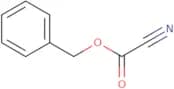
CAS :Versatile small molecule scaffoldFormule :C12H16ODegré de pureté :Min. 95%Masse moléculaire :176.25 g/molBenzyl Cyanoformate
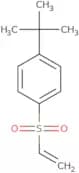
CAS :Benzyl Cyanoformate is a diagnostic agent that is used in the synthesis of amide compounds. It has a structure that includes an active methylene and nitrogen atoms. Benzyl Cyanoformate is synthesized through asymmetric synthesis, which encompasses the use of amines, inhibitors, and solid-phase synthesis. This compound has been shown to inhibit the activity of some receptor proteins by binding to them and preventing their activation, thus acting as an antagonist. Benzyl Cyanoformate binds to the enzyme carboxy with hydrochloric acid as a catalyst. The v600e mutation in K-ras can lead to increased sensitivity to this inhibitor; however, it is not known if this mutation confers sensitivity or resistance to other inhibitors of K-ras.Formule :C9H7NO2Degré de pureté :Min. 95%Masse moléculaire :161.16 g/mol1-tert-Butyl-4-(ethenesulfonyl)benzene
CAS :Versatile small molecule scaffoldFormule :C12H16O2SDegré de pureté :Min. 95%Masse moléculaire :224.32 g/mol1-(Ethenesulfonyl)-4-nitrobenzene
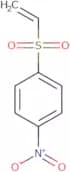
CAS :1-(Ethenesulfonyl)-4-nitrobenzene (1ESNB) is a pyrazoline that has been used as an oxidant in cyclic aliphatic and heterocyclic syntheses. 1ESNB is also used to form phosphate derivatives, which are important in the pharmaceutical industry. 1ESNB can be prepared by the organocatalytic coupling of ethyl sulfone with nitrobenzene. The azomethine ylide can be generated from 1ESNB through oxidation with potassium permanganate or ozone, followed by addition of an aliphatic amine. This reaction gives a quinolinium salt that can be converted to a sulfone using thionyl chloride or oxalyl chloride. A cycloaddition reaction can then convert the sulfone into a biologically active molecule such as methotrexate or daunorubicin.
Formule :C8H7NO4SDegré de pureté :Min. 95%Masse moléculaire :213.21 g/mol(4-Hydroxy-2,6-dimethylpyrimidin-5-yl)acetic acid
CAS :Versatile small molecule scaffoldFormule :C8H10N2O3Degré de pureté :Min. 95%Masse moléculaire :182.18 g/mol3-Amino-5-methyl-1-phenylpyrrolidin-2-one
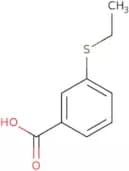
CAS :Versatile small molecule scaffoldFormule :C11H14N2ODegré de pureté :Min. 95%Masse moléculaire :190.24 g/mol3-(Ethylsulfanyl)benzoic acid
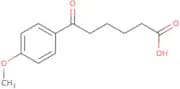
CAS :Versatile small molecule scaffoldFormule :C9H10O2SDegré de pureté :Min. 95%Masse moléculaire :182.24 g/mol6-(4-Methoxyphenyl)-6-oxohexanoic acid
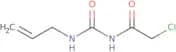
CAS :Versatile small molecule scaffoldFormule :C13H16O4Degré de pureté :Min. 95%Masse moléculaire :236.26 g/mol1-(2-Chloroacetyl)-3-(prop-2-en-1-yl)urea
CAS :Versatile small molecule scaffoldFormule :C6H9ClN2O2Degré de pureté :Min. 95%Masse moléculaire :176.6 g/molEthyl 2-(3-methylpyridin-2-yl)acetate
CAS :Versatile small molecule scaffoldFormule :C10H13NO2Degré de pureté :Min. 95%Masse moléculaire :179.2 g/mol

![2-[4-(Hydroxymethyl)cyclohex-3-en-1-yl]propan-2-ol](/_next/image/?url=https%3A%2Fstatic.cymitquimica.com%2Fproducts%2F3D%2Fthumb-webp%2FFAA50274.webp&w=3840&q=75)