Alcools
Sous-catégories appartenant à la catégorie "Alcools"
5816 produits trouvés pour "Alcools"
(R)-2-Methylbutanol
CAS :(R)-2-Methylbutanol is a volatile pheromone that is produced by both sexes of the avocado tree. It is emitted from the flowers, fruits, and leaves of the plant as well as from wounds on the bark and branches. (R)-2-Methylbutanol has also been identified in other plants such as pine trees. This compound is synthesized in organisms through a cross-coupling reaction and an acetylation reaction. The acetylation reaction involves the addition of an acetyl group to an organic molecule, which may be accomplished using a host plant or synthetic reagents. The cross-coupling reaction involves two molecules that are coupled together by a metal catalyst such as palladium or nickel. In this process, one molecule donates a pair of electrons to another molecule, which accepts them and becomes reduced. This compound has been found to be important for microhabitat selection in some insects because it plays a role in pheromFormule :C5H12ODegré de pureté :Min. 95%Masse moléculaire :88.15 g/molD-Tryptophanol
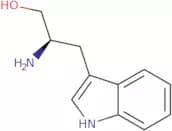
CAS :Produit contrôléD-Tryptophanol is a synthetic, enantiopure, hydroxymethylated tryptamine. It is a maltobionic molecule and it can be prepared by the hydrolysis of L-tryptophan with sodium hydroxide in water. D-Tryptophanol can also be synthesized from 3,4-diaminopyridine in the presence of a base and catalytic amount of copper(II) chloride. The chemical stability of D-tryptophanol has been studied using HPLC methods. Molecular modeling studies have shown that the compound forms hydrogen bonds with its neighboring molecules and has a high affinity for binding to human liver cells. D-Tryptophanol has been found to inhibit cancer cell growth at nanomolar concentrations, making it an attractive candidate for chemotherapeutic drugs. Calixarenes are used as chiral synthons to produce racemic mixtures of D-tryptophanol that could be
Formule :C11H14N2ODegré de pureté :Min. 95%Masse moléculaire :190.24 g/molSodium methanethiolate - 15% aqueous solution
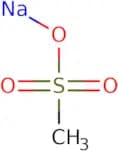
CAS :Sodium methanethiolate is an antimicrobial agent that is a white, crystalline solid. It reacts with trifluoroacetic acid and water to produce the active form of sodium trifluoroacetate. The reaction mechanism is likely due to the formation of a bicyclic heterocycle that has been shown to be effective against a number of bacteria. Sodium methanethiolate has been used for the treatment of infectious diseases, such as respiratory infections and skin infections, as well as autoimmune diseases and cardiovascular disorders. The oxidation catalyst in this compound may also have physiological effects on the body's cells and tissues.Formule :CH3NaSDegré de pureté :Min. 95%Couleur et forme :Clear LiquidMasse moléculaire :70.09 g/molbeta-Alaninol 2-chlorotrityl resin
Please enquire for more information about beta-Alaninol 2-chlorotrityl resin including the price, delivery time and more detailed product information at the technical inquiry form on this pageDegré de pureté :Min. 95%2,2,3,3,4,4-Hexafluoro-1,5-pentanediol
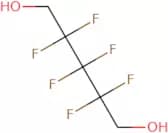
CAS :Produit contrôlé2,2,3,3,4,4-Hexafluoro-1,5-pentanediol is a colorless liquid with a boiling point of 155°C. It is soluble in water and has an odor similar to that of hexane. 2,2,3,3,4,4-Hexafluoro-1,5-pentanediol is used as a chemical intermediate for the production of sodium salts and quaternary ammonium compounds. This substance can be obtained by reacting butanediol with hydrofluoric acid or trifluoromethanesulfonic acid. The most common use of 2,2,3,3,4,4-hexafluoro-1,5-pentanediol is in the synthesis of amines. It also has been used as a solvent for electroplating metals and as a high boiling point solvent in organic reactions. This compound exhibits nucleophilic properties with amines and canFormule :C5H6F6O2Degré de pureté :Min. 95%Masse moléculaire :212.09 g/molBromoform - Stabilized with ethanol
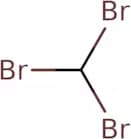
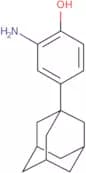
CAS :Bromoform is a colorless, sweet-smelling liquid that was formerly used as an industrial solvent and disinfectant. Bromoform is a potent liver toxin and has been implicated in the development of liver cancer. In animal studies, bromoform causes significant genotoxic effects, including DNA single-strand breaks and chromosomal aberrations. Bromoform also inhibits the activity of enzymes involved in lipid metabolism, which may be due to its ability to bind to proteins in the cell membrane and alter their function. Bromoform is absorbed through the lungs or gastrointestinal tract after inhalation or ingestion. It undergoes rapid metabolism by oxidation followed by conjugation with glutathione, which renders it non-toxic and allows for its elimination from the body.Formule :CHBr3Degré de pureté :Min. 95%Couleur et forme :Clear LiquidMasse moléculaire :252.73 g/mol4-(1-Adamantyl)-2-aminophenol
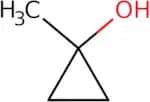
CAS :Please enquire for more information about 4-(1-Adamantyl)-2-aminophenol including the price, delivery time and more detailed product information at the technical inquiry form on this pageFormule :C16H21NODegré de pureté :Min. 95%Masse moléculaire :243.34 g/mol1-Methylcyclopropanol
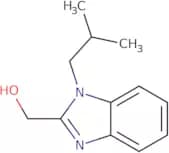
CAS :1-Methylcyclopropanol is a multigram chemical that can be produced on a large scale. It is an organic compound with the molecular formula CH3CCH2OH. It can be synthesized from monomers such as cyclobutanone, amines, and hydrogen bond by ring-opening polymerization to produce polycyclohexane rings. 1-Methylcyclopropanol has been used in the synthesis of polymers such as poly(1-methylcyclopropane). This chemical has also been investigated for use in laser ablation techniques that remove material from surfaces and in laser cutting techniques that cut materials into shapes. 1-Methylcyclopropanol has been found to react with hypobromous acid to form a diol ether product.Formule :C4H8ODegré de pureté :80%MinCouleur et forme :Clear LiquidMasse moléculaire :72.11 g/mol(1-Isobutyl-1H-benzimidazol-2-yl)methanol
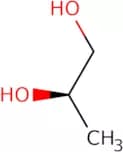
CAS :Produit contrôléPlease enquire for more information about (1-Isobutyl-1H-benzimidazol-2-yl)methanol including the price, delivery time and more detailed product information at the technical inquiry form on this pageFormule :C12H16N2ODegré de pureté :Min. 95%Masse moléculaire :204.27 g/molR-(-)-1,2-Propanediol
CAS :R-(-)-1,2-Propanediol is a diol that is used as an additive in pharmaceutical preparations. It has been shown to inhibit the growth of several genera of bacteria and fungi, including Actinomyces, Bacillus, Clostridium, Corynebacterium, Enterobacteriaceae (Escherichia coli), Lactobacillus, Micrococcus, Mycobacteria (M. tuberculosis), Nocardia, Pseudomonas aeruginosa. R-(-)-1,2-Propanediol also inhibits the production of carbon source from glucose by inhibiting the enzyme pyruvate dehydrogenase which catalyzes the conversion of pyruvate to acetyl coenzyme A. R-(-)-1,2-Propanediol does not show any significant effect on bacterial growth when it is used at concentrations below 100mM. It has been shown that optimal reaction with R-(-)-
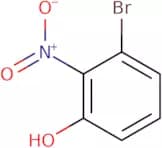
Formule :C3H8O2Degré de pureté :Min. 98 Area-%Couleur et forme :Colorless Clear LiquidMasse moléculaire :76.09 g/mol3-Bromo-2-nitrophenol
CAS :3-Bromo-2-nitrophenol (3-BNP) is a brominating agent that can be used in the synthesis of a variety of compounds. It is prepared by the refluxing of 3-bromo-2-nitrobenzene with lithium chloride, followed by treatment with trifluoromethanesulfonic anhydride to yield 3-bromo-2-(trifluoromethyl)phenoxyacetic acid. The product can also be obtained from 2,4,6-trinitrophenol and NBS. 3-BNP has shown chemoselectivity for chlorides relative to iodides or fluorides. The yields are higher when it is used in coupling reactions and permutations with lithium or magnesium.Formule :C6H4BrNO3Degré de pureté :Min. 95%Masse moléculaire :218 g/mol3,3,3-Trifluoro-1-propanol
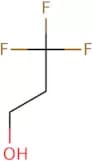
CAS :3,3,3-Trifluoro-1-propanol is a chemical that is used in pharmaceutical dosage formulations. It has a relatively low toxicity and is not readily absorbed through the skin. 3,3,3-Trifluoro-1-propanol has been shown to be an effective inhibitor of fatty acid oxidation and protein synthesis. The structure of this compound consists of three carbon atoms connected by single bonds to one hydrogen atom each and one fluorine atom. This molecule also contains a hydroxyl group at one end and two nitrogen atoms at the other end. These nitrogen atoms are stabilized by intramolecular hydrogen bonds with the hydrogen atoms on the hydroxyl group. 3,3,3-Trifluoro-1-propanol can be used as a cationic polymerization catalyst for perfluoroalkyls and aromatic hydrocarbons.
Formule :C3H5F3ODegré de pureté :Min. 95%Masse moléculaire :114.07 g/molIsoeugenol methyl ether
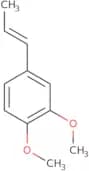
CAS :Isoeugenol methyl ether is a plant-derived natural compound that is used in vitro as an antioxidant. It has been shown to inhibit the activity of enzymes such as hydroxylase, glucuronidase, and cytochrome P450. Isoeugenol methyl ether has also been shown to have anti-inflammatory properties and may be useful for treatment of colorectal adenocarcinoma. The mechanism by which isoeugenol methyl ether inhibits the enzyme activity is not clear but it may be due to its ability to bind reversibly with free enzyme form.Formule :C11H14O2Degré de pureté :Min. 95%Couleur et forme :LiquidMasse moléculaire :178.23 g/mol3-Dehydro retinol
CAS :3-Dehydro retinol is a carotenoid that is found in the skin. It is derived from retinol, and has been shown to have antioxidant properties. 3-Dehydro retinol can be isolated from the fungus Monascus purpureus by chromatographic methods. The enzyme activities of 3-dehydroretinol are not well understood, but it has been hypothesized that chronic exposure to this compound may lead to an increase in cell proliferation or an increase in cell differentiation. 3-Dehydro retinol has also been shown to inhibit the oxidation of other molecules such as hydrogen chloride.
Formule :C20H28ODegré de pureté :90%MinMasse moléculaire :284.44 g/molGanodermanontriol
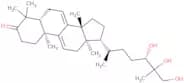
CAS :Produit contrôléGanodermanontriol is a natural compound that is extracted from the roots of Ganderma applanatum. It has potent anticomplement activity and has been shown to have transcriptional regulation activity. Ganodermanontriol binds to DNA with high affinity, which leads to inhibition of transcription and replication. Ganodermanontriol also inhibits the activity of enzymes such as protein kinase C, phosphodiesterase, and phosphatases. This inhibitory effect on these enzymes may be due to its hydroxyl group, which can donate hydrogen bonds.
Formule :C30H48O4Degré de pureté :Min. 95%Masse moléculaire :472.7 g/molRac 1,2-bis-palmitoyl-3-chloropropanediol
CAS :Rac-1,2-bis-palmitoyl-3-chloropropanediol is a dispersive molecule that is composed of a fatty acid and a chlorinated derivative of palmitic acid. It is used to calibrate the mass spectrometer and as an internal standard in quantitative analysis. Rac-1,2-bis-palmitoyl-3-chloropropanediol reacts with electrospray ionization with a dose-dependent response. It has been shown to be toxic to kidney cells at high doses but not at low doses. This chemical has been detected in food samples after being absorbed from the gastrointestinal tract. Rac 1,2-bis-palmitoyl 3 chloropropanediol can be found in the dipalmitate form or as formic acid.
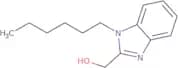
Formule :C35H67ClO4Degré de pureté :95%NmrCouleur et forme :PowderMasse moléculaire :587.36 g/mol(1-Hexyl-1H-benzimidazol-2-yl)methanol
CAS :Produit contrôléPlease enquire for more information about (1-Hexyl-1H-benzimidazol-2-yl)methanol including the price, delivery time and more detailed product information at the technical inquiry form on this pageFormule :C14H20N2ODegré de pureté :Min. 95%Masse moléculaire :232.32 g/mol1-Tetradecanethiol
CAS :1-Tetradecanethiol is a high-resistance, detergent composition that is used in vitro to test the effects of boron nitride. This chemical has been shown to be an effective cross-linking agent for polymers and other materials. It also acts as a viscosity reducer and has low energy requirements. 1-Tetradecanethiol can be used as a cationic surfactant and as a molecule in 3-mercaptopropionic acid.
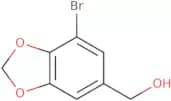
Degré de pureté :Min. 95%(7-bromo-2H-1,3-benzodioxol-5-yl)methanol
CAS :Produit contrôléPlease enquire for more information about (7-bromo-2H-1,3-benzodioxol-5-yl)methanol including the price, delivery time and more detailed product information at the technical inquiry form on this pageDegré de pureté :Min. 95%Masse moléculaire :231.0452-Bromoallyl alcohol
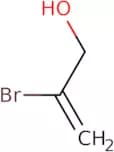
CAS :2-Bromoallyl alcohol is a halogenated aromatic hydrocarbon that is an analyte in the chemical analysis of soil. It is also used as a reagent for the debromination of 2-bromopropane and as a dehalogenating agent for the removal of bromine from organic compounds. 2-Bromoallyl alcohol can be distilled at high temperatures, but it will volatilize if heated to 80°C or higher. It has been reported that 2-bromoallyl alcohol was found to be present in all replicates analyzed. The recovery of this compound ranged from 83% to 114%. 2-Bromoallyl alcohol is used as a reagent in organic synthesis, such as in palladium catalyzed couplings with boronic acids and esters. This compound may also be used to synthesize N-(2-hydroxyethyl)hydroxylamines by reacting with sodium hydroxideFormule :C3H5BrODegré de pureté :Min. 95%Masse moléculaire :136.98 g/mol