Alcools
Les alcools sont une large gamme de molécules organiques dérivées des hydrocarbures et contenant un ou plusieurs groupes hydroxyle (groupe OH). Ces composés sont essentiels dans diverses réactions chimiques et sont largement utilisés en laboratoire pour la synthèse, comme solvants et en chimie analytique. Chez CymitQuimica, nous proposons des alcools de haute qualité préparés pour une utilisation en laboratoire, soutenant vos recherches et applications industrielles avec des produits fiables et efficaces. Notre sélection garantit que vous disposez des alcools adaptés à vos besoins spécifiques, que ce soit pour des travaux de laboratoire de routine ou des projets de recherche spécialisés.
Sous-catégories appartenant à la catégorie "Alcools"
5814 produits trouvés pour "Alcools"
Trier par
Degré de pureté (%)
0
100
|
0
|
50
|
90
|
95
|
100
Eupalinolide A
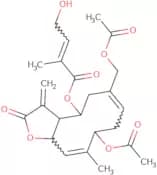
CAS :<p>Eupalinolide A is a sesquiterpene lactone that is extracted from Eupatorium. It has been shown to have anti-inflammatory and antioxidant properties, as well as the ability to activate caspase-9 in cells. This drug also inhibits the production of reactive oxygen species (ROS) by inhibiting mitochondrial membrane potential, which leads to cell death. Eupalinolide A also has the ability to inhibit collagen synthesis and can be used for the treatment of chronic bronchitis, hepatitis, and liver cirrhosis.</p>Formule :C24H30O9Degré de pureté :Min. 95%Masse moléculaire :462.49 g/mol(2-Chloro-4-nitrophenyl)methanol
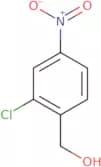
CAS :Please enquire for more information about (2-Chloro-4-nitrophenyl)methanol including the price, delivery time and more detailed product information at the technical inquiry form on this pageFormule :C7H6ClNO3Degré de pureté :Min. 95%Couleur et forme :PowderMasse moléculaire :187.58 g/mol3-Propylphenol
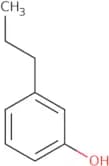
CAS :3-Propylphenol is a naturally occurring fatty acid found in animals and plants. It is used as an industrial chemical and as a solvent for fats, oils, waxes, and resins. 3-Propylphenol has been shown to have a high affinity for caproic acid, which is a fatty acid that can be found in the urine of humans and animals. 3-Propylphenol also has the ability to inhibit methyl ketone formation by diptera during metathesis reactions. This compound is used in the production of industrial chemicals like phenols, acetates, and esters.Formule :C9H12ODegré de pureté :Min. 95%Masse moléculaire :136.19 g/mol5-Methoxyquinoline
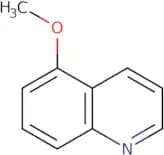
CAS :5-Methoxyquinoline (5MQ) is a chemical compound that belongs to the quinoline derivatives. It has shown anticancer activity in tumor models through a proton-transfer mechanism. 5MQ reacts with an acidic proton, such as the hydronium ion, to produce a reactive intermediate that can react with DNA and other cellular macromolecules. The drug also has been shown to inhibit the growth of bacteria by inhibiting protein synthesis. This inhibition is due to its ability to transfer protons from one molecule to another, which alters the charge distribution on that molecule and prevents it from reacting with other molecules.Formule :C10H9NODegré de pureté :Min. 95%Couleur et forme :LiquidMasse moléculaire :159.18 g/mol2-Phenylphenol
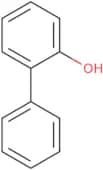
CAS :<p>2-Phenylphenol is a ferrocenecarboxylic acid with an anhydrous sodium salt. It reacts with water vapor to produce ferric hydroxide and 2-phenylphenolsodium. 2-Phenylphenol is used as a long-term toxicity test for enzyme activities in liver cells, and has shown to cause liver lesions in rats. The hydrophobic effect of 2-Phenylphenol has been shown to be its inhibition of the binding of inhibitors to enzymes. This chemical is also used in analytical methods for determining the concentration of phenols in water samples.</p>Formule :C12H1ODegré de pureté :Min. 95%Masse moléculaire :161.14 g/mol4,4'-Bis(dimethylamino)diphenyl carbinol
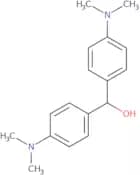
CAS :4,4'-Bis(dimethylamino)diphenyl carbinol is a bathochromic compound that belongs to the group of amines. It has been synthesized from 4,4'-diaminodiphenylmethane and hydrochloric acid. This molecule has been shown to react with protonated nitrogen atoms in an oxidation-reduction reaction. The protonation process occurs via kinetic, thermodynamic, and photophysical mechanisms. 4,4'-Bis(dimethylamino)diphenyl carbinol was used to study the proton transfer reactions between chlorine and nitrogen atoms in molecular modeling studies. On the other hand, this molecule has been shown to have fluorescence properties due to its carbonyl group.Formule :C17H22N2ODegré de pureté :Min. 95%Couleur et forme :White PowderMasse moléculaire :270.37 g/mol4-Amino-2-(1,3-benzoxazol-2-yl)phenol
CAS :<p>4-Amino-2-(1,3-benzoxazol-2-yl)phenol (4APB) is a fluorescent compound that has been used to study the fungal cell wall. It has shown to cause morphological changes in the conidia of some fungi, including transfer and swelling of the contents. 4APB has also been used to study the transfer mechanism of conidia by fluorescence microscopy and epifluorescence microscopy. This chemical can be stained with tosylates, which are reagents used for staining proteins and other molecules that contain sulfur atoms.</p>Formule :C13H10N2O2Degré de pureté :Min. 95%Masse moléculaire :226.23 g/mol8-Hydroxyquinoline copper(II)
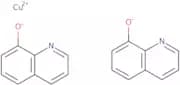
CAS :8-Hydroxyquinoline copper(II) salt is a metal chelate that can be used as an analytical reagent. It is prepared by the reaction of ethylene diamine with 8-hydroxyquinoline and copper(II) chloride. The product has been found to emit light when irradiated with UV light. This product is also used as a substrate for methyl transferase, which is an enzyme involved in the metabolism of drugs. 8-Hydroxyquinoline copper(II) salt has been shown to inhibit the activity of P-glycoprotein (Pgp), which is a drug transporter protein found in mammalian cells that functions to pump xenobiotics from the inside of cells out into the bloodstream. When Pgp is inhibited, it causes cellular accumulation of certain drugs, such as cyclosporin A and tacrolimus.Formule :C18H12CuN2O2Degré de pureté :Min. 95%Couleur et forme :PowderMasse moléculaire :351.85 g/mol(1-Benzyl-1H-benzimidazol-2-yl)methanol
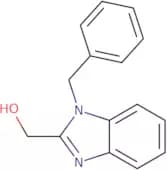
CAS :Produit contrôlé<p>Please enquire for more information about (1-Benzyl-1H-benzimidazol-2-yl)methanol including the price, delivery time and more detailed product information at the technical inquiry form on this page</p>Formule :C15H14N2ODegré de pureté :Min. 95%Masse moléculaire :238.28 g/mol4-(Decyloxy)butan-1-ol
CAS :Produit contrôléPlease enquire for more information about 4-(Decyloxy)butan-1-ol including the price, delivery time and more detailed product information at the technical inquiry form on this pageFormule :C14H30O2Degré de pureté :Min. 95%Masse moléculaire :230.39 g/mol5-Benzofuranol
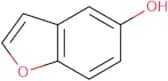
CAS :<p>5-Benzofuranol is a potent cytotoxic natural product that has been isolated from the fungus Cryptococcus neoformans. It possesses a terminal alkyne group and a sulfonic acid group, which are both important for its cytotoxicity. 5-Benzofuranol inhibits the growth of cells in vitro by inhibiting their ability to synthesize DNA. 5-Benzofuranol shows significant cytotoxicity against various cancer cell lines, as well as potent inhibition against Candida albicans, Aspergillus niger, and Saccharomyces cerevisiae strains in vitro. This compound's functional groups make it an effective antifungal agent.</p>Formule :C8H6O2Degré de pureté :Min. 95%Masse moléculaire :134.13 g/molPoly(1,2-dihydro-2,2,4-trimethylquinoline)
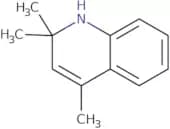
CAS :Poly(1,2-dihydro-2,2,4-trimethylquinoline) is a high molecular weight polymeric quinoline. It is an intramolecular hydrogen bond donor. The nitrogen atoms in the polymers are bound to hydrogen and form a ring with two amino groups. Poly(1,2-dihydro-2,2,4-trimethylquinoline) has been shown to be resistant to many chemical agents such as hydrogen fluoride and glycoside derivatives. It also has a carcinogenic potential and can induce liver lesions. The carcinogenesis studies of poly(1,2-dihydro-2,2,4-trimethylquinoline) have shown that it may cause cancer in animals via diazonium salt and methyl ethyl hydrochloric acidFormule :(C12H15N)xDegré de pureté :Min. 95%Couleur et forme :Powder(aR)-a-[[[2-(4-Nitrophenyl)ethyl]amino]methyl]benzenemethanol
CAS :<p>(aR)-a-[[[2-(4-Nitrophenyl)ethyl]amino]methyl]benzenemethanol is a chiral, carbonyl compound that has been used in the synthesis of mirabegron. It is synthesized by reacting an amide with a hydrochloric acid salt. The product yield of (aR)-a-[[[2-(4-Nitrophenyl)ethyl]amino]methyl]benzenemethanol is high and it does not react with aluminium or amide impurities. This compound can be used for the industrial synthesis of mirabegron, which is a drug for the treatment of urinary incontinence. The reduction reaction and hydrolysis reactions are both important to this process.</p>Degré de pureté :Min. 95%Ergosta-5,24(28)-diene-3,7,16-triol
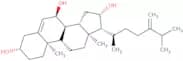
CAS :Produit contrôlé<p>Please enquire for more information about Ergosta-5,24(28)-diene-3,7,16-triol including the price, delivery time and more detailed product information at the technical inquiry form on this page</p>Formule :C28H46O3Degré de pureté :Min. 95%Masse moléculaire :430.66 g/mol3-Amino-2-methylpropan-1-ol
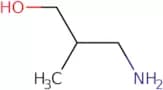
CAS :<p>3-Amino-2-methylpropan-1-ol is a reactive chemical that can be used as a reactant in the synthesis of other chemicals. It is an alkanolamine and can be found in small amounts in water vapor. 3-Amino-2-methylpropan-1-ol has been shown to have low energy and it reacts with water vapor to form 3,4-dihydroxybutanal, which is a product that can be converted into other useful chemicals. 3-Amino-2-methylpropan-1-ol also reacts with high energy photons to form new substances, such as 3,4,5,6 tetrahydroxymethylbenzaldehyde. 3Amino - 2 - methylpropan - 1 - ol has been shown to have many uses including the production of low molecular weight polymers and resins for paints and coatings.</p>Formule :C4H11NODegré de pureté :Min. 95%Masse moléculaire :89.14 g/molAllopurinol-d2
CAS :<p>Allopurinol-d2 is an inhibitor of xanthine oxidase, which is an enzyme that catalyzes the conversion of hypoxanthine to xanthine and then to uric acid. Allopurinol-d2 is used for the treatment of gout and hyperuricemia. The compound was expressed in Escherichia coli and purified by electrospray ionization mass spectrometry. It has been shown to inhibit methyltransferase activity, thereby decreasing the production of urate. Allopurinol-d2 has also been shown to decrease disease activity in animal models of colitis and ulcerative colitis.</p>Formule :C5H2D2N4ODegré de pureté :Min. 95%Masse moléculaire :138.12 g/mol2-Isopropylphenol
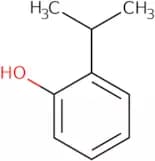
CAS :<p>2-Isopropylphenol is a chemical compound that contains a hydroxy group and a benzene ring. It has been shown to have an inhibitory effect on the growth of plants by interfering with the synthesis of plant hormones like gibberellic acid, indoleacetic acid, and ethylene. 2-Isopropylphenol also inhibits the production of gamma-aminobutyric acid (GABA) in mammalian nervous tissue. The specific agonists for 2-isopropylphenol are esters, which are formed through the reaction of hydroxy groups with acids or alcohols. 2-Isopropylphenol can be used as an industrial chemical and is found in products such as adhesives, paints, and plastics.</p>Formule :C9H12ODegré de pureté :98.0%Masse moléculaire :136.19 g/mol(S)-a,a-Diphenylmethylprolinol
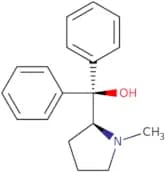
CAS :Produit contrôlé(S)-a,a-Diphenylmethylprolinol is a chiral ligand that is used in asymmetric synthesis. It has been shown to react with alkylating agents to form chiral methyl esters. The reaction product can be resolved into the desired enantiomer by the use of a chiral stationary phase or an experimental method called isotopic labeling. (S)-a,a-Diphenylmethylprolinol was prepared by a preparative method involving the reaction of cyanate, aldehyde and hexane.Formule :C18H21NODegré de pureté :Min. 95%Masse moléculaire :267.37 g/mol2-Methyl-2-propanethiol
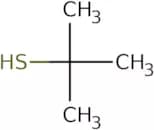
CAS :<p>2-Methyl-2-propanethiol is an electron acceptor and a reagent that can be used for the synthesis of organic compounds. It is soluble in polar solvents, but insoluble in nonpolar solvents. 2-Methyl-2-propanethiol has been shown to react with thiols at concentrations below its optimum concentration. The reaction mechanism is believed to involve adsorption and intramolecular hydrogen transfer. The adsorption process occurs on the surface of the substrate and the intramolecular hydrogen transfer occurs through an intermolecular hydrogen bond with the substrate's hydroxyl group or disulfide bond. When 2-methyl-2-propanethiol reacts with a thiol, it forms a mercaptan group called p2 that contains two substituents, one on each carbon atom. This reaction produces a disulfide bond as well as an electrochemical detector signal known as "activated."</p>Formule :C4H10SDegré de pureté :Min. 98%Couleur et forme :Clear LiquidMasse moléculaire :90.19 g/molrac 1,2-dioleoyl-3-chloropropanediol
CAS :<p>Rac-1,2-dioleoyl-3-chloropropanediol is a fatty acid and can be used for the preparation of isotopically labelled fatty acids. Rac-1,2-dioleoyl-3-chloropropanediol has been used as an internal standard in the quantification of fatty acid esters in plant oils. The use of rac 1,2-dioleoyl-3-chloropropanediol was found to be appropriate for calibrating liquid chromatography with a quadrupole mass spectrometer.</p>Formule :C39H71ClO4Degré de pureté :Min. 95%Masse moléculaire :639.43 g/mol



![(aR)-a-[[[2-(4-Nitrophenyl)ethyl]amino]methyl]benzenemethanol](/_next/image/?url=https%3A%2Fstatic.cymitquimica.com%2Fproducts%2F3D%2Fthumb-webp%2FFN75044.webp&w=3840&q=75)