Alcools
Les alcools sont une large gamme de molécules organiques dérivées des hydrocarbures et contenant un ou plusieurs groupes hydroxyle (groupe OH). Ces composés sont essentiels dans diverses réactions chimiques et sont largement utilisés en laboratoire pour la synthèse, comme solvants et en chimie analytique. Chez CymitQuimica, nous proposons des alcools de haute qualité préparés pour une utilisation en laboratoire, soutenant vos recherches et applications industrielles avec des produits fiables et efficaces. Notre sélection garantit que vous disposez des alcools adaptés à vos besoins spécifiques, que ce soit pour des travaux de laboratoire de routine ou des projets de recherche spécialisés.
Sous-catégories appartenant à la catégorie "Alcools"
5814 produits trouvés pour "Alcools"
Trier par
Degré de pureté (%)
0
100
|
0
|
50
|
90
|
95
|
100
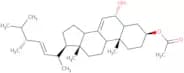
3b-Acetoxyergosta-7,22-dien-5a-ol
CAS :Produit contrôléPlease enquire for more information about 3b-Acetoxyergosta-7,22-dien-5a-ol including the price, delivery time and more detailed product information at the technical inquiry form on this pageFormule :C30H48O3Degré de pureté :Min. 95%Masse moléculaire :456.7 g/molDoxorubicinol,mixture of diastereomers
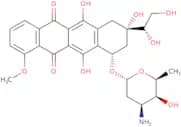
CAS :Doxorubicinol, a mixture of diastereomers, is an anthracycline antibiotic that inhibits the growth of cells by binding to DNA and preventing the production of RNA. Doxorubicinol has been shown to be effective in treating breast cancer and solid tumours, including those resistant to doxorubicin. This drug has also been shown to inhibit the production of matrix metalloproteinases that are involved in tumor invasion and metastasis. The concentration-time curve for doxorubicinol can be determined experimentally by blood sampling and measuring its metabolites. The ryanodine receptor is a calcium channel found on the surface membrane of cardiac muscle cells that regulates intracellular calcium levels. Doxorubicinol may bind to this receptor, which could account for its cardiotoxic effects.Formule :C27H31NO11Degré de pureté :(%) Min. 90%Masse moléculaire :545.54 g/mol1,1,1-Trichloro-3-(1-methyl-1H-benzimidazol-2-yl)propan-2-ol
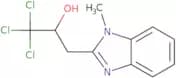
CAS :Produit contrôlé<p>Please enquire for more information about 1,1,1-Trichloro-3-(1-methyl-1H-benzimidazol-2-yl)propan-2-ol including the price, delivery time and more detailed product information at the technical inquiry form on this page</p>Formule :C11H11Cl3N2ODegré de pureté :Min. 95%Masse moléculaire :293.58 g/mol(1S,2S)-(+)-2-Amino-1-phenyl-1,3-propanediol
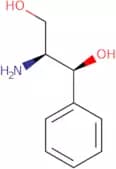
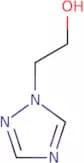
CAS :<p>(1S,2S)-(+)-2-Amino-1-phenyl-1,3-propanediol is a synthetic compound that has been synthesized and studied as an amide. It has a hydroxy group on the skeleton of the molecule. The enantiomer of this compound is (1R,2R)-(-)-2-amino-1-phenyl-1,3-propanediol. This compound contains two chiral centers and four stereoisomers. These stereoisomers are not mirror images of each other. (1S,2S)-(+)-2-Amino-1-phenyl-1,3-propanediol has been shown to be effective against cryptococcus neoformans in cell culture experiments.</p>Formule :C9H13NO2Degré de pureté :Min. 95%Masse moléculaire :167.21 g/mol2-(1H-1,2,4-Triazol-1-yl)ethanol
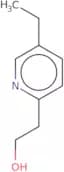
CAS :<p>2-(1H-1,2,4-Triazol-1-yl)ethanol is a synthetic molecule that has been expressed in cyanoalkyl and validated. This molecule can be used as a fluconazole prodrug. The electron density analysis of this compound has shown that it is highly hydrophilic and may be able to penetrate the cell membrane. 2-(1H-1,2,4-Triazol-1-yl)ethanol is bioanalytically equivalent to fluconazole and has shown growth regulating properties. 2-(1H-1,2,4-Triazol-1-yl)ethanol binds to the receptor molecule at low light levels and inhibits the synthesis of DNA by inhibiting RNA polymerase activity.</p>Formule :C4H7N3ODegré de pureté :Min. 95%Masse moléculaire :113.12 g/mol5-Ethyl-2-pyridineethanol
CAS :<p>5-Ethyl-2-pyridineethanol is an anti-diabetic drug that belongs to the class of thiazolidinediones. It is the active form of pioglitazone, which has been shown to bind to peroxisome proliferator-activated receptor gamma (PPARγ). This binding results in increased expression and activity of insulin receptors on cell membranes. 5-Ethyl-2-pyridineethanol also binds to PPARγ in a similar manner as pioglitazone, and it has been shown to be an agonist for PPARγ. This compound has a number of other biological effects such as inhibition of the production of acetone by the liver, which is due to its ability to inhibit diazotization.</p>Formule :C9H13NODegré de pureté :Min. 95%Couleur et forme :White To Yellow Solid Or Liquid (May Vary)Masse moléculaire :151.21 g/moltrans-4-Aminocyclohexanol
CAS :<p>Trans-4-aminocyclohexanol is a cell signaling molecule that belongs to the class of heterocyclic compounds. It has been shown to have an anti-inflammatory effect and inhibit the production of pro-inflammatory cytokines in vitro. Trans-4-aminocyclohexanol also inhibits cyclooxygenase (COX) activity, which is responsible for the conversion of arachidonic acid into prostaglandins. This inhibition leads to decreased inflammation and pain. Trans-4-aminocyclohexanol is orally bioavailable and can be detected in the blood plasma within one hour after administration. The compound has been shown to bind to the enzyme protein kinase C, which is involved in cell signaling pathways, and inhibit its activity.</p>Formule :C6H13NODegré de pureté :Min. 95%Couleur et forme :PowderMasse moléculaire :115.17 g/molβ-Alaninol 2-chlorotrityl resin
Please enquire for more information about beta-Alaninol 2-chlorotrityl resin including the price, delivery time and more detailed product information at the technical inquiry form on this pageDegré de pureté :Min. 95%4-Bromoisoquinoline
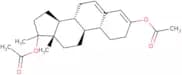
CAS :4-Bromoisoquinoline is an aryl halide that can be used in the cross-coupling reaction with other aryl halides. It has been shown to have anticancer activity and to inhibit the growth of tumour cell lines in vitro. This compound is also efficient for inhibiting leukemia cells. 4-Bromoisoquinoline has been shown to have an inhibitory effect on cancer cells through the inhibition of DNA synthesis and RNA transcription, as well as by inducing apoptosis. The mechanism of action may be due to its ability to bind to aromatic hydrocarbons and halides, which leads to thermodynamic changes and vibrational energy transfer.Formule :C9H6BrNDegré de pureté :Min. 95%Masse moléculaire :208.05 g/mol17-Methylestra-3,5-diene-3,17b-diol diacetate
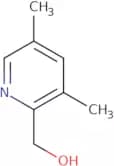
CAS :Produit contrôlé<p>Please enquire for more information about 17-Methylestra-3,5-diene-3,17b-diol diacetate including the price, delivery time and more detailed product information at the technical inquiry form on this page</p>Formule :C23H32O4Degré de pureté :Min. 95%Masse moléculaire :372.5 g/mol(3,5-Dimethylpyridin-2-yl)methanol
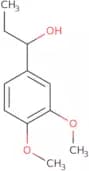
CAS :<p>3,5-Dimethylpyridin-2-yl)methanol is a compound used in the synthesis of esomeprazole. It is not considered an impurity or a target compound and does not need to be analyzed. 3,5-Dimethylpyridin-2-yl)methanol is synthesized by reacting 3,5-dimethylpyridine with methanol.</p>Formule :C8H11NODegré de pureté :Min. 95%Masse moléculaire :137.18 g/mol1-(3',4'-Dimethoxyphenyl)-1-propanol
CAS :1-(3’,4’-Dimethoxyphenyl)-1-propanol is a naturally occurring chemical with the molecular formula C10H14O2. It has been found in the bark of Pinus pinaster and the rhizome of Piper auritum. This compound has been shown to have an antiinflammatory effect by inhibiting prostaglandin synthesis. It also inhibits nitrosation reactions and is being studied for its potential as a cancer chemopreventive agent. 1-(3’,4’-Dimethoxyphenyl)-1-propanol is an enantiomer of 2-(3',4'-dimethoxyphenyl)propane-1,3-diol.Formule :C11H16O3Degré de pureté :Min. 95%Masse moléculaire :196.24 g/molH-Leucinol-2-chlorotrityl resin
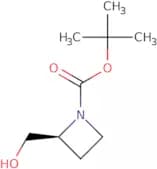
<p>Please enquire for more information about H-Leucinol-2-chlorotrityl resin including the price, delivery time and more detailed product information at the technical inquiry form on this page</p>Degré de pureté :Min. 95%Couleur et forme :Light (Or Pale) Yellow To Brown Solid(S)-1-(tert-Butoxycarbonyl)-2-azetidinemethanol
CAS :<p>Please enquire for more information about (S)-1-(tert-Butoxycarbonyl)-2-azetidinemethanol including the price, delivery time and more detailed product information at the technical inquiry form on this page</p>Formule :C9H17NO3Degré de pureté :Min. 95%Masse moléculaire :187.24 g/molTrimethylsilylmethanethiol
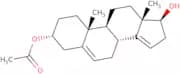
CAS :Trimethylsilylmethanethiol (TMSET) is a thiol that is used as a reagent in organic synthesis. It is soluble in water and it has a high boiling point, making it useful for reactions that require heat. TMSET has been shown to be an effective antiviral agent against hepatitis C virus (HCV) and influenza A virus by binding to the viral receptor on the cell surface and preventing its entry into the cell. TMSET also inhibits neuronal function by binding to the hydroxy group of proteins, thereby disrupting their structure and function.Formule :C4H12SSiDegré de pureté :Min. 95%Masse moléculaire :120.29 g/mol3-O-Acetyl 5,14-androstadiene-3b,17b-diol
CAS :Produit contrôléPlease enquire for more information about 3-O-Acetyl 5,14-androstadiene-3b,17b-diol including the price, delivery time and more detailed product information at the technical inquiry form on this pageFormule :C21H30O3Degré de pureté :Min. 95%Masse moléculaire :330.46 g/molEstradiol hemihydrate
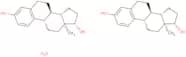
CAS :Produit contrôlé<p>Estradiol hemihydrate is a synthetic estrogen. It binds to estrogen receptors, causing the activation of DNA transcription and synthesis of messenger RNA. Estradiol hemihydrate has been used for the treatment of various symptoms, such as menopause, osteoporosis, breast cancer, and metabolic disorders. The drug is most often administered by injection or in a polymeric matrix that dissolves slowly in the mouth. The recommended dose is between 0.5mg and 1mg per day. Estradiol hemihydrate can be detected in plasma using an analytical method called liquid chromatography-tandem mass spectrometry (LC-MS/MS).</p>Formule :(C18H24O2)2•H2ODegré de pureté :Min. 95%Couleur et forme :PowderMasse moléculaire :562.78 g/mol1-O-Hexadecyl-sn-glycerol
CAS :1-O-Hexadecyl-sn-glycerol is a glycol ether that is used as a surfactant and emulsifier in cosmetic products. It has been shown to have minimal toxicity, and to not be carcinogenic or teratogenic. 1-O-Hexadecyl-sn-glycerol has been shown to increase the stability of proteins in rat liver microsomes, and it also prevents the hydrolysis of carbohydrates. The surface glycoprotein adsorbed by 1-O-Hexadecyl-sn-glycerol may play an important role in the binding of monoclonal antibodies. This compound affects cellular calcium levels, with high concentrations resulting in increased cytosolic calcium concentrations. Zirconium oxide can replace calcium ions in 1-O-Hexadecyl-sn-glycerol for this purpose, although this substitution reduces enzyme activity.Formule :C19H40O3Degré de pureté :Min. 95%Masse moléculaire :316.52 g/mol7-Chloro-4-piperazinylquinoline
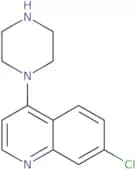
CAS :<p>7-Chloro-4-piperazinylquinoline is a quinoline derivative that belongs to the group of organic solvents. It has anticancer activity and is used as a medicine. 7-Chloro-4-piperazinylquinoline is used as an intermediate in the preparation of sorafenib, which is a potent inhibitor of the protein tyrosine kinase. Sorafenib inhibits cancer cell proliferation and tumor growth by blocking the activity of tyrosine kinases, which are necessary for cellular proliferation and survival. It also inhibits phospholipase A2, which leads to cell death by apoptosis.</p>Formule :C13H14ClN3Degré de pureté :Min. 95%Masse moléculaire :247.72 g/molGlycerol tristearate
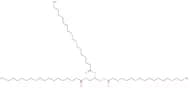
CAS :<p>Glycerol tristearate is a triglyceride, which is derived from the esterification of glycerol with stearic acid, a saturated fatty acid. This compound is typically sourced from natural fats and oils through a process involving the hydrogenation of vegetable oils, which facilitates its pure and controlled production.The mode of action of glycerol tristearate involves its function as an effective emulsifier. It stabilizes mixtures of water and oil by reducing interfacial tension, thus enabling the formation of stable emulsions. Its solid form at room temperature also contributes to its ability to enhance texture and stability in various formulations.Glycerol tristearate is widely used in diverse applications including the food industry, where it acts as a texturizer and stabilizer in products like margarine, chocolate, and confectionery. Additionally, it plays a significant role in the cosmetics and personal care sectors, where it improves the texture and stability of creams and lotions. Its properties make it a valuable ingredient for controlling crystallization and improving consistency across multiple industry settings.</p>Formule :C57H110O6Degré de pureté :Min. 95%Masse moléculaire :891.48 g/mol