Alcools
Sous-catégories appartenant à la catégorie "Alcools"
5818 produits trouvés pour "Alcools"
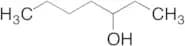
(±)-3-Heptanol
CAS :Produit contrôléApplications (±)-3-Heptanol, is a volatile components of various plants, and can be used as flavor and fragrance ingredients. It is also used as building block used for the synthesis of various chemicals. It is used for the preparation of biologically active ester derivatives as potent inhibitors of the soluble epoxide hydrolase.
Not a dangerous good if item is equal to or less than 1g/ml and there is less than 100g/ml in the package
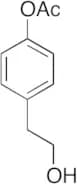
References Kim, I., et al.: Bioorg. Med. Chem. Lett., 55 (18), 5889 (2012); Gibka, J., et al.: Zeszyty Naukowe - Politechnika Lodzka, 60, 65 (1998);Formule :C7H16OCouleur et forme :NeatMasse moléculaire :116.22-(4-Acetoxyphenyl)ethanol
CAS :Produit contrôléApplications 2-(4-Acetoxyphenyl)ethanol is an intermediate in synthesizing Oleocanthal (O524540). It is a compound of olive oil with potential use as anti-inflammatory and chemotherapeutic agents.
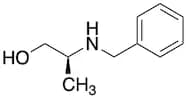
References Scotece, M., et. al.: Drug Discovery Today, 20, 406 (2015)Formule :C10H12O3Couleur et forme :NeatMasse moléculaire :180.2(S)-2-(Benzylamino)propan-1-ol
CAS :Produit contrôléApplications (S)-2-(Benzylamino)propan-1-ol is a useful research chemical for the preparation of cross-benzoin products of heteroaromatic aldehydes and amino aldehydes.
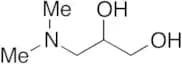
References Haghshenas, P., et al.: J. Org. Chem., 81, 12075-83 (2016);Formule :C10H15NOCouleur et forme :NeatMasse moléculaire :165.233-(Dimethylamino)-1,2-propanediol
CAS :Produit contrôléApplications 3-(Dimethylamino)-1,2-propanediol is a reagent in the synthesis of 1,2-Dioleoyl-3-trimethylammonium-propane, Chloride (D484450).
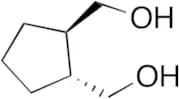
Not a dangerous good if item is equal to or less than 1g/ml and there is less than 100g/ml in the packageFormule :C5H13NO2Couleur et forme :NeatMasse moléculaire :119.16(1R,2R)-1,2-Cyclopentanedimethanol
CAS :Produit contrôléApplications (1R,2R)-1,2-Cyclopentanedimethanol is an intermediate in the synthesis of trans-1,2-Dimethylcyclopentane (D464925). trans-1,2-Dimethylcyclopentane was found in sedimentary rocks and was one of the hydrocarbons used to determine its maturation history.
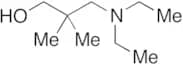
References Schaefer, R.G., Littke, R.: Org. Geochem., 13, 887 (1988)Formule :C7H14O2Couleur et forme :NeatMasse moléculaire :130.183-(Diethylamino)-2,2-dimethylpropanol
CAS :Produit contrôléApplications 3-(Diethylamino)-2,2-dimethylpropanol is a reactant used in the preparation of herbicides, several local anesthetics and histamine H3 receptor antagonists.
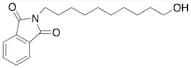
Formule :C9H21NOCouleur et forme :NeatMasse moléculaire :159.2710-Phthalamido-1-decanol
CAS :Produit contrôléApplications 10-Phthalamido-1-decanol is an intermediate used in the synthesis of 10-(t-Boc-amino)-1-decanol (B617785), which is a compound useful in organic synthesis.
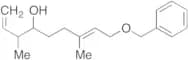
Formule :C18H25NO3Couleur et forme :NeatMasse moléculaire :303.49-(Benzyloxy)-3,7-dimethylnona-1,7-dien-4-ol
Produit contrôléApplications 9-(Benzyloxy)-3,7-dimethylnona-1,7-dien-4-ol is an intermediate in the synthesis of Menaquinone 6 (M218590). Menaquinones are isoprenoid quinones of the naphthalene series and belongs to the K2 Vitamin homologs. Menaquinones were originally discovered as the anti-hemorrhagic factor and now encompasses a variety of physiological processes. Menaquinone-6 were the major isoprenoid quinones found in membrane preparations of Campylobacter jejuni and Campylobacter fetus.
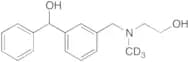
References Kiesel, B., et al.: Biodegradation, 19, 435 (2008), Suhara, Y., et al.: Bioorg. Med. Chem., 16, 3108 (2008), Gast, G., et al.: Nut., Metab., Cardiovas., Diseases, 19, 504 (2009); Carlone G.M., et al.: J. Gen. Microbiol., 129, 3385 (1983);Formule :C18H26O2Couleur et forme :NeatMasse moléculaire :274.42-((3-Hydroxy(phenyl)methyl)benzyl)(methyl)amino)ethanol
Produit contrôléApplications (3-(((2-Hydroxyethyl)(methyl)amino)methyl)phenyl)(phenyl)methanone-d3 is an intermediate in the synthesis of Nefopam-d3 (N389402), a cyclized labelled analog of orphenadrine and diphenhydramine; representative of a new class of centrally acting skeletal muscle relaxants.
References Bassett, et al.: Br. J. Pharmacol., 37, 69 (1969), Klohs, et al.: Arzneim.-Forsch., 22, 132 (1972), Hell, et al.: Drugs, 19, 249 (1980),Formule :C17D3H18NO2Couleur et forme :NeatMasse moléculaire :274.3736-Chloro-1-hexanol
CAS :Produit contrôléApplications 6-Chloro-1-hexanol is used as a reagent in the synthesis of 3-(4-Chloro butyl)-1H-indole-5-carbonitrile; a key intermediate of the antidepressant drug Vilazodone (V265000).
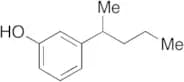
References Anitha, N., et al.: Synthetic Commun., 44, 3563 (2014)Formule :C6H13ClOCouleur et forme :NeatMasse moléculaire :136.623-(2-Pentyl)phenol
CAS :Produit contrôléApplications 3-(2-Pentyl)phenol is an intermediate in the synthesis of Bufencarb (B689385), a carbamate pesticide used mainly as an insecticide.
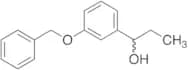
References Nesterova, T.N., et al.: J. Chem. Thermodyn., 21, 385 (1989);Formule :C11H16OCouleur et forme :NeatMasse moléculaire :164.24rac-1-(3-Benzyloxyphenyl)-1-propanol
CAS :Produit contrôléApplications An intermediate used in the production of various ectoparasiticides, drug metabolites and analgesic agents.
References Rastogi, S., et al.: J. Med. Chem., 16, 797 (1973), Maguire, J., et al.: Drug Metab. Disposition, 9, 393 (1981),Formule :C16H18O2Couleur et forme :NeatMasse moléculaire :242.311-Butanol (n-Butyl Alcohol)
CAS :Produit contrôléApplications 1-Butanol is a common chemical reagent used in biodiesel production. Also it has been used in the study the polarization of vapor-deposited 1-butanol films (1) as well as in the preparation of bioavailable CB1 antagonists (2) . Drinking water contaminant candidate list 3 (CCL 3) compound as per United States Environmental Protection Agency (EPA), environmental, and food contaminants.
Not a dangerous good if item is equal to or less than 1g/ml and there is less than 100g/ml in the package
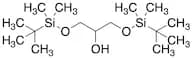
References 1. Gavra, I. et al.: J. Chem. Phys. 2017 Mar 14;146(10):104701.2. Röver, S. et al.: J. Med. Chem. 2013 Dec 27;56(24):9874-96.Formule :C4H10OCouleur et forme :ColourlessMasse moléculaire :74.121,3-Bis(tert-Butyldimethylsiloxy)-2-propanol
CAS :Produit contrôléApplications 1,3-Bis(tert-Butyldimethylsiloxy)-2-propanol is an intermediate in the synthesis of 2-Linoleoyl-rac-glycerol (L467960), which is a atty acid monoglycerides in vegetable oils with medium unsaturation.
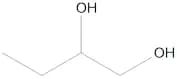
References Compton, D., et al.: J. Pharmacol. Exp. Ther., 277, 586 (1996), Devane, W., et al.: Science, 258, 1946 (1992),Formule :C15H36O3Si2Couleur et forme :NeatMasse moléculaire :320.621,2-Butanediol
CAS :Produit contrôléApplications 1,2-Butanediol is a glycol in human serum.
References Imbert, L., et al.: J. Anal. Toxicol., 38, 676 (2014)Formule :C4H10O2Couleur et forme :NeatMasse moléculaire :90.122-(4-Octylphenyl)ethanol
CAS :Produit contrôléApplications 2-(4-Octylphenyl)ethanol (cas# 162358-05-6) is a compound useful in organic synthesis.
Formule :C16H26OCouleur et forme :NeatMasse moléculaire :234.384-Methyl-4H-1,2,4-triazole-3-thiol
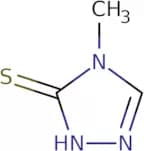
CAS :4-Methyl-4H-1,2,4-triazole-3-thiol is a corrosion inhibitor that has been used in the production of polyurethane foam. It is synthesized by the reaction of ethylene diamine with sulfur trioxide and water. This compound has a molecular weight of 184.14 g/mol and an acidic nature due to the presence of four protonated amines on its structure. The compound can be characterized by gravimetric analysis, structural analysis, and FTIR spectroscopy. 4-Methyl-4H-1,2,4-triazole-3-thiol is toxic to rats when administered orally at 2000 mg/kg and also causes irritation to rabbits when applied topically at 200 µg/ear. !--Formule :C3H5N3SDegré de pureté :Min. 97 Area-%Couleur et forme :White PowderMasse moléculaire :115.16 g/mol1-Methyl-1,2,3,4-tetrahydroquinolin-7-amine hydrochloride
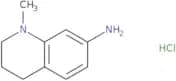
CAS :1-Methyl-1,2,3,4-tetrahydroquinolin-7-amine hydrochloride (MQ) is a fluorescent probe that has been used to study the photostability of cisplatin in real time. MQ was synthesized by reacting 3-(2'-bromoacetyl)-7-methoxy-1,2,3,4-tetrahydroquinolin with 7-aminoquinaldine. The emission spectrum of MQ peaks at 615 nm and has an extinction coefficient at 615 nm of 12.5 mM/cm. This probe has been shown to be photostable for long periods of time and can be used to visualize DNA polymerase activity in living cells.Formule :C10H15ClN2Degré de pureté :Min. 95%Couleur et forme :Off-White PowderMasse moléculaire :198.69 g/mol1-Amino-2-methyl-propan-2-ol
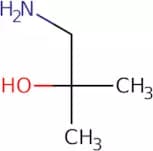
CAS :1-Amino-2-methyl-propan-2-ol is a cytotoxic molecule that has been shown to inhibit the growth of cancer cells. It is synthesized by converting 1,4-benzenediamine and cyclopentanol into the corresponding amines. The amines are then condensed with an alkanolamine in a kinetic reaction to form 1-amino-2-methylpropan-2-ol. This product's anticancer activity may be due to its ability to induce nucleophilic attack on DNA, leading to DNA strand breakage. 1AMPP has also been shown to have antiviral properties against HIV infection.Formule :C4H11NODegré de pureté :Min. 95%Couleur et forme :Colorless Clear LiquidMasse moléculaire :89.14 g/molFmoc-O-tert-butyl-L-threoninol
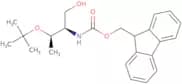
CAS :Fmoc-O-tert-butyl-L-threoninol is an aminoacyl chloroformate ester that is used in the synthesis of peptides. It has a conjugate acid chloride and a disulfide bond. The chloroformate group reacts with the carboxylic acid moiety of L-threonine to form an ester, which can then be cleaved by hydrolysis to yield L-threonine. This product is also used for the synthesis of peptides in which the threonine residue is conjugated to another amino acid such as cysteine or glutamic acid.
Fmoc-O-tert-butyl-L-threoninol is synthesized from l-threonine and isobutene via a phase chromatography process. The synthetic intermediate Fmoc-(S)-OH is reacted with trifluoroacetic acid (TFA)Formule :C23H29NO4Degré de pureté :Min. 98 Area-%Couleur et forme :White PowderMasse moléculaire :383.48 g/mol