Alcools
Les alcools sont une large gamme de molécules organiques dérivées des hydrocarbures et contenant un ou plusieurs groupes hydroxyle (groupe OH). Ces composés sont essentiels dans diverses réactions chimiques et sont largement utilisés en laboratoire pour la synthèse, comme solvants et en chimie analytique. Chez CymitQuimica, nous proposons des alcools de haute qualité préparés pour une utilisation en laboratoire, soutenant vos recherches et applications industrielles avec des produits fiables et efficaces. Notre sélection garantit que vous disposez des alcools adaptés à vos besoins spécifiques, que ce soit pour des travaux de laboratoire de routine ou des projets de recherche spécialisés.
Sous-catégories appartenant à la catégorie "Alcools"
5814 produits trouvés pour "Alcools"
Trier par
Degré de pureté (%)
0
100
|
0
|
50
|
90
|
95
|
100
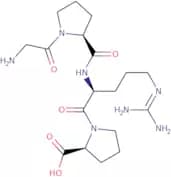
Fibrinolysis Inhibitng Factor
CAS :<p>Fibrinolysis Inhibiting Factor is a surface glycoprotein that belongs to the group of human serum proteins. It has been shown to be involved in the pathogenesis of bowel diseases and is a target for dextran sulfate. Fibrinolysis inhibiting factor binds to the surfaces of cells and blocks blood coagulation by interfering with the conversion of fibrinogen into fibrin. The protein also binds calcium ions and prevents them from being deposited on cell surfaces, thereby preventing inflammatory reactions such as inflammation of the bowel. Fibrinolysis inhibiting factor has been shown to activate monoclonal antibodies in vitro, which may explain its effect on inflammatory bowel disease.</p>Formule :C18H31N7O5Degré de pureté :Min. 95%Masse moléculaire :425.48 g/mol(aR)-a-[[[2-(4-Nitrophenyl)ethyl]amino]methyl]benzenemethanol
CAS :<p>(aR)-a-[[[2-(4-Nitrophenyl)ethyl]amino]methyl]benzenemethanol is a chiral, carbonyl compound that has been used in the synthesis of mirabegron. It is synthesized by reacting an amide with a hydrochloric acid salt. The product yield of (aR)-a-[[[2-(4-Nitrophenyl)ethyl]amino]methyl]benzenemethanol is high and it does not react with aluminium or amide impurities. This compound can be used for the industrial synthesis of mirabegron, which is a drug for the treatment of urinary incontinence. The reduction reaction and hydrolysis reactions are both important to this process.</p>Degré de pureté :Min. 95%1,3-Dioleoyl-2-palmitoylglycerol
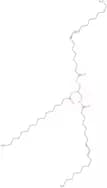
CAS :Dipalmitoylglycerol is a fatty acid that is naturally found in catfish. The optimal conditions for the synthesis of dipalmitoylglycerol from tripalmitin have been determined by surface methodology to be at pH 5 and at 0°C. Dipalmitoylglycerol has been shown to bind to the enzyme acetyl-CoA carboxylase, which is involved in the synthesis of fatty acids, and prevent its activation. As a result, there is no production of malonyl CoA, which is an important precursor in the synthesis of fatty acids. This may be beneficial for infants because it prevents them from developing allergies and asthma.Formule :C55H102O6Degré de pureté :Min. 95%Masse moléculaire :859.39 g/mol1-(3',4'-Dimethoxyphenyl)-1-propanol
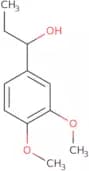
CAS :1-(3’,4’-Dimethoxyphenyl)-1-propanol is a naturally occurring chemical with the molecular formula C10H14O2. It has been found in the bark of Pinus pinaster and the rhizome of Piper auritum. This compound has been shown to have an antiinflammatory effect by inhibiting prostaglandin synthesis. It also inhibits nitrosation reactions and is being studied for its potential as a cancer chemopreventive agent. 1-(3’,4’-Dimethoxyphenyl)-1-propanol is an enantiomer of 2-(3',4'-dimethoxyphenyl)propane-1,3-diol.Formule :C11H16O3Degré de pureté :Min. 95%Masse moléculaire :196.24 g/mol2-(2-Methyl-1H-imidazol-1-yl)ethanol
CAS :2-(2-Methyl-1H-imidazol-1-yl)ethanol is a synthetic intermediate that has been used to synthesize antibiotics and antiviral agents. It has a terminal half-life of about 2 days and its pharmacokinetics are linear with an oral dose range from 10 to 100 mg/kg. The fruit extract of Camptotheca acuminata contains alkaloids, which can be converted into 2-(2-methyl-1H-imidazol-1-yl)ethanol by alkalization. 2-(2-Methyl-1H-imidazol-1-yl)ethanol is effective against hordeolum, acne, and infectious diseases caused by viruses such as herpes simplex. This drug has antibacterial properties and can be used in the treatment of bacterial infections such as staphylococcal skin infections, streptococcal throat infections, or gonorrhea. Dehydration is anFormule :C6H10N2ODegré de pureté :Min. 95%Masse moléculaire :126.16 g/mol(17b)-4,17-Dimethyl-androsta-2,4-dieno[2,3-d]isoxazol-17-ol
CAS :Produit contrôléPlease enquire for more information about (17b)-4,17-Dimethyl-androsta-2,4-dieno[2,3-d]isoxazol-17-ol including the price, delivery time and more detailed product information at the technical inquiry form on this pageFormule :C22H31NO2Degré de pureté :Min. 95%Masse moléculaire :341.49 g/mol3-Methyl-1-pentyn-3-ol
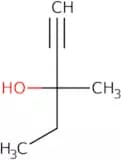
CAS :Produit contrôlé<p>3-Methyl-1-pentyn-3-ol is a chemical that has been shown to have interactive effects on the metabolism of urea nitrogen and low light. 3-Methyl-1-pentyn-3-ol has been shown to produce a depressant effect in animals, which may be due to its ability to inhibit the production of acetylcholine by blocking the enzyme cholinesterase. This chemical has also been shown to react with hydroxyl groups, producing a pharmacological agent. The reaction mechanism for 3-methyl pentynol is via hydrolysis by hydrochloric acid or pentobarbital sodium.</p>Formule :C6H10ODegré de pureté :Min. 95%Masse moléculaire :98.14 g/molGanodermanontriol
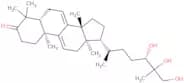
CAS :Produit contrôlé<p>Ganodermanontriol is a natural compound that is extracted from the roots of Ganderma applanatum. It has potent anticomplement activity and has been shown to have transcriptional regulation activity. Ganodermanontriol binds to DNA with high affinity, which leads to inhibition of transcription and replication. Ganodermanontriol also inhibits the activity of enzymes such as protein kinase C, phosphodiesterase, and phosphatases. This inhibitory effect on these enzymes may be due to its hydroxyl group, which can donate hydrogen bonds.</p>Formule :C30H48O4Degré de pureté :Min. 95%Masse moléculaire :472.7 g/mol1,4-Butanediol biscrylate - Hydroquinone as inhibitor
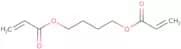
CAS :Produit contrôlé<p>1,4-Butanediol biscrylate - Hydroquinone as inhibitor is a glycol ester that is used in the process of laser ablation. It has been shown to be a biocompatible polymer that can be used for surface methodology. This polymer is synthesized by reacting monosodium salt of butanediol with hydroquinone and sodium carbonate in aqueous solution. 1,4-Butanediol biscrylate - Hydroquinone as inhibitor has been tested using cervical cancer cells and it was found to have a cytotoxic effect on these cells.</p>Formule :C10H14O4Degré de pureté :Min. 95%Masse moléculaire :198.22 g/mol3-[(4-Aminopiperidin-1-yl)methyl]phenol
CAS :<p>Please enquire for more information about 3-[(4-Aminopiperidin-1-yl)methyl]phenol including the price, delivery time and more detailed product information at the technical inquiry form on this page</p>Formule :C12H18N2ODegré de pureté :Min. 95%Masse moléculaire :206.28 g/mol2,4-Difluorobenzenethiol
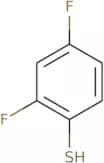
CAS :<p>2,4-Difluorobenzenethiol is a chemical with the molecular formula CHClF2SH. It has a high yield and can be used in the production of medicines and chemicals. Industrially, 2,4-difluorobenzenethiol is used as a raw material for the manufacture of dyes, perfumes and other products. The synthesis of this chemical involves treating 2-fluoroaniline with sulfuric acid. This process produces 2,4-difluorobenzenethiol as a byproduct.</p>Formule :C6H4F2SDegré de pureté :Min. 95%Masse moléculaire :146.16 g/molChromagnol
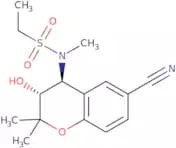
CAS :<p>Chromagnol is a drug that inhibits the enzyme protein kinase C (PKC). It has been shown to have inhibitory properties on cardiac muscle cells and whole-cell recordings of heart cells. Chromagnol has also been shown to affect the function of bowel disease, including papillary muscle. Chromagnol has been shown to have effects on cardiac and atrial tissue. This drug may be a potential treatment for autoimmune diseases, such as multiple sclerosis, or other diseases that are caused by PKC overactivity. The mechanisms of action are not fully understood but it is believed that chromanol binds to the cytosolic Ca2+ ion channel, preventing it from opening and releasing Ca2+, which leads to an increase in intracellular Ca2+.</p>Formule :C15H20N2O4SDegré de pureté :Min. 95%Masse moléculaire :324.4 g/mol3-Methylether-estradiol
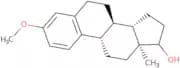
CAS :Produit contrôlé3-Methylether-estradiol is a naturally occurring estrogen that is found in humans and other mammals. It binds to estrogen receptors on the plasma membrane, which stimulates cell growth, protein synthesis, and modulates the immune system. 3-Methylether-estradiol has been shown to inhibit taurocholic acid induced hypertension in rats by blocking the conversion of angiotensin I to angiotensin II. In addition, this compound has been shown to have anti-inflammatory properties and can be used as an antihypertensive agent. 3-Methylether-estradiol has also been shown to increase blood pressure in pregnant rats when given at bolus doses. This drug should not be prescribed for use during pregnancy because it can cause fetal death.Formule :C19H26O2Degré de pureté :Min. 95%Masse moléculaire :286.41 g/molD-Tryptophanol
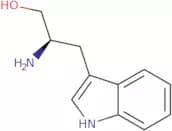
CAS :Produit contrôlé<p>D-Tryptophanol is a synthetic, enantiopure, hydroxymethylated tryptamine. It is a maltobionic molecule and it can be prepared by the hydrolysis of L-tryptophan with sodium hydroxide in water. D-Tryptophanol can also be synthesized from 3,4-diaminopyridine in the presence of a base and catalytic amount of copper(II) chloride. The chemical stability of D-tryptophanol has been studied using HPLC methods. Molecular modeling studies have shown that the compound forms hydrogen bonds with its neighboring molecules and has a high affinity for binding to human liver cells. D-Tryptophanol has been found to inhibit cancer cell growth at nanomolar concentrations, making it an attractive candidate for chemotherapeutic drugs. Calixarenes are used as chiral synthons to produce racemic mixtures of D-tryptophanol that could be</p>Formule :C11H14N2ODegré de pureté :Min. 95%Masse moléculaire :190.24 g/mol4-(Decyloxy)butan-1-ol
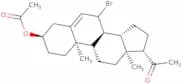
CAS :Produit contrôléPlease enquire for more information about 4-(Decyloxy)butan-1-ol including the price, delivery time and more detailed product information at the technical inquiry form on this pageFormule :C14H30O2Degré de pureté :Min. 95%Masse moléculaire :230.39 g/mol7-Bromo-3-O-acetyl pregnenolone
CAS :Produit contrôlé<p>Please enquire for more information about 7-Bromo-3-O-acetyl pregnenolone including the price, delivery time and more detailed product information at the technical inquiry form on this page</p>Formule :C23H33BrO3Degré de pureté :Min. 95%Masse moléculaire :437.41 g/mol1H-Pyrazol-4-ol
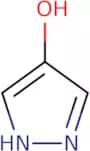
CAS :<p>1H-Pyrazol-4-ol is a molecule that has been shown to have antibacterial properties by inhibiting the growth of bacteria. It was also found to be effective in inhibiting the activity of dopamine β-hydroxylase, which is an enzyme that catalyzes the conversion of dopamine to norepinephrine. 1H-Pyrazol-4-ol has been shown to inhibit nitrite ion reductase, which converts nitrite ions into nitric oxide. Nitric oxide is a potent vasodilator and can cause hypotension. 1H-Pyrazol-4-ol also inhibits the formation of nitro groups from diazonium salts, which are used in many industrial processes, including dyeing and photography. 1H-Pyrazol-4-ol is activated by UV light and reacts with epididymal adipose tissue (fatty tissue) in rats to generate pyrazole derivatives with cytotoxic effects on liver</p>Formule :C3H4N2ODegré de pureté :Min. 95%Masse moléculaire :84.08 g/mol2-Methyl-1-propanol
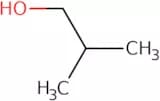
CAS :Produit contrôlé<p>2-Methyl-1-propanol is a small molecule that inhibits the activity of certain enzymes. It is an inhibitor of alcohol dehydrogenase, which converts ethanol to acetaldehyde. 2-Methyl-1-propanol also inhibits the enzyme pyruvate decarboxylase, which catalyzes the conversion of pyruvic acid to acetaldehyde. These two effects result in increased levels of acetaldehyde in the blood and reduced levels of acetate in the blood. The effect on alcohol dehydrogenase has been shown in recombinant cells and in yeast cells with a mutation that leads to decreased alcohol dehydrogenase activity. 2-Methyl-1-propanol has been shown to inhibit the growth of wild type strains but not mutant strains of Escherichia coli, suggesting that its physiological effects are due to inhibition of alcohol dehydrogenase and pyruvate decarboxylase activities.</p>Formule :C4H10ODegré de pureté :Min. 95%Couleur et forme :Clear LiquidMasse moléculaire :74.12 g/mol(20R)-Pregn-4-ene-3,17,20-triol
CAS :Produit contrôlé<p>Please enquire for more information about (20R)-Pregn-4-ene-3,17,20-triol including the price, delivery time and more detailed product information at the technical inquiry form on this page</p>Formule :C21H34O3Degré de pureté :Min. 95%Masse moléculaire :334.49 g/mol3,5-Dimethyl-1-hexyn-3-ol
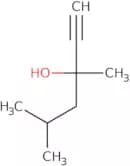
CAS :<p>3,5-Dimethyl-1-hexyn-3-ol is a reactive chemical that is used as a polymerase chain reaction (PCR) substrate film. The film has an active surface and can be used to detect the presence of DNA by adding colloidal gold. 3,5-Dimethyl-1-hexyn-3-ol reacts with the glycol ether and surfactant to form a hydrophobic film on the surface of the substrate film. The hydrophobic films are nonpolar and do not mix with water, so they do not dissolve in water. This allows for detection of DNA by using plasma mass spectrometry or eugenol, which reacts selectively with double bonds in DNA. 3,5-Dimethyl-1-hexyn-3-ol is also used in wastewater treatment as an antimicrobial agent to control bacterial growth.</p>Formule :C8H14ODegré de pureté :Min. 95%Couleur et forme :Clear LiquidMasse moléculaire :126.2 g/mol

![(aR)-a-[[[2-(4-Nitrophenyl)ethyl]amino]methyl]benzenemethanol](/_next/image/?url=https%3A%2Fstatic.cymitquimica.com%2Fproducts%2F3D%2Fthumb-webp%2FFN75044.webp&w=3840&q=75)

![(17b)-4,17-Dimethyl-androsta-2,4-dieno[2,3-d]isoxazol-17-ol](/_next/image/?url=https%3A%2Fstatic.cymitquimica.com%2Fproducts%2F3D%2Fthumb-webp%2FFD22349.webp&w=3840&q=75)
![3-[(4-Aminopiperidin-1-yl)methyl]phenol](/_next/image/?url=https%3A%2Fstatic.cymitquimica.com%2Fproducts%2F3D%2Fthumb-webp%2FFA116167.webp&w=3840&q=75)