Alcools
Les alcools sont une large gamme de molécules organiques dérivées des hydrocarbures et contenant un ou plusieurs groupes hydroxyle (groupe OH). Ces composés sont essentiels dans diverses réactions chimiques et sont largement utilisés en laboratoire pour la synthèse, comme solvants et en chimie analytique. Chez CymitQuimica, nous proposons des alcools de haute qualité préparés pour une utilisation en laboratoire, soutenant vos recherches et applications industrielles avec des produits fiables et efficaces. Notre sélection garantit que vous disposez des alcools adaptés à vos besoins spécifiques, que ce soit pour des travaux de laboratoire de routine ou des projets de recherche spécialisés.
Sous-catégories appartenant à la catégorie "Alcools"
5814 produits trouvés pour "Alcools"
Trier par
Degré de pureté (%)
0
100
|
0
|
50
|
90
|
95
|
100
3-O-Methyl 17a-estradiol
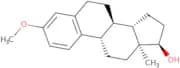
CAS :Produit contrôléPlease enquire for more information about 3-O-Methyl 17a-estradiol including the price, delivery time and more detailed product information at the technical inquiry form on this pageFormule :C19H26O2Degré de pureté :Min. 95%Masse moléculaire :286.41 g/mol(S)-(+)-5-Methyl-1-heptanol
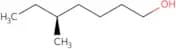
CAS :(S)-(+)-5-Methyl-1-heptanol is a naturally occurring chemical compound that has been found to be effective against bacteria, fungi, and viruses. It is a volatile liquid that is soluble in water. The (S)-(+)-5-Methyl-1-heptanol molecule contains a hydroxyl group, which can bind to the bacterial cell wall and inhibit the synthesis of proteins necessary for cell division. This compound also has the ability to inhibit fungal growth by binding to ergosterol, which is an important component of fungal cell membranes. The (S)-(+)-5-Methyl-1-heptanol molecule inhibits microbial growth by inhibiting protein synthesis and DNA replication.Formule :C8H18ODegré de pureté :Min. 95%Masse moléculaire :130.23 g/mol(S)-1-(tert-Butoxycarbonyl)-2-azetidinemethanol
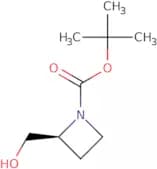
CAS :<p>Please enquire for more information about (S)-1-(tert-Butoxycarbonyl)-2-azetidinemethanol including the price, delivery time and more detailed product information at the technical inquiry form on this page</p>Formule :C9H17NO3Degré de pureté :Min. 95%Masse moléculaire :187.24 g/molall-trans-Retro retinol
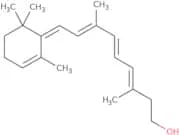
CAS :<p>All-trans-retinol is a form of vitamin A that is found in many animal tissues and some plant oils. It acts as a hormone, binding to the retinoic acid receptors (RARs) in the nucleus and activating gene transcription. All-trans-retinol has been shown to be effective against hyperproliferative diseases such as cancer, both by inducing apoptosis and by inhibiting cell growth. All-trans-retinol may also have therapeutic potential for other diseases, such as intestinal cancers and prostatic hypertrophy. This compound has been shown to induce messenger RNA (mRNA) production in cells that express RARs.</p>Formule :C20H30ODegré de pureté :Min. 95%Masse moléculaire :286.45 g/mol5a-Estrane-3a,17a-diol
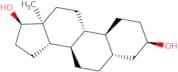
CAS :Produit contrôléPlease enquire for more information about 5a-Estrane-3a,17a-diol including the price, delivery time and more detailed product information at the technical inquiry form on this pageFormule :C18H30O2Degré de pureté :Min. 95%Masse moléculaire :278.43 g/mol4-[(4-Chlorophenyl)phenylmethyl]-1-piperazineethanol dihydrochloride
CAS :<p>4-[(4-Chlorophenyl)phenylmethyl]-1-piperazineethanol dihydrochloride is a cholinergic drug that is used to treat allergic rhinitis in children and adults. It has been shown to be well tolerated in pediatric patients and geriatric patients, as well as being an innovative, labile, and biopharmaceutical compound. 4-[(4-Chlorophenyl)phenylmethyl]-1-piperazineethanol dihydrochloride is not metabolized by the liver and does not have significant side effects. It has a low potential for abuse because of its low solubility in water. It is an antihistamine that blocks the action of histamine at H1 receptors on smooth muscle cells in the nose, which helps reduce nasal congestion and sneezing.</p>Formule :C19H23ClN2O·2HClDegré de pureté :Min. 95%Masse moléculaire :403.77 g/mol(3',5',7')-Cholane-3,7,24-triol
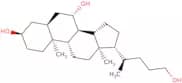
CAS :Produit contrôlé<p>Please enquire for more information about (3',5',7')-Cholane-3,7,24-triol including the price, delivery time and more detailed product information at the technical inquiry form on this page</p>Formule :C24H42O3Degré de pureté :Min. 95%Masse moléculaire :378.59 g/mol1,2,3,4-Tetrahydro-4,8-dihydroxy-2-methyl-isoquinoline
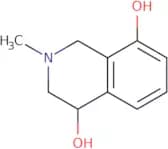
CAS :1,2,3,4-Tetrahydro-4,8-dihydroxy-2-methyl-isoquinoline is a chemical compound that has been used as an intermediate in the synthesis of pharmaceuticals. It is also a useful building block for the production of other chemicals. This compound is soluble in water. 1,2,3,4-Tetrahydro-4,8-dihydroxy-2-methyl-isoquinoline has shown to be a versatile and high quality reagent with many research applications.Formule :C10H13NO2Degré de pureté :Min. 95%Couleur et forme :Yellow PowderMasse moléculaire :179.22 g/mol[1-(3-Methylbutyl)-1H-benzimidazol-2-yl]methanol
CAS :Produit contrôléPlease enquire for more information about [1-(3-Methylbutyl)-1H-benzimidazol-2-yl]methanol including the price, delivery time and more detailed product information at the technical inquiry form on this pageFormule :C13H18N2ODegré de pureté :Min. 95%Masse moléculaire :218.29 g/mol8-Bromo-2-methylquinoline
CAS :8-Bromo-2-methylquinoline is a naphthalene derivative that has an oxidant function. It can be used as a solvent for chlorobenzene and as a catalyst for the production of bipyridines and piperazine. 8-Bromo-2-methylquinoline is also used as a ligand in the preparation of metal complexes. This compound reacts with methyl groups, chlorine, and halides to form methyl quinolines and dichloromethanes. 8-Bromo-2-methylquinoline may react with fatty acids to form polyunsaturated acid esters or with polyunsaturated fatty acids to form polyethers.Formule :C10H8BrNDegré de pureté :Min. 95%Masse moléculaire :222.08 g/molα-(2,4-Dichlorophenyl)-1H-imidazole-1-ethanol
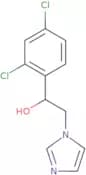
CAS :<p>a-(2,4-Dichlorophenyl)-1H-imidazole-1-ethanol is an analytical reagent that is used to identify the presence of methylbenzene in a sample. It has been used as a drug target in schistosomiasis and interacting with imprinting genes. The synthetic method for this reagent includes sodium carbonate and methylbenzene, which are heated together at low energy to produce a-(2,4-Dichlorophenyl)-1H-imidazole-1-ethanol. The analytical method for this compound involves efficient methods such as high performance liquid chromatography and gas chromatography. Methylbenzene is dissolved in trifluoroacetic acid before being mixed with anhydrous potassium carbonate. This mixture is then heated to produce a-(2,4-Dichlorophenyl)-1H-imidazole-1-ethanol.</p>Formule :C11H10Cl2N2ODegré de pureté :Min. 95%Couleur et forme :White To Beige SolidMasse moléculaire :257.12 g/mol2-(Dimethylamino)ethanol
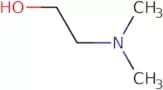
CAS :Produit contrôlé2-(Dimethylamino)ethanol is a colorless liquid that has a molecular weight of 78.1 g/mol and a boiling point of 176.1 °C. It can be found in many household products as well as cosmetics, pharmaceuticals, and chemical manufacturing. 2-(Dimethylamino)ethanol is a precursor to acetaldehyde and acetic acid, which are important intermediates in the production of polymers such as nylon. It can also be used to synthesize other chemicals such as dimethylformamide, ethylene glycol, and methyl methacrylate. This chemical reacts with calcium to form insoluble calcium 2-(dimethylamino)ethanolate (Ca(DMAE)). This reaction is reversible and the equilibrium can be shifted by changing the pH or adding another reactant such as hydrogen peroxide or hydroxide ions.Formule :C4H11NODegré de pureté :Min. 95%Couleur et forme :Clear LiquidMasse moléculaire :89.14 g/mol(+)-cis-Abienol
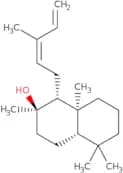
CAS :<p>(+)-Cis-abienol is a diterpene that is found in the leaves of the tobacco plant. It has been suggested to be involved in the synthesis of abscisic acid, which is an important hormone related to plant responses to water and salt stress. (+)-Cis-abienol may also have insecticidal properties and may play a role in resistance to insects. (+)-Cis-abienol has shown activity as an analytical reagent for the detection of hydroxyl groups, due to its UV absorption at 275 nm. The signal peptide sequence for this compound has been determined by analysis of tobacco sequences. This molecule's phase behavior can be predicted from its X-ray crystal structures and it is soluble in organic solvents such as benzyl alcohols or ethers. The mechanism for the reaction between (+)-cis-abienol and dehydroabietic acid has not yet been elucidated but it is thought that benzyl</p>Formule :C20H34ODegré de pureté :Min. 95%Couleur et forme :PowderMasse moléculaire :290.48 g/mol6-Heptyn-1-ol
CAS :6-Heptyn-1-ol is a naturally occurring chemical compound that has been isolated from the human colon and shown to have potent cytotoxicity against human colon carcinoma cells. 6-Heptyn-1-ol inhibits the growth of cancer cells by inducing apoptosis, the process by which a cell commits suicide. It also inhibits pancreatic lipase, an enzyme involved in fat digestion. 6-Heptyn-1-ol has been shown to be a chiral molecule with two enantiomers that can be synthesized artificially. The (R) form of 6-heptyn-1-ol is more potent than the (S) form in inducing apoptosis and inhibiting pancreatic lipase activity.Formule :C7H12ODegré de pureté :Min. 95%Masse moléculaire :112.17 g/mol2-Heptanol
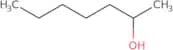
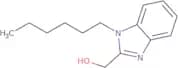
CAS :<p>2-Heptanol is a colorless liquid with a pungent odor. It is soluble in water and has a high boiling point. 2-Heptanol is an intermediate in the synthesis of fatty acids, which are used for the production of soaps, lubricants, and waxes. 2-Heptanol reacts with potassium hydroxide to produce potassium 2-heptoxide, which is soluble in water. The reaction products are caproic acid and hydroxy group. The transport properties of this compound are not well known.</p>Formule :C7H16ODegré de pureté :Min. 95%Couleur et forme :Clear LiquidMasse moléculaire :116.2 g/mol(1-Hexyl-1H-benzimidazol-2-yl)methanol
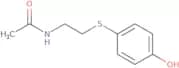
CAS :Produit contrôléPlease enquire for more information about (1-Hexyl-1H-benzimidazol-2-yl)methanol including the price, delivery time and more detailed product information at the technical inquiry form on this pageFormule :C14H20N2ODegré de pureté :Min. 95%Masse moléculaire :232.32 g/molN-Acetyl-4-S-cysteaminylphenol
CAS :<p>N-Acetyl-4-S-cysteaminylphenol is a tyrosinase inhibitor that is used in the treatment of skin disorders such as melasma and vitiligo. It slows the production of melanin by inhibiting tyrosinase activity and may be useful for treating some types of skin cancer. N-Acetyl-4-S-cysteaminylphenol also inhibits the growth of tumor cells, but not normal cells, which may be due to its ability to inhibit protein synthesis. This compound has been shown to inhibit cyclic nucleotide phosphodiesterases and cellular processes associated with the proliferation of cancer cells.</p>Formule :C10H13NO2SDegré de pureté :Min. 95%Couleur et forme :White PowderMasse moléculaire :211.28 g/mol(S)-1,2,3,4,5,6,7,8-Octahydro-1-[(4-methoxyphenyl)methyl]isoquinoline (acetate salt )
CAS :<p>(S)-1,2,3,4,5,6,7,8-Octahydro-1-[(4-methoxyphenyl)methyl]isoquinoline (acetate salt ) is a diphosphine that can be used as a catalyst to produce formic acid from methanol and carbon monoxide. This product is an enantiomer of picric acid and has been shown to be an effective additive in the crystallization of picric acid. The acetate salt is also optically pure.</p>Degré de pureté :Min. 95%4-Amino-3-bromoisoquinoline
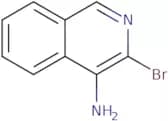
CAS :<p>4-Amino-3-bromoisoquinoline is an isocyanide that reacts with nucleophilic heteroatoms such as the amino group. It also reacts with bromine to form a bromopyridine. The nitrile group of 4-amino-3-bromoisoquinoline can be reduced with sodium borohydride to produce 4-aminoquinoline. This compound has shown potential for use in chemotherapy and treating bacterial infections.</p>Degré de pureté :Min. 95%cis-4-Hexen-1-ol
CAS :Cis-4-Hexen-1-ol is an ester compound that has a strong odor and can be used in the perfume industry. It belongs to the class of compounds called esters, which are organic compounds derived from carboxylic acids and alcohols. Cis-4-Hexen-1-ol is not volatile at room temperature and has a high resistance to oxidation. The detection methods for cis-4-Hexen-1-ol include gas chromatography, mass spectrometry, and infrared spectroscopy. When cis-4-Hexen-1-ol is subjected to oxidation by ultraviolet light or heat, it reacts with oxygen to form various oxidation products such as hexanal, hexanoic acid, hexyl acetate, and octanal. These products are responsible for its characteristic odor. Cis 4 Hexen 1 ol also has antibacterial activity against human pathogens such as Staphylococcus aureusFormule :C6H12ODegré de pureté :Min. 95%Couleur et forme :Clear LiquidMasse moléculaire :100.16 g/mol

![4-[(4-Chlorophenyl)phenylmethyl]-1-piperazineethanol dihydrochloride](/_next/image/?url=https%3A%2Fstatic.cymitquimica.com%2Fproducts%2F3D%2Fthumb-webp%2FFC53582.webp&w=3840&q=75)
![[1-(3-Methylbutyl)-1H-benzimidazol-2-yl]methanol](/_next/image/?url=https%3A%2Fstatic.cymitquimica.com%2Fproducts%2F3D%2Fthumb-webp%2FFM135812.webp&w=3840&q=75)


![(S)-1,2,3,4,5,6,7,8-Octahydro-1-[(4-methoxyphenyl)methyl]isoquinoline (acetate salt )](/_next/image/?url=https%3A%2Fstatic.cymitquimica.com%2Fproducts%2F3D%2Fthumb-webp%2FFO29465.webp&w=3840&q=75)