Alcools
Les alcools sont une large gamme de molécules organiques dérivées des hydrocarbures et contenant un ou plusieurs groupes hydroxyle (groupe OH). Ces composés sont essentiels dans diverses réactions chimiques et sont largement utilisés en laboratoire pour la synthèse, comme solvants et en chimie analytique. Chez CymitQuimica, nous proposons des alcools de haute qualité préparés pour une utilisation en laboratoire, soutenant vos recherches et applications industrielles avec des produits fiables et efficaces. Notre sélection garantit que vous disposez des alcools adaptés à vos besoins spécifiques, que ce soit pour des travaux de laboratoire de routine ou des projets de recherche spécialisés.
Sous-catégories appartenant à la catégorie "Alcools"
5814 produits trouvés pour "Alcools"
Trier par
Degré de pureté (%)
0
100
|
0
|
50
|
90
|
95
|
100
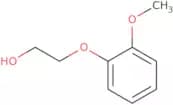
2-(2-Methoxyphenoxy)ethanol
CAS :<p>2-(2-Methoxyphenoxy)ethanol (2-MPE) is a metabolite of propanediol, which is a precursor in the synthesis of polyurethanes. 2-MPE can be oxidized by monooxygenases to form syringyl and other reactive metabolites. Basic hydrolysis may also produce monomers such as phenols, alcohols, and carboxylic acids. Syringyl is one of the metabolic products of 2-MPE, which has been shown to be resistant to degradation by basidiomycete fungi.</p>Formule :C9H12O3Degré de pureté :Min. 95%Masse moléculaire :168.19 g/mol1,2-O-Dioctadecyl-sn-glycerol
CAS :1,2-O-Dioctadecyl-sn-glycerol is a hydrogenated glycerol that can be used as an advance in synthetic chemistry. It can be hydrogenolyzed to produce choline and cyclic phosphatidylglycerols. The catalytic properties of 1,2-O-dioctadecyl-sn-glycerol are due to its ability to react with chloride or cadmium chloride to form dialkyl glycerols. This product is also used in the synthesis of cadmium.Formule :C39H80O3Degré de pureté :Min. 95%Masse moléculaire :597.05 g/mol4-[(2,4-Dimethylbenzyl)oxy]butan-1-ol
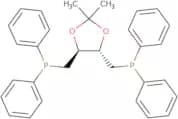
CAS :Produit contrôlé<p>Please enquire for more information about 4-[(2,4-Dimethylbenzyl)oxy]butan-1-ol including the price, delivery time and more detailed product information at the technical inquiry form on this page</p>Formule :C13H20O2Degré de pureté :Min. 95%Masse moléculaire :208.3 g/mol(2S,3S)-(+)-1,4-Bis(diphenylphosphino)-2,3-O-isopropylidene-2,3-butanediol
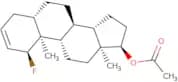
CAS :(2S,3S)-(+)-1,4-Bis(diphenylphosphino)-2,3-O-isopropylidene-2,3-butanediol is a chiral phosphine ligand. It has been used as an optical catalyst for styrene polymerization and as a homogeneous catalyst for the electrochemical oxidation of cyclic aldehydes. This compound has also been used in preparative voltammetric studies of phosphines and diphosphines. (2S,3S)-(+)-1,4-Bis(diphenylphosphino)-2,3-O-isopropylidene-2,3-butanediol can be obtained by reduction of bis-(diphenylphosphine)ethane with lithium aluminum hydride or sodium borohydride. This compound is soluble in solvents such as benzene and chloroFormule :C31H32O2P2Degré de pureté :Min. 95%Masse moléculaire :498.53 g/mol1-Fluoro-5a-androst-2-en-17b-ol acetate
CAS :Produit contrôléPlease enquire for more information about 1-Fluoro-5a-androst-2-en-17b-ol acetate including the price, delivery time and more detailed product information at the technical inquiry form on this pageFormule :C20H28FO2Degré de pureté :Min. 95%Masse moléculaire :319.43 g/molTris(dimethylaminomethyl)phenol
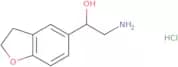
CAS :<p>Tris(dimethylaminomethyl)phenol (TDAP) is a compound that has been used as an additive in detergents, paints, and sealants. TDAP is a reactive chemical with the potential to cause adverse effects in humans such as allergic reactions and environmental pollution. TDAP is classified as an extremely hazardous substance by the United States Environmental Protection Agency. TDAP can be found in many household products and building materials, including paint and sealants. TDAP can also be found in cosmetics such as shampoos, lotions, and deodorant. TDAP may also be found in some types of food packaging materials. Long-term exposure to TDAP may lead to calcium carbonate deposits on the lungs or kidney stones due to increased levels of boron nitride-induced calcium oxalate crystals in urine.</p>Formule :C15H27N3ODegré de pureté :Min. 95%Couleur et forme :Clear LiquidMasse moléculaire :265.39 g/mol2-Amino-1-(2,3-dihydro-benzofuran-5-yl)-ethanolHydrochloride
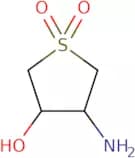
CAS :Produit contrôléPlease enquire for more information about 2-Amino-1-(2,3-dihydro-benzofuran-5-yl)-ethanolHydrochloride including the price, delivery time and more detailed product information at the technical inquiry form on this pageFormule :C10H14ClNO2Degré de pureté :Min. 95%Masse moléculaire :215.68 g/mol4-Aminotetrahydrothiophene-3-ol 1,1-dioxide
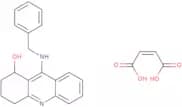
CAS :<p>Please enquire for more information about 4-Aminotetrahydrothiophene-3-ol 1,1-dioxide including the price, delivery time and more detailed product information at the technical inquiry form on this page</p>Formule :C4H9NO3SDegré de pureté :Min. 95%Masse moléculaire :151.19 g/mol9-(Benzylamino)-1,2,3,4-tetrahydroacridin-1-ol maleate
CAS :9-(Benzylamino)-1,2,3,4-tetrahydroacridin-1-ol maleate is a cholinergic drug that is used for the treatment of inflammatory diseases. It inhibits phosphodiesterase activity and has been shown to be effective in clinical studies against a number of inflammatory diseases. This drug also has anti-inflammatory properties and can be used to treat acute inflammation. 9-(Benzylamino)-1,2,3,4-tetrahydroacridin-1-ol maleate is also conjugated with fatty acids and this formation helps to increase its bioavailability.Formule :C24H24N2O5Degré de pureté :Min. 95%Masse moléculaire :420.46 g/mol(aR)-a-[[[2-(4-Nitrophenyl)ethyl]amino]methyl]benzenemethanol
CAS :<p>(aR)-a-[[[2-(4-Nitrophenyl)ethyl]amino]methyl]benzenemethanol is a chiral, carbonyl compound that has been used in the synthesis of mirabegron. It is synthesized by reacting an amide with a hydrochloric acid salt. The product yield of (aR)-a-[[[2-(4-Nitrophenyl)ethyl]amino]methyl]benzenemethanol is high and it does not react with aluminium or amide impurities. This compound can be used for the industrial synthesis of mirabegron, which is a drug for the treatment of urinary incontinence. The reduction reaction and hydrolysis reactions are both important to this process.</p>Degré de pureté :Min. 95%1H-Pyrazol-4-ol
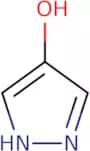
CAS :<p>1H-Pyrazol-4-ol is a molecule that has been shown to have antibacterial properties by inhibiting the growth of bacteria. It was also found to be effective in inhibiting the activity of dopamine β-hydroxylase, which is an enzyme that catalyzes the conversion of dopamine to norepinephrine. 1H-Pyrazol-4-ol has been shown to inhibit nitrite ion reductase, which converts nitrite ions into nitric oxide. Nitric oxide is a potent vasodilator and can cause hypotension. 1H-Pyrazol-4-ol also inhibits the formation of nitro groups from diazonium salts, which are used in many industrial processes, including dyeing and photography. 1H-Pyrazol-4-ol is activated by UV light and reacts with epididymal adipose tissue (fatty tissue) in rats to generate pyrazole derivatives with cytotoxic effects on liver</p>Formule :C3H4N2ODegré de pureté :Min. 95%Masse moléculaire :84.08 g/mol3-Bromo-2-nitrophenol
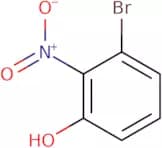
CAS :3-Bromo-2-nitrophenol (3-BNP) is a brominating agent that can be used in the synthesis of a variety of compounds. It is prepared by the refluxing of 3-bromo-2-nitrobenzene with lithium chloride, followed by treatment with trifluoromethanesulfonic anhydride to yield 3-bromo-2-(trifluoromethyl)phenoxyacetic acid. The product can also be obtained from 2,4,6-trinitrophenol and NBS. 3-BNP has shown chemoselectivity for chlorides relative to iodides or fluorides. The yields are higher when it is used in coupling reactions and permutations with lithium or magnesium.Formule :C6H4BrNO3Degré de pureté :Min. 95%Masse moléculaire :218 g/mol(5-Amino-1H-1,2,4-triazol-3-yl)methanol
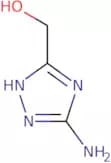
CAS :<p>Please enquire for more information about (5-Amino-1H-1,2,4-triazol-3-yl)methanol including the price, delivery time and more detailed product information at the technical inquiry form on this page</p>Formule :C3H6N4ODegré de pureté :Min. 95%Masse moléculaire :114.11 g/mol4-Methyl estradiol
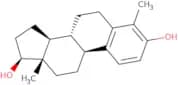
CAS :Produit contrôlé<p>4-Methyl estradiol is an estrogen that is a naturally occurring metabolite of estradiol. It has been shown to have weak estrogenic effects and may be used in low doses to treat breast cancer. 4-Methyl estradiol binds to the estrogen receptor with high affinity, which leads to its activation and subsequent translocation into the nucleus, where it binds to DNA and regulates gene transcription. The binding of 4-methyl estradiol to the receptor also stimulates the production of other hormones such as progesterone and estrone.</p>Formule :C19H26O2Degré de pureté :Min. 95 Area-%Couleur et forme :White PowderMasse moléculaire :286.41 g/mol3-O-Methyl 4-hydroxy estradiol
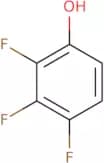
CAS :Produit contrôlé<p>Please enquire for more information about 3-O-Methyl 4-hydroxy estradiol including the price, delivery time and more detailed product information at the technical inquiry form on this page</p>Formule :C19H26O3Degré de pureté :Min. 95%Masse moléculaire :302.41 g/mol2,3,4-Trifluorophenol
CAS :<p>2,3,4-Trifluorophenol is a chemical control agent that is used as an intermediate in the synthesis of organic compounds. It reacts with hydroxyl groups to form 2,3,4-trifluoroacetophenone from a proton. The compound has low light and x-ray absorption properties and is typically used in liquid crystal compositions. Chemical ionization experiments have shown that 2,3,4-trifluorophenol binds to copper oxide and forms copper trifluoride. This compound also has been found to be conjugated with neutral ph phenols and chlorinated with chlorine atom.</p>Formule :C6H3F3ODegré de pureté :Min. 95%Couleur et forme :PowderMasse moléculaire :148.08 g/molGestadienol
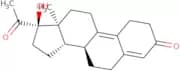
CAS :Produit contrôléGestadienol is a synthetic, reconstituted drug that is used to treat congestive heart failure. Gestadienol is produced by reacting hydrochloric acid with isopropyl palmitate and diluent. The reaction yield of this process can be increased by implanting the drug into animal tissue for a period of time before extraction. Gestadienol binds to glucuronidated compounds in the blood, which may be due to its chemical similarity to estradiol. This binding prevents the glucuronidated compound from being excreted in urine and increases their concentration in the bloodstream. Gestadienol has been shown to increase postnatal development in rats, which may be due to its ability to bind progesterone receptors on cells and inhibit progesterone-mediated effects.Formule :C20H26O3Degré de pureté :Min. 95%Masse moléculaire :314.42 g/mol1-Benzyl-1H-benzimidazole-2-thiol
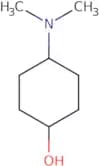
CAS :Please enquire for more information about 1-Benzyl-1H-benzimidazole-2-thiol including the price, delivery time and more detailed product information at the technical inquiry form on this pageFormule :C14H12N2SDegré de pureté :Min. 95%Masse moléculaire :240.32 g/mol4-(Dimethylamino)cyclohexanol
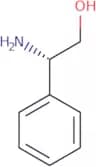
CAS :<p>4-(Dimethylamino)cyclohexanol is a colorless liquid that has a sweet odor. It is insoluble in water but soluble in alcohol, ether, and chloroform. This compound has been used as a solvent for fats, oils, waxes, resins, and rubber. 4-(Dimethylamino)cyclohexanol is found in the environment as a result of its use in insecticides and herbicides. 4-(Dimethylamino)cyclohexanol has been shown to be carcinogenic in animal studies.</p>Formule :C8H17NODegré de pureté :Min. 95%Masse moléculaire :143.23 g/molL-Phenylglycinol
CAS :<p>L-phenylglycinol is a chiral compound that is synthesized by the reaction of phenylglycinol with hydroxide solution in the presence of an asymmetric synthesis catalyst. It is used as a precursor to chiral amides and aziridines, which are important for addressing the need for enantiopure compounds. The reaction mechanism involves nucleophilic substitution at the amino function, which can be catalyzed by copper complexes in solution. This reaction can also be monitored using liquid chromatography methods.</p>Formule :C8H11NODegré de pureté :Min. 95%Couleur et forme :White PowderMasse moléculaire :137.18 g/mol


![4-[(2,4-Dimethylbenzyl)oxy]butan-1-ol](/_next/image/?url=https%3A%2Fstatic.cymitquimica.com%2Fproducts%2F3D%2Fthumb-webp%2FFD131280.webp&w=3840&q=75)
![(aR)-a-[[[2-(4-Nitrophenyl)ethyl]amino]methyl]benzenemethanol](/_next/image/?url=https%3A%2Fstatic.cymitquimica.com%2Fproducts%2F3D%2Fthumb-webp%2FFN75044.webp&w=3840&q=75)