Alcools
Les alcools sont une large gamme de molécules organiques dérivées des hydrocarbures et contenant un ou plusieurs groupes hydroxyle (groupe OH). Ces composés sont essentiels dans diverses réactions chimiques et sont largement utilisés en laboratoire pour la synthèse, comme solvants et en chimie analytique. Chez CymitQuimica, nous proposons des alcools de haute qualité préparés pour une utilisation en laboratoire, soutenant vos recherches et applications industrielles avec des produits fiables et efficaces. Notre sélection garantit que vous disposez des alcools adaptés à vos besoins spécifiques, que ce soit pour des travaux de laboratoire de routine ou des projets de recherche spécialisés.
Sous-catégories appartenant à la catégorie "Alcools"
5814 produits trouvés pour "Alcools"
Trier par
Degré de pureté (%)
0
100
|
0
|
50
|
90
|
95
|
100
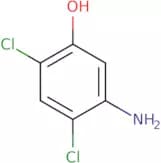
5-Amino-2,4-dichlorophenol
CAS :<p>Please enquire for more information about 5-Amino-2,4-dichlorophenol including the price, delivery time and more detailed product information at the technical inquiry form on this page</p>Formule :C6H5Cl2NODegré de pureté :Min. 95%Couleur et forme :PowderMasse moléculaire :178.02 g/molEstradiol hemihydrate
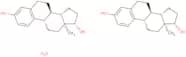
CAS :Produit contrôlé<p>Estradiol hemihydrate is a synthetic estrogen. It binds to estrogen receptors, causing the activation of DNA transcription and synthesis of messenger RNA. Estradiol hemihydrate has been used for the treatment of various symptoms, such as menopause, osteoporosis, breast cancer, and metabolic disorders. The drug is most often administered by injection or in a polymeric matrix that dissolves slowly in the mouth. The recommended dose is between 0.5mg and 1mg per day. Estradiol hemihydrate can be detected in plasma using an analytical method called liquid chromatography-tandem mass spectrometry (LC-MS/MS).</p>Formule :(C18H24O2)2•H2ODegré de pureté :Min. 95%Couleur et forme :PowderMasse moléculaire :562.78 g/mol(1S,2R)-2-Aminocyclohexanol hydrochloride
CAS :<p>Please enquire for more information about (1S,2R)-2-Aminocyclohexanol hydrochloride including the price, delivery time and more detailed product information at the technical inquiry form on this page</p>Formule :C6H14ClNODegré de pureté :Min. 95%Masse moléculaire :151.63 g/mol4-Methylquinoline
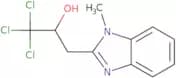
CAS :<p>4-Methylquinoline is a natural compound that is structurally related to coumarin. It serves as an enzyme substrate for various types of enzymes, and has been shown to inhibit the activity of enzymes such as N-acetyltransferase, indoleamine 2,3-dioxygenase, and tryptophan 2,3-dioxygenase. 4-Methylquinoline has also been shown to be effective against infectious diseases such as toxoplasmosis and leishmaniasis. Furthermore, 4-methylquinoline has been shown to have anti-inflammatory properties in autoimmune diseases such as multiple sclerosis. The mechanism of action of 4-methylquinoline is not fully understood but it may interfere with the production of nitric oxide by inhibiting the enzyme nitric oxide synthase.</p>Formule :C10H9NDegré de pureté :Min. 95%Masse moléculaire :143.19 g/mol1,1,1-Trichloro-3-(1-methyl-1H-benzimidazol-2-yl)propan-2-ol
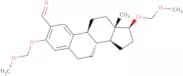
CAS :Produit contrôlé<p>Please enquire for more information about 1,1,1-Trichloro-3-(1-methyl-1H-benzimidazol-2-yl)propan-2-ol including the price, delivery time and more detailed product information at the technical inquiry form on this page</p>Formule :C11H11Cl3N2ODegré de pureté :Min. 95%Masse moléculaire :293.58 g/mol2-Formyl-3,17b-O-bis(methoxymethyl)estradiol
CAS :Produit contrôléPlease enquire for more information about 2-Formyl-3,17b-O-bis(methoxymethyl)estradiol including the price, delivery time and more detailed product information at the technical inquiry form on this pageFormule :C23H32O5Degré de pureté :Min. 95%Masse moléculaire :388.5 g/molErythromycin A enol ether
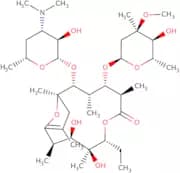
CAS :<p>Erythromycin A enol ether is an antimicrobial agent that is used as an antiretroviral therapy for HIV. It has been shown to be active against microbial infections caused by resistant microorganisms, such as methicillin-resistant Staphylococcus aureus and erythromycin-resistant Enterobacteriaceae. Erythromycin A enol ether has been found to be a promising candidate for topical applications due to its low toxicity and ability to penetrate the skin. The metabolite of erythromycin A enol ether is formed through hydrolysis with hydrochloric acid in the presence of glycol ester. The resulting product, erythromycin A, is an antibiotic that inhibits bacterial growth by blocking peptide synthesis at the ribosome level.</p>Formule :C37H65NO12Degré de pureté :Min. 95%Masse moléculaire :715.91 g/mol2-(1-Adamantyl)propan-2-ol
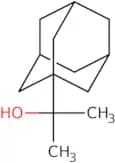
CAS :<p>2-(1-Adamantyl)propan-2-ol is an alcohol that can be synthesized in a multistep process. This molecule has been shown to inhibit the influenza virus, which is a type of negative strand RNA virus. It reacts with the sulfide group on the influenza virus, forming a covalent bond. The structure of 2-(1-Adamantyl)propan-2-ol is similar to that of amantadine and azetidine, which are also antiviral drugs used for the treatment of influenza.</p>Formule :C13H22ODegré de pureté :Min. 95%Masse moléculaire :194.31 g/mol2-(4-(4,4,5,5-Tetramethyl-l.3,2-dioxaborolan-2-yl)phenyl)ethanol
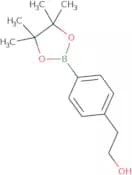
CAS :2-(4-(4,4,5,5-Tetramethyl-l,3,2-dioxaborolan-2-yl)phenyl)ethanol is a fine chemical that has been used as a reagent and as a building block for the synthesis of complex compounds. It is also an intermediate in organic reactions and has been used as a reaction component in the synthesis of various drugs and agrochemicals. 2-(4-(4,4,5,5-Tetramethyl-l,3,2-dioxaborolan-2-yl)phenyl)ethanol is useful as a scaffold in organic synthesis. This compound can be converted to other useful chemicals such as tetrahydropyranones and dibenzalacetone derivatives. 2-(4-(4,4,5,5-Tetramethyl-l,3,2-dioxaborolan-2-yl)phenyl)ethanolFormule :C14H21BO3Degré de pureté :Min. 95%Couleur et forme :White PowderMasse moléculaire :248.13 g/molRITA
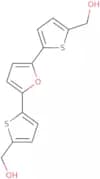
CAS :<p>RITA is a novel compound that has been shown to have anticancer activity in vivo in a rat model. RITA is a small molecule with high potency and low toxicity. It binds selectively to the α subunit of the enzyme topoisomerase II, which is involved in DNA replication and repair. RITA has been shown to induce apoptosis in cancer cells by pro-apoptotic proteins such as Bax and Bak. These proteins are known for their ability to induce apoptosis by increasing mitochondrial membrane permeability, inhibiting mitochondrial functions, or destabilizing the mitochondrial membrane potential. The compound class of RITA is not yet known, but it has been shown to be chemically stable at physiological pH levels and does not require metabolic activation for its cytotoxicity. The pharmacokinetics of this drug have also been studied in human liver cells and humans, indicating that this drug may be able to cross the blood-brain barrier.</p>Formule :C14H12O3S2Degré de pureté :Min. 95%Masse moléculaire :292.38 g/mol3-Phenyl-1-propanol
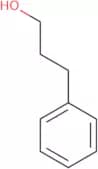
CAS :<p>3-Phenyl-1-propanol is an organic compound that belongs to the class of trifluoroacetic acids. It has a molecular weight of 134.24 and a molecular formula of C8H12O2F3. 3-Phenyl-1-propanol is a reactive compound that reacts with germinating seeds, causing them to stop growing. The reaction products are fatty acid esters, which may be responsible for the inhibition of seed germination. 3-Phenyl-1-propanol can be prepared by reacting phenylacetaldehyde with trifluoroacetic acid in the presence of potassium hydroxide at high temperature and pressure. This method also produces 4-vinylbenzyl alcohol as a side product, which is used in the production of polymers and plastics.</p>Formule :C9H12ODegré de pureté :Min. 95%Masse moléculaire :136.19 g/molD-Tryptophanol
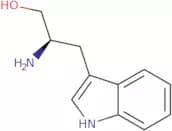
CAS :Produit contrôlé<p>D-Tryptophanol is a synthetic, enantiopure, hydroxymethylated tryptamine. It is a maltobionic molecule and it can be prepared by the hydrolysis of L-tryptophan with sodium hydroxide in water. D-Tryptophanol can also be synthesized from 3,4-diaminopyridine in the presence of a base and catalytic amount of copper(II) chloride. The chemical stability of D-tryptophanol has been studied using HPLC methods. Molecular modeling studies have shown that the compound forms hydrogen bonds with its neighboring molecules and has a high affinity for binding to human liver cells. D-Tryptophanol has been found to inhibit cancer cell growth at nanomolar concentrations, making it an attractive candidate for chemotherapeutic drugs. Calixarenes are used as chiral synthons to produce racemic mixtures of D-tryptophanol that could be</p>Formule :C11H14N2ODegré de pureté :Min. 95%Masse moléculaire :190.24 g/mol3-O-Acetyl 5,14-androstadiene-3b,17b-diol
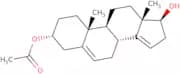
CAS :Produit contrôléPlease enquire for more information about 3-O-Acetyl 5,14-androstadiene-3b,17b-diol including the price, delivery time and more detailed product information at the technical inquiry form on this pageFormule :C21H30O3Degré de pureté :Min. 95%Masse moléculaire :330.46 g/mol3-Isoquinolinecarboxylic acid
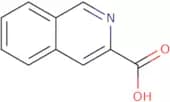
CAS :<p>3-Isoquinolinecarboxylic acid is a molecule with a reactive group that can form cyclic structures. It has been shown that 3-Isoquinolinecarboxylic acid is an apoptotic agent in human macrophages and induces the release of picolinic acid from these cells. This molecule also has a high affinity for α7 nicotinic acetylcholine receptors, which are present on the surface of nerve cells. 3-Isoquinolinecarboxylic acid can be synthesized by condensing picolinic acid, an aromatic aminoacid, with an appropriate amine. The synthesis of this heterocycle is catalyzed by an enzyme called quinolinate synthase. The product of this reaction is oxidized to form 3-isoquinolyl carboxylic acid. The final step in the synthesis involves the oxidative cleavage of a disulfide bond using hydrogen peroxide, yielding 3-isoquinoly</p>Formule :C10H7NO2Degré de pureté :Min. 95%Masse moléculaire :173.17 g/molChlormadinol acetate
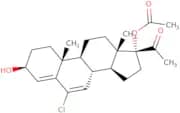
CAS :Produit contrôlé<p>Chlormadinol acetate is a stable complex of a fatty acid and an antibiotic that is used to treat infections caused by bacteria. It has been shown to have high resistance to antimicrobial agents, including amoxicillin-clavulanic acid, tetracycline, and multidrug efflux pumps. Chlormadinol acetate has also been shown to inhibit the growth of certain cancer cells in vitro and in vivo using gene therapy. This drug also inhibits bacterial protein synthesis by binding to the 30S ribosomal subunit and preventing the formation of a functional 70S ribosome. Chlormadinol acetate has been shown to be clinically relevant in mice when used with amoxicillin-clavulanic acid or tetracycline.</p>Formule :C23H31ClO4Degré de pureté :Min. 95%Masse moléculaire :406.94 g/mol2-(Trimethylsily)ethanol
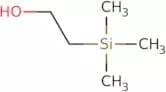
CAS :<p>2- (Trimethylsily)ethanol is a hdac inhibitor that is used in the synthesis of other chemical substances. It inhibits HDAC activity by binding to the hydroxyl group on the histone and prevents acetylation of lysine residues, preventing gene transcription. 2-(Trimethylsily)ethanol has been shown to inhibit oxidation reactions in biological systems, such as those caused by trifluoroacetic acid or trichloroacetic acid. In addition, this reagent can be used to prepare functional groups through a synthetic method with an activation energy of 15 kcal/mol and a reaction rate constant of 0.04 M-1 s-1. 2-(Trimethylsily)ethanol has also been used for preparative methods with cleavage products including sulfamoyl chloride.</p>Formule :C5H14OSiDegré de pureté :95%NmrCouleur et forme :PowderMasse moléculaire :118.25 g/molHeptadecan-1-ol
CAS :<p>Heptadecan-1-ol is a long-chain fatty alcohol, which is commonly derived from the reduction of heptadecanoic acid or by hydrogenation of heptadecane. This compound acts primarily as a nonionic surfactant due to its amphiphilic nature, where the hydrophobic alkyl chain and the hydrophilic hydroxyl group interact with diverse components in a system. Its surfactant properties lead to applications in the formulation of emulsions, facilitating improved mixing and stability in complex mixtures.</p>Degré de pureté :Min. 95%2,2,3,3,4,4,5,5-Octafluoro-1,6-hexanediol
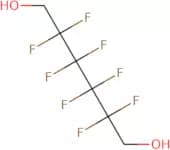
CAS :Octafluoro-1,6-hexanediol is a cyclic diol with the chemical formula C6F14O2. The compound is produced by the reaction of hexafluoropropylene oxide and hydrogen fluoride in the presence of a catalyst. This process can be repeated to produce higher molecular weight compounds such as octafluoro-1,8-octanediol (C8F18O2) and octafluoro-1,10-decanediol (C10F22O2). Octafluoro-1,6-hexanediol has been studied using spectroscopies and x-ray crystallography techniques. X-ray crystallographic studies have shown that this molecule has an intramolecular conformation with one hydroxy group on each end of the molecule. Octafluoro-1,6-hexanediol forms crystals that are colorless or light yellow in color. Crystals are monoclinFormule :C6H6F8O2Degré de pureté :Min. 95%Couleur et forme :PowderMasse moléculaire :262.1 g/molSodium benzyloxide solution - 1.0 M in benzyl alcohol
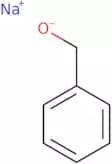
CAS :<p>Sodium benzyloxide is an alkanoic acid with the chemical formula CH3C6H2O2. It is used as a matrix metalloproteinase inhibitor in the synthesis of bicyclic heterocycles. It is also used in asymmetric synthesis and as a substrate for enzyme inhibitors. Sodium benzyloxide has been shown to be effective against herpes simplex virus by preventing viral replication and inducing apoptosis.</p>Formule :C6H5CH2ONaCouleur et forme :Clear LiquidMasse moléculaire :130.12 g/mol(+)-cis-Abienol
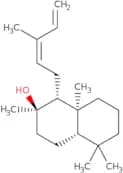
CAS :<p>(+)-Cis-abienol is a diterpene that is found in the leaves of the tobacco plant. It has been suggested to be involved in the synthesis of abscisic acid, which is an important hormone related to plant responses to water and salt stress. (+)-Cis-abienol may also have insecticidal properties and may play a role in resistance to insects. (+)-Cis-abienol has shown activity as an analytical reagent for the detection of hydroxyl groups, due to its UV absorption at 275 nm. The signal peptide sequence for this compound has been determined by analysis of tobacco sequences. This molecule's phase behavior can be predicted from its X-ray crystal structures and it is soluble in organic solvents such as benzyl alcohols or ethers. The mechanism for the reaction between (+)-cis-abienol and dehydroabietic acid has not yet been elucidated but it is thought that benzyl</p>Formule :C20H34ODegré de pureté :Min. 95%Couleur et forme :PowderMasse moléculaire :290.48 g/mol