Alcools
Les alcools sont une large gamme de molécules organiques dérivées des hydrocarbures et contenant un ou plusieurs groupes hydroxyle (groupe OH). Ces composés sont essentiels dans diverses réactions chimiques et sont largement utilisés en laboratoire pour la synthèse, comme solvants et en chimie analytique. Chez CymitQuimica, nous proposons des alcools de haute qualité préparés pour une utilisation en laboratoire, soutenant vos recherches et applications industrielles avec des produits fiables et efficaces. Notre sélection garantit que vous disposez des alcools adaptés à vos besoins spécifiques, que ce soit pour des travaux de laboratoire de routine ou des projets de recherche spécialisés.
Sous-catégories appartenant à la catégorie "Alcools"
5814 produits trouvés pour "Alcools"
Trier par
Degré de pureté (%)
0
100
|
0
|
50
|
90
|
95
|
100
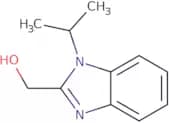
(1-Isopropyl-1H-benzimidazol-2-yl)methanol
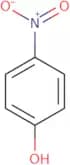
CAS :Produit contrôlé<p>Please enquire for more information about (1-Isopropyl-1H-benzimidazol-2-yl)methanol including the price, delivery time and more detailed product information at the technical inquiry form on this page</p>Formule :C11H14N2ODegré de pureté :Min. 95%Masse moléculaire :190.24 g/mol4-Nitrophenol
CAS :4-Nitrophenol is a chemical compound that is used in wastewater treatment to remove iron and copper ions. 4-Nitrophenol has been shown to catalyze the oxidation of picolinic acid by copper chloride, forming oxalic acid. The redox potential of 4-nitrophenol is -0.53 V, which makes it a suitable electron acceptor for the reaction. The reaction mechanism of this process involves the formation of a nitroso radical intermediate, which reacts with copper ions to form copper nitroso complexes and then reacts with oxygen to form hydroxylamine radicals. This reaction can also be followed using fluorescence probe measurements or electrochemical impedance spectroscopy (EIS).Formule :C6H5NO3Degré de pureté :Min. 95%Couleur et forme :PowderMasse moléculaire :139.11 g/molrac-3-hexadecanamido-2-methoxypropan-1-ol phosphocholine monohydrate
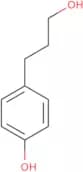
CAS :Please enquire for more information about rac-3-hexadecanamido-2-methoxypropan-1-ol phosphocholine monohydrate including the price, delivery time and more detailed product information at the technical inquiry form on this pageFormule :C25H55N2O7PDegré de pureté :Min. 95%Masse moléculaire :526.69 g/mol3-(4-Hydroxyphenyl)-1-propanol
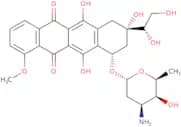
CAS :<p>Produces a fluorogenic signal in the presence of peroxidase</p>Formule :C9H12O2Degré de pureté :Min. 95%Masse moléculaire :152.19 g/molDoxorubicinol,mixture of diastereomers
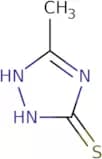
CAS :<p>Doxorubicinol, a mixture of diastereomers, is an anthracycline antibiotic that inhibits the growth of cells by binding to DNA and preventing the production of RNA. Doxorubicinol has been shown to be effective in treating breast cancer and solid tumours, including those resistant to doxorubicin. This drug has also been shown to inhibit the production of matrix metalloproteinases that are involved in tumor invasion and metastasis. The concentration-time curve for doxorubicinol can be determined experimentally by blood sampling and measuring its metabolites. The ryanodine receptor is a calcium channel found on the surface membrane of cardiac muscle cells that regulates intracellular calcium levels. Doxorubicinol may bind to this receptor, which could account for its cardiotoxic effects.</p>Formule :C27H31NO11Degré de pureté :(%) Min. 90%Masse moléculaire :545.54 g/mol3-Methyl-1H-1,2,4-triazole-5-thiol
CAS :3-Methyl-1H-1,2,4-triazole-5-thiol is a coagulant agent that has been shown to be effective in the field of wastewater treatment. 3-Methyl-1H-1,2,4-triazole-5-thiol binds metal ions and prevents them from catalyzing reactions in the filtrate. It also has an inhibitory effect on polymerization reactions by binding to functional groups. 3MTH is used as a coagulant additive in many industries, such as papermaking, textile printing and dyeing, food processing and leather tanning. The use of 3MTH has been shown to reduce the amount of water needed during the production process. This product can also be used for coatings and other applications where it is necessary to prevent corrosion or environmental pollution by metal ions.Formule :C3H5N3SDegré de pureté :Min. 95%Masse moléculaire :115.16 g/mol(1R,2S)-2-[N-Benzyl-N-(mesitylenesulfonyl)amino]-1-phenyl-1-propanol
CAS :Produit contrôlé<p>Please enquire for more information about (1R,2S)-2-[N-Benzyl-N-(mesitylenesulfonyl)amino]-1-phenyl-1-propanol including the price, delivery time and more detailed product information at the technical inquiry form on this page</p>Formule :C25H29NO3SDegré de pureté :Min. 95%Masse moléculaire :423.57 g/mol5-Chloropentanol
CAS :5-Chloropentanol is a reactive compound that can be used as an epidermal growth factor. It has been shown to have potentiating effects on the production of epidermal growth factor in a biological sample. 5-Chloropentanol has also been shown to increase the rate of cell proliferation, which could be due to its ability to generate reactive chloroform in cells. It is not known whether 5-Chloropentanol has any carcinogenic properties.Degré de pureté :Min. 95%2-[(4-Methylbenzenesulfonyl)oxy]ethan-1-ol
CAS :<p>2-[(4-Methylbenzenesulfonyl)oxy]ethan-1-ol is a compound that contains a benzene ring and an ethyl chain. It has the following chemical structure: It is structurally related to benzodiazepine, but with an amide group instead of a diazepine ring. 2-[(4-Methylbenzenesulfonyl)oxy]ethan-1-ol is a membrane stabilizer that inhibits thrombin and can be used as an anticoagulant. This compound also has growth factor activity and can be used in the synthesis of heterocyclic compounds.</p>Formule :C9H12O4SDegré de pureté :Min. 95%Couleur et forme :Clear LiquidMasse moléculaire :216.26 g/molKushenol X
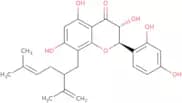
CAS :Kushenol X is a bioactive flavonoid compound, which is derived from the traditional Chinese medicinal plant Sophora flavescens. Known for its diverse pharmacological activities, Kushenol X primarily exerts its effects through the modulation of various cellular pathways. This compound has been found to interact with signaling molecules and pathways implicated in inflammation and cancer, exhibiting both anti-inflammatory and anticancer properties.Degré de pureté :Min. 95%Naphthalen-2-ethanol
CAS :<p>Naphthalen-2-ethanol is a primary alcohol that has been synthesized and immobilized onto boron nitride. It can be used as a synthetic reaction rate indicator. Naphthalen-2-ethanol is soluble in organic solvents such as methanol, which can be used to determine the concentration of methanol in solution by observing the change in absorbance at 230 nm. This compound has functional groups such as carbinols, which are characterized by their high reactivity and ability to form esters, ethers, amides, or nitriles. Naphthalen-2-ethanol also reacts with lipases to produce polyamines and with chromatography to produce substitutive nomenclature.</p>Formule :C12H12ODegré de pureté :Min. 95%Masse moléculaire :172.22 g/mol2-(1-Adamantyl)propan-2-ol
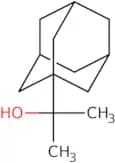
CAS :<p>2-(1-Adamantyl)propan-2-ol is an alcohol that can be synthesized in a multistep process. This molecule has been shown to inhibit the influenza virus, which is a type of negative strand RNA virus. It reacts with the sulfide group on the influenza virus, forming a covalent bond. The structure of 2-(1-Adamantyl)propan-2-ol is similar to that of amantadine and azetidine, which are also antiviral drugs used for the treatment of influenza.</p>Formule :C13H22ODegré de pureté :Min. 95%Masse moléculaire :194.31 g/mol4-Hydroxy-3-nitro-2(1H)-quinolinone
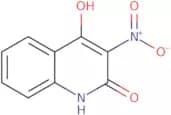
CAS :<p>4-Hydroxy-3-nitro-2(1H)-quinolinone is a quinoline derivative that has been shown to have anticancer activity against cancer cells. It can be used for the treatment of various types of cancer, including lung cancer, breast cancer, and colon cancer. This drug inhibits the growth of cancer cells by blocking the cycle at the G1 phase and inducing apoptosis. It also disrupts mitochondrial membrane potential, leading to an increase in reactive oxygen species and DNA damage. 4-Hydroxy-3-nitro-2(1H)-quinolinone is an epidermal growth factor receptor (EGFR) antagonist and blocks epidermal growth factor signaling through its inhibition of EGFR tyrosine kinase activity. It also downregulates TNFα expression in tumor cells by inhibiting NFκB activation.</p>Formule :C9H6N2O4Degré de pureté :Min. 95%Masse moléculaire :206.16 g/molChromagnol
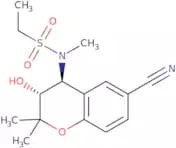
CAS :<p>Chromagnol is a drug that inhibits the enzyme protein kinase C (PKC). It has been shown to have inhibitory properties on cardiac muscle cells and whole-cell recordings of heart cells. Chromagnol has also been shown to affect the function of bowel disease, including papillary muscle. Chromagnol has been shown to have effects on cardiac and atrial tissue. This drug may be a potential treatment for autoimmune diseases, such as multiple sclerosis, or other diseases that are caused by PKC overactivity. The mechanisms of action are not fully understood but it is believed that chromanol binds to the cytosolic Ca2+ ion channel, preventing it from opening and releasing Ca2+, which leads to an increase in intracellular Ca2+.</p>Formule :C15H20N2O4SDegré de pureté :Min. 95%Masse moléculaire :324.4 g/mol4-Hydroxy-7-methoxyquinoline
CAS :<p>4-Hydroxy-7-methoxyquinoline is an anti-malarial drug that belongs to the class of trimethyl, trifluoromethyl group. It is a cyclic compound and its synthesis starts with cyclization of the methyl derivative, which forms a ring. This product is used in clinical practice as an inhibitor of malarial protozoa and has been shown to have mechanistic effects on the cytochrome bc1 complex containing red blood cells. 4-Hydroxy-7-methoxyquinoline also inhibits the growth of bacteria by binding to the enzyme methionine synthase, which is involved in the biosynthesis of methionine from homocysteine. The product also has an inhibitory effect on DNA synthesis and protein synthesis.</p>Formule :C10H9NO2Degré de pureté :Min. 95%Masse moléculaire :175.18 g/mol2-Amino-1-(2,3-dihydro-benzofuran-5-yl)-ethanol
CAS :Produit contrôléPlease enquire for more information about 2-Amino-1-(2,3-dihydro-benzofuran-5-yl)-ethanol including the price, delivery time and more detailed product information at the technical inquiry form on this pageFormule :C10H13NO2Degré de pureté :Min. 95%Masse moléculaire :179.22 g/molRac 1,2-bis-palmitoyl-3-chloropropanediol
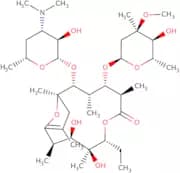
CAS :<p>Rac-1,2-bis-palmitoyl-3-chloropropanediol is a dispersive molecule that is composed of a fatty acid and a chlorinated derivative of palmitic acid. It is used to calibrate the mass spectrometer and as an internal standard in quantitative analysis. Rac-1,2-bis-palmitoyl-3-chloropropanediol reacts with electrospray ionization with a dose-dependent response. It has been shown to be toxic to kidney cells at high doses but not at low doses. This chemical has been detected in food samples after being absorbed from the gastrointestinal tract. Rac 1,2-bis-palmitoyl 3 chloropropanediol can be found in the dipalmitate form or as formic acid.</p>Formule :C35H67ClO4Degré de pureté :95%NmrCouleur et forme :PowderMasse moléculaire :587.36 g/molErythromycin A enol ether
CAS :<p>Erythromycin A enol ether is an antimicrobial agent that is used as an antiretroviral therapy for HIV. It has been shown to be active against microbial infections caused by resistant microorganisms, such as methicillin-resistant Staphylococcus aureus and erythromycin-resistant Enterobacteriaceae. Erythromycin A enol ether has been found to be a promising candidate for topical applications due to its low toxicity and ability to penetrate the skin. The metabolite of erythromycin A enol ether is formed through hydrolysis with hydrochloric acid in the presence of glycol ester. The resulting product, erythromycin A, is an antibiotic that inhibits bacterial growth by blocking peptide synthesis at the ribosome level.</p>Formule :C37H65NO12Degré de pureté :Min. 95%Masse moléculaire :715.91 g/mol4-Bromoisoquinoline
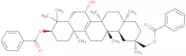
CAS :4-Bromoisoquinoline is an aryl halide that can be used in the cross-coupling reaction with other aryl halides. It has been shown to have anticancer activity and to inhibit the growth of tumour cell lines in vitro. This compound is also efficient for inhibiting leukemia cells. 4-Bromoisoquinoline has been shown to have an inhibitory effect on cancer cells through the inhibition of DNA synthesis and RNA transcription, as well as by inducing apoptosis. The mechanism of action may be due to its ability to bind to aromatic hydrocarbons and halides, which leads to thermodynamic changes and vibrational energy transfer.Formule :C9H6BrNDegré de pureté :Min. 95%Masse moléculaire :208.05 g/mol3,29-Dibenzoyl rarounitriol
CAS :Produit contrôlé<p>3,29-Dibenzoyl rarounitriol (3,29-DBR) is a quercetin glycoside that has been shown to be an effective inhibitor of the H1 receptor. It prevents the binding of histamine to the H1 receptor on cells, preventing the release of inflammatory compounds such as lysosomal enzymes and prostaglandins. 3,29-DBR has been shown to be a potent inhibitor of terfenadine in both rats and humans. It has also been shown to inhibit other drugs metabolized by cytochrome P450 2D6. In a pharmacokinetic study in rats, 3,29-DBR was found to have a half-life of 5 hours and peak plasma concentrations at 1 hour following oral administration. Pharmacokinetic parameters are dose dependent with Cmax values ranging from 0.5 µg/mL for low doses to 14 µg/mL for high doses.</p>Degré de pureté :Min. 95%


![(1R,2S)-2-[N-Benzyl-N-(mesitylenesulfonyl)amino]-1-phenyl-1-propanol](/_next/image/?url=https%3A%2Fstatic.cymitquimica.com%2Fproducts%2F3D%2Fthumb-webp%2FFB59938.webp&w=3840&q=75)

![2-[(4-Methylbenzenesulfonyl)oxy]ethan-1-ol](/_next/image/?url=https%3A%2Fstatic.cymitquimica.com%2Fproducts%2F3D%2Fthumb-webp%2FFM171828.webp&w=3840&q=75)