Alcools
Les alcools sont une large gamme de molécules organiques dérivées des hydrocarbures et contenant un ou plusieurs groupes hydroxyle (groupe OH). Ces composés sont essentiels dans diverses réactions chimiques et sont largement utilisés en laboratoire pour la synthèse, comme solvants et en chimie analytique. Chez CymitQuimica, nous proposons des alcools de haute qualité préparés pour une utilisation en laboratoire, soutenant vos recherches et applications industrielles avec des produits fiables et efficaces. Notre sélection garantit que vous disposez des alcools adaptés à vos besoins spécifiques, que ce soit pour des travaux de laboratoire de routine ou des projets de recherche spécialisés.
Sous-catégories appartenant à la catégorie "Alcools"
5814 produits trouvés pour "Alcools"
Trier par
Degré de pureté (%)
0
100
|
0
|
50
|
90
|
95
|
100
4-Bromo-1-butanol
CAS :4-Bromo-1-butanol is a synthetic fatty acid used as a reagent in the synthesis of glycyrrhetinic acid. It is a colorless liquid with a strong odor. This substance has impurities that are not specified. It reacts with n-hexane and thionyl chloride to form bromobutanoic acid, which can be used as an intermediate in the production of other substances. 4-Bromo-1-butanol is also used in the synthesis of polyvinyl pyrrolidone, which is an organic polymer that is soluble in water and polar solvents such as alcohols and acetone. The molecular weight of this compound ranges from 300 to 3,000 g/mol, with a melting point below 100 °C. Formamide is another substance that can be synthesized using 4-bromo-1 butanol. Formamide is a colorless liquid with a pungent odor and it hasFormule :C4H9BrODegré de pureté :80%MinCouleur et forme :Colorless Clear LiquidMasse moléculaire :153.02 g/mol2,4-Difluorobenzenethiol
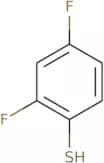
CAS :<p>2,4-Difluorobenzenethiol is a chemical with the molecular formula CHClF2SH. It has a high yield and can be used in the production of medicines and chemicals. Industrially, 2,4-difluorobenzenethiol is used as a raw material for the manufacture of dyes, perfumes and other products. The synthesis of this chemical involves treating 2-fluoroaniline with sulfuric acid. This process produces 2,4-difluorobenzenethiol as a byproduct.</p>Formule :C6H4F2SDegré de pureté :Min. 95%Masse moléculaire :146.16 g/mol3-Buten-2-ol
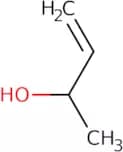
CAS :<p>3-Buten-2-ol is an organic compound that contains a hydroxyl group and a double bond in the form of an alkene. It is a colorless liquid with a sweet odor. 3-Buten-2-ol is used as a chemical intermediate to produce glycol ethers, which are used as solvents for paints and coatings. 3-Buten-2-ol has been shown to inhibit protein synthesis by inhibiting glutamate dehydrogenase, which is required for the conversion of glutamate to α-ketoglutarate in the TCA cycle. The deuterium isotope effect on the kinetic data suggests that 3-buten-2-ol binds to the active site of glutamate dehydrogenase and blocks its access to substrate.</p>Formule :C4H8ODegré de pureté :Min. 95%Couleur et forme :Clear LiquidMasse moléculaire :72.11 g/mol1,2,3,4-Tetrahydroquinoline-3-carboxylic acid
CAS :<p>Tetrahydroquinoline-3-carboxylic acid is a crystalline, water-soluble compound. It is an intermediate in the synthesis of l-phenylalanine, paraformaldehyde and formaldehyde. Tetrahydroquinoline-3-carboxylic acid can be hydrolyzed to produce formic acid and hydrogen chloride. This product is also optically active and can be used as an indicator for hydroiodic acid.</p>Formule :C10H11NO2Degré de pureté :Min. 95%Masse moléculaire :177.2 g/mol6-Amino-5,6,7,8-tetrahydronaphthalene-2,3-diol
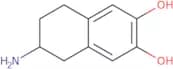
CAS :Produit contrôlé<p>6-Amino-5,6,7,8-tetrahydronaphthalene-2,3-diol is a potent dopamine D2 receptor antagonist. It has been shown to inhibit the light emission of dopamine in vitro. This compound also has a high affinity for 5-HT receptors and has been shown to be a potent agonist at these sites. 6-Amino-5,6,7,8-tetrahydronaphthalene-2,3-diol has been found to induce pluripotent stem cells from human fibroblasts. These cells can differentiate into virtually any cell type in the body and may be used to study diseases such as Parkinson's disease and cancer.</p>Formule :C10H13NO2Degré de pureté :Min. 95%Masse moléculaire :179.22 g/mol(3b,5a,17a)-19-Norpregnane-3,17-diol
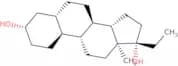
CAS :Produit contrôléPlease enquire for more information about (3b,5a,17a)-19-Norpregnane-3,17-diol including the price, delivery time and more detailed product information at the technical inquiry form on this pageFormule :C20H34O2Degré de pureté :Min. 95%Masse moléculaire :306.48 g/mol(7a,17beta)-7-(9-Bromononyl)estra-1,3,5(10)-triene-3,17-diol
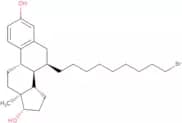
CAS :Produit contrôlé<p>Please enquire for more information about (7a,17beta)-7-(9-Bromononyl)estra-1,3,5(10)-triene-3,17-diol including the price, delivery time and more detailed product information at the technical inquiry form on this page</p>Formule :C27H41BrO2Degré de pureté :Min. 95%Masse moléculaire :477.52 g/mol3-Nitro-benzene-1,2-diol
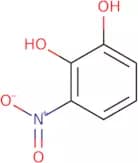
CAS :<p>3-Nitro-benzene-1,2-diol is an inhibitor of catechol-o-methyltransferase (COMT), which catalyzes the transfer of a methyl group from S-adenosyl methionine to dopamine. This results in the formation of 3-O-(methylamino) catechol. COMT inhibitors are used as pharmaceutical preparations for the treatment of Parkinson's disease and other diseases involving dopamine. 3-Nitro-benzene-1,2-diol has been shown to inhibit COMT and prevent the breakdown of dopamine in the brain, which may be beneficial for treating Parkinson's disease and other nervous system diseases.</p>Formule :C6H5NO4Degré de pureté :Min. 95%Masse moléculaire :155.11 g/mol1,4-Butanediol biscrylate - Hydroquinone as inhibitor
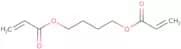
CAS :Produit contrôlé<p>1,4-Butanediol biscrylate - Hydroquinone as inhibitor is a glycol ester that is used in the process of laser ablation. It has been shown to be a biocompatible polymer that can be used for surface methodology. This polymer is synthesized by reacting monosodium salt of butanediol with hydroquinone and sodium carbonate in aqueous solution. 1,4-Butanediol biscrylate - Hydroquinone as inhibitor has been tested using cervical cancer cells and it was found to have a cytotoxic effect on these cells.</p>Formule :C10H14O4Degré de pureté :Min. 95%Masse moléculaire :198.22 g/mol2-Phenylphenol
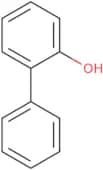
CAS :<p>2-Phenylphenol is a ferrocenecarboxylic acid with an anhydrous sodium salt. It reacts with water vapor to produce ferric hydroxide and 2-phenylphenolsodium. 2-Phenylphenol is used as a long-term toxicity test for enzyme activities in liver cells, and has shown to cause liver lesions in rats. The hydrophobic effect of 2-Phenylphenol has been shown to be its inhibition of the binding of inhibitors to enzymes. This chemical is also used in analytical methods for determining the concentration of phenols in water samples.</p>Formule :C12H1ODegré de pureté :Min. 95%Masse moléculaire :161.14 g/molChlormadinol acetate
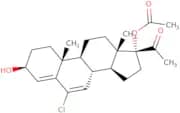
CAS :Produit contrôlé<p>Chlormadinol acetate is a stable complex of a fatty acid and an antibiotic that is used to treat infections caused by bacteria. It has been shown to have high resistance to antimicrobial agents, including amoxicillin-clavulanic acid, tetracycline, and multidrug efflux pumps. Chlormadinol acetate has also been shown to inhibit the growth of certain cancer cells in vitro and in vivo using gene therapy. This drug also inhibits bacterial protein synthesis by binding to the 30S ribosomal subunit and preventing the formation of a functional 70S ribosome. Chlormadinol acetate has been shown to be clinically relevant in mice when used with amoxicillin-clavulanic acid or tetracycline.</p>Formule :C23H31ClO4Degré de pureté :Min. 95%Masse moléculaire :406.94 g/mol1,4-Bis[3,4-dihydro-2(1H)-quinolinon-7-oxy]butane
CAS :Produit contrôlé<p>Please enquire for more information about 1,4-Bis[3,4-dihydro-2(1H)-quinolinon-7-oxy]butane including the price, delivery time and more detailed product information at the technical inquiry form on this page</p>Formule :C22H24N2O4Degré de pureté :Min. 95%Masse moléculaire :380.44 g/mol2,6-Dibromophenol
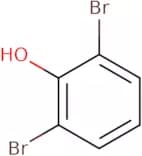
CAS :<p>2,6-Dibromophenol is a chemical compound that is used as an analytical reagent in the determination of bromide ion concentrations. It can be prepared by the debromination of 2-bromophenols using hydrochloric acid and heating to 150°C. This reaction mechanism is best described by kinetic data and a model system. The reaction product of this process is 2,6-dibromo-3-hydroxyphenol. This compound has been shown to have a higher dry weight in strains with high levels of hydroxy group activity.</p>Formule :C6H4Br2ODegré de pureté :Min. 95%Masse moléculaire :251.9 g/mol2,3-Dimercapto-1-propanol
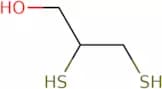
CAS :<p>2,3-Dimercapto-1-propanol (DMPC) is an antibiotic that has been shown to have a potent synergistic effect when used in combination with other antibiotics. DMPC inhibits the enzyme fatty acid synthase and prevents the synthesis of long-chain fatty acids. It also inhibits the uptake of long-chain fatty acids by tissues such as liver, muscle, and fat cells. DMPC is also a reactive chemical that reacts with oxygen from the air to form 2,3-dimercapto-1-propanol peroxyl radicals and hydrogen peroxide. These reactive species are toxic to cells exposed to DMPC in tissue culture or in vivo. This chemical is also a potent inducer of all-trans retinoic acid and dehydroascorbic acid production.</p>Formule :C3H8OS2Degré de pureté :Min. 95%Couleur et forme :Clear LiquidMasse moléculaire :124.23 g/mol4-[(4-Chlorophenyl)phenylmethyl]-1-piperazineethanol dihydrochloride
CAS :<p>4-[(4-Chlorophenyl)phenylmethyl]-1-piperazineethanol dihydrochloride is a cholinergic drug that is used to treat allergic rhinitis in children and adults. It has been shown to be well tolerated in pediatric patients and geriatric patients, as well as being an innovative, labile, and biopharmaceutical compound. 4-[(4-Chlorophenyl)phenylmethyl]-1-piperazineethanol dihydrochloride is not metabolized by the liver and does not have significant side effects. It has a low potential for abuse because of its low solubility in water. It is an antihistamine that blocks the action of histamine at H1 receptors on smooth muscle cells in the nose, which helps reduce nasal congestion and sneezing.</p>Formule :C19H23ClN2O·2HClDegré de pureté :Min. 95%Masse moléculaire :403.77 g/molCP 55940
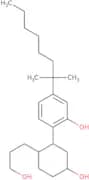
CAS :Produit contrôlé<p>CP 55940 is a cannabinoid receptor agonist that inhibits acetylcholine release in the brain and has been shown to cause neuronal death. CP 55940 binds to the α7 nicotinic acetylcholine receptor, which is important for memory and learning. The binding of this drug causes an increase in guanine nucleotide-binding protein (G protein) activity by reducing the rate of GTP hydrolysis, leading to inhibition of adenylyl cyclase activity and subsequent decrease in cAMP levels. CP 55940 has significant up-regulation of toll-like receptors following exposure, which leads to an increased immune response. This drug can also cause bowel disease or side effects such as seizures and psychotic symptoms. CP 55940 can interact with other drugs, including cannabinoids that may lead to serious side effects.</p>Formule :C24H40O3Degré de pureté :Min. 95%Masse moléculaire :376.57 g/mol2-Methoxy-4-methylbenzenethiol
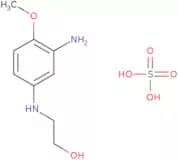
CAS :<p>Please enquire for more information about 2-Methoxy-4-methylbenzenethiol including the price, delivery time and more detailed product information at the technical inquiry form on this page</p>Formule :C8H10OSDegré de pureté :Min. 95%Masse moléculaire :154.23 g/mol2-((3-Amino-4-methoxyphenyl)amino)ethanol sulfate
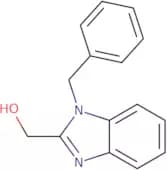
CAS :2-((3-Amino-4-methoxyphenyl)amino)ethanol sulfate is a potent antibacterial agent that inhibits the growth of bacteria by binding to the 50S ribosomal subunit. It is also used in dermatology, as an aminophenol, and as an ingredient in cosmetics. 2-((3-Amino-4-methoxyphenyl)amino)ethanol sulfate has been shown to be efficacious against bacterial infections caused by methicillin resistant Staphylococcus aureus (MRSA), Pseudomonas aeruginosa, Proteus mirabilis, and Klebsiella pneumoniae. This compound also has antihistamine properties.Formule :C9H16N2O6SDegré de pureté :Min. 95%Masse moléculaire :280.3 g/mol(1-Benzyl-1H-benzimidazol-2-yl)methanol
CAS :Produit contrôlé<p>Please enquire for more information about (1-Benzyl-1H-benzimidazol-2-yl)methanol including the price, delivery time and more detailed product information at the technical inquiry form on this page</p>Formule :C15H14N2ODegré de pureté :Min. 95%Masse moléculaire :238.28 g/molSodium linoleate
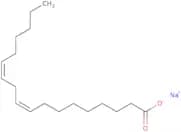
CAS :<p>Sodium linoleate is a model system for studying the effect of radiation on tumorigenesis. Sodium linoleate is used to study the relationship between light exposure and cancer. It has been shown to inhibit Cox-2 expression in carcinoma cell lines, which may be due to its ability to inhibit cox-2 activity by preventing the production of prostaglandins E2 (PGE2). The increased levels of PGE2 can lead to an increase in inflammation and cancer growth. Sodium linoleate has also been shown to have a synergic effect with sodium carbonate in inhibiting tumour growth, which is due to the inhibition of nuclear DNA transcription and protein synthesis.</p>Formule :C18H32O2·NaDegré de pureté :Min. 95%Couleur et forme :PowderMasse moléculaire :303.44 g/mol



![1,4-Bis[3,4-dihydro-2(1H)-quinolinon-7-oxy]butane](/_next/image/?url=https%3A%2Fstatic.cymitquimica.com%2Fproducts%2F3D%2Fthumb-webp%2FFB18792.webp&w=3840&q=75)
![4-[(4-Chlorophenyl)phenylmethyl]-1-piperazineethanol dihydrochloride](/_next/image/?url=https%3A%2Fstatic.cymitquimica.com%2Fproducts%2F3D%2Fthumb-webp%2FFC53582.webp&w=3840&q=75)