


Alcools
Les alcools sont une large gamme de molécules organiques dérivées des hydrocarbures et contenant un ou plusieurs groupes hydroxyle (groupe OH). Ces composés sont essentiels dans diverses réactions chimiques et sont largement utilisés en laboratoire pour la synthèse, comme solvants et en chimie analytique. Chez CymitQuimica, nous proposons des alcools de haute qualité préparés pour une utilisation en laboratoire, soutenant vos recherches et applications industrielles avec des produits fiables et efficaces. Notre sélection garantit que vous disposez des alcools adaptés à vos besoins spécifiques, que ce soit pour des travaux de laboratoire de routine ou des projets de recherche spécialisés.
Sous-catégories appartenant à la catégorie "Alcools"
5814 produits trouvés pour "Alcools"
Trier par
Degré de pureté (%)
0
100
|
0
|
50
|
90
|
95
|
100
(+)-cis-Abienol
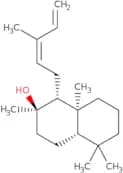
CAS :<p>(+)-Cis-abienol is a diterpene that is found in the leaves of the tobacco plant. It has been suggested to be involved in the synthesis of abscisic acid, which is an important hormone related to plant responses to water and salt stress. (+)-Cis-abienol may also have insecticidal properties and may play a role in resistance to insects. (+)-Cis-abienol has shown activity as an analytical reagent for the detection of hydroxyl groups, due to its UV absorption at 275 nm. The signal peptide sequence for this compound has been determined by analysis of tobacco sequences. This molecule's phase behavior can be predicted from its X-ray crystal structures and it is soluble in organic solvents such as benzyl alcohols or ethers. The mechanism for the reaction between (+)-cis-abienol and dehydroabietic acid has not yet been elucidated but it is thought that benzyl</p>Formule :C20H34ODegré de pureté :Min. 95%Couleur et forme :PowderMasse moléculaire :290.48 g/molMycophenolic acid carboxybutoxy ether
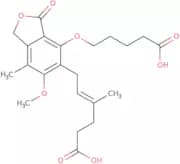
CAS :<p>Mycophenolic acid carboxybutoxy ether is an active form of mycophenolic acid. It has been shown to activate the immune system by increasing the production of lymphokines, including interleukin-2 and gamma-interferon. Mycophenolic acid carboxybutoxy ether has been shown to be effective in vivo in models for autoimmune diseases and cancer. This compound has a high affinity for glycoside derivatives, which are important for the formation of body tissues, such as collagen and elastin. The drug binds to monoclonal antibodies that are used in diagnostic tests for cervical cancer and other cancers. Mycophenolic acid carboxybutoxy ether also binds to x-ray diffraction data, which aids in the structural analysis of glycoside derivatives. This drug can be analyzed using surface methodology.</p>Formule :C22H28O8Degré de pureté :Min. 95%Masse moléculaire :420.45 g/molDodecane-1-thiol
CAS :Dodecane-1-thiol is a chemical that is used as an ingredient in the production of nanoparticles. It has been shown to have high resistance to sodium salts and is chemically stable. Dodecane-1-thiol can be synthesized by reacting dodecane with hydroxylamine and mercaptan, which are both highly reactive compounds. Dodecane-1-thiol has a hydroxyl group on the thiol group and a dimethyl fumarate molecule attached to it. The hydroxyl group reacts with mercaptan, while the dimethyl fumarate molecule attaches to the thiol group to provide stability. Dodecane-1-thiol can also be synthesized using polymerization reactions.Formule :C12H26SDegré de pureté :95%MinMasse moléculaire :202.4 g/mol7-Methylquinoline
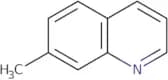
CAS :<p>7-Methylquinoline is an organic compound that can be used to synthesize antimalarial drugs. It is a quinoline derivative with a methyl group at the 7th position. The structure of 7-methylquinoline contains a nitrogen atom and hydrogen atoms, which are bonded to fluorine, chlorine, and bromine atoms. This molecule has been shown to be stable in the presence of Friedel-Crafts catalysts and chloride ions. The reaction mechanism for 7-methylquinoline is intramolecular hydrogen transfer from the chloroform molecule to the quinoline ring system. The formation rate for this compound is slow because it requires two steps: nucleophilic substitution and electrophilic addition reactions.</p>Formule :C10H9NDegré de pureté :Min. 95%Masse moléculaire :143.19 g/molRITA
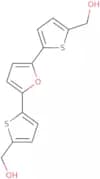
CAS :<p>RITA is a novel compound that has been shown to have anticancer activity in vivo in a rat model. RITA is a small molecule with high potency and low toxicity. It binds selectively to the α subunit of the enzyme topoisomerase II, which is involved in DNA replication and repair. RITA has been shown to induce apoptosis in cancer cells by pro-apoptotic proteins such as Bax and Bak. These proteins are known for their ability to induce apoptosis by increasing mitochondrial membrane permeability, inhibiting mitochondrial functions, or destabilizing the mitochondrial membrane potential. The compound class of RITA is not yet known, but it has been shown to be chemically stable at physiological pH levels and does not require metabolic activation for its cytotoxicity. The pharmacokinetics of this drug have also been studied in human liver cells and humans, indicating that this drug may be able to cross the blood-brain barrier.</p>Formule :C14H12O3S2Degré de pureté :Min. 95%Masse moléculaire :292.38 g/mol(3b,20R)-Pregn-5-ene-3,17,20-triol
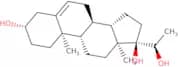
CAS :Produit contrôlé<p>Please enquire for more information about (3b,20R)-Pregn-5-ene-3,17,20-triol including the price, delivery time and more detailed product information at the technical inquiry form on this page</p>Formule :C21H34O3Degré de pureté :Min. 95%Masse moléculaire :334.49 g/molDibromochloromethane (stabilized with ethanol)
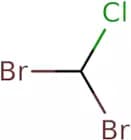
CAS :<p>Dibromochloromethane (DBCM) is a chemical that is used as a solvent and cleaning agent. It was found to be genotoxic, with the potential to cause cancer in humans. DBCM causes cardiac effects in animals, including arrhythmias and an increase in heart rate. DBCM is not volatile and has a low vapor pressure, which makes it hazardous if inhaled or ingested. DBCM can also cause renal toxicity and liver injury in rats. Dibromochloromethane has been shown to have a toxic effect on the heart, lungs, kidneys and liver when administered at high doses in animals. It has been shown to damage DNA by causing mutations or cross-linking with DNA strands.</p>Formule :CHBr2ClDegré de pureté :Min. 95%Masse moléculaire :208.28 g/mol(1S,2S)-(+)-2-Amino-1-phenyl-1,3-propanediol
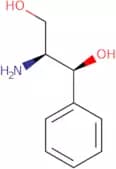
CAS :<p>(1S,2S)-(+)-2-Amino-1-phenyl-1,3-propanediol is a synthetic compound that has been synthesized and studied as an amide. It has a hydroxy group on the skeleton of the molecule. The enantiomer of this compound is (1R,2R)-(-)-2-amino-1-phenyl-1,3-propanediol. This compound contains two chiral centers and four stereoisomers. These stereoisomers are not mirror images of each other. (1S,2S)-(+)-2-Amino-1-phenyl-1,3-propanediol has been shown to be effective against cryptococcus neoformans in cell culture experiments.</p>Formule :C9H13NO2Degré de pureté :Min. 95%Masse moléculaire :167.21 g/molR-(-)-1,2-Propanediol
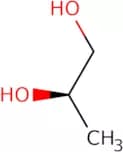
CAS :<p>R-(-)-1,2-Propanediol is a diol that is used as an additive in pharmaceutical preparations. It has been shown to inhibit the growth of several genera of bacteria and fungi, including Actinomyces, Bacillus, Clostridium, Corynebacterium, Enterobacteriaceae (Escherichia coli), Lactobacillus, Micrococcus, Mycobacteria (M. tuberculosis), Nocardia, Pseudomonas aeruginosa. R-(-)-1,2-Propanediol also inhibits the production of carbon source from glucose by inhibiting the enzyme pyruvate dehydrogenase which catalyzes the conversion of pyruvate to acetyl coenzyme A. R-(-)-1,2-Propanediol does not show any significant effect on bacterial growth when it is used at concentrations below 100mM. It has been shown that optimal reaction with R-(-)-</p>Formule :C3H8O2Degré de pureté :Min. 98 Area-%Couleur et forme :Colorless Clear LiquidMasse moléculaire :76.09 g/mol1-Tetratriacontanol
CAS :1-Tetratriacontanol is a natural compound that is found in plants, such as Momilactone. It has been shown to have inhibitory properties on chemical interactions, which may be due to its enhancement of acetate extract. 1-Tetratriacontanol has also been shown to have potent inhibitory activity against human serum and fetal bovine cells. It has a diameter of approximately 1 nm and is composed of fatty acids and phosphatidylcholine. This compound has not yet been studied for its physiological effects.Formule :C34H70ODegré de pureté :Min. 95%Masse moléculaire :494.92 g/mol4-Phenoxy-1-butanol
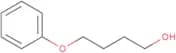
CAS :Produit contrôlé<p>4-Phenoxy-1-butanol is a reactive chemical that can be used as a macroinitiator in cationic polymerization. When 4-phenoxy-1-butanol is heated to about 200°C, it undergoes a ring opening reaction to form an alkoxybenzene. This reaction can be followed by kinetic and microscopy techniques. 4-Phenoxy-1-butanol also reacts with amines to produce haloalkyls, which are then alkylated by chloride or proton. Macroinitiators such as 4-phenoxy-1-butanol have been used for the synthesis of polyurethanes with different properties such as thermal stability, water resistance, and adhesion strength.</p>Formule :C10H14O2Degré de pureté :Min. 95%Masse moléculaire :166.22 g/mol(S)-3',5'-Bis(trifluoromethyl)-1-phenethanol
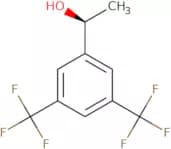
CAS :<p>(S)-3',5'-Bis(trifluoromethyl)-1-phenethanol is a choline derivative that is used in the treatment of liver cancer. It has been shown to increase the permeability of cell membranes and to suppress the growth of tumor cells by inhibiting protein synthesis. (S)-3',5'-Bis(trifluoromethyl)-1-phenethanol can be used as a surfactant and a hydrophobic solvent for optimization of reaction parameters. This chemical also has been shown to be active against Gram-positive bacteria such as Staphylococcus aureus and Enterococcus faecalis, but not against Gram-negative bacteria such as Escherichia coli or Pseudomonas aeruginosa. The mechanism of this effect is mediated by chloride ions that act as bioreductive agents on cellular membranes, leading to increased permeability and cell death.</p>Formule :C10H8F6ODegré de pureté :Min. 95%Masse moléculaire :258.16 g/mol3-Amino-2-methylpropan-1-ol
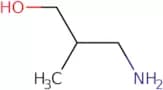
CAS :<p>3-Amino-2-methylpropan-1-ol is a reactive chemical that can be used as a reactant in the synthesis of other chemicals. It is an alkanolamine and can be found in small amounts in water vapor. 3-Amino-2-methylpropan-1-ol has been shown to have low energy and it reacts with water vapor to form 3,4-dihydroxybutanal, which is a product that can be converted into other useful chemicals. 3-Amino-2-methylpropan-1-ol also reacts with high energy photons to form new substances, such as 3,4,5,6 tetrahydroxymethylbenzaldehyde. 3Amino - 2 - methylpropan - 1 - ol has been shown to have many uses including the production of low molecular weight polymers and resins for paints and coatings.</p>Formule :C4H11NODegré de pureté :Min. 95%Masse moléculaire :89.14 g/molDelta9,11-Estradiol
CAS :Produit contrôlé<p>Delta9,11-Estradiol is an estrogen that has been found to bind to the estrogen receptor α. The growth factor activity of this drug is mediated through the binding of this receptor and the activation of various intracellular signaling pathways. This drug is effective in treating eye disorders such as macular degeneration. Delta9,11-Estradiol also has a protective effect on ganglion cells by reducing oxidative stress, inhibiting apoptosis, and modulating inflammatory responses. The hydroxyl group in Delta9,11-Estradiol can be used as a corrosion inhibitor in eye drops and other ophthalmic solutions. It binds to viral gene promoters and inhibits transcriptional activity of these genes.</p>Formule :C18H22O2Degré de pureté :Min. 95%Couleur et forme :SolidMasse moléculaire :270.37 g/mol3-(2-Methyl-1H-imidazol-1-yl)propan-1-ol hydrochloride
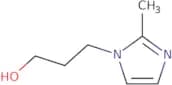
CAS :<p>Please enquire for more information about 3-(2-Methyl-1H-imidazol-1-yl)propan-1-ol hydrochloride including the price, delivery time and more detailed product information at the technical inquiry form on this page</p>Formule :C7H12N2ODegré de pureté :Min. 95%Masse moléculaire :140.18 g/mol1,2-Dilinoleoyl-3-palmitoyl-rac-glycerol
CAS :<p>1,2-Dilinoleoyl-3-palmitoyl-rac-glycerol (DLPG) is a lipid molecule that is structurally similar to the sphingolipid ceramide. It has been shown to be an inhibitor of cellular uptake and growth rate and also has long-term toxicity effects. DLPG has been shown to inhibit the signal transduction pathway by binding to microprocessors in the cell membrane and changing their frequency. DLPG also has a profile that can be used as an analog for dextran sulfate, which is a chemical compound that inhibits the uptake of glucose in mammalian cells. The uptake of DLPG can be decoupled from its signaling activity by using constant magnetic fields, which can be generated with superparamagnetic iron oxides or iron particles.</p>Formule :C55H98O6Degré de pureté :Min. 95%Masse moléculaire :855.36 g/molrac-prolinol
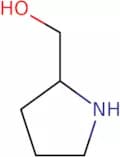
CAS :<p>Rac-prolinol is a picolinic acid derivative that has been shown to inhibit the production of pyrrolidinecarboxylic acid in the form of l-tartaric acid. This inhibition is due to the formation of a hydrogen bond with the hydroxyl group on the substrate molecule, which prevents its conversion into pyrrolidinecarboxylic acid. Rac-prolinol has also been shown to inhibit collagen production in cells. Rac-prolinol binds to receptors that are involved in regulating cell proliferation and differentiation, including transforming growth factor beta receptor and epidermal growth factor receptor. It inhibits collagen synthesis by acting as a competitive inhibitor of proline hydroxylase, an enzyme responsible for catalyzing proline into hydroxyproline. The molecule also inhibits DNA synthesis by binding to the erythrocyte membrane skeleton and blocking ATP synthesis.</p>Formule :C5H11NODegré de pureté :Min. 95%Masse moléculaire :101.15 g/molPentafluorobenzenethiol
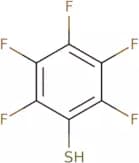
CAS :<p>Pentafluorobenzenethiol is an organosulfur compound that is synthesized by the nucleophilic attack of deuterium on a hydrogenated aliphatic hydrocarbon. It is a colorless liquid with a characteristic low boiling point and high volatility. Pentafluorobenzenethiol has been shown to react with chelate rings and to form irreversible oxidation products. This chemical has analytical applications in the determination of potassium, sodium, and lithium in water samples; it also has semiconductor properties. The diameter of pentafluorobenzenethiol is 6.2 Å, which makes it a low energy aromatic hydrocarbon that can be easily transported through porous media.</p>Formule :C6HF5SDegré de pureté :Min. 95%Couleur et forme :Colorless Clear LiquidMasse moléculaire :200.13 g/molEstra-1,3,5(10),6-tetraene-3,17-diol
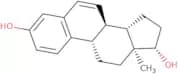
CAS :Produit contrôlé<p>Estra-1,3,5(10),6-tetraene-3,17-diol is a sulfonated derivative of estradiol. It is used as a ligand in binding assays to measure the affinity of various compounds for estrogens. Estra-1,3,5(10),6-tetraene-3,17-diol binds with high affinity to 17β-estradiol and other estrogens at the estrogen receptor. The binding of estradiol and its derivatives to the receptor leads to a conformational change that causes dissociation of heat shock proteins from the receptor. This results in an increase in transcriptional activity of the receptor and increased synthesis of mRNA.</p>Formule :C18H22O2Degré de pureté :Min. 95%Masse moléculaire :270.37 g/mol(aR)-a-[[[2-(4-Aminophenyl)ethyl]amino]methyl]-benzenemethanol
CAS :Please enquire for more information about (aR)-a-[[[2-(4-Aminophenyl)ethyl]amino]methyl]-benzenemethanol including the price, delivery time and more detailed product information at the technical inquiry form on this pageFormule :C16H20N2ODegré de pureté :Min. 95%Couleur et forme :PowderMasse moléculaire :256.34 g/mol





![(aR)-a-[[[2-(4-Aminophenyl)ethyl]amino]methyl]-benzenemethanol](/_next/image/?url=https%3A%2Fstatic.cymitquimica.com%2Fproducts%2F3D%2Fthumb-webp%2FFA75045.webp&w=3840&q=75)