Alcools
Les alcools sont une large gamme de molécules organiques dérivées des hydrocarbures et contenant un ou plusieurs groupes hydroxyle (groupe OH). Ces composés sont essentiels dans diverses réactions chimiques et sont largement utilisés en laboratoire pour la synthèse, comme solvants et en chimie analytique. Chez CymitQuimica, nous proposons des alcools de haute qualité préparés pour une utilisation en laboratoire, soutenant vos recherches et applications industrielles avec des produits fiables et efficaces. Notre sélection garantit que vous disposez des alcools adaptés à vos besoins spécifiques, que ce soit pour des travaux de laboratoire de routine ou des projets de recherche spécialisés.
Sous-catégories appartenant à la catégorie "Alcools"
5814 produits trouvés pour "Alcools"
Trier par
Degré de pureté (%)
0
100
|
0
|
50
|
90
|
95
|
100
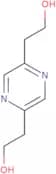
2,5-Pyrazinediethanol
CAS :<p>2,5-Pyrazinediethanol is a neutral compound that hydrolyzes in water to form the acidic 2,5-diketopiperazine. It also reacts with sodium hydroxide to form the alkaline 2,5-diketopiperazine. The chemical structure of this compound is similar to that of clavulanic acid, which is a drug used in combination with amoxicillin (a penicillin antibiotic) for the treatment of bacterial infections. 2,5-Pyrazinediethanol has been shown to have antibacterial properties against Escherichia coli and Bacillus subtilis. However, it is less active than clavulanic acid against Staphylococcus aureus or Clostridium perfringens.</p>Formule :C8H12N2O2Degré de pureté :(%) Min. 97%Couleur et forme :PowderMasse moléculaire :168.19 g/mol4-Chloro-2-iodo-phenol
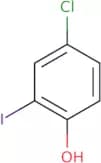
CAS :Please enquire for more information about 4-Chloro-2-iodo-phenol including the price, delivery time and more detailed product information at the technical inquiry form on this pageFormule :C6H4ClIODegré de pureté :Min. 95%Masse moléculaire :254.45 g/molBemotrizinol
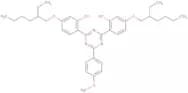
CAS :<p>Bemotrizinol is a chemical compound that belongs to the group of organometallic compounds. It has been shown to be an effective photostabilizer for polymers, as well as an antioxidant for skin cells and tissues. This compound has been shown to have synergistic effects with malonic acid, which is also used in sunscreen products. Bemotrizinol has been shown to be carcinogenic in animal studies, but not in humans.</p>Formule :C38H49N3O5Degré de pureté :Min. 95%Couleur et forme :PowderMasse moléculaire :627.81 g/mol6,6-Dimethyl-1-heptene-4-yn-3-ol
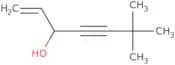
CAS :<p>6,6-Dimethyl-1-heptene-4-yn-3-ol is a chlorinating agent that is used in the production of epidermophyton. It also has antifungal properties and can be used as an antimycotic. 6,6-Dimethyl-1-heptene-4-yn-3-ol can be added to hydrochloric acid or magnesium chloride to form an acetylide. This agent has been shown to have selective chlorination activity at temperatures below 10°C. It is also capable of minimizing organometallic chloride catalysts and has been shown to reduce microsporum gypseum and microsporum titinium at pH 2.5.</p>Formule :C9H14ODegré de pureté :Min. 95%Couleur et forme :Colourless To Yellow LiquidMasse moléculaire :138.21 g/mol2-Bromo-1-indanol
CAS :2-Bromo-1-indanol is an industrial solvent used in the production of dyes, pigments, perfumes, pharmaceuticals, and other organic compounds. It is a chiral compound with two stereoisomers (R and S) that have different properties. The R isomer has a hydroxyl group on the 2 position of the indane ring, while the S isomer does not. The industrial process involves recycling of 2-bromo-1-indanol from the reaction mixture. This process can be monitored using mass spectrometric detection for bromine and hydrogen ions released during hydrolysis. 2-Bromo-1-indanol can be used to synthesize methoxybenzaldehyde with high regioselectivity, which can then be used to make some drugs such as amphetamine and methamphetamine.Formule :C9H9BrODegré de pureté :Min. 95%Couleur et forme :PowderMasse moléculaire :213.07 g/molTetrahydropyran-2-methanol
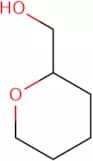
CAS :<p>Tetrahydropyran-2-methanol is a hydrogenated, hydrated, triflic acid derivative that belongs to the group of organic compounds known as ethers. The presence of a hydroxyl group on one end and a chloride group on the other end provides tetrahydropyran-2-methanol with two reactive sites for reactions with metals. It has been shown to react with metal surfaces in order to form an adduct under acidic conditions that can be used as an ion exchange resin. Tetrahydropyran-2-methanol also reacts rapidly with hydrochloric acid to form tetrahydrothiophene and methanol. This reaction time can be sped up by heating the liquid at atmospheric pressure or by adding sulfuric acid. Tetrahydropyran-2-methanol is also capable of reacting with water in order to produce hydrogen gas and alcohol.</p>Formule :C6H12O2Degré de pureté :Min. 98%Masse moléculaire :116.16 g/mol(alphaR)-alpha-[[[2-(4-Nitrophenyl)ethyl]amino]methyl]benzenemethanol hydrochloride
CAS :<p>Intermediate in the synthesis of mirabegron</p>Formule :C16H18N2O3·HClDegré de pureté :Min. 95%Masse moléculaire :322.79 g/mol2-Aminoresorcinol
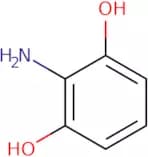
CAS :<p>2-Aminoresorcinol is a synthetic chemical compound that inhibits the reaction of amines with chlorine atoms. It is used as an intermediate in the production of resorcinol and 2-aminophenol. The reaction mechanism involves the formation of a chloramine (chlorine atom attached to an amine) which, in turn, reacts with malonic acid to produce an intermediate that undergoes intramolecular hydrogen transfer. This reaction results in the formation of a chloroform molecule. A second step involves hydroxylation by hydrochloric acid, which leads to the formation of chloral hydrate. In this way, 2-aminoresorcinol can be used for the synthesis of both resorcinol and 2-aminophenol. 2-Aminoresorcinol is also known for its inhibitory effects on certain reactions involving amines and sulfur compounds such as thiourea and carbonyl compounds such as malonic acid.</p>Formule :C6H7NO2Degré de pureté :Min. 95%Couleur et forme :White To Dark Brown SolidMasse moléculaire :125.13 g/molCloprostenol sodium
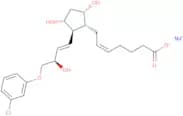
CAS :Cloprostenol sodium is a prostaglandin analogue that is used in veterinary medicine. It is administered intravenously to induce ovulation, improve estrus and fertility, or control luteal function in cows. Cloprostenol sodium has been shown to have a positive effect on the ovulatory process by stimulating the release of endogenous progesterone and estradiol benzoate from the follicle cells. This drug also increases luteal activity by increasing the production of progesterone and inhibiting its metabolism. Cloprostenol sodium has been shown to be effective in inducing ovulation in pregnant women who do not respond to clomiphene citrate (CC) alone. Cloprostenol sodium can also be used for induction of labour in pregnant women with an uncomplicated pregnancy at term, where it is given intravenously or intramuscularly, but intravaginally or orally are not recommended.Formule :C22H28ClNaO6Degré de pureté :Min. 95%Couleur et forme :White PowderMasse moléculaire :446.9 g/molOctreotide trifluoroacetate salt (Dimer, Antiparallel) (
Please enquire for more information about Octreotide trifluoroacetate salt (Dimer, Antiparallel) ( including the price, delivery time and more detailed product information at the technical inquiry form on this pageFormule :C98H132N20O20S4Degré de pureté :Min. 95%Masse moléculaire :2,038.48 g/mol3-Bromophenol
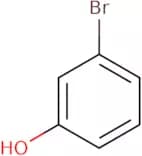
CAS :3-Bromophenol is an organic compound that is a bromophenol. It is used as a fluorometric probe in wastewater treatment and as a tracer for metabolic pathways in the proximal tubules of the kidney. 3-Bromophenol has a molecular weight of 184.16 g/mol and has been shown to be metabolized by bacteria into 2,4-dihydroxyphenylacetic acid (2,4-DPA). 3-Bromophenol can also be synthesized from 2,4-dihydroxyphenylacetic acid using sodium hydroxide solution and carbon source in a synthetic process. This synthetic process can be carried out at room temperature and atmospheric pressure.Formule :C6H5BrODegré de pureté :Min. 98 Area-%Couleur et forme :Clear LiquidMasse moléculaire :173.01 g/mol(R)-(+)-3-Chloro-1-phenyl-1-propanol
CAS :<p>(R)-(+)-3-Chloro-1-phenyl-1-propanol is a substrate for the lactamase of bacteria. The immobilized lipase catalyzes the hydrolysis reaction in which the lactam ring is broken, yielding a propiophenone intermediate. This intermediate can be converted to (S)-(+)-3-chloro-1-phenylpropanol by treatment with an alcohol oxidase or by hydrolysis with hydrogen peroxide. The product has been shown to have antidepressant activity and may modulate the dry weight of bacteria. In vivo studies show that this compound has a high concentration in rats and mice, but it is not active in humans.</p>Formule :C9H11ClODegré de pureté :Min. 95%Couleur et forme :White To Yellow SolidMasse moléculaire :170.64 g/molCalcipotriol monohydrate
CAS :<p>Calcipotriol is a synthetic vitamin D3 analog that has been shown to be effective in the treatment of bone cancer. It has a film-forming property and is used in pharmaceutical preparations as well as for wastewater treatment. Calcipotriol monohydrate is made by reacting calcipotriol with hydrochloric acid, which produces an ester bond between the hydroxyl group and the carboxylic acid group. The reaction also produces water, methanol, and methyl ethyl ether. Studies have shown that calcipotriol monohydrate has a chemical stability of over 30 days at room temperature, indicating it can be stored for long periods without degradation.</p>Formule :C27H40O3·H2ODegré de pureté :(%) Min. 96%Couleur et forme :PowderMasse moléculaire :430.62 g/mol3-Bromo-4-fluorophenol
CAS :<p>3-Bromo-4-fluorophenol is a synthetic, water soluble, and stable compound with a variety of applications. It yields white crystals that are soluble in water, acetone, ethanol, ether, benzene, chloroform, and carbon tetrachloride. 3-Bromo-4-fluorophenol has been shown to have a number of structural modifications that may be advantageous for therapeutic purposes. The most prominent modification is the methylation of the phenolic hydroxyl group (functionalisation). This modification prevents the drug from reacting with nucleophilic sites on proteins and other biological molecules. 3-Bromo-4-fluorophenol interacts with methyltransferase enzymes in cancer cells to inhibit their activity. These methyltransferase enzymes are involved in cellular proliferation and proliferation signalling pathways that may lead to cancer cell death.</p>Formule :C6H4BrFODegré de pureté :Min. 95%Couleur et forme :PowderMasse moléculaire :191 g/mol(-)-Corey lactone diol
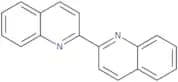
CAS :<p>(-)-Corey lactone diol is a synthetic compound that is soluble in organic solvents. It is used for the synthesis of carbocyclic nucleosides, which are analogs of pyrimidine nucleosides. (-)-Corey lactone diol has been shown to inhibit cholesterol synthesis and the synthesis of alkene. (-)-Corey lactone diol also shows anti-inflammatory properties, which may be due to its inhibition of prostaglandin synthesis.</p>Formule :C8H12O4Degré de pureté :Min. 95%Masse moléculaire :172.18 g/mol2,2'-Biquinoline
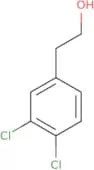
CAS :<p>2,2'-Biquinoline is a coordination compound that has been used as an analytical reagent in the determination of copper and nitrogen. It has been shown to be stable in a variety of matrices, including human serum and copper chloride. 2,2'-Biquinoline is also used as an antimicrobial agent against Gram-positive bacteria, including Staphylococcus aureus. The redox potentials of this compound are dependent on the number of nitrogen atoms present.</p>Formule :C18H12N2Degré de pureté :Min. 95%Masse moléculaire :256.3 g/mol2-(3,4-Dichlorophenyl)ethanol
CAS :<p>2-(3,4-Dichlorophenyl)ethanol is a high quality reagent for the synthesis of complex compounds, useful as an intermediate in organic synthesis and as a building block for speciality chemicals. This chemical is also used as a research chemical in the synthesis of versatile building blocks. It can be used as a reaction component in various reactions such as Suzuki coupling, Negishi coupling, Heck reaction, and Sonogashira coupling.</p>Formule :C8H8Cl2ODegré de pureté :Min. 95%Masse moléculaire :191.05 g/mol3-(3'-Trifluoromethylphenyl)propanol
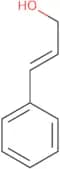
CAS :<p>3-(3'-Trifluoromethylphenyl)propanol is a trifluoroacetic acid derivative that is used in acylation reactions to form esters. It can be obtained by the reaction of aluminium chloride, isopropyl alcohol, and phosphine with 3-trifluoromethylaniline. Impurities may include chloride and zirconium. The trifluoromethyl group on this molecule can react with the carbonyl group of an organic acid to form a trifluoroacetate ester.</p>Degré de pureté :Min. 95%Cinnamyl alcohol
CAS :<p>Cinnamyl alcohol is a substance that belongs to the group of organic compounds called alcohols. It has been shown to be an inhibitor of enzymes such as alcohol dehydrogenase and lignin peroxidase, which are involved in the production of lignin. Cinnamyl alcohol also inhibits the synthesis of proteins, nucleic acids, and other cellular components. Cinnamyl alcohol has significant cytotoxicity against tumor cells, with biochemical properties that make it a good candidate for cancer treatment.</p>Formule :C9H10ODegré de pureté :Min. 98 Area-%Couleur et forme :White PowderMasse moléculaire :134.18 g/mol1-O-Octadecyl-rac-glycerol
CAS :<p>1-O-Octadecyl-rac-glycerol is a fatty acid that has been shown to have antiinflammatory properties. It is also known as 1,1'-dioctadecyl-rac-glycerol, or DOG. 1-O-Octadecyl-rac-glycerol has been shown to inhibit the production of inflammatory mediators such as prostaglandin E2 and monocyte chemotactic protein 1 (MCP1) in vitro and in vivo. It has also been shown to stimulate the production of colony stimulating factor (CSF), which stimulates the growth and differentiation of stem cells into macrophages, neutrophils, dendritic cells, erythrocytes, and lymphocytes. These cells are needed for wound healing and repair.</p>Formule :C21H44O3Degré de pureté :Min. 95%Masse moléculaire :344.57 g/mol


![(alphaR)-alpha-[[[2-(4-Nitrophenyl)ethyl]amino]methyl]benzenemethanol hydrochloride](/_next/image/?url=https%3A%2Fstatic.cymitquimica.com%2Fproducts%2F3D%2Fthumb-webp%2FFN156825.webp&w=3840&q=75)