


Alcools
Les alcools sont une large gamme de molécules organiques dérivées des hydrocarbures et contenant un ou plusieurs groupes hydroxyle (groupe OH). Ces composés sont essentiels dans diverses réactions chimiques et sont largement utilisés en laboratoire pour la synthèse, comme solvants et en chimie analytique. Chez CymitQuimica, nous proposons des alcools de haute qualité préparés pour une utilisation en laboratoire, soutenant vos recherches et applications industrielles avec des produits fiables et efficaces. Notre sélection garantit que vous disposez des alcools adaptés à vos besoins spécifiques, que ce soit pour des travaux de laboratoire de routine ou des projets de recherche spécialisés.
Sous-catégories appartenant à la catégorie "Alcools"
5814 produits trouvés pour "Alcools"
Trier par
Degré de pureté (%)
0
100
|
0
|
50
|
90
|
95
|
100
Linoleic acid - powder
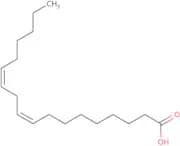
CAS :<p>Linoleic acid is a polyunsaturated fatty acid that is an important component of cell membranes. It has been shown to inhibit oxidative injury and improve mitochondrial functions. Linoleic acid also has a role in energy metabolism, as it is the precursor for biosynthesis of eicosanoids and arachidonic acid. The physiological effects of linoleic acid have been studied using a model system consisting of isolated rat adipose tissue and mitochondria. This model system has been used to investigate the inhibitory properties of linoleic acid on caproic acid-induced lipid peroxidation. Linoleic acid has also been shown to have anion radical scavenging activity when in the presence of iron. This compound can be analyzed using gas chromatography-mass spectrometry (GC-MS) based on its chemical composition, which consists mainly of linear 18-carbon chains with two double bonds at positions 9 and 12.</p>Formule :C18H32O2Degré de pureté :Min. 95%Couleur et forme :PowderMasse moléculaire :280.45 g/mol2-[3-(S)-[3-(2-(7-Chloro-2-quinolinyl)ethenyl)phenyl]-3-hydroxypropyl]benzoic acid methyl ester
CAS :<p>2-[3-(S)-[3-(2-(7-Chloro-2-quinolinyl)ethenyl)phenyl]-3-hydroxypropyl]benzoic acid methyl ester is a synthetic compound that can be used as a reagent in the synthesis of polynucleotides and polypeptides. It can also be used as an inhibitor of ketoreductase, which is an enzyme involved in the synthesis of fatty acids and ketones. 2-[3-(S)-[3-(2-(7-Chloro-2-quinolinyl)ethenyl)phenyl]-3-hydroxypropyl]benzoic acid methyl ester has been shown to inhibit the growth of wild type and mutant strains of E. coli. The molecular weight of this compound is 439.</p>Formule :C28H24ClNO3Degré de pureté :Min. 95%Masse moléculaire :457.95 g/mol2-Chloro-3-methoxyphenol
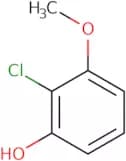
CAS :<p>Please enquire for more information about 2-Chloro-3-methoxyphenol including the price, delivery time and more detailed product information at the technical inquiry form on this page</p>Formule :C7H7ClO2Degré de pureté :Min. 95%Masse moléculaire :158.58 g/molPhenolphthalein monophosphate di(cyclohexylammonium)
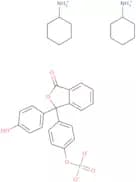
CAS :<p>Phenolphthalein monophosphate di(cyclohexylammonium) is a fine chemical that can be used as a building block in research, reagent, or speciality chemical. It is a versatile building block and reaction component that can be used as an intermediate to make other compounds. Phenolphthalein monophosphate di(cyclohexylammonium) is also used as a scaffold for the synthesis of complex chemicals. This complex compound has CAS number 14815-59-9.</p>Formule :C20H15O7P•2C6H13NDegré de pureté :Min. 90%Couleur et forme :PowderMasse moléculaire :596.65 g/mol2,4-Dimethoxyphenylmethylcarbinol
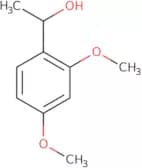
CAS :<p>2,4-Dimethoxyphenylmethylcarbinol is a benzene derivative that can be synthesized from 2,4-dimethoxybenzaldehyde and formaldehyde. This compound is an efficient reductant for hydrazine and has been used as a screening agent for new drugs. It is also a pharmacological active substance with anti-inflammatory properties. 2,4-Dimethoxyphenylmethylcarbinol has shown activity against carrageenan-induced rat paw edema, as well as the vessel and ultrasonic effects of irradiation.</p>Formule :C10H14O3Degré de pureté :Min. 95%Masse moléculaire :182.22 g/mol(D-Thr6,D-Trp8·9,L-alaninol15)-Galanin (1-15)
CAS :<p>Please enquire for more information about (D-Thr6,D-Trp8·9,L-alaninol15)-Galanin (1-15) including the price, delivery time and more detailed product information at the technical inquiry form on this page</p>Formule :C84H117N21O18Degré de pureté :Min. 95%Masse moléculaire :1,708.96 g/mol2,2,6,6-Tetramethyl-4-piperidinol 1-oxyl, free radical
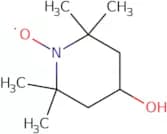
CAS :2,2,6,6-Tetramethyl-4-piperidinol 1-oxyl (TEMPO) is a reactive oxygen species that belongs to the group of nitroxide radicals. It can be used as a radical scavenger and has been shown to inhibit the production of pro-apoptotic proteins in human macrophages. TEMPO has also been shown to bind to DNA and prevent the binding of HIV viral protein gp120. TEMPO can be used as an inhibitor for glycol ethers in laboratory experiments. The most common use is as a water vapor scavenger during polymerization reactions in organic chemistry.Formule :C9H18NO2Degré de pureté :Min. 98 Area-%Couleur et forme :Orange SolidMasse moléculaire :172.24 g/molTetrahydropyran-2-methanol
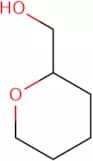
CAS :<p>Tetrahydropyran-2-methanol is a hydrogenated, hydrated, triflic acid derivative that belongs to the group of organic compounds known as ethers. The presence of a hydroxyl group on one end and a chloride group on the other end provides tetrahydropyran-2-methanol with two reactive sites for reactions with metals. It has been shown to react with metal surfaces in order to form an adduct under acidic conditions that can be used as an ion exchange resin. Tetrahydropyran-2-methanol also reacts rapidly with hydrochloric acid to form tetrahydrothiophene and methanol. This reaction time can be sped up by heating the liquid at atmospheric pressure or by adding sulfuric acid. Tetrahydropyran-2-methanol is also capable of reacting with water in order to produce hydrogen gas and alcohol.</p>Formule :C6H12O2Degré de pureté :Min. 98%Masse moléculaire :116.16 g/mol(-)-Corey lactone diol
CAS :<p>(-)-Corey lactone diol is a synthetic compound that is soluble in organic solvents. It is used for the synthesis of carbocyclic nucleosides, which are analogs of pyrimidine nucleosides. (-)-Corey lactone diol has been shown to inhibit cholesterol synthesis and the synthesis of alkene. (-)-Corey lactone diol also shows anti-inflammatory properties, which may be due to its inhibition of prostaglandin synthesis.</p>Formule :C8H12O4Degré de pureté :Min. 95%Masse moléculaire :172.18 g/mol1,6-Hexanediol
CAS :<p>1,6-Hexanediol is a diol that can be used as a control agent for radiation-sensitive polymeric matrices. It has been shown to bind to the hydroxyl groups of polymers and form hydrogen bonds with other molecules. 1,6-Hexanediol also reacts with trifluoroacetic acid in an electrochemical impedance spectroscopy study to produce low energy electrons. The kinetic data show that the optimum concentration of 1,6-hexanediol is between 0.1 and 0.2 M and the activation energies are in the range of 4.0 - 7.0 kcal/mol.</p>Formule :C6H14O2Degré de pureté :Min. 95%Couleur et forme :PowderMasse moléculaire :118.17 g/molCampestanol
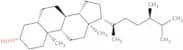
CAS :Produit contrôlé<p>Please enquire for more information about Campestanol including the price, delivery time and more detailed product information at the technical inquiry form on this page</p>Formule :C28H50ODegré de pureté :Min. 95%Masse moléculaire :402.7 g/mol2,2'-Biquinoline
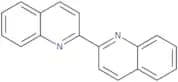
CAS :<p>2,2'-Biquinoline is a coordination compound that has been used as an analytical reagent in the determination of copper and nitrogen. It has been shown to be stable in a variety of matrices, including human serum and copper chloride. 2,2'-Biquinoline is also used as an antimicrobial agent against Gram-positive bacteria, including Staphylococcus aureus. The redox potentials of this compound are dependent on the number of nitrogen atoms present.</p>Formule :C18H12N2Degré de pureté :Min. 95%Masse moléculaire :256.3 g/mol1-O-Octadecyl-2-O-benzyl-sn-glycerol
CAS :<p>1-O-Octadecyl-2-O-benzyl-sn-glycerol (ODBG) is a novel antiviral drug that is being developed for the treatment of HIV. ODBG inhibits HIV by binding to the virus and preventing it from entering cells, which prevents the virus from replicating. ODBG has been shown to be effective against other viruses as well, such as herpes simplex virus and respiratory syncytial virus. ODBG is a lipid molecule that can cross cell membranes and has been shown to have low toxicity in animal studies. This drug also has potential to be used as an oral medication for patients with HIV.</p>Formule :C28H50O3Degré de pureté :Min. 95%Masse moléculaire :434.69 g/mol2-Bromo-6-chlorophenol
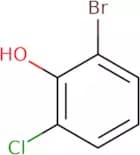
CAS :2-Bromo-6-chlorophenol is a reactive, thiourea-containing compound that undergoes catalytic reactions. 2-Bromo-6-chlorophenol reacts with sulfate in water to form chlorine radicals, which react with other organic compounds to produce chlorinated organic compounds. This reaction can be used for the oxidation of phenols and alcohols to yield chlorinated products. The yields of this process depend on the concentration of acetonitrile used in the reaction. Acetonitrile is also required for the conversion of dichlorinated benzenes to brominated products.Formule :C6H4BrClODegré de pureté :Min. 95%Masse moléculaire :207.45 g/molPridinol methanesulfonate salt
CAS :<p>Pridinol methanesulfonate salt is a water-soluble drug that is used for the treatment of chronic pancreatitis. It has been shown to have a sustained-release effect in the gastrointestinal tract and is absorbed from the mouth. Pridinol methanesulfonate salt interacts with microspheres, which are made of polymers that form a gel matrix. This interaction stabilizes the complex and prevents premature release of the drug. The microspheres are then released by an absorber, which is an agent that binds to the surface of the microsphere and releases it into solution. Pridinol methanesulfonate salt can be found in wastewater as it biodegrades quickly and does not accumulate in tissues or organs.</p>Formule :C21H29NO4SDegré de pureté :Min. 95%Masse moléculaire :391.53 g/mol2-[2-[2-(2-Azidoethoxy)ethoxy]ethoxy]ethanol
CAS :<p>2-[2-[2-(2-Azidoethoxy)ethoxy]ethoxy]ethanol is a PEG polymer categorised as monofunctional (OH-PEG-X). Used as a linker, 2-[2-[2-(2-azidoethoxy)ethoxy]ethoxy]ethanol is used to attached PEG to proteins, peptides, oligonucleotides, nanoparticles and small molecules via pegylation, a bioconjugation technique.</p>Formule :C8H17N3O4Degré de pureté :Min. 95%Couleur et forme :Colorless PowderMasse moléculaire :219.24 g/mol2-Bromo-6-methylpyridin-3-ol
CAS :<p>2-Bromo-6-methylpyridin-3-ol is a heterocyclic organic compound. It is a pyridine ring with two methyl groups attached to the ring at positions 2 and 6. The bromine atom is at position 3. This is an important intermediate in the Suzuki coupling reaction, which uses it as a starting material for the synthesis of many other compounds. The dieckmann condensation reaction produces this compound from 2,6-dichloropyridine and other reagents. Fluorescent when exposed to UV light, this compound has been used as a probe for chloride ions in solution using mass spectroscopy. This substance also yields dieckmann condensation products with alkynes and chlorine or bromine. 2-Bromo-6-methylpyridin-3-ol can be produced by treating pyridine with methylacrylate in the presence of catalysts such as copper(II)</p>Formule :C6H6BrNODegré de pureté :Min. 95%Masse moléculaire :188.02 g/mol4-[(4-Chlorophenyl)phenylmethyl]-1-piperazineethanol dihydrochloride
CAS :<p>Please enquire for more information about 4-[(4-Chlorophenyl)phenylmethyl]-1-piperazineethanol dihydrochloride including the price, delivery time and more detailed product information at the technical inquiry form on this page</p>Formule :C19H23ClN2O•(HCl)2Degré de pureté :Min. 95%Masse moléculaire :403.77 g/mol(R)-(+)-3-Chloro-1-phenyl-1-propanol
CAS :<p>(R)-(+)-3-Chloro-1-phenyl-1-propanol is a substrate for the lactamase of bacteria. The immobilized lipase catalyzes the hydrolysis reaction in which the lactam ring is broken, yielding a propiophenone intermediate. This intermediate can be converted to (S)-(+)-3-chloro-1-phenylpropanol by treatment with an alcohol oxidase or by hydrolysis with hydrogen peroxide. The product has been shown to have antidepressant activity and may modulate the dry weight of bacteria. In vivo studies show that this compound has a high concentration in rats and mice, but it is not active in humans.</p>Formule :C9H11ClODegré de pureté :Min. 95%Couleur et forme :White To Yellow SolidMasse moléculaire :170.64 g/molUbiquinol
CAS :<p>Fully reduced form of coenzyme Q10</p>Formule :C59H92O4Degré de pureté :Min. 95%Couleur et forme :White Yellow PowderMasse moléculaire :865.36 g/mol

![2-[3-(S)-[3-(2-(7-Chloro-2-quinolinyl)ethenyl)phenyl]-3-hydroxypropyl]benzoic acid methyl ester](/_next/image/?url=https%3A%2Fstatic.cymitquimica.com%2Fproducts%2F3D%2Fthumb-webp%2FFC20038.webp&w=3840&q=75)





![2-[2-[2-(2-Azidoethoxy)ethoxy]ethoxy]ethanol](/_next/image/?url=https%3A%2Fstatic.cymitquimica.com%2Fproducts%2F3D%2Fthumb-webp%2FFA09300.webp&w=3840&q=75)

![4-[(4-Chlorophenyl)phenylmethyl]-1-piperazineethanol dihydrochloride](/_next/image/?url=https%3A%2Fstatic.cymitquimica.com%2Fproducts%2F3D%2Fthumb-webp%2FFC33627.webp&w=3840&q=75)

