


Amines
Sous-catégories appartenant à la catégorie "Amines"
- Nitrosamines(2.663 produits)
- Amines primaires(30.947 produits)
- Cations d'ammonium quaternaire(1.099 produits)
- Amines secondaires(20.887 produits)
- Amines tertiaires(17.195 produits)
8788 produits trouvés pour "Amines"
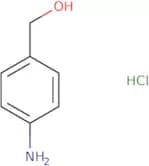
4-Aminobenzyl alcohol hydrochloride
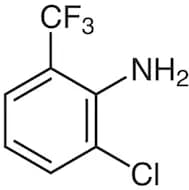
CAS :4-Aminobenzyl alcohol hydrochloride is a fine chemical that is used as a building block for research chemicals, reagents, and specialty chemicals. It can be used as a versatile building block in the synthesis of many complex compounds. 4-Aminobenzyl alcohol hydrochloride is also an intermediate for the synthesis of pharmaceuticals and other useful compounds. CAS No. 170926-25-7Formule :C7H10ClNODegré de pureté :Min. 95%Couleur et forme :PowderMasse moléculaire :159.61 g/mol2-Amino-3-chlorobenzotrifluoride
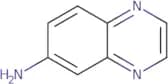
CAS :Formule :C7H5ClF3NDegré de pureté :>97.0%(GC)Couleur et forme :Colorless to Almost colorless clear liquidMasse moléculaire :195.576-Aminoquinoxaline
CAS :6-Aminoquinoxaline is a quinoxaline derivative that has been shown to be effective against the bacterium, Salmonella typhimurium. 6-Aminoquinoxaline has significant cytotoxicity and significant activity against the ryanodine receptor (RYR). This compound is also a dopamine analog which may have neuroprotective effects. It was also shown to have no adverse effects on skeletal development in rats. 6-Aminoquinoxaline is an analog of quinoxaline and it can undergo a thermal expansion reaction with other organic molecules. The biological properties of this compound are still being researched, but it has been shown to be toxic to cells in culture due to its ability to inhibit protein synthesis and DNA replication.
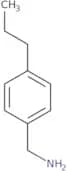
Formule :C8H7N3Degré de pureté :Min. 95%Couleur et forme :Yellow PowderMasse moléculaire :145.16 g/mol4-Propylbenzylamine
CAS :4-Propylbenzylamine is a chemical compound that is an intermediate for the synthesis of other chemicals. It is a versatile building block that can be used in research to create useful scaffolds or as a reaction component to form complex compounds. 4-Propylbenzylamine has been shown to have high purity, and it is soluble in most solvents. The CAS number for this chemical is 538342-98-2.
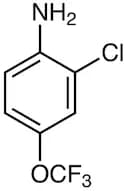
Formule :C10H15NDegré de pureté :Min. 95%Couleur et forme :PowderMasse moléculaire :149.23 g/mol2-Chloro-4-(trifluoromethoxy)aniline
CAS :Formule :C7H5ClF3NODegré de pureté :>97.0%(GC)(T)Couleur et forme :Colorless to Light yellow to Light orange clear liquidMasse moléculaire :211.57TAPS
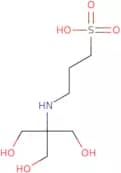
CAS :TAPS, also known as 3-[(Tris(hydroxymethyl)methyl)amino]-1-propanesulfonic acid, is a buffering agent that can be used in capillary electrophoresis with DNA and can form metal complexes. It has an optimal pH range of 7.7-9.1 and a pKa of 8.4.
Formule :C7H17NO6SDegré de pureté :Min. 95%Couleur et forme :SolidMasse moléculaire :243.28 g/molFmoc-12-aminododecanoic acid
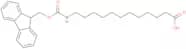
CAS :Fmoc-12-aminododecanoic acid is a synthetic amino acid that has been shown to lower blood pressure in both animal and human studies. It binds to albumin, which regulates the passage of substances into and out of the bloodstream, and also binds to b2 receptors that regulate the release of insulin from pancreatic cells. Fmoc-12-aminododecanoic acid has also been shown to inhibit cancer cell growth in vitro and has been used as an anti-cancer agent in animal experiments. This drug also inhibits bacterial growth by binding to a transporter protein, preventing uptake of glucose. Fmoc-12-aminododecanoic acid is a substrate for 4-tert butylbenzoic acid (4TBBA), which is taken up by bacteria such as P. aeruginosa at high rates.
Formule :C27H35NO4Degré de pureté :Min. 95%Masse moléculaire :437.57 g/mol2-Amino-4,5-dimethoxybenzamide
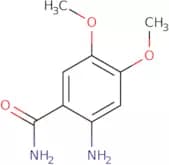
CAS :2-Amino-4,5-dimethoxybenzamide is an anticancer agent that inhibits the epidermal growth factor receptor tyrosine kinase. It binds to the linker region of the epidermal growth factor receptor and prevents autophosphorylation. 2-Amino-4,5-dimethoxybenzamide has shown in vitro cytotoxic activity against testicular cancer cells and acute lymphoblastic leukemia cells. 2-Amino-4,5-dimethoxybenzamide is a synthetic compound that has been shown to have bioisosteric properties with other growth factors such as epidermal growth factor.
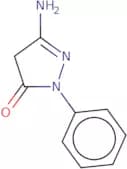
Formule :C9H12N2O3Degré de pureté :Min. 95%Couleur et forme :PowderMasse moléculaire :196.2 g/mol1-Phenyl-3-aminopyrazol-5-one
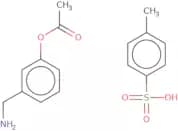
CAS :1-Phenyl-3-aminopyrazol-5-one is a solvent that can be used in elemental analysis. It has a molecular weight of 137.12 and is soluble in water, methanol, ethanol, acetone, ether, benzene and chloroform. 1-Phenyl-3-aminopyrazol-5-one has been shown to react with amines and form tautomers with different chemical properties. The spectral data for this compound are presented as the absorption spectra of substituted 1-phenyl-3-aminopyrazol-5-ones with acetyl groups at C2 and C4 (1), the nuclear magnetic resonance spectrum of 1-(dimethylamino)ethyl 3-[2-(N,N'-dimethylamino)ethyl]pyrazole (2), the NMR spectrum of 2-(dimethylamino)ethyl 3-[2-(N,N'-dimethylamino)ethyl]Formule :C9H9N3ODegré de pureté :Min. 95%Masse moléculaire :175.19 g/mol3-Acetoxybenzylamine 4-toluenesulphonate
CAS :3-Acetoxybenzylamine 4-toluenesulphonate is a white solid reagent that can be used as a building block for the synthesis of complex compounds. It has been shown to be useful as an intermediate and building block in the synthesis of natural products. 3-Acetoxybenzylamine 4-toluenesulphonate is a versatile compound that can be used in many different chemical reactions. It is also a speciality chemical that is available for purchase from research chemical suppliers.
Formule :C9H11NO2·C7H8O3SDegré de pureté :Min. 95%Masse moléculaire :337.39 g/molThiamine monophosphate chloride dihydrate
CAS :Thiamine monophosphate chloride dihydrate is a form of the vitamin thiamine. It has been used in control analysis to measure the activity of enzymes that require thiamine as a cofactor, such as transketolase and pyruvate kinase. Thiamine monophosphate chloride dihydrate has also been studied in biochemical properties, where it was found that this compound can be cleaved by picolinic acid to form thiazole phosphate. The matrix effect is an important factor in polymerase chain reactions and has been shown to be dependent on the presence of dinucleotide phosphate. This compound is an essential component of energy metabolism and plays a role in protein synthesis. Thiamine monophosphate chloride dihydrate also has toxicological studies, including a model system using wild-type strains of yeast. These studies have shown that this compound leads to physiological effects such as inhibition of glycolysis and lactic acid production.
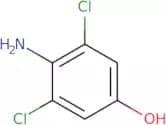
Formule :C12H18N4O4PS•Cl•(H2O)2Degré de pureté :Min. 99 Area-%Couleur et forme :PowderMasse moléculaire :416.82 g/mol4-Amino-3,5-dichlorophenol
CAS :4-Amino-3,5-dichlorophenol is a decoupling agent that has been shown to have acute toxicities in cultures. It is also used as a regulatory control for the analysis of hydroxyl groups and for broad-spectrum antimicrobial agents. 4-Amino-3,5-dichlorophenol reacts with hydrochloric acid to form chlorohydrin, which can be detected by an electrochemical detector. This reaction mechanism has been proposed as the basis for the use of this chemical as a decoupling agent in analytical chemistry. Its use as an antimicrobial agent is based on its ability to inhibit bacterial growth by reacting with thiol groups in enzymes or proteins and blocking their activity.
Formule :C6H5Cl2NODegré de pureté :Min. 95%Couleur et forme :PowderMasse moléculaire :178.02 g/mol(S)-3-Amino-3-phenylpropan-1-ol
CAS :The enantiopure (S)-3-Amino-3-phenylpropan-1-ol is a chiral and optically pure amino alcohol compound. It is an antibiotic that inhibits the bacterial enzyme acylase, which catalyzes the hydrolysis of ester bonds in fatty acids. This drug is also an inhibitor of drug substance, as well as an active form of dapoxetine hydrochloride. The (S)-3-Amino-3-phenylpropan-1-ol has been shown to be effective against both Gram positive and Gram negative bacteria, including methicillin resistant Staphylococcus aureus (MRSA) and Mycobacterium tuberculosis.
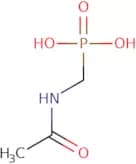
Formule :C9H13NODegré de pureté :Min. 95%Couleur et forme :Off-White PowderMasse moléculaire :151.21 g/molN-Acetylaminomethylphosphonic acid
CAS :N-Acetylaminomethylphosphonic acid is a benzylcompound with an amide group on the nitrogen atom. It has three resonance structures, two of which are shown below.
Formule :C3H8NO4PDegré de pureté :Min. 95%Couleur et forme :White PowderMasse moléculaire :153.07 g/molRef: 3D-FA34932
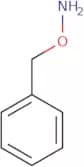
Produit arrêtéO-Benzylhydroxylamine
CAS :O-Benzylhydroxylamine is an antimicrobial agent that has been shown to be active against a range of microorganisms, including bacteria, fungi, and protozoa. It also has been shown to have an effect on locomotor activity in mice. O-Benzylhydroxylamine is synthesized by the asymmetric addition of hydrogen bromide to hydroxylamine with the use of a chiral catalyst. The synthesis yields two diastereomers, one enantiomeric form being active and the other inactive. O-Benzylhydroxylamine has been found to decrease levels of dopamine β-hydroxylase in rats and was used for the treatment of diabetic neuropathy and inflammatory bowel disease in human clinical trials.
Formule :C7H9NODegré de pureté :Min. 95%Couleur et forme :Clear LiquidMasse moléculaire :123.15 g/mol2-Aminophenylboronic acid
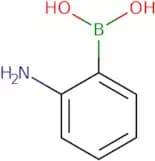
CAS :2-Aminophenylboronic acid is an organic compound that can be used as a cross-coupling agent in the Suzuki coupling reaction. It has been used to synthesize amides and β-unsaturated ketones. It has also been used to prepare fluorescent molecules for use in clinical diagnostics. The phase transition temperature of 2-aminophenylboronic acid is approximately -6°C, which makes it useful for the synthesis of amides and β-unsaturated ketones at low temperatures. This compound is not reactive towards nucleophiles due to its acidic character, but it can undergo a nucleophilic attack when protonated. Its fluorescence assay can be used to detect the presence of low concentrations of hydrogen sulfide gas in natural gas pipelines.
Formule :C6H8BNO2Degré de pureté :Min. 95%Couleur et forme :PowderMasse moléculaire :136.94 g/mol2-Aminothiophene-3-methyl carboxylate
CAS :2-Aminothiophene-3-methyl carboxylate is a hydrogen bond that is derived from the amino acid methionine. It has been shown to have potent antitumor activity and can be used for the treatment of cancer. 2-Aminothiophene-3-methyl carboxylate has a molecular weight of 244.6 g/mol, an isolated yield of 0.68%, and a melting point of 245 °C.
Formule :C4H2SCOOCH3NH2Degré de pureté :Min. 95%Couleur et forme :Yellow PowderMasse moléculaire :157.19 g/mol2-Cyanobenzylamine hydrochloride
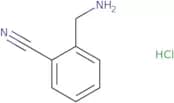
CAS :2-Cyanobenzylamine hydrochloride is a chemical building block and intermediate that can be used in the synthesis of many different compounds. It is also a useful reagent for reactions involving nitro compounds. 2-Cyanobenzylamine hydrochloride is a fine chemical that is registered with the Chemical Abstract Service (CAS No. 1134529-25-1). It has been identified as a versatile building block and useful intermediate in the synthesis of pharmaceuticals, agrochemicals, and other organic chemicals.
Formule :C8H8N2·HClDegré de pureté :Min. 95%Couleur et forme :White/Off-White SolidMasse moléculaire :168.62 g/molNb[n-N-butyl-N-acetyl]aminopropionic acid ethyl ester
CAS :Nb[n-N-butyl-N-acetyl]aminopropionic acid ethyl ester is a nitro compound that can be used as a repellent. It is often used in pharmaceutical preparations, such as topical and oral medications. The Nb[n-N-butyl-N-acetyl]aminopropionic acid ethyl ester molecule has nitrogen atoms with two hydrogens each, which are separated by an oxygen atom. This makes it a polar molecule because the hydrogen atoms are not on the same side of the molecule. The Nb[n-N-butyl-N-acetyl]aminopropionic acid ethyl ester also contains two carboxylic acids, which are fatty acids with one carbon atom and two hydrogens each. This makes it an organic compound that can be analyzed using gas chromatography or high performance liquid chromatography.
Formule :C11H21NO3Degré de pureté :Min. 95%Couleur et forme :Clear LiquidMasse moléculaire :215.29 g/mol2-Anilino-6-dibutylamino-3-methylfluoran
CAS :2-Anilino-6-dibutylamino-3-methylfluoran is a switchable fluorescent dye that has been used to detect and measure biochemically active substances in living cells. The dye is introduced into the cell, where it binds to specific proteins or nucleic acids, causing a change in fluorescence. This change can then be detected using a microscope with an ultraviolet light source. 2-Anilino-6-dibutylamino-3-methylfluoran has also been used to detect bacteria in wastewater samples. An experiment was conducted to determine the effects of temperature on the reaction time of 2AADMF and metal ion concentration. Increasing the temperature resulted in an increase in reaction time, while increasing the concentration of metal ions had no effect on reaction time. 2AADMF also reacts differently depending on whether it is inside microcapsules or not. Microcapsules with 2AADMF reacted faster than those without it when
Formule :C35H36N2O3Degré de pureté :Min. 95%Couleur et forme :White PowderMasse moléculaire :532.67 g/mol





![Nb[n-N-butyl-N-acetyl]aminopropionic acid ethyl ester](/_next/image/?url=https%3A%2Fstatic.cymitquimica.com%2Fproducts%2F3D%2Fthumb-webp%2FFN149896.webp&w=3840&q=75)
