Organoborane
6123 produits trouvés pour "Organoborane"
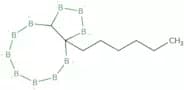
1-Hexyl-o-carborane
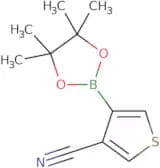
CAS :Produit contrôlé1-Hexyl-o-carborane is a human bioassay that has shown carcinogenic activity. It has been observed to cause cancer in humans through its ability to bind to DNA and alter the cell cycle. 1-Hexyl-o-carborane is an organometallic compound that binds to ferrocene and other organometallic compounds, preventing their use as anticancer drugs. 1-Hexyl-o-carborane can be synthesized by reacting hexylmagnesium bromide with ammonium carbonyl chloride in a one pot reaction.Formule :C8B10H24Degré de pureté :Min. 95%Masse moléculaire :228.39 g/mol3-Cyanothiophene-4-boronic acid pinacol ester
CAS :Please enquire for more information about 3-Cyanothiophene-4-boronic acid pinacol ester including the price, delivery time and more detailed product information at the technical inquiry form on this pageFormule :C11H14BNO2SDegré de pureté :Min. 95%Masse moléculaire :235.11 g/molIron bis(tetrafluoroborate) hexahydrate
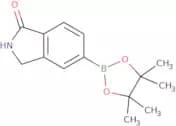
CAS :Iron bis(tetrafluoroborate) hexahydrate is a ferrimagnetic, thermally stable coordination compound that has been shown to interact with bidentate ligands. Iron bis(tetrafluoroborate) hexahydrate can be used as a mononuclear section in analogy to the octahedral section of nickel bis(tetrafluoroborate) hexahydrate. The ligands are methyl groups, which are diffracted at 2θ values of 12.8° and 18.3°. The compound is stable in solvents such as dimethylsulfoxide and tetrahydrofuran. It also has chelate ligand transfer properties, which are due to the presence of two hydroxyl groups on each iron atom.Formule :Fe(BF4)2•(H2O)6Degré de pureté :Min. 95%Couleur et forme :SolidMasse moléculaire :337.55 g/mol5-(4,4,5,5-Tetramethyl-1,3,2-dioxaborolan-2-yl)isoindolin-1-one
CAS :Please enquire for more information about 5-(4,4,5,5-Tetramethyl-1,3,2-dioxaborolan-2-yl)isoindolin-1-one including the price, delivery time and more detailed product information at the technical inquiry form on this page
Formule :C14H18BNO3Degré de pureté :Min. 95%Masse moléculaire :259.11 g/mol4-(Ethylsulfonyl)phenylboronicacid
CAS :Please enquire for more information about 4-(Ethylsulfonyl)phenylboronicacid including the price, delivery time and more detailed product information at the technical inquiry form on this page
Formule :C8H11BO4SDegré de pureté :Min. 95%Masse moléculaire :214.05 g/mol3-Methyl-1H-indazol-5-yl-5-boronic acid
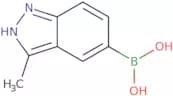
CAS :Please enquire for more information about 3-Methyl-1H-indazol-5-yl-5-boronic acid including the price, delivery time and more detailed product information at the technical inquiry form on this pageFormule :C8H9BN2O2Degré de pureté :Min. 95%Masse moléculaire :175.98 g/mol4-(Hydroxymethyl)phenylboronic acid
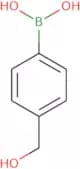
CAS :4-(Hydroxymethyl)phenylboronic acid is an organic compound that has been identified as a reactive, fatty acid. It has shown antibacterial efficacy against gram-positive and gram-negative bacteria in the presence of nanogels. 4-(Hydroxymethyl)phenylboronic acid is also a cross-linking agent that can be used to form hydrogels for tissue engineering applications. This chemical is being studied as a potential treatment for inflammatory bowel disease and diabetes mellitus. 4-(Hydroxymethyl)phenylboronic acid has been shown to have anti-cancer properties by inhibiting the proliferation of cancer cells and inducing apoptosis. The molecule also undergoes structural analysis using confocal microscopy.
Formule :C7H9BO3Masse moléculaire :151.96 g/mol2-Chloro-4-fluoropyridine-5-boronic acid, pinacol ester
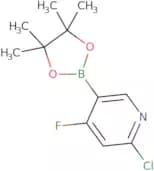
CAS :Please enquire for more information about 2-Chloro-4-fluoropyridine-5-boronic acid, pinacol ester including the price, delivery time and more detailed product information at the technical inquiry form on this pageFormule :C11H14BClFNO2Degré de pureté :Min. 95%Masse moléculaire :257.5 g/mol3-Chloro-4-cyanophenylboronic acid
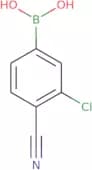
CAS :Produit contrôléPlease enquire for more information about 3-Chloro-4-cyanophenylboronic acid including the price, delivery time and more detailed product information at the technical inquiry form on this pageFormule :C7H5BClNO2Degré de pureté :Min. 95%Masse moléculaire :181.38 g/molTrimethylchlorosilane
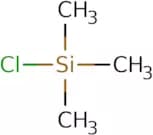
CAS :Trimethylchlorosilane is a model system for the study of chloride ion transport across lipid membranes. It has been shown that this molecule can form a disulfide bond with glutathione and may have synergistic effects with other drugs, such as metronidazole, to treat bowel disease. Trimethylchlorosilane can also be used in analytical methods for measuring chloride ions in wastewater and other samples. The x-ray crystal structures of trimethylchlorosilane anhydrous sodium salt have been determined at room temperature. The hydrogen fluoride molecule binds to the pyrazole ring and the chlorine atom forms a covalent bond with the hydroxyl group on one of the water molecules. The reaction solution is heated to produce trimethylchlorosilane, which is then cooled to room temperature again, during which time it crystallizes out of solution.Formule :C3H9ClSiDegré de pureté :Min. 95%Couleur et forme :Clear LiquidMasse moléculaire :108.64 g/mol(-)-B-Chlorodiisopinocampheylborane, 60% in Hexane, ca. 1.7mol/L
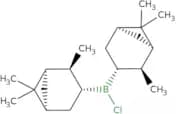
CAS :(-)-B-Chlorodiisopinocampheylborane is a carbonyl group that can be used for asymmetric synthesis. It was synthesized from the reaction of chlorodiisopinocampheylborane with butyllithium and allyl bromide, followed by aqueous workup. The enantiomers were separated through thin layer chromatography on silica gel plates with hexane as the eluent. The resolution of racemic latanoprost lactol was achieved in the same manner. (-)-B-Chlorodiisopinocampheylborane is also a diketone that can be prepared from para-chloroacetophenone and sodium hydroxide in ethanol. This diketone undergoes an intramolecular cyclization to produce noradrenaline (norepinephrine) and hydrochloric acid, which can then be converted into dioxolanes or other products.Formule :C20H34BClDegré de pureté :Min. 95%Couleur et forme :Clear LiquidMasse moléculaire :320.75 g/molTriethoxy(propyl)silane
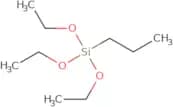
CAS :Triethoxy(propyl)silane is an organosilicon compound that has reactive properties. It is a polymeric material that can be used as a component in paints, coatings, and sealants. The reaction of triethoxy(propyl)silane with sodium hydroxide solution yields hydrogen fluoride, water vapor, and hydrochloric acid. Triethoxy(propyl)silane has been shown to react with hydroxide solution to form polycarboxylic acids. The hydroxyl group on the triethoxy(propyl)silane molecule is responsible for the transport properties of this compound.Formule :C9H22O3SiDegré de pureté :Min. 95%Masse moléculaire :206.35 g/molO-(Tert-Butyldimethylsilyl)hydroxylamine
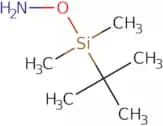
CAS :O-(Tert-butyldimethylsilyl)hydroxylamine is a stereospecific, oxidized, insoluble, tautomeric hydroxamic acid. It is used as a reagent in organic synthesis to form lactams by reaction with hexamethylenetetramine. The compound can be prepared by treatment of hydroxylamine with diacetate in the presence of aluminium chloride. The product is an orange liquid that crystallizes from water, but is not soluble in most organic solvents.Formule :C6H17NOSiDegré de pureté :Min. 95%Masse moléculaire :147.29 g/molO-Benzyl psilocybin
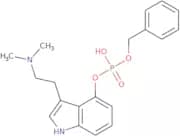
CAS :Produit contrôléO-Benzyl psilocybin is a hydrophobic molecule with an affinity for lipase. It has been shown to exhibit growth inhibition on malignant cells in tissue culture, and has been investigated as a potential anticancer agent. O-Benzyl psilocybin is also able to inhibit the activity of plasminogen activator inhibitor-1 (PAI-1), which is involved in cancer progression and metastasis. This compound may be used as an anticancer drug or as a prophylactic agent against cancer. It may also be useful in treating other conditions such as atherosclerosis and restenosis, where PAI-1 plays a significant role. O-Benzyl psilocybin has been found to have anti-inflammatory properties that may be due to its ability to inhibit the production of prostaglandin E2 from arachidonic acid.Formule :C19H23N2O4PDegré de pureté :Min. 95%Masse moléculaire :374.37 g/molChlorodimethyl(3,3,4,4,5,5,6,6,7,7,8,8,8-Tridecafluorooctyl)-Silane
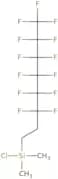
CAS :Chlorodimethyl(3,3,4,4,5,5,6,6,7,7,8,8,8-Tridecafluorooctyl)-Silane is an organic solvent that can be used as a component in the synthesis of synaptic membranes. It has been shown to inhibit spontaneous activity in rat brain slices and exhibits high hydrophobicity. Chlorodimethyl(3,3,4,4,5,5,6,6) - Silane has been used for the patch-clamp technique on human erythrocytes and the immunostaining of proteins. This compound is also useful for the optimization of organic reactions and asymmetric synthesis.Formule :C10H10ClF13SiDegré de pureté :Min. 95%Masse moléculaire :440.7 g/molBromotrimethylsilane
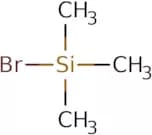
CAS :Bromotrimethylsilane is an inhibitor of the enzyme hydroxyl methyl transferases. It binds to the penicillin-binding protein and inhibits the activity of this enzyme, which is involved in the synthesis of bacterial cell walls. Bromotrimethylsilane has been shown to be active against murine sarcoma virus and other viruses as well as bacterial growth. This compound has also been shown to inhibit the growth of several types of cancer cells, including leukemia cells from mice.Formule :C3H9BrSiDegré de pureté :Min. 95%Couleur et forme :Colorless Clear LiquidMasse moléculaire :153.09 g/mol(2,4-Dimethylphenyl)boronic acid
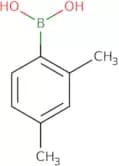
CAS :(2,4-Dimethylphenyl)boronic acid is an arylboronic acid that is used in organic synthesis. The boron atom of the 2,4-dimethylphenyl group coordinates with the metal atom in the catalyst to form a stable complex. This allows for a multilayer reaction and fluorescence to occur. The activated fluorine atoms can be used to boost the reaction by adding them to the substrate and increasing the rate of oxidation. Astragalus membranaceus and rapeseed extracts have been shown to increase the rate of oxidation as well as inhibiting the formation of disaccharides. These extracts also have shown anti-inflammatory effects when tested on rats. (2,4-Dimethylphenyl)boronic acid has also been found to interact with dihydroisoquinolines, which are compounds that are structurally similar to morphine and codeine.Formule :C8H11BO2Degré de pureté :Min. 95%Masse moléculaire :149.98 g/molTriethyl borate
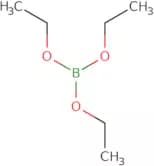
CAS :Triethyl borate is an inorganic acid that is used as a catalyst. It has been shown to react with hydrochloric acid and orthoboric acid to form hydrogen boron hydride (H3BO3) and water. It also reacts with hydrogen chloride, forming hydrogen boron chloride, which can be used to prepare the active form of boric acid. This reaction is reversible and the equilibrium can be shifted by adding a base such as sodium hydroxide or ammonia. Triethyl borate is reactive, so it should only be handled in well-ventilated areas. The structural analysis of this compound reveals that it contains two hydroxyl groups that are involved in intramolecular hydrogen bonding, which helps stabilize its structure. Triethyl borate has been shown to have anti-infectious properties, inhibiting the growth of infectious bacteria such as Staphylococcus aureus and Streptococcus pneumoniae.
Formule :C6H15BO3Degré de pureté :Min. 95%Masse moléculaire :145.99 g/mol1-(difluoromethyl)-4-(4,4,5,5-tetramethyl-1,3,2-dioxaborolan
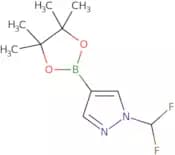
CAS :Please enquire for more information about 1-(difluoromethyl)-4-(4,4,5,5-tetramethyl-1,3,2-dioxaborolan including the price, delivery time and more detailed product information at the technical inquiry form on this page
Formule :C10H15BF2N2O2Degré de pureté :Min. 95%Masse moléculaire :244.05 g/molPhenyl-1,2-carborane
CAS :Produit contrôléPlease enquire for more information about Phenyl-1,2-carborane including the price, delivery time and more detailed product information at the technical inquiry form on this page
Formule :C8H16B10Degré de pureté :Min. 95%Couleur et forme :Colourless Or White To Off-White Solid Or Liquid (May Vary)Masse moléculaire :220.32 g/mol