Nitro
Les composés nitro sont des molécules organiques contenant un ou plusieurs groupes nitro (NO2). Ces composés sont largement utilisés dans la synthèse d'explosifs, de produits pharmaceutiques et de colorants. Chez CymitQuimica, nous proposons une large gamme de composés nitro de haute qualité pour soutenir vos applications de recherche et industrielles, garantissant des résultats sûrs et efficaces. Notre sélection comprend une variété de composés nitro adaptés à différentes synthèses chimiques et applications.
2516 produits trouvés pour "Nitro"
Trier par
Degré de pureté (%)
0
100
|
0
|
50
|
90
|
95
|
100
4-(Benzyloxy)-5-methoxy-2-nitrobenzaldehyde
CAS :<p>4-(Benzyloxy)-5-methoxy-2-nitrobenzaldehyde (BOMBA) is an amide with affinity for microtubules. It has been shown to interact with the microtubule lattice and inhibit the polymerization of tubulin. This leads to a decrease in cell viability and cytotoxicity, as well as a decrease in tumor size. In vivo studies have demonstrated that BOMBA inhibits tumor growth by inducing thrombosis and coagulation, which results in reduced blood flow to the tumor. The mechanism of action of BOMBA is thought to be due to its ability to form sulfamates, which are known for their anti-coagulant activity.</p>Formule :C15H13NO5Degré de pureté :Min. 95%Masse moléculaire :287.27 g/mol4-Nitrophenol
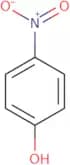
CAS :<p>4-Nitrophenol is a chemical compound that is used in wastewater treatment to remove iron and copper ions. 4-Nitrophenol has been shown to catalyze the oxidation of picolinic acid by copper chloride, forming oxalic acid. The redox potential of 4-nitrophenol is -0.53 V, which makes it a suitable electron acceptor for the reaction. The reaction mechanism of this process involves the formation of a nitroso radical intermediate, which reacts with copper ions to form copper nitroso complexes and then reacts with oxygen to form hydroxylamine radicals. This reaction can also be followed using fluorescence probe measurements or electrochemical impedance spectroscopy (EIS).</p>Formule :C6H5NO3Degré de pureté :Min. 95%Couleur et forme :PowderMasse moléculaire :139.11 g/mol4-Chloro-2-nitroaniline
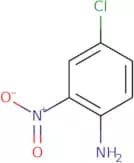
CAS :<p>4-Chloro-2-nitroaniline (4CNA) is a chemical that is used for wastewater treatment. 4CNA reacts with phosphorus pentachloride or phosphorus pentoxide to form phosphoric acid, which can be used as a pH buffer in water treatment applications. It is also used as an antidepressant treatment in pharmaceutical dosage and has been shown to have signal properties. 4CNA is also used in the production of monoclonal antibodies, n-dimethyl formamide and intracranial haemorrhage treatments. It can be produced by reacting hydrochloric acid with membrane systems at low energy.</p>Formule :C6H5ClN2O2Degré de pureté :Min. 95%Masse moléculaire :172.57 g/mol3-Chloro-2-nitropyridine
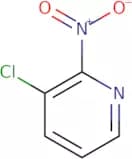
CAS :<p>3-Chloro-2-nitropyridine is a chemical compound that has been shown to have anticancer activity. It is a structural analog of the nucleophilic piperazine, which can react with hydrogen fluoride in an electrophilic substitution reaction to form 3-chloro-2-nitropyridine oxide. The anticancer activity of this compound may be due to its ability to inhibit the growth of tumor cells by binding to the d4 receptor, inhibiting the production of inflammatory cytokines and growth factors. 3-Chloro-2-nitropyridine has also been shown to have antiinflammatory activities, which may be due to its inhibition of nitric oxide synthesis and 5'-lipoxygenase.</p>Formule :C5H3N2O2ClDegré de pureté :Min. 95%Couleur et forme :PowderMasse moléculaire :158.54 g/mol2-Amino-5-nitroindan hydrochloride
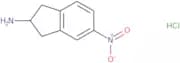
CAS :Produit contrôlé<p>Please enquire for more information about 2-Amino-5-nitroindan hydrochloride including the price, delivery time and more detailed product information at the technical inquiry form on this page</p>Formule :C9H10N2O2·HClDegré de pureté :Min. 95%Masse moléculaire :214.65 g/mol1-Nitronaphthalene
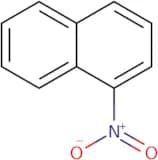
CAS :<p>1-Nitronaphthalene is a nitrobenzene derivative that has been used as an intermediate in the synthesis of pharmaceuticals, dyes, and other organic compounds. 1-Nitronaphthalene is classified as a hazardous substance due to its carcinogenicity and toxicity. In particular, it can cause irritation and burns on skin contact and may be fatal if swallowed. The toxicity profile of 1-nitronaphthalene has been studied in rats, mice, guinea pigs, rabbits, hamsters, and dogs. It was found to have moderate acute oral toxicity in rats but no significant acute toxicity in mice or dogs. 1-Nitronaphthalene also had little effect on p450 activity or enzyme activities in rats.</p>Formule :C10H7NO2Degré de pureté :Min. 95%Couleur et forme :Yellow Clear LiquidMasse moléculaire :173.17 g/mol1,2-Epoxy-3-(4-nitrophenoxy)propane
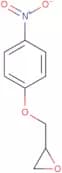
CAS :<p>1,2-Epoxy-3-(4-nitrophenoxy)propane is an epoxide that is a reactive intermediate that participates in a number of reactions, including the formation of disulfide bonds. It has been shown to have genotoxic effects and to be toxic to polymorphonuclear leucocytes. The compound can also inhibit detoxification enzymes, which may make it useful as a biomarker for environmental exposure to xenobiotics. 1,2-Epoxy-3-(4-nitrophenoxy)propane has also been shown to be a potential anti-cancer agent in gene therapy studies. This compound inhibits energy metabolism by inhibiting the enzyme glyceraldehyde 3 phosphate dehydrogenase (GAPDH).</p>Formule :C9H9NO4Degré de pureté :Min. 95%Masse moléculaire :195.17 g/mol5-Nitrosoquinolin-8-ol
CAS :<p>5-Nitrosoquinolin-8-ol is a chemical inhibitor that can be used in the study of enzyme function. It reacts with the active site of the enzymes and prevents them from carrying out their normal functions. 5-Nitrosoquinolin-8-ol has been shown to inhibit the growth of cancer cells and to have antiinflammatory properties. 5-Nitrosoquinolin-8-ol has been shown to bind to sephadex G-100 and potassium dichromate, which are both types of ion exchangers. The redox potential for this compound is -0.84 V. This means it will not react easily with other compounds, which makes it a good candidate for use as an inhibitor in biochemical studies. The nitrogen atoms in this compound are reactive, which means they can form covalent bonds with other molecules in a reaction called nitrosation. Structural biology is a branch of science that deals with studying the three dimensional structure of biological mac</p>Formule :C9H6N2O2Degré de pureté :Min. 95%Couleur et forme :Yellow To Green SolidMasse moléculaire :174.16 g/mol4-(N-Methyl-N-nitrosamino)-4-(3-pyridyl)butane-1-ol
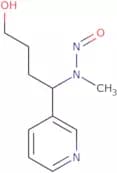
CAS :<p>4-(N-Methyl-N-nitrosamino)-4-(3-pyridyl)butane-1-ol is a chemical that can be found in tobacco smoke. It has been shown that chronic exposure to 4-(N-methyl-N-nitrosamino)-4-(3-pyridyl)butane-1-ol causes cancer in rodents, as evidenced by increased rates of tumorigenesis. This chemical also has the ability to inhibit butyric acid formation, which may reduce the risk of colon cancer. The carcinogenic effect of this chemical is due to its ability to react with DNA and form adducts that cause methylation at C8 position on guanine nucleotide (G). These adducts lead to mutations, which can lead to cancer.</p>Formule :C10H15N3O2Degré de pureté :Min. 95%Masse moléculaire :209.25 g/mol4-Nitro-1,2,5-oxadiazol-3-amine
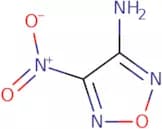
CAS :Produit contrôlé<p>4-Nitro-1,2,5-oxadiazol-3-amine is a molecule that has been shown to be an inhibitor of the epidermal growth factor receptor (EGFR). The optimal reaction conditions for this molecule were determined by crystallography. These results were confirmed by prognosis assays and the determination of tautomers. This molecule may be used in diagnosis and as a potential treatment for cancer. 4-Nitro-1,2,5-oxadiazol-3-amine binds to the EGFR at a site different from that of erlotinib, an inhibitor currently used in the clinic. This binding leads to inhibition of protein synthesis and cell division by preventing the activation of downstream signal transduction pathways. The molecule also inhibits tumor cell proliferation and induces apoptosis by preventing the production of nitric oxide (NO) and reactive oxygen species (ROS).</p>Formule :C2H2N4O3Degré de pureté :Min. 95%Masse moléculaire :130.06 g/mol3-Nitropyridine
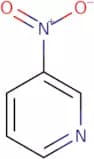
CAS :<p>3-Nitropyridine is a nitro compound that is used in the preparation of pharmaceuticals. It has been shown to have an inhibitory effect on HIV and other viruses, which may be due to its ability to react with nucleophilic groups. 3-Nitropyridine has also been shown to have an inhibitory effect on the human immunodeficiency virus (HIV) by reacting with the acidic group of the virus. This reaction prevents the virus from binding to cells and entering them. 3-Nitropyridine is also used as a solvent for organic reactions.</p>Formule :C5H4N2O2Degré de pureté :Min. 95%Couleur et forme :PowderMasse moléculaire :124.1 g/mol(aR)-a-[[[2-(4-Nitrophenyl)ethyl]amino]methyl]benzenemethanol
CAS :<p>(aR)-a-[[[2-(4-Nitrophenyl)ethyl]amino]methyl]benzenemethanol is a chiral, carbonyl compound that has been used in the synthesis of mirabegron. It is synthesized by reacting an amide with a hydrochloric acid salt. The product yield of (aR)-a-[[[2-(4-Nitrophenyl)ethyl]amino]methyl]benzenemethanol is high and it does not react with aluminium or amide impurities. This compound can be used for the industrial synthesis of mirabegron, which is a drug for the treatment of urinary incontinence. The reduction reaction and hydrolysis reactions are both important to this process.</p>Degré de pureté :Min. 95%1-(Bromomethyl)-2-(trifluoromethyl)-4-nitrobenzene
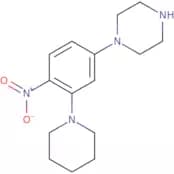
CAS :<p>Please enquire for more information about 1-(Bromomethyl)-2-(trifluoromethyl)-4-nitrobenzene including the price, delivery time and more detailed product information at the technical inquiry form on this page</p>Formule :C8H5BrF3NO2Degré de pureté :Min. 95%Couleur et forme :PowderMasse moléculaire :284.03 g/mol1-(4-Nitro-3-piperidin-1-ylphenyl)piperazine
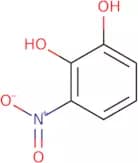
CAS :<p>1-(4-Nitro-3-piperidin-1-ylphenyl)piperazine is a synthetic molecule that is used as a polymerization initiator. It can be used to prepare polymers with functional groups that contain nitro and piperidine groups. 1-(4-Nitro-3-piperidin-1-ylphenyl)piperazine reacts with monomers such as thiourea, which are then polymerized by the addition of other reagents such as solvents or catalysts. The most common use of 1-(4-Nitro-3-piperidin-1-ylphenyl)piperazine is in the synthesis of nalidixic acid, an antibiotic drug that inhibits bacterial growth by preventing DNA replication. This compound has been shown to be nonhazardous to humans and animals in bioassays, although it may cause toxic effects on the skin, eyes, and respiratory system when exposed</p>Formule :C15H22N4O2Degré de pureté :Min. 95%Masse moléculaire :290.36 g/mol3-Nitro-benzene-1,2-diol
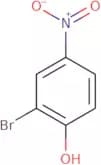
CAS :<p>3-Nitro-benzene-1,2-diol is an inhibitor of catechol-o-methyltransferase (COMT), which catalyzes the transfer of a methyl group from S-adenosyl methionine to dopamine. This results in the formation of 3-O-(methylamino) catechol. COMT inhibitors are used as pharmaceutical preparations for the treatment of Parkinson's disease and other diseases involving dopamine. 3-Nitro-benzene-1,2-diol has been shown to inhibit COMT and prevent the breakdown of dopamine in the brain, which may be beneficial for treating Parkinson's disease and other nervous system diseases.</p>Formule :C6H5NO4Degré de pureté :Min. 95%Masse moléculaire :155.11 g/mol2-Bromo-4-nitrophenol
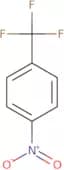
CAS :<p>2-Bromo-4-nitrophenol is a byproduct of the reaction between hydrogen peroxide and sodium bromate. It can be detected in the presence of hydrochloric acid, which reacts with 2-bromo-4-nitrophenol to form an orange color that can be detected spectrophotometrically. 2-Bromo-4-nitrophenol has been shown to inhibit the growth of various strains of bacteria, including Escherichia coli, Bacillus subtilis, and Pseudomonas aeruginosa. This compound binds to flavin adenine dinucleotide (FAD) as well as other nucleophilic cofactors such as thioredoxin reductase. The binding affinity is increased when carbon sources are present. This property makes it a useful inhibitor for catalytic reduction reactions in biotechnology and synthetic chemistry applications.br>br> 2B4NP is a by</p>Formule :C6H4BrNO3Degré de pureté :Min. 95%Couleur et forme :PowderMasse moléculaire :218 g/mol4-Nitrobenzotrifluoride
CAS :<p>4-Nitrobenzotrifluoride is a chemical with the formula C6H3N3O2F3. It is a white solid that is soluble in organic solvents and insoluble in water. The compound has been used as a precursor to other compounds, including 4-nitrobenzoic acid, 4-nitrophenol, and 2,4-dinitrobenzenesulfonic acid. The nitro group of this compound can be reduced to an amine by reaction with hydroxide solution. This reaction is exothermic and produces hydrogen gas as a byproduct. Further reactions involving the nitro group can be performed in the presence of aryl chlorides or alkali metals such as potassium or sodium hydroxide. These reactions yield products that have the functional groups RNH2, RCOOH, and RN=C=O. The product of these reactions can be identified using nuclear magnetic resonance spectroscopy</p>Formule :C7H4F3NO2Degré de pureté :Min. 95%Masse moléculaire :191.11 g/molN-Nitrosodiethylamine
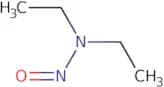
CAS :<p>N-Nitrosodiethylamine (NDEA) is a genotoxic carcinogen that is formed as an intermediate in the industrial production of nitric acid. It has been shown to be a potent inhibitor of DNA polymerase and topoisomerase II, which are involved in DNA replication and repair. NDEA has been detected in human blood samples and has been shown to induce squamous cell carcinoma in animal models. This chemical can also cause inflammation by binding to toll-like receptor 4, which activates the inflammatory response. The biocompatible polymer used for this product is not known to produce any genotoxic or mutagenic effects.</p>Formule :C4H10N2ODegré de pureté :Min. 95%Couleur et forme :Colorless Clear LiquidMasse moléculaire :102.14 g/molN-α-Z-L-lysine 4-nitrophenyl ester hydrochloride
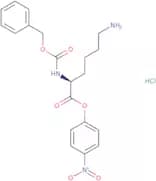
CAS :<p>N-alpha-Z-L-lysine 4-nitrophenyl ester hydrochloride is a protease that belongs to the family of serine proteases. It is produced by the biotechnological process of enzymatic extraction from the natural polysaccharide carrageenan. This product has been used in the production of high yield and purified enzymes for industrial applications. The enzyme has been shown to have cysteine and hydrolytic activity, as well as being able to break peptidic bonds in peptides. N-alpha-Z-L-lysine 4-nitrophenyl ester hydrochloride also has a high specificity for proteolytic cleavage of proteins at their carboxy terminal end.</p>Formule :C20H23N3O6•HClDegré de pureté :Min. 95%Masse moléculaire :437.87 g/mol1-Nitro-Cyclohexene
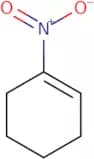
CAS :<p>1-Nitro-cyclohexene is an aromatic compound that reacts with nitric oxide to form a nitroso. 1-Nitro-cyclohexene has been shown to be a reactive intermediate in the Covid-19 pandemic, catalyzing the formation of covidimycin from dimethoxymethylpenicillin. 1-Nitro-cyclohexene also has been found to react with hydrogen peroxide and flavin mononucleotide to form hydroxyl radicals, which are highly reactive chemical species capable of damaging DNA and other cellular components. The toxicity of 1-nitrocyclohexene is related to its ability to form nitrosamines and nitrophenols, which are both carcinogenic. 1-Nitro-cyclohexene can also react with protonated amines or amides to form imines or imides, which are chemically stable species that can persist in the environment.</p>Formule :C6H9NO2Degré de pureté :Min. 95%Masse moléculaire :127.14 g/mol



![(aR)-a-[[[2-(4-Nitrophenyl)ethyl]amino]methyl]benzenemethanol](/_next/image/?url=https%3A%2Fstatic.cymitquimica.com%2Fproducts%2F3D%2Fthumb-webp%2FFN75044.webp&w=3840&q=75)