Nitro
Les composés nitro sont des molécules organiques contenant un ou plusieurs groupes nitro (NO2). Ces composés sont largement utilisés dans la synthèse d'explosifs, de produits pharmaceutiques et de colorants. Chez CymitQuimica, nous proposons une large gamme de composés nitro de haute qualité pour soutenir vos applications de recherche et industrielles, garantissant des résultats sûrs et efficaces. Notre sélection comprend une variété de composés nitro adaptés à différentes synthèses chimiques et applications.
2516 produits trouvés pour "Nitro"
Trier par
Degré de pureté (%)
0
100
|
0
|
50
|
90
|
95
|
100
2,6-Dibromo-3-nitropyridine
CAS :2,6-Dibromo-3-nitropyridine is a chemical compound that has been shown to inhibit serine protease activity. The compound was shown to be an inhibitor of the enzyme trypsin, and showed some activity against a number of other proteases. 2,6-Dibromo-3-nitropyridine has also been shown to inhibit nucleophilic alkylation of DNA bases by 2,6-dichloroquinoxaline. 2,6-Dibromo-3-nitropyridine is a targeted inhibitor that binds to the active site of the enzyme and prevents the formation of an enzyme-substrate complex. This inhibition leads to a decrease in the production of proteins essential for cell division.Formule :C5H2Br2N2O2Degré de pureté :Min. 95%Masse moléculaire :281.89 g/mol6-Hydroxy-5-nitronicotinic acid
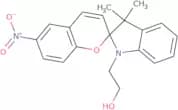
CAS :<p>Please enquire for more information about 6-Hydroxy-5-nitronicotinic acid including the price, delivery time and more detailed product information at the technical inquiry form on this page</p>Formule :C6H4N2O5Degré de pureté :Min. 95%Masse moléculaire :184.11 g/mol1-(2-Hydroxyethyl)-3,3-dimethylindolino-6'-nitrobenzopyrylospiran
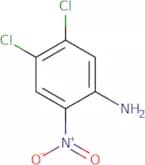
CAS :<p>Please enquire for more information about 1-(2-Hydroxyethyl)-3,3-dimethylindolino-6'-nitrobenzopyrylospiran including the price, delivery time and more detailed product information at the technical inquiry form on this page</p>Degré de pureté :Min. 95%4,5-Dichloro-2-nitroaniline
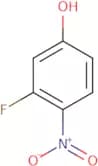
CAS :<p>4,5-Dichloro-2-nitroaniline is a chemical compound that has been shown to be an uncoupler of oxidative phosphorylation in ciliates. It is experimentally shown that the reaction yield for 4,5-Dichloro-2-nitroaniline is much higher than that of the corresponding methylbenzene. The two isomers are not detected in the gaseous phase, but only as products of thermal decomposition at high temperatures. Linear regression analysis and predictive models were used to evaluate the transfer and population growth rates at different temperatures. Narcosis was observed in rats exposed to 4,5-Dichloro-2-nitroaniline at concentrations greater than 0.1 ppm (0.1 mg/L).</p>Formule :C6H4Cl2N2O2Degré de pureté :Min. 95%Masse moléculaire :207.01 g/mol3-Fluoro-4-nitrophenol
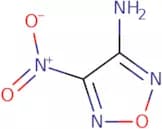
CAS :<p>3-Fluoro-4-nitrophenol is an organic solvent that is used in the synthesis of a number of organic and inorganic compounds, including diazonium salts. 3-Fluoro-4-nitrophenol can be reacted with organometallic reagents to form tetraphenylmethane derivatives. It has been shown to have potential use as a precursor for the synthesis of a number of pharmaceuticals, such as regorafenib, which is an antiangiogenic drug. 3-Fluoro-4-nitrophenol reacts with chloride ions to form coelomic acid (3-fluoroaniline) and other organic acids. Reaction with magnesium and aluminium produces silicon nitride.</p>Formule :C6H4FNO3Degré de pureté :Min. 95%Masse moléculaire :157.1 g/mol4-Nitro-1,2,5-oxadiazol-3-amine
CAS :Produit contrôlé<p>4-Nitro-1,2,5-oxadiazol-3-amine is a molecule that has been shown to be an inhibitor of the epidermal growth factor receptor (EGFR). The optimal reaction conditions for this molecule were determined by crystallography. These results were confirmed by prognosis assays and the determination of tautomers. This molecule may be used in diagnosis and as a potential treatment for cancer. 4-Nitro-1,2,5-oxadiazol-3-amine binds to the EGFR at a site different from that of erlotinib, an inhibitor currently used in the clinic. This binding leads to inhibition of protein synthesis and cell division by preventing the activation of downstream signal transduction pathways. The molecule also inhibits tumor cell proliferation and induces apoptosis by preventing the production of nitric oxide (NO) and reactive oxygen species (ROS).</p>Formule :C2H2N4O3Degré de pureté :Min. 95%Masse moléculaire :130.06 g/mol2-Chloro-4-nitro-6-bromoaniline
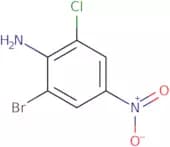
CAS :2-Chloro-4-nitro-6-bromoaniline is a dispersive, linear range, ammonolysis and chloride free oxidant for wastewater treatment. This compound is effective at removing organic pollutants from wastewater and has been shown to be both environmentally safe and cost effective. 2-Chloro-4-nitro-6-bromoaniline is also used as a polymerization initiator in the production of polyester resins. It can be manufactured by recycling anilines by reacting them with bromine in the presence of an acid catalyst. 2CNBBA is used as a hydrogen bond acceptor in microextraction of chlorinated compounds from water samples.Formule :C6H4BrClN2O2Degré de pureté :Min. 95%Masse moléculaire :251.46 g/mol4-(4-Nitrophenoxy)butanoic acid
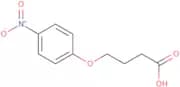
CAS :Produit contrôlé<p>Please enquire for more information about 4-(4-Nitrophenoxy)butanoic acid including the price, delivery time and more detailed product information at the technical inquiry form on this page</p>Formule :C10H11NO5Degré de pureté :Min. 95%Masse moléculaire :225.2 g/molMethyl3-formyl-4-nitrobenzoate
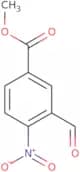
CAS :<p>Methyl3-formyl-4-nitrobenzoate is a polycyclic, boronic ester ligand that can be used in organic synthesis. It has a monocyclic alkenyl group with substitutable hydrogens and a haloalkyl substituent. The heterocycle is an aryloxy substituted with an alkynyl group. This reagent has been patented by the University of California.</p>Formule :C9H7NO5Degré de pureté :Min. 95%Masse moléculaire :209.16 g/mol3-Methyl-4-nitroimino-tetrahydro-1,3,5-oxadiazine
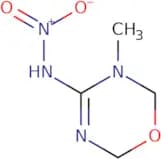
CAS :<p>3-Methyl-4-nitroiminoperhydro-1,3,5-oxadiazine is a synthetic chemical compound that can be used as a pressurizing agent. It is an acidic compound and has high yield. 3-Methyl-4-nitroiminoperhydro-1,3,5-oxadiazine is also used to produce formic acid and can be found in the environment as a pollutant. This chemical may be harmful to insects. 3-Methyl-4-nitroiminoperhydro-1,3,5-oxadiazine has been used in scientific research to synthesize paraformaldehyde and recycled materials from formaldehyde. This chemical is also often used as a diluent or reagent in laboratory experiments.</p>Formule :C4H8N4O3Degré de pureté :Min. 95%Masse moléculaire :160.13 g/molNitrosobis(2-hydroxyethyl)amine
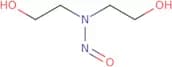
CAS :<p>Nitrosobis(2-hydroxyethyl)amine (NBEA) is an inhibitor of nitrite reductase, an enzyme that catalyzes the reduction of nitrite to ammonia. Nitrite reductase is used in wastewater treatment and is also involved in the metabolism of some carcinogens. NBEA has been shown to inhibit the activity of nitrite reductase by binding to its active site, preventing the enzyme from reducing nitrite to ammonia. NBEA has genotoxic effects on E. coli K-12 cells and increases DNA damage with prolonged exposure, which may be due to the production of reactive oxygen species such as superoxide radical anion and hydrogen peroxide.</p>Formule :C4H10N2O3Degré de pureté :Min. 95%Couleur et forme :Clear LiquidMasse moléculaire :134.13 g/mol3-Nitro-benzene-1,2-diol
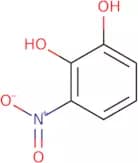
CAS :<p>3-Nitro-benzene-1,2-diol is an inhibitor of catechol-o-methyltransferase (COMT), which catalyzes the transfer of a methyl group from S-adenosyl methionine to dopamine. This results in the formation of 3-O-(methylamino) catechol. COMT inhibitors are used as pharmaceutical preparations for the treatment of Parkinson's disease and other diseases involving dopamine. 3-Nitro-benzene-1,2-diol has been shown to inhibit COMT and prevent the breakdown of dopamine in the brain, which may be beneficial for treating Parkinson's disease and other nervous system diseases.</p>Formule :C6H5NO4Degré de pureté :Min. 95%Masse moléculaire :155.11 g/mol2,6-Dichloro-5-nitropyrimidin-4-amine
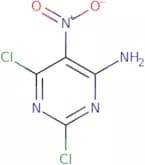
CAS :<p>2,6-Dichloro-5-nitropyrimidin-4-amine is a chlorinating agent that reacts with aliphatic and aromatic amines to form substituted pyrimidines. The substitution pattern of the product depends on the regioselectivity of the reaction. 2,6-Dichloro-5-nitropyrimidin-4-amine is one of the few chlorinating agents that react with propylamine. Substitution at position 2 of the purine ring has been found to be more selective than substitution at position 6. The 2,6-dichloropyrimidine can also be used as a nitro group source in chemical synthesis or as an intermediate in production of other compounds.</p>Formule :C4H2Cl2N4O2Degré de pureté :Min. 95%Couleur et forme :SolidMasse moléculaire :208.99 g/mol6-Nitro-1H-quinazoline-2,4-dione
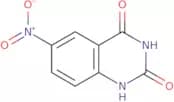
CAS :6-Nitro-1H-quinazoline-2,4-dione (6NQD) is a carbonyl compound and an intermolecular hydrogen bond donor. It is synthesized by nitration of 1H-quinazoline-2,4-dione with nitric acid. This product has been studied by x-ray diffraction and spectroscopy techniques. 6NQD has been found to have yields of 48% in the synthesis reaction and the average yield is 61%. The x-ray analysis technique was used to characterize the molecular structure of this product. 6NQD has shown to be centrosymmetric and exhibits intermolecular hydrogen bonding.Formule :C8H5N3O4Degré de pureté :Min. 95%Couleur et forme :PowderMasse moléculaire :207.14 g/mol4-(Benzyloxy)-5-methoxy-2-nitrobenzaldehyde
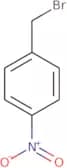
CAS :<p>4-(Benzyloxy)-5-methoxy-2-nitrobenzaldehyde (BOMBA) is an amide with affinity for microtubules. It has been shown to interact with the microtubule lattice and inhibit the polymerization of tubulin. This leads to a decrease in cell viability and cytotoxicity, as well as a decrease in tumor size. In vivo studies have demonstrated that BOMBA inhibits tumor growth by inducing thrombosis and coagulation, which results in reduced blood flow to the tumor. The mechanism of action of BOMBA is thought to be due to its ability to form sulfamates, which are known for their anti-coagulant activity.</p>Formule :C15H13NO5Degré de pureté :Min. 95%Masse moléculaire :287.27 g/mol4-Nitrobenzyl bromide
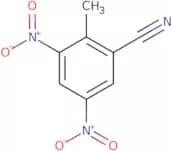
CAS :<p>4-Nitrobenzyl bromide is a reactive compound that reacts with the hydroxyl group of phenols to form 4-nitrophenols. It has been shown to react with congestive heart failure (CHF) patients' sera and bind to receptors on the surface of red blood cells, thereby inhibiting their ability to carry oxygen. The reaction mechanism for this process is unclear, but it is thought that it may involve a nucleophilic attack on the double bond in the phenol by a hydroxyl radical. This chemical can also be used as an analytical method for determining organic acids in natural compounds. Monoclonal antibodies are used for this purpose because they are specific for certain organic acids and thus will only react with them.</p>Formule :C7H6BrNO2Degré de pureté :Min. 95%Couleur et forme :PowderMasse moléculaire :216.03 g/mol2-Methyl-3,5-dinitrobenzonitrile
CAS :<p>2-Methyl-3,5-dinitrobenzonitrile is a nitro compound that is used as a coccidiostat in the poultry industry. It inhibits the development of coccidiosis in chickens by preventing the growth of protozoa. 2-Methyl-3,5-dinitrobenzonitrile binds to DNA and RNA and prevents protein synthesis, thereby inhibiting cell division and causing death. This drug has been shown to be an analog of benzene, hexane, and pyridine. The structural analysis of this molecule reveals that it contains two nitro groups attached to a benzene ring. One nitro group is located on each methyl group. The hydrogen atoms are replaced by fluorine atoms with one hydrogen atom being replaced by chloride atom. The other nitro group is located on the 3rd carbon on the right side of the benzene ring. This molecule also contains three chlorine atoms which are attached to two adjacent carbons</p>Formule :C8H5N3O4Degré de pureté :Min. 95%Masse moléculaire :207.14 g/mol3-Nitro-4-chloro-benzotrifluoride
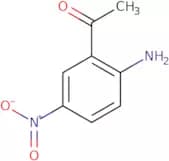
CAS :<p>3-Nitro-4-chloro-benzotrifluoride is a nucleophilic reagent that reacts with aryl chlorides, such as phenoxazine and chloride, to give the corresponding nitro compounds. The reaction yield is dependent on the solvent, with higher yields obtained in n-dimethyl formamide than in dichloromethane. 3-Nitro-4-chloro-benzotrifluoride has been investigated for its potential use in cancer therapy. It inhibits the proliferation of a number of cancer cells, including resistant mutants. The deuterium isotope effect has also been used to determine the mechanism of action of 3-nitro-4-chloro benzo trifluoride.</p>Formule :C7H3ClF3NO2Degré de pureté :Min. 98.0%Couleur et forme :Clear LiquidMasse moléculaire :225.55 g/mol1-(2-Amino-5-nitrophenyl)ethanone
CAS :Please enquire for more information about 1-(2-Amino-5-nitrophenyl)ethanone including the price, delivery time and more detailed product information at the technical inquiry form on this pageFormule :C8H8N2O3Degré de pureté :Min. 95%Masse moléculaire :180.16 g/mol1,8-Dinitropyrene
CAS :<p>1,8-Dinitropyrene is a genotoxic and mutagenic potential agent. It has been shown to induce nitric oxide synthase activity in rat liver microsomes, which may be due to its ability to activate the redox potential of the cells. 1,8-Dinitropyrene also induces enzyme activities such as p450 and nitroreductase in rat liver microsomes. This chemical has an analytical detection limit of 0.05 ppm and can be used as a marker for environmental exposure. 1,8-Dinitropyrene is genotoxic and carcinogenic in rats but not mice. It has been shown to induce mutations at the thymidine position of calf-thymus DNA and is potent inducer of genetic mutation in vitro.</p>Formule :C16H8N2O4Degré de pureté :Min. 95%Couleur et forme :PowderMasse moléculaire :292.25 g/mol