Nitro
Les composés nitro sont des molécules organiques contenant un ou plusieurs groupes nitro (NO2). Ces composés sont largement utilisés dans la synthèse d'explosifs, de produits pharmaceutiques et de colorants. Chez CymitQuimica, nous proposons une large gamme de composés nitro de haute qualité pour soutenir vos applications de recherche et industrielles, garantissant des résultats sûrs et efficaces. Notre sélection comprend une variété de composés nitro adaptés à différentes synthèses chimiques et applications.
2516 produits trouvés pour "Nitro"
Trier par
Degré de pureté (%)
0
100
|
0
|
50
|
90
|
95
|
100
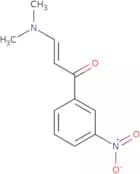
(2E)-3-(Dimethylamino)-1-(3-nitrophenyl)prop-2-en-1-one
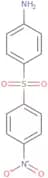
CAS :<p>Please enquire for more information about (2E)-3-(Dimethylamino)-1-(3-nitrophenyl)prop-2-en-1-one including the price, delivery time and more detailed product information at the technical inquiry form on this page</p>Formule :C11H12N2O3Degré de pureté :Min. 95%Masse moléculaire :220.22 g/mol4-Nitro-4'-aminodiphenyl sulfone
CAS :<p>4-Nitro-4'-aminodiphenyl sulfone is a surfactant that is used in a variety of industries, including wastewater treatment and the manufacture of plastics. It has been shown to inhibit the synthesis of fatty acids and other molecules in cells. 4-Nitro-4'-aminodiphenyl sulfone also inhibits the synthesis of regulatory pathways involved in antimicrobial resistance in bacteria such as chlorobium and solanum tuberosum. The inhibition of fatty acid biosynthesis by 4-nitro-4'-aminodiphenyl sulfone may be due to its ability to bind to catalytic sites on enzymes responsible for this process. This binding prevents them from functioning properly, resulting in an accumulation of fatty acid precursors.</p>Formule :C12H10N2O4SDegré de pureté :Min. 95%Masse moléculaire :278.28 g/mol(R,S)-N-Nitroso anatabine
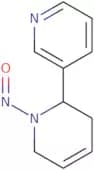
CAS :<p>(R,S)-N-Nitroso anatabine is a nitrosamine that is used as an analytical standard for the determination of the covalent binding of carcinogens to DNA. It can be synthesized by reacting (R,S)-N-nitrosodimethylamine with nitric acid in the presence of aluminum chloride. The structure and purity of this compound were confirmed by LC-MS/MS. The compound was found to be carcinogenic when administered to female mice, but not male mice. The carcinogenicity was attributed to the formation of DNA adducts in tissues and the induction of chromosomal aberrations.</p>Formule :C10H11N3ODegré de pureté :Min. 95%Couleur et forme :Clear LiquidMasse moléculaire :189.21 g/mol2-Amino-4-chloro-3-nitropyridine
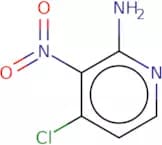
CAS :<p>2-Amino-4-chloro-3-nitropyridine is a potent inhibitory molecule that inhibits the activity of the enzyme acetylcholinesterase. It has been used in the treatment of chronic pain, and has been shown to be effective for inhibiting malonate esters and amino acid esters. This drug is an ethyl ester that can be synthesized from chlorobenzene and malonic acid by chlorinating it with chlorine gas. 2-Amino-4-chloro-3-nitropyridine has also been shown to have a high affinity for malonic acid diethyl esters.</p>Formule :C5H4ClN3O2Degré de pureté :Min. 98 Area-%Couleur et forme :PowderMasse moléculaire :173.56 g/mol4-Nitro-1H-imidazole-1-ethanol
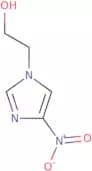
CAS :<p>Please enquire for more information about 4-Nitro-1H-imidazole-1-ethanol including the price, delivery time and more detailed product information at the technical inquiry form on this page</p>Formule :C5H7N3O3Degré de pureté :Min. 95%Couleur et forme :Beige PowderMasse moléculaire :157.13 g/mol4-(Methylnitrosoamino)-1-(3-pyridinyl)-1-butanone
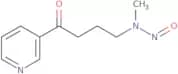
CAS :<p>4-(Methylnitrosoamino)-1-(3-pyridinyl)-1-butanone (NNK) is a carcinogenic chemical that has been identified in tobacco smoke. It induces squamous cell carcinomas in the respiratory tract of rodents and induces lung cancer in the offspring of pregnant rats exposed to NNK. This compound binds to double-stranded DNA, with high affinity for the minor groove, and inhibits DNA synthesis by binding to enzymes such as polymerase chain. In addition, it has been shown to cause transformation of epithelial cells into mesenchymal cells in vitro. 4-(Methylnitrosoamino)-1-(3-pyridinyl)-1-butanone binds to α7 nicotinic acetylcholine receptors and increases the response element activity.</p>Formule :C10H13N3O2Degré de pureté :Min. 95%Couleur et forme :PowderMasse moléculaire :207.23 g/mol3-Nitrobenzanilide
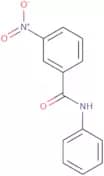
CAS :<p>3-Nitrobenzanilide is an intermediate in the synthesis of a number of pharmaceuticals and pesticides. It is used as an activated reagent to introduce the benzoyl group by reaction with dimethylformamide. 3-Nitrobenzanilide can be prepared from phenylacetonitrile, benzoyl chloride, and ammonia or from nitrobenzene and sodium cyanide. The nature of the nitro group on the benzene ring determines whether the product is a diazo compound or a carbonyl compound. 3-Nitrobenzanilide has been shown to have plant disease control properties via its ability to inhibit plant enzymes such as acetylcholine esterase.</p>Formule :C13H10N2O3Degré de pureté :Min. 95%Masse moléculaire :242.23 g/molDiethyl[2-(4-nitrophenoxy)ethyl]amine
CAS :Produit contrôlé<p>Please enquire for more information about Diethyl[2-(4-nitrophenoxy)ethyl]amine including the price, delivery time and more detailed product information at the technical inquiry form on this page</p>Formule :C12H18N2O3Degré de pureté :Min. 95%Masse moléculaire :238.28 g/molN-Nitroso-N-methyl-4-aminobutyric acid methyl ester
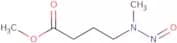
CAS :<p>Please enquire for more information about N-Nitroso-N-methyl-4-aminobutyric acid methyl ester including the price, delivery time and more detailed product information at the technical inquiry form on this page</p>Formule :C6H12N2O3Degré de pureté :Min. 95%Masse moléculaire :160.17 g/mol3-Chloro-7-nitro-1H-indole
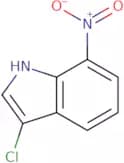
CAS :3-Chloro-7-nitro-1H-indole is a chemical compound that has been shown to have antitumor activity in clinical trials. It is catalysed by the addition of chloride ions to the nitro group, yielding an aminocarbonyl intermediate. This intermediate reacts with hydrogen chloride to form a chlorinating agent that can react with DNA and protein bases. The chlorinating agent has been shown to be efficient in screening for anticancer drugs. 3-Chloro-7-nitro-1H-indole is currently being tested for efficacy against colon carcinoma cells and human colon carcinoma xenografts.Formule :C8H5ClN2O2Degré de pureté :Min. 95%Masse moléculaire :196.59 g/mol(NZ)-4-chloro-N-[1-[2-(4-nitrophenyl)ethyl]piperidin-2-ylidene]benzenesulfonamide
CAS :Produit contrôlé<p>Please enquire for more information about (NZ)-4-chloro-N-[1-[2-(4-nitrophenyl)ethyl]piperidin-2-ylidene]benzenesulfonamide including the price, delivery time and more detailed product information at the technical inquiry form on this page</p>Formule :C19H20ClN3O4SDegré de pureté :Min. 95%Masse moléculaire :421.9 g/mol3,4-Dinitrophenol
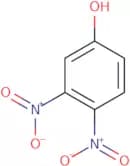
CAS :Produit contrôlé<p>3,4-Dinitrophenol is a yellow solid that is chemically synthesized from 2,4-dinitrobenzene and morpholine. 3,4-Dinitrophenol is a high energy compound with an activation energy of about 28 kcal/mol. The endpoints for the reaction are oligosaccharides and the acceptor is an ionisation mass. This molecule has a pyrazole ring and can be classified as belonging to group P2 on the periodic table of elements. 3,4-Dinitrophenol has been found to have biological functions in organic solvents such as acetone or benzene.</p>Formule :C6H4N2O5Degré de pureté :Min. 95%Couleur et forme :PowderMasse moléculaire :184.11 g/mol4-Nitro lenalidomide
CAS :<p>4-Nitro lenalidomide is an organic compound that is a derivative of the drug lenalidomide. It is synthesized by reacting 2-nitrobenzaldehyde with amines, yielding 4-nitro-N-(2-chloroethyl)-N-(2,3-dihydroxypropyl)benzamide or 4-nitrolenalidomide. This reaction occurs in tetrahydrofuran (THF) as a solvent and in the presence of sodium borohydride (NaBH4). The four nitro groups are used to control the enantiomeric purity of the product. The chemical formula for 4-nitro lenalidomide is C12H14ClNO2.</p>Formule :C13H11N3O5Degré de pureté :Min. 95%Masse moléculaire :289.24 g/mol2-Bromo-4-nitrophenol
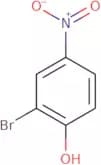
CAS :2-Bromo-4-nitrophenol is a byproduct of the reaction between hydrogen peroxide and sodium bromate. It can be detected in the presence of hydrochloric acid, which reacts with 2-bromo-4-nitrophenol to form an orange color that can be detected spectrophotometrically. 2-Bromo-4-nitrophenol has been shown to inhibit the growth of various strains of bacteria, including Escherichia coli, Bacillus subtilis, and Pseudomonas aeruginosa. This compound binds to flavin adenine dinucleotide (FAD) as well as other nucleophilic cofactors such as thioredoxin reductase. The binding affinity is increased when carbon sources are present. This property makes it a useful inhibitor for catalytic reduction reactions in biotechnology and synthetic chemistry applications.br>br> 2B4NP is a byFormule :C6H4BrNO3Degré de pureté :Min. 95%Couleur et forme :PowderMasse moléculaire :218 g/mol(R,S)-N-Nitroso anabasine
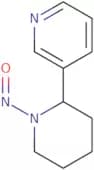
CAS :(R,S)-N-Nitroso anabasine is a nitrosamine that has been shown to be a potent carcinogen in laboratory animals. It is found in tobacco smoke and cigarette tar. The production of this chemical is related to the activity of cytochrome P450 (CYP) enzymes, which are involved in the metabolism of aromatic hydrocarbons. The carcinogenicity of (R,S)-N-nitroso anabasine has been demonstrated by its ability to induce cancer in laboratory animals when administered at high doses. This chemical has also been shown to have mutagenic effects on bacteria exposed to it. The mechanism for this effect is not known but may involve inhibition of DNA synthesis or oxidation of DNA bases. Toxicity studies have indicated that (R,S)-N-nitroso anabasine is toxic when administered orally or intravenously to rats and mice.Formule :C10H13N3ODegré de pureté :Min. 95%Couleur et forme :Clear LiquidMasse moléculaire :191.23 g/mol2,5-Dimethoxy-4-nitroaniline
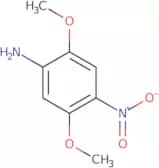
CAS :Produit contrôlé<p>Please enquire for more information about 2,5-Dimethoxy-4-nitroaniline including the price, delivery time and more detailed product information at the technical inquiry form on this page</p>Formule :C8H10N2O4Degré de pureté :Min. 95%Masse moléculaire :198.18 g/mol5-Nitropyridin-3-ol
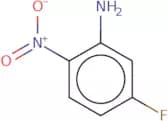
CAS :Please enquire for more information about 5-Nitropyridin-3-ol including the price, delivery time and more detailed product information at the technical inquiry form on this pageFormule :C5H4N2O3Degré de pureté :Min. 95%Masse moléculaire :140.1 g/mol5-Fluoro-2-nitroaniline
CAS :<p>5-Fluoro-2-nitroaniline is a sulfonated compound that acts as a growth factor. It has been shown to be effective in the treatment of cancer, especially in the epidermal growth factor receptor (EGFR) signaling pathway. 5-Fluoro-2-nitroaniline has also been shown to have antithrombotic properties and may be beneficial for cardiovascular diseases. This compound is an inhibitor of the human serum albumin binding site on EGFR and inhibits the activation of EGFR by its ligand, epidermal growth factor. The sulfonation reaction increases the polarity of the molecule, which has been attributed to increased activity against cancer cells.</p>Formule :C6H5FN2O2Degré de pureté :Min. 95%Couleur et forme :PowderMasse moléculaire :156.11 g/mol3-(Methylnitrosamino)propionitrile
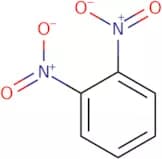
CAS :3-(Methylnitrosamino)propionitrile (NNK) is a potent, but toxic, carcinogen that has been shown to be one of the major causes of lung cancer in animals. It is metabolized to 3-aminobenzamide and N-nitrosodimethylamine (NDMA) by cytochrome P450 enzymes. These metabolites are then further converted into reactive species that bind covalently with DNA, leading to mutations and ultimately cancer. The activation of NNK can be prevented by inhibiting the enzyme hydrolysis or by blocking the synthesis of the reactive metabolites.Formule :C4H7N3ODegré de pureté :Area-% Min. 95 Area-%Masse moléculaire :113.12 g/mol1,2-Dinitrobenzene
CAS :<p>1,2-Dinitrobenzene (DNB) is a nucleophilic compound that reacts with hydrochloric acid to form the corresponding nitroso derivative. It is used as an analytical reagent to measure the concentration of amines in organic compounds. DNB has been shown to be potent inducer of DNA strand breaks, and genotoxic activity in mammalian cells. DNB also has biological properties such as binding to fatty acids and inhibiting the dehydroascorbic acid reductase enzyme.</p>Formule :C6H4N2O4Degré de pureté :Min. 95%Couleur et forme :PowderMasse moléculaire :168.11 g/mol

![Diethyl[2-(4-nitrophenoxy)ethyl]amine](/_next/image/?url=https%3A%2Fstatic.cymitquimica.com%2Fproducts%2F3D%2Fthumb-webp%2FFD21808.webp&w=3840&q=75)
![(NZ)-4-chloro-N-[1-[2-(4-nitrophenyl)ethyl]piperidin-2-ylidene]benzenesulfonamide](/_next/image/?url=https%3A%2Fstatic.cymitquimica.com%2Fproducts%2F3D%2Fthumb-webp%2FFN154024.webp&w=3840&q=75)