Acides carboxyliques
12457 produits trouvés pour "Acides carboxyliques"
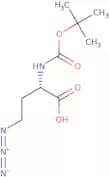
N-alpha-Boc-Ngamma-Azido-L-2,4-diaminobutyric acid cyclohexylamine salt
CAS :Please enquire for more information about N-alpha-Boc-Ngamma-Azido-L-2,4-diaminobutyric acid cyclohexylamine salt including the price, delivery time and more detailed product information at the technical inquiry form on this page
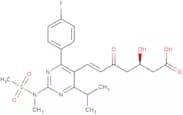
Formule :C9H16N4O4·C6H13NDegré de pureté :Min. 95%Masse moléculaire :343.42 g/mol5-Oxo Rosuvastatin
CAS :5-Oxo Rosuvastatin is a drug product that has been synthesized from natural ingredients. It is an analytical standard for the impurity, 5-oxo-rosuvastatin, which is a potential impurity in the API, rosuvastatin. This drug product has been custom synthesized in order to provide an Impurity Standard for HPLC. This drug product is also used as a Synthetic Reference Standard for Drug Development and Research and Development.
Formule :C22H26FN3O6SDegré de pureté :Min. 95%Couleur et forme :Off-White To Light (Or Pale) Yellow To Dark Yellow SolidMasse moléculaire :479.52 g/molRef: 3D-FF103553
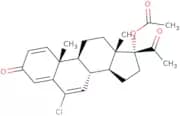
Produit arrêtéDelmadinone acetate
CAS :Produit contrôléDelmadinone acetate is an oestrogenic amorphous drug that has been used in the treatment of prostatic hypertrophy, diabetic neuropathy and other conditions. It is a prodrug that is hydrolyzed to delmadinone, its active form, following oral administration. Delmadinone acetate has shown efficacy against a number of pharmacological agents, including fatty alcohols and pharmaceutical dosage form preparations. It binds to fatty acids and carbon sources in the body and is removed by dispersive solid-phase extraction. The effects of this drug are dose-dependent; it can be used for control experiments at low doses but has adverse effects at higher doses.
Formule :C23H27ClO4Degré de pureté :Min. 95%Couleur et forme :PowderMasse moléculaire :402.91 g/mol(±)-3-Methyl-2-oxovaleric acid
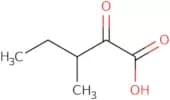
CAS :(±)-3-Methyl-2-oxovaleric acid is a fatty acid that is found in the mitochondria of liver cells and other tissues. It is an intermediate in the citric acid cycle and can be converted into acetyl-CoA, which is used for energy production. (±)-3-Methyl-2-oxovaleric acid has been shown to cause necrotic cell death when it binds to the mitochondrial membrane potential and causes a loss of ATP production. This results in a lack of energy for the cell, leading to cell death. (±)-3-Methyl-2-oxovaleric acid has also been shown to inhibit protein synthesis by decreasing uptake and increasing creatine kinase activity. This inhibition leads to decreased body formation and tissue culture growth in vitro. In vivo, (±)-3-Methyl-2-oxovaleric acid causes primary sclerosing cholangitis, a disease characterized by inflammation of bile ducts that
Formule :C6H10O3Degré de pureté :Min. 95%Couleur et forme :White PowderMasse moléculaire :130.14 g/molBenzyl N-(2-aminoethyl)carbamate hydrochloride
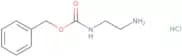
CAS :Please enquire for more information about Benzyl N-(2-aminoethyl)carbamate hydrochloride including the price, delivery time and more detailed product information at the technical inquiry form on this pageFormule :C10H15ClN2O2Degré de pureté :Min. 95%Masse moléculaire :230.69 g/molRef: 3D-FB32838
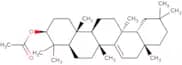
Produit arrêtéTaraxeryl acetate
CAS :Produit contrôléTaraxeryl acetate is a fatty acid that is found in the extract of Curcuma aromatica (turmeric). It has been shown to inhibit cervical cancer cells in tissue culture. Taraxeryl acetate inhibits the growth of Streptococcus faecalis by binding to its ribosomal RNA and inhibiting protein synthesis. Toxicological studies on rats have shown that this compound does not have any harmful effects on physiological functions. This molecule has also been shown to be an inhibitor for protocatechuic acid, which is a chemical structure involved in the cycle analysis of curcuminoids. In addition, taraxeryl acetate has been used as an active ingredient in Chinese medicine preparations for the treatment of symptoms related to herpes simplex virus infections.
Degré de pureté :Min. 95%2-(Phenylmethoxy)-acetic acid hydrazide
CAS :2-(Phenylmethoxy)-acetic acid hydrazide is a synthetic depressant that belongs to the group of phthalimides. It is an orally active drug with a triazolo structure and has been used in the treatment of psychoneurosis and anxiety, but it has also been found to be effective in treating reflexes and diazepine-induced psychosomatic disorders. 2-(Phenylmethoxy)-acetic acid hydrazide may also act as a prodrug for other agents, such as azides or phenylureas.
Formule :C9H12N2O2Degré de pureté :Min. 95%Masse moléculaire :180.2 g/mol1-(Benzyloxy)-6-oxo-1,6-dihydropyridine-2-carboxylic acid
CAS :Please enquire for more information about 1-(Benzyloxy)-6-oxo-1,6-dihydropyridine-2-carboxylic acid including the price, delivery time and more detailed product information at the technical inquiry form on this page
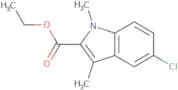
Formule :C13H11NO4Degré de pureté :Min. 95%Couleur et forme :PowderMasse moléculaire :245.23 g/molEthyl 5-chloro-1,3-dimethyl-1H-indole-2-carboxylate
CAS :Produit contrôléPlease enquire for more information about Ethyl 5-chloro-1,3-dimethyl-1H-indole-2-carboxylate including the price, delivery time and more detailed product information at the technical inquiry form on this page
Formule :C13H14ClNO2Degré de pureté :Min. 95%Masse moléculaire :251.71 g/molDimethyl 1-[2-(1H-indol-3-yl)ethyl]-2,5-dimethyl-1H-pyrrole-3,4-dicarboxylate
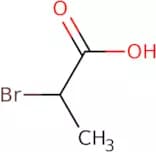
CAS :Produit contrôléPlease enquire for more information about Dimethyl 1-[2-(1H-indol-3-yl)ethyl]-2,5-dimethyl-1H-pyrrole-3,4-dicarboxylate including the price, delivery time and more detailed product information at the technical inquiry form on this pageFormule :C20H22N2O4Degré de pureté :Min. 95%Masse moléculaire :354.4 g/mol2-Bromopropionic acid
CAS :2-Bromopropionic acid is a tetroxide used in organic synthesis. It is an intermediate in the synthesis of 2,4-dibromopropionamide and 2,4-dibromo-3-methylpentanoic acid. The reaction mechanism of this process starts with the formation of a bromine atom from bromine monoxide and hydrogen peroxide. This bromine atom reacts with the carbon to form an alkyl radical that reacts with another molecule of bromine monoxide to form an alkyl radical that is stabilized by two atoms of hydrogen (i.e., CBr). The alkyl radical then undergoes a nucleophilic attack on iodobenzene to form an iodoalkane intermediate. This intermediate reacts with acetic acid to form the desired product, acetyl chloride. This reaction also produces iodoacetic acid as a byproduct.
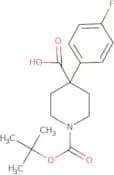
Formule :C3H5BrO2Degré de pureté :Min. 95%Masse moléculaire :152.97 g/molBoc-4-(4-fluorophenyl)-piperidine-4-carboxylic acid
CAS :Please enquire for more information about Boc-4-(4-fluorophenyl)-piperidine-4-carboxylic acid including the price, delivery time and more detailed product information at the technical inquiry form on this page
Formule :C17H22FNO4Degré de pureté :Min. 95%Masse moléculaire :323.36 g/molRef: 3D-FB57316
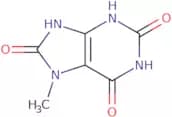
Produit arrêté7-Methyluric acid
CAS :Produit contrôlé7-Methyluric acid is a purine derivative that is excreted in the urine. This compound can be used to measure the metabolic rate of an individual. 7-Methyluric acid reacts with caffeine to produce methylxanthines and uric acid, which are then measured by chromatographic methods. In order to measure the metabolic rate, a known amount of caffeine is given orally to Sprague-Dawley rats for a period of time, followed by measurement of 7-methyluric acid in their urine samples. The results show that the metabolic rate increases linearly with time.
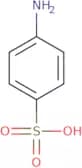
Formule :C6H6N4O3Degré de pureté :Min. 95%Couleur et forme :PowderMasse moléculaire :182.14 g/mol4-Aminobenzenesulfonic acid
CAS :4-Aminobenzenesulfonic acid is a sulfonic acid that is used in wastewater treatment. It has been shown to be an excellent water permeability agent and can be used as an additive to the process of making sulfonated polymers for use in water filtration. 4-Aminobenzenesulfonic acid has been shown to have enzyme inhibitory effects on metal hydroxide-dependent enzymes, such as sulphanilic and sulfanilic acid. This compound also has been investigated as a potential therapeutic agent for the treatment of cancer, with some success. It has been shown to stimulate the production of picolinic acid, which is an intermediate in the kynurenine pathway leading to production of nicotinamide adenine dinucleotide (NAD+). In humans, 4-aminobenzenesulfonic acid can bind toll-like receptors (TLRs) and activate TLR4 signaling pathways.
Formule :C6H7NO3SDegré de pureté :Min. 95%Masse moléculaire :173.19 g/molRuthenium(III) nitrosyl nitrate, soluble in 10% dilute nitric acid
CAS :Please enquire for more information about Ruthenium(III) nitrosyl nitrate, soluble in 10% dilute nitric acid including the price, delivery time and more detailed product information at the technical inquiry form on this page
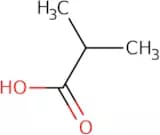
Formule :RuN4O10Degré de pureté :Min. 95%Couleur et forme :Clear LiquidMasse moléculaire :317.09 g/molIsobutyric acid
CAS :Isobutyric acid is a short-chain carboxylic acid that has been shown to be a potent inhibitor of congestive heart failure. Isobutyric acid binds to the dinucleotide phosphate and is then hydrolyzed by glycol ethers to release isobutyric acid, which can induce vasodilation. The surface methodology used in this study revealed that Isobutyric acid inhibits the polymerase chain reaction activity of human DNA. This inhibition may be due to its structural similarity with mycobacterial sesquiterpene lactones, which have been shown to inhibit protein synthesis in human cells. Isobutyric acid also has antibacterial properties, and has been shown to have an activity index of 0.5 against methicillin-resistant Staphylococcus aureus (MRSA) isolates and erythromycin-resistant Mycobacterium avium complex isolates.
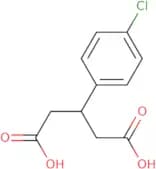
Formule :C4H8O2Degré de pureté :Min. 95%Couleur et forme :Colorless Clear LiquidMasse moléculaire :88.11 g/mol3-(4-Chlorophenyl)glutaric acid
CAS :3-(4-Chlorophenyl)glutaric acid is a subunit of lanthanide complexes. It has been synthesized from cinchona alkaloids and single-crystal x-ray diffraction data obtained in the absence of ligands. 3-(4-Chlorophenyl)glutaric acid is a desymmetrization reagent and has been shown to be an effective ligand for lanthanide complexes. This compound has the potential to form impurities during the synthesis process, which can lead to morphological changes, luminescence, or high-performance liquid chromatography interference.
Formule :C11H11ClO4Degré de pureté :Min. 95%Masse moléculaire :242.66 g/moltert-Butyl 4-(2-oxo-2,4-dihydro-1H-benzo[d][1,3]oxazin-1-yl)piperidine-1-carboxylate
CAS :Produit contrôléPlease enquire for more information about tert-Butyl 4-(2-oxo-2,4-dihydro-1H-benzo[d][1,3]oxazin-1-yl)piperidine-1-carboxylate including the price, delivery time and more detailed product information at the technical inquiry form on this page
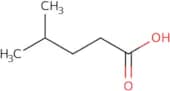
Degré de pureté :Min. 95%4-Methylpentanoic acid
CAS :4-Methylpentanoic acid is a fatty acid that is the product of anaerobic fermentation in the colon and can be found as an end product in the body. It can be used as a substrate in film tests for detecting bacteria, such as Escherichia coli, which are associated with bowel diseases. 4-Methylpentanoic acid has been shown to have inhibitory effects against nuclear dna replication, mitochondrial membrane potential, and energy metabolism. 4-Methylpentanoic acid also has antiinflammatory properties and has been shown to decrease body mass index. The 6-Fluoro-3-indoxyl-beta-D-galactopyranoside is an antituberculosis drug that belongs to the class of rifamycins. It is the most active of the rifamycins for the treatment of tuberculosis. Rifapentine inhibits bacterial growth by binding to DNA-dependent RNA polymerase, thereby preventing transcription
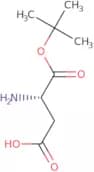
Formule :C6H12O2Degré de pureté :Min. 95%Masse moléculaire :116.16 g/molL-Aspartic acid alpha-tert-butyl ester
CAS :L-Aspartic acid alpha-tert-butyl ester is a synthetic amino acid that can be used as a substrate for the synthesis of L-cysteine in the presence of selenomethionine. This compound is an auxotroph and cannot be synthesized by the body, so it must be obtained through diet or supplementation. It has been shown to have anti-cancer properties, which may be due to its role in regulating cell proliferation, apoptosis, and angiogenesis. L-Aspartic acid alpha-tert-butyl ester may also inhibit colon cancer cells by preventing them from recycling proteins. This compound was shown to inhibit HCT116 human colon cancer cells in both experimentally and computationally studies. Additionally, this molecule was seen to induce tumor regression in mice with colitis by inhibiting eukaryotic protein synthesis. This inhibition was found to be mediated through a trifluoromethyl group on the molecule's
Formule :C8H15NO4Degré de pureté :Min. 95%Couleur et forme :PowderMasse moléculaire :189.21 g/mol



![Dimethyl 1-[2-(1H-indol-3-yl)ethyl]-2,5-dimethyl-1H-pyrrole-3,4-dicarboxylate](/_next/image/?url=https%3A%2Fstatic.cymitquimica.com%2Fproducts%2F3D%2Fthumb-webp%2FFD121817.webp&w=3840&q=75)

![tert-Butyl 4-(2-oxo-2,4-dihydro-1H-benzo[d][1,3]oxazin-1-yl)piperidine-1-carboxylate](/_next/image/?url=https%3A%2Fstatic.cymitquimica.com%2Fproducts%2F3D%2Fthumb-webp%2FFB142189.webp&w=3840&q=75)