Aldéhydes
8588 produits trouvés pour "Aldéhydes"
2-Hydroxy-1-naphthaldehyde
CAS :2-Hydroxy-1-naphthaldehyde is a redox potential chemical that has been shown to have anticancer activity in vitro and in vivo. It inhibits the growth of cells by binding to iron, which is important for many biological processes including DNA synthesis. 2-Hydroxy-1-naphthaldehyde has also been shown to have metal carbonyl reactivity and fluorescence properties that may be useful as a fluorescent probe. 2-Hydroxy-1-naphthaldehyde binds to iron ions through hydrogen bonding interactions, forming an octahedral complex with six ligands. The compound also has coordination geometry that can be described as either trigonal bipyramidal or square planar, depending on the solvent used. This data was obtained by x-ray diffraction studies of crystalline solids. The compound's Langmuir adsorption isotherm was found to be linear at low concentrations and shifted to nonlinear behavior at higher concentrations. TheFormule :C11H8O2Degré de pureté :Min. 95%Couleur et forme :SolidMasse moléculaire :172.18 g/molp-Anisaldehyde dimethyl acetal
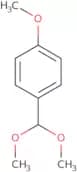
CAS :p-Anisaldehyde dimethyl acetal is a broad-spectrum antimicrobial that can be synthesized from anisaldehyde and dimethoxyacetal. It has been shown to have anticancer properties in vitro. p-Anisaldehyde dimethyl acetal has also been shown to inhibit the growth of HL60 cells, which are specialized white blood cells. This compound was found to increase neuronal death and induce cachexia in mice. The molecular weight of p-Anisaldehyde dimethyl acetal is 244.24 g/mol, with a melting point of -14 °C and a boiling point of 156 °C. The molecule contains one asymmetric center, one hydrogen bond, one non-bonding electron pair, and no double bonds. This compound has acidic properties and it reacts with vitamin D3 in a cationic polymerization process at alkaline pH levels.
Formule :C10H14O3Degré de pureté :Min. 95%Couleur et forme :Colourless To Pale Yellow Clear LiquidMasse moléculaire :182.22 g/molTacrolimus methyl acryl aldehyde
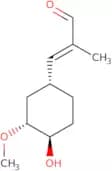
CAS :Please enquire for more information about Tacrolimus methyl acryl aldehyde including the price, delivery time and more detailed product information at the technical inquiry form on this pageFormule :C11H18O3Degré de pureté :Min. 95%Masse moléculaire :198.26 g/mol5-(Methoxymethyl)-2-furancarboxaldehyde
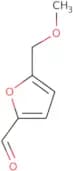
CAS :5-hydroxymethylfurfural (5-hmf) is an organic compound that is produced when a carbohydrate or sugar undergoes oxidation. It is used as an additive in animal feed and as an industrial chemical. 5-hmf is a solid catalyst that can be used at high temperatures, making it suitable for use in the production of 2,6-dihydroxybenzoic acid. The reaction mechanism of 5-hmf involves the dehydration of furfural to form 5-hydroxymethylfurfural. This process occurs when a molecule of water reacts with furfural to produce two molecules of 5-hmf. The reaction may be accelerated by introducing heat, which breaks down the hydrogen bonds between the molecules of furfural and water.Formule :C7H8O3Degré de pureté :Min. 95%Couleur et forme :Clear LiquidMasse moléculaire :140.14 g/molN-Methyl-N-hydroxyethyl-4-aminobenzaldehyde
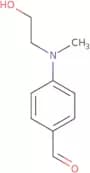
CAS :N-Methyl-N-hydroxyethyl-4-aminobenzaldehyde (NHABA) is a bathochromic molecule that absorbs light at wavelengths of 400 to 500 nm. It is reactive and reacts with metal cations to form chromophores. NHABA has been shown to be a fluorescent probe for the detection of tyrosinase and autophagy in human serum. It also has inhibitory properties against tyrosinase, which may be due to its ability to inhibit the formation of melanin. NHABA is used as an analytical chemistry reagent for the determination of ammonia, nitrite, and nitrate ions in water samples. This molecule can also be used as a chemosensor for the detection of phenolic compounds in water samples.Formule :C10H13NO2Degré de pureté :Min. 95%Masse moléculaire :179.22 g/mol5-Bromopyridine-2-carbaldehyde
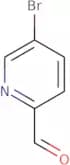
CAS :5-Bromopyridine-2-carbaldehyde is a water soluble organic molecule that has been shown to inhibit the mitochondrial respiratory chain. It is a structural analog of the natural substrate for mitochondrial cytochrome c oxidase, 5-aminolevulinic acid. This compound has been shown to be selective against cancer cells and has anti-viral properties. The photophysical properties of 5-bromopyridine-2-carbaldehyde have been studied extensively. The fluorescence quantum yield of this molecule in aqueous solution is 0.06%.
Formule :C6H4BrNODegré de pureté :Min. 95%Couleur et forme :White PowderMasse moléculaire :186.01 g/mol3,4-Dichlorobenzaldehyde
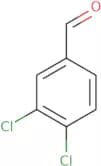
CAS :3,4-Dichlorobenzaldehyde is a monosubstituted aromatic organic compound with inhibitory effects. 3,4-Dichlorobenzaldehyde has shown significant antifungal activity against Candida albicans and Saccharomyces cerevisiae. It also inhibits the growth of certain cancer cells in cell culture studies. 3,4-Dichlorobenzaldehyde has been found to have anti-inflammatory properties and would be effective in treating inflammatory diseases such as asthma or arthritis. This compound has been shown to have significant effects on energy metabolism and fatty acid synthesis by inhibiting enzymes that are involved in these processes. 3,4-Dichlorobenzaldehyde can also be used to treat metabolic disorders such as diabetes mellitus type II and hyperlipidemia by inhibiting enzymes that are involved in these processes.Formule :C7H4Cl2ODegré de pureté :Min. 95%Couleur et forme :White To Off-White SolidMasse moléculaire :175.01 g/mol2-Phenoxyacetaldehyde
CAS :2-Phenoxyacetaldehyde is a reactive molecule that has been shown to inhibit the growth of hematopoietic cells. It also inhibits the production of active enzymes, such as amylase, by interfering with the nucleophilic attack and oxidation of 2-phenoxyacetaldehyde. The synthesis methods for 2-phenoxyacetaldehyde include homogeneous catalysts and chemical reactions. This molecule has been used in detergent compositions, but it is not suitable for use in food contact materials because of its toxicity.Formule :C8H8O2Degré de pureté :Min. 95%Masse moléculaire :136.15 g/molHeptaldehyde
CAS :Heptaldehyde is a colorless liquid with a pleasant, sweet odor. It is used in the production of polyvinyl chloride and other chemicals. In addition, it can be an important biomarker in environmental studies. Heptaldehyde is produced by the reaction of ethyl decanoate with water vapor or methyl ethyl ketone. It is also an inhibitor of acetylcholinesterase, which may be due to its hydroxyl group and acetyl group. Furthermore, heptaldehyde has been shown to react with p-nitrophenyl phosphate to form p-nitrophenol. The following table outlines the chemical properties of heptaldehyde: Molecular formula: C7H8O Molecular weight: 112.14 g/mol Boiling point (°C): 212 °C Melting point (°C): -78 °C Density (g/cm3): 1.096
Formule :C7H14ODegré de pureté :Min. 95%Couleur et forme :Clear LiquidMasse moléculaire :114.19 g/molTrans-2-nonenal
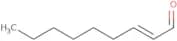
CAS :Trans-2-nonenal is a monoclonal antibody that recognizes the physiological function of cardiac and rat liver microsomes. It has been shown to inhibit enzyme activities in both cell lines. Trans-2-nonenal has also been shown to protect against ischemia/reperfusion injury in rats by reducing the release of intracellular Ca2+ and ATP levels. Trans-2-nonenal is genotoxic and induces oxidative injury, which may be due to its ability to react with caproic acid to form reactive oxygen species.
Formule :C9H16ODegré de pureté :Min. 95%Masse moléculaire :140.22 g/mol1-Allyl-1H-benzimidazole-2-carbaldehyde
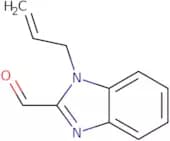
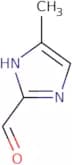
CAS :1-Allyl-1H-benzimidazole-2-carbaldehyde is a dipolar compound that can be synthesized from the reaction of 1,3-diphenylazomethine and allyl bromide. It is an orange solid that has been shown to form cycloadducts with alkenes. The selectivity of this reaction depends on the substituents on both reactants, with electron withdrawing groups increasing the rate of substitution. Dipolar cycloaddition theory predicts that 1-allyl-1H-benzimidazole-2-carbaldehyde undergoes intramolecular cycloaddition to form a six membered ring in which one carbon atom is shared between two adjacent atoms.Formule :C11H10N2ODegré de pureté :Min. 95%Couleur et forme :SolidMasse moléculaire :186.21 g/mol4(5)-Methyl-1H-imidazole-2-carbaldehyde
CAS :Please enquire for more information about 4(5)-Methyl-1H-imidazole-2-carbaldehyde including the price, delivery time and more detailed product information at the technical inquiry form on this pageFormule :C5H6N2ODegré de pureté :95%NmrMasse moléculaire :110.11 g/molBenalaxyl
CAS :Benalaxyl is an insecticide that belongs to the group of organochlorine compounds. It is a chiral compound that has been used in analytical methods for wastewater treatment and as an anti-fouling agent. Benalaxyl has been shown to possess acute toxicity, based on the results of redox cycle experiments, cell nuclei studies, enzyme activities, and rat liver microsomes. Toxicological studies have also shown that benalaxyl can cause high levels of resistance in nutrient solutions, energy metabolism, and synthesis methods.
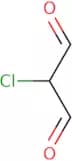
Formule :C20H23NO3Degré de pureté :Min. 95%Masse moléculaire :325.4 g/mol2-Chloromalonaldehyde
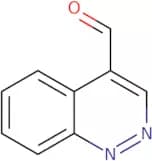
CAS :2-Chloromalonaldehyde is a reactive chemical that can be used as a pharmaceutical intermediate. It has been shown to have anti-inflammatory properties and is often used in pharmaceutical preparations. 2-Chloromalonaldehyde has shown an ability to bind with integrin receptors and inhibit the production of pro-inflammatory molecules, such as prostaglandins. This compound has also been shown to have a photoelectron spectrum that includes an intramolecular hydrogen bond, which contributes to its biological activity.Formule :C3H3ClO2Degré de pureté :(%) Min. 90%Couleur et forme :PowderMasse moléculaire :106.51 g/mol4-Cinnolinecarboxaldehyde
CAS :4-Cinnolinecarboxaldehyde is an organic compound that belongs to the group of cinnoline. It is a colorless liquid that can be used as a precursor in the production of aluminum metal. 4-Cinnolinecarboxaldehyde reacts with lithium aluminum hydride to form a compound that can be used as a reducing agent in organic chemistry. 4-Cinnolinecarboxaldehyde is also used as a precursor for preparing other compounds, such as lithium aluminum hydride and lithium aluminum trihydride.
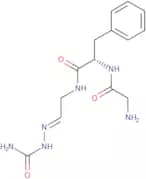
Formule :C9H6N2ODegré de pureté :Min. 95%Masse moléculaire :158.16 g/molH-Gly-Phe-Gly-aldehyde semicarbazone acetate salt
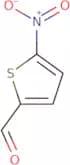
CAS :Please enquire for more information about H-Gly-Phe-Gly-aldehyde semicarbazone acetate salt including the price, delivery time and more detailed product information at the technical inquiry form on this pageFormule :C14H20N6O3Degré de pureté :Min. 95%Masse moléculaire :320.35 g/mol5-Nitrothiophene-2-carboxaldehyde
CAS :5-Nitrothiophene-2-carboxaldehyde (5NT) is a chemical compound that belongs to the class of dihedral molecules. It is commonly used as an antimicrobial agent and has been shown to have amoebicidal activity in tissue culture. 5NT also inhibits cell growth and proliferation in certain bacteria, such as Staphylococcus aureus strains, by interfering with DNA replication and protein synthesis. Although 5NT is not active against other types of bacteria, it has been shown to be effective against MRSA in laboratory studies. The biological properties of 5NT are still being studied.
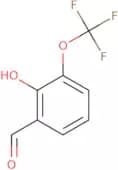
Formule :C5H3NO3SDegré de pureté :Min. 95%Masse moléculaire :157.15 g/mol2-Hydroxy-3-(Trifluoromethoxy)Benzaldehyde
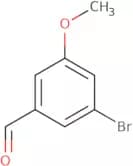
CAS :2-Hydroxy-3-(trifluoromethoxy)benzaldehyde is a coordination compound that is used as a ligand. It has two-dimensional and crystal structures. The ligated molecule is usually coordinated to the metal ion, forming a dimer.Formule :C8H5F3O3Degré de pureté :Min. 95%Masse moléculaire :206.12 g/mol5-Bromo-3-methoxybenzaldehyde
CAS :5-Bromo-3-methoxybenzaldehyde is a type of growth factor that is synthesized by cancer cells. It has been shown to have anticancer activity when used in conjunction with other drugs. 5-Bromo-3-methoxybenzaldehyde has been shown to inhibit tumor growth in mice, which may be due to its ability to prevent the activation of PD-L1. This compound interacts with a tetranuclear ligand and can be activated by light.Formule :C8H7BrO2Degré de pureté :Min. 95%Couleur et forme :PowderMasse moléculaire :215.04 g/molValiphenal
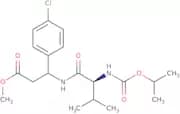
CAS :Valiphenal is a chemical compound that belongs to the amide class. It has been shown to control the growth of various bacterial strains, such as Escherichia coli and Salmonella enterica serovar Typhimurium. Valiphenal inhibits lipid biosynthesis in bacteria by binding to bacterial matrix effect enzymes, which are involved in fatty acid synthesis. This inhibition leads to a decrease in the production of lipids, which are an important component of bacterial cell membranes. Valiphenal also inhibits mitochondrial cytochrome c oxidase and can be used as an analytical tool for determining the presence of this enzyme in cells. Valiphenal is also used as an agrochemical to control pests on vegetables such as aubergines. Valiphenal is extensively metabolized by esterases or glucuronidases, oxidation by cytochrome P450 enzymes, reduction by glutathione reductase, or conjugation with glucuronic acid.
Formule :C19H27ClN2O5Degré de pureté :Min. 98 Area-%Couleur et forme :White Clear LiquidMasse moléculaire :398.88 g/mol