Aldéhydes
8588 produits trouvés pour "Aldéhydes"
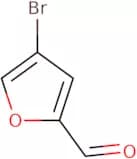
4-Bromofuran-2-carbaldehyde
CAS :4-Bromofuran-2-carbaldehyde is a synthetic compound that has been shown to have antioxidant properties. It contains an electron-donating carbonyl group and an electron-withdrawing bromine atom. 4-Bromofuran-2-carbaldehyde is useful in the treatment of endophytic fungi infections, as it inhibits the synthesis of ergosterol, which is an important component of the fungal cell membrane. The molecule's conformational properties are also important for its biological activity, as they enable it to act as a chiral ligand by binding to proteins in a way that will inhibit their function. In addition, 4-bromofuran-2-carbaldehyde has been shown to be effective against cancer cells in vitro, particularly against MMCF7 cells. This may be due to its ability to bind to DNA and prevent transcription or replication of DNA strands.
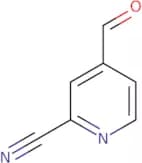
Formule :C5H3BrO2Degré de pureté :Min. 95%Masse moléculaire :174.98 g/mol2-Cyanopyridine-4-carboxaldehyde
CAS :Please enquire for more information about 2-Cyanopyridine-4-carboxaldehyde including the price, delivery time and more detailed product information at the technical inquiry form on this pageFormule :C7H4N2ODegré de pureté :Min. 95%Masse moléculaire :132.12 g/mol2-Phenoxyacetaldehyde
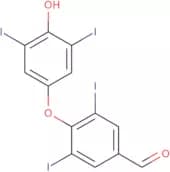
CAS :2-Phenoxyacetaldehyde is a reactive molecule that has been shown to inhibit the growth of hematopoietic cells. It also inhibits the production of active enzymes, such as amylase, by interfering with the nucleophilic attack and oxidation of 2-phenoxyacetaldehyde. The synthesis methods for 2-phenoxyacetaldehyde include homogeneous catalysts and chemical reactions. This molecule has been used in detergent compositions, but it is not suitable for use in food contact materials because of its toxicity.Formule :C8H8O2Degré de pureté :Min. 95%Masse moléculaire :136.15 g/mol3,5,3',5'-Tetraiodo thyroaldehyde
CAS :Please enquire for more information about 3,5,3',5'-Tetraiodo thyroaldehyde including the price, delivery time and more detailed product information at the technical inquiry form on this page
Formule :C13H6I4O3Degré de pureté :Min. 95%Couleur et forme :PowderMasse moléculaire :717.8 g/mol5-Bromo-2-furaldehyde
CAS :5-Bromo-2-furaldehyde is a chemical compound that belongs to the class of heterocycles. It is used in industry as a precursor for the synthesis of other organic compounds. 5-Bromo-2-furaldehyde has been shown to have anti-inflammatory properties, which may be due to its ability to inhibit prostaglandin synthesis. The use of this chemical has been linked with autoimmune diseases and cancer development in animal models. 5-Bromo-2-furaldehyde is an environmental pollutant that can enter the body by ingestion or inhalation, and it can cause irritation of the skin, eyes, nose, throat, and lungs. This chemical is also known as amide or suzuki coupling reaction (SCR).
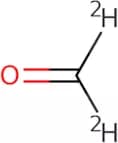
Formule :C5H3BrO2Degré de pureté :Min. 98%Couleur et forme :Off-White To Yellow To Light Brown SolidMasse moléculaire :174.98 g/molFormaldehyde-d2 solution, 20 wt. % in D2O
CAS :Produit contrôléFormaldehyde-d2 solution is a formaldehyde solution that contains deuterium, which has the same chemical properties as hydrogen but has an additional neutron in its nucleus. Formaldehyde-d2 solution is used to prepare samples for NMR and ESI-MS experiments. The reaction mechanism of formaldehyde is believed to be an acid-catalyzed hydrolysis of the hydrogen bond between formaldehyde and methanol. Deuterium isotopes are generally considered to be non-radioactive and have little or no effect on biological systems. Formaldehyde-d2 solution can inhibit fatty acids from binding to the surface of potatoes, which may make it useful in treating autoimmune diseases.Formule :CD2ODegré de pureté :Min. 95%Couleur et forme :Clear LiquidMasse moléculaire :32.04 g/mol3-Hydroxy-4-nitrobenzaldehyde
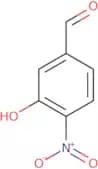
CAS :3-Hydroxy-4-nitrobenzaldehyde is a ternary complex, which consists of three molecules that are bound to each other in a specific way. It has been observed in the nmr spectra and it has been proposed as a fluorescence probe for the detection of hydrogen bonds. 3-Hydroxy-4-nitrobenzaldehyde catalyzes the reaction by forming a covalent bond with the pbr322 dna, which is an important DNA molecule in bacteria. The enzyme mechanism is not fully understood, but it has been shown that it can bind to Toll-like receptor 4 (TLR4), which is an innate immune system protein. This binding event activates TLR4, leading to the inflammatory response. 3-Hydroxy-4-nitrobenzaldehyde has shown efficacy against microglia cells and animal experiments have shown that this compound may be useful for reducing pain after surgery or injury.
Formule :C7H5NO4Degré de pureté :Min. 95%Couleur et forme :PowderMasse moléculaire :167.12 g/mol4-Cinnolinecarboxaldehyde
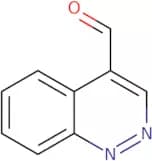
CAS :4-Cinnolinecarboxaldehyde is an organic compound that belongs to the group of cinnoline. It is a colorless liquid that can be used as a precursor in the production of aluminum metal. 4-Cinnolinecarboxaldehyde reacts with lithium aluminum hydride to form a compound that can be used as a reducing agent in organic chemistry. 4-Cinnolinecarboxaldehyde is also used as a precursor for preparing other compounds, such as lithium aluminum hydride and lithium aluminum trihydride.
Formule :C9H6N2ODegré de pureté :Min. 95%Masse moléculaire :158.16 g/molFormaldehyde-2,4-dinitrophenylhydrazone
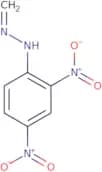
CAS :Formaldehyde-2,4-dinitrophenylhydrazone (FDNH) is a chemical compound that inhibits the production of galacturonic acid. It is used as an analytical method to measure the concentration of galacturonic acid in biological samples. FDNH reacts with galacturonic acid to form a diazonium salt and a hydrazone derivative. The diazonium salt can be measured by liquid chromatography, while the hydrazone derivative can be measured by gas chromatography. This test has been used to measure the concentration of galacturonic acid in plants, pharmaceutical drugs, and reaction products.Formule :C7H6N4O4Degré de pureté :Min. 95%Masse moléculaire :210.15 g/mol5,6,7,8-Tetrahydronaphthalene-1-carbaldehyde
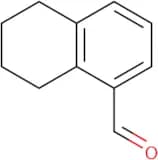
CAS :Please enquire for more information about 5,6,7,8-Tetrahydronaphthalene-1-carbaldehyde including the price, delivery time and more detailed product information at the technical inquiry form on this page
Formule :C11H12ODegré de pureté :Min. 95%Couleur et forme :Clear LiquidMasse moléculaire :160.21 g/mol4-Nitro lenalidomide
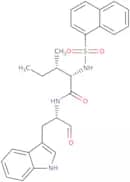
CAS :4-Nitro lenalidomide is an organic compound that is a derivative of the drug lenalidomide. It is synthesized by reacting 2-nitrobenzaldehyde with amines, yielding 4-nitro-N-(2-chloroethyl)-N-(2,3-dihydroxypropyl)benzamide or 4-nitrolenalidomide. This reaction occurs in tetrahydrofuran (THF) as a solvent and in the presence of sodium borohydride (NaBH4). The four nitro groups are used to control the enantiomeric purity of the product. The chemical formula for 4-nitro lenalidomide is C12H14ClNO2.Formule :C13H11N3O5Degré de pureté :Min. 95%Masse moléculaire :289.24 g/mol1-Naphthalenylsulfonyl-Ile-Trp-aldehyde
CAS :1-Naphthalenylsulfonyl-Ile-Trp-aldehyde is a recombinant protein that has protease activity. It is a serine protease that cleaves proteins at the amino acid sequence Ser-Xaa-Gly or Ser-Xaa. The recombinant protein has been shown to have proteolytic activity and can be used in assays to measure the amount of β-catenin, collagen, and growth factor in cells. 1-Naphthalenylsulfonyl-Ile-Trp-aldehyde also binds to monoclonal antibodies and can be used as a neutralizing agent for these proteins. This recombinant protein also has been shown to inhibit the growth of lung fibroblasts.Formule :C27H29N3O4SDegré de pureté :Min. 95%Couleur et forme :PowderMasse moléculaire :491.6 g/mol5-Ethyl-2-furaldehyde
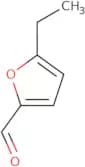
CAS :Furfural is a five-carbon aldehyde produced by the hydrolysis of pentoses. It has been used as an industrial solvent, plasticizer, and fuel. Furfural is also used to produce butanol and biofuels. Furfural can be oxidized in the redox cycle to produce active oxygen species that are reactive with other biological molecules. Furfural is also used as an inhibitor of acetaldehyde formation in beer production. This molecule has two forms: the cis form (C3H4O) and the trans form (C3H3O). The cis form has a chemical structure of CH2=CH-CH2OH, whereas the trans form is CH=CH-CH2OH.Formule :C7H8O2Degré de pureté :Min. 95%Masse moléculaire :124.14 g/molTerephthaloyl chloride
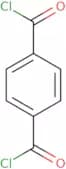
CAS :Terephthalaldehyde chloride is a water-insoluble, white solid that is soluble in organic solvents. It forms a protective layer on metal surfaces and plastics, preventing corrosion and microbial growth. Terephthalaldehyde chloride has been shown to be effective against Escherichia coli, Klebsiella pneumoniae, Bacillus subtilis, Pseudomonas aeruginosa, Staphylococcus aureus, and Salmonella enterica. Terephthalaldehyde chloride's antimicrobial activity is attributed to its acid complex with phosphorus pentoxide and electrochemical impedance spectroscopy data indicate that it reacts with the anionic sites of bacterial cell walls. Terephthalaldehyde chloride does not react with human serum proteins or ester linkages; however, it has toxic effects on mice at high doses.
Formule :C8H4Cl2O2Degré de pureté :Min. 95%Couleur et forme :PowderMasse moléculaire :203.02 g/mol2-fluoro-5-hydroxybenzaldehyde
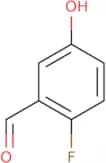
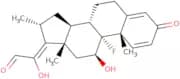
CAS :2-Fluoro-5-hydroxybenzaldehyde (2FHBA) is an olefinic compound that is synthesized from 2,5-dihydroxybenzaldehyde by reductive amination with formaldehyde. The configuration of 2FHBA is dependent on the dihedral angle between the two olefinic groups. Liquid chromatography has been used to analyze the metabolic pathway of 2FHBA in rats and humans. This study showed that tyramine and aligned are metabolites of 2FHBA in rats, while crystallized and emission are metabolites in humans. The positron emission studies also showed that 2FHBA was metabolized by erythrocytes in vitro to produce positron emission.Formule :C7H5FO2Degré de pureté :Min. 95%Masse moléculaire :140.11 g/molDexamethasone-δ17,20 21-aldehyde
CAS :Produit contrôléPlease enquire for more information about Dexamethasone-δ17,20 21-aldehyde including the price, delivery time and more detailed product information at the technical inquiry form on this page
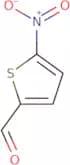
Formule :C22H27FO4Degré de pureté :Min. 95%Couleur et forme :PowderMasse moléculaire :374.45 g/mol5-Nitrothiophene-2-carboxaldehyde
CAS :5-Nitrothiophene-2-carboxaldehyde (5NT) is a chemical compound that belongs to the class of dihedral molecules. It is commonly used as an antimicrobial agent and has been shown to have amoebicidal activity in tissue culture. 5NT also inhibits cell growth and proliferation in certain bacteria, such as Staphylococcus aureus strains, by interfering with DNA replication and protein synthesis. Although 5NT is not active against other types of bacteria, it has been shown to be effective against MRSA in laboratory studies. The biological properties of 5NT are still being studied.
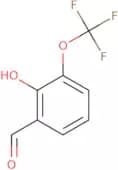
Formule :C5H3NO3SDegré de pureté :Min. 95%Masse moléculaire :157.15 g/mol2-Hydroxy-3-(Trifluoromethoxy)Benzaldehyde
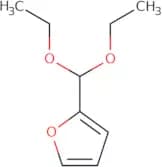
CAS :2-Hydroxy-3-(trifluoromethoxy)benzaldehyde is a coordination compound that is used as a ligand. It has two-dimensional and crystal structures. The ligated molecule is usually coordinated to the metal ion, forming a dimer.Formule :C8H5F3O3Degré de pureté :Min. 95%Masse moléculaire :206.12 g/mol2-Furaldehyde diethylacetal
CAS :2-Furaldehyde diethylacetal is a synthetic compound that has been used in the synthesis of calcium carbonate. It is also a potent inhibitor of p. aeruginosa and other bacteria, as well as organic acids and halogen compounds. It reacts with hydroxy groups to form aldehydes, which are then oxidized to form carboxylic acid derivatives. The reaction mechanism for this compound is not well understood, but it is thought that the activation energy for the reaction may be low due to the presence of a furfural functional group.Formule :C9H14O3Degré de pureté :Min. 95%Masse moléculaire :170.21 g/mol2-Bromo-4-methoxybenzaldehyde
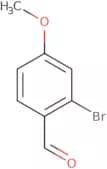
CAS :2-Bromo-4-methoxybenzaldehyde is a cyclic, stereoselectively eliminable, acrylate that can be used in the asymmetric synthesis of sulfamidate and lactam. It can also be used to synthesize quinoline derivatives with aluminium chloride. This product has been shown to yield good yields when reacted with functional groups such as halides and nature. 2-Bromo-4-methoxybenzaldehyde is found in biomolecular reactions.Formule :C8H7BrO2Couleur et forme :PowderMasse moléculaire :215.04 g/mol