Aldéhydes
8588 produits trouvés pour "Aldéhydes"
1-Methyl-1H-indazole-7-carbaldehyde
CAS :1-Methyl-1H-indazole-7-carbaldehyde is a 1,3,5-substituted indazole derivative that can be used as a building block for the synthesis of complex compounds. It is an intermediate in the synthesis of various pharmaceuticals and it has been shown to have potential applications in research chemicals. 1-Methyl-1H-indazole-7-carbaldehyde can be used as a versatile building block after conversion to other derivatives. This chemical is also being investigated as a possible treatment for Parkinson's disease and Alzheimer's disease.Formule :C9H8N2ODegré de pureté :Min. 95%Couleur et forme :Yellow PowderMasse moléculaire :160.17 g/molMethoxyacetaldehyde diethyl acetal
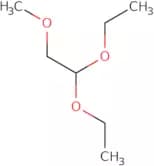
CAS :Methoxyacetaldehyde diethyl acetal is a viscous liquid with a low vapor pressure. This substance is stable at high temperatures and has a high resistance to chemical interactions. It is also hydrophobic in nature. Methoxyacetaldehyde diethyl acetal has been shown to interact with the aminoglycoside antibiotics, erythromycin, streptomycin, and neomycin. The interaction of this substance with these antibiotics may be due to the fact that it has proton resonances similar to those of amino acids, as well as its ability to form hydrogen bonds with the antibiotic molecules. Methoxyacetaldehyde diethyl acetal also interacts with triethyl orthoformate, which can lead to the formation of an ester bond between them.Formule :C7H16O3Degré de pureté :Min. 95%Couleur et forme :Colorless Clear LiquidMasse moléculaire :148.2 g/mol2,2-Dimethoxyacetaldehyde - About 60% water solution
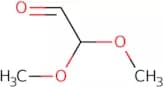
CAS :2,2-Dimethoxyacetaldehyde is an inhibitor of the enzyme DNA polymerase. It has been shown to inhibit replication of the herpes simplex virus type 1 and 2 (HSV-1, HSV-2) in cell cultures. 2,2-Dimethoxyacetaldehyde has also been shown to inhibit the replication of HIV in cells and is a potential antiviral agent. This compound is also used as a building block for other drugs such as amide and ester hydrochloride. It is synthesized from 2,2-dimethoxypropane and formaldehyde with a two step process that starts with an asymmetric synthesis reaction between formaldehyde and methoxide ion followed by an ester hydrochloride formation reaction with methylamine. The product can be purified by recrystallization from water or acetone solution.Formule :C4H8O3Degré de pureté :Min. 95%Masse moléculaire :104.1 g/molN-Boc-4-piperidineacetaldehyde
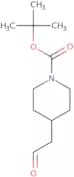
CAS :N-Boc-4-piperidineacetaldehyde is a chiral, stable, and readily available aldehyde. It has been used in the synthesis of various biologically active molecules including imidazolidinones, which are important for their use as catalysts in organic chemistry. The synthesis of this molecule by the condensation of 4-piperidineacetic acid with acetaldehyde followed by reduction with sodium borohydride is an example of this type of reaction. N-Boc-4-piperidineacetaldehyde can be used to synthesize imines and linkers that are covalently bonded to the protein backbone. This molecule also has conformational stability and is not susceptible to oxidation or radiation damage.
Formule :C12H21NO3Degré de pureté :Min. 95%Masse moléculaire :227.3 g/mol3-Fluoro-2-nitrobenzaldehyde
CAS :3-Fluoro-2-nitrobenzaldehyde is a pyridine derivative that has been used in the synthesis of a number of important heterocyclic compounds. This compound can be prepared by reacting 3,4-dichloroaniline with nitrous acid and then hydrolyzing the resulting 3-chloroquinoline with hydrochloric acid. The reaction yields anilines and quinolines in regiospecifically, as well as formylation, cyclisation, and condensation products. It is also capable of aromatisation reactions with benzene to produce benzofuran derivatives.
Formule :C7H4FNO3Degré de pureté :Min. 95%Couleur et forme :Yellow PowderMasse moléculaire :169.11 g/mol2-Chloro-3-methoxybenzaldehyde
CAS :Please enquire for more information about 2-Chloro-3-methoxybenzaldehyde including the price, delivery time and more detailed product information at the technical inquiry form on this pageFormule :C8H7ClO2Degré de pureté :Min. 95%Masse moléculaire :170.59 g/mol1H-Indole-2-carbaldehyde
CAS :1H-Indole-2-carbaldehyde is a solvent that has been used in the protein data and molecular modeling study. The 1H NMR spectrum of this compound showed an intense signal at δ 4.8 ppm, corresponding to the hydroxyl proton. This solvent also has fluorescence properties, as shown by its photophysical and structural analysis. The 1H-indole-2-carbaldehyde molecule has an active methylene group and an oxindole ring with amine substituents.
Formule :C9H7NODegré de pureté :Min. 98%Couleur et forme :PowderMasse moléculaire :145.16 g/molAc-Glu-Ser-Met-Asp-aldehyde (pseudo acid)
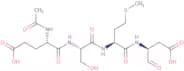
CAS :Ac-Glu-Ser-Met-Asp-aldehyde is a molecule that is naturally produced by the human body. It has been shown to be an endogenous caspase activator, which may lead to apoptosis. Ac-Glu-Ser-Met-Asp-aldehyde can also bind to cholesterol and influence its synthesis, thus affecting the production of other proteins. This molecule has a protease activity and can cleave peptides at specific sites. The sequences of this molecule have been determined and it has been found that these sequences are similar to those found in other proteases such as serine proteases.Formule :C19H30N4O10SDegré de pureté :Min. 95%Masse moléculaire :506.53 g/mol2,4-Dichlorobenzaldehyde
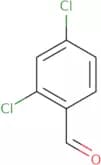
CAS :2,4-Dichlorobenzaldehyde is a compound that is a member of the class of phenylpropanoids. It has been shown to react with curcumin analogues to form 1,3-dichloro-2,4-bis(chloromethyl)benzene and 1,3-dichloro-2,4-(1′,2′-dichloroethoxy)benzene. These products have been found to have high values for fluorescence analysis. This molecule also has physiological effects as a growth regulator and antimicrobial agent. 2,4-Dichlorobenzaldehyde has been used in analytical methods such as dihedral angle determination and synthetic processes like the synthesis of benzaldehydes.
Formule :C7H4Cl2ODegré de pureté :Min. 95%Couleur et forme :PowderMasse moléculaire :175.01 g/mol3-Acetoxybenzaldehyde
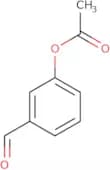
CAS :3-Acetoxybenzaldehyde is a chemical compound that has been used as a photosensitiser for the production of hydrogen peroxide. When irradiated with light, it undergoes a series of reactions, including the removal of an electron from the molecule and the formation of a reactive oxygen species (ROS). This ROS then reacts with chloride ions to form chlorine radicals. These chlorine radicals can react with acetyl groups to form 3-acetoxybenzoic acid. 3-Acetoxybenzaldehyde is also used in organic synthesis to produce ketones and aldehydes. The functional groups on this compound are an acetyl group and a carbonyl group. 3-Acetoxybenzaldehyde is produced by the dehydrogenation of trimethyl acetate, which is catalyzed by palladium on charcoal or platinum oxide.Formule :C9H8O3Degré de pureté :Min. 95%Couleur et forme :Clear LiquidMasse moléculaire :164.16 g/molN-Ethylcarbazole-3-carboxaldehyde
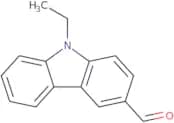
CAS :N-Ethylcarbazole-3-carboxaldehyde is an organic compound that has been shown to have anti-cancer properties. It activates the enzyme dioxygenase, which in turn generates reactive oxygen species (ROS) that induce DNA damage and apoptosis in mammalian cells. The photophysical and fluorescence spectrometry of N-ethylcarbazole-3-carboxaldehyde were studied as a function of pH and found to be sensitive to acidic environments. N-Ethylcarbazole-3-carboxaldehyde is also able to form covalent bonds with DNA bases, leading to irreversible oxidation.Formule :C15H13NODegré de pureté :Min. 95%Masse moléculaire :223.27 g/mol4-Bromobenzaldehyde
CAS :4-Bromobenzaldehyde is a chemical compound that belongs to the group of aromatic compounds. It has been shown to have a potent stimulatory effect on locomotor activity in mice, which may be due to its ability to increase levels of epidermal growth factor and gamma-aminobutyric acid in the brain. 4-Bromobenzaldehyde can be synthesized from 2,4-dibromophenol and anhydrous copper chloride in the presence of sodium hydroxide. The reaction mechanism for this synthesis is believed to involve an intermediate enamine form of 4-bromobenzaldehyde, which can then undergo hydrolysis into 2,4-dibromophenol and benzaldehyde. This product is used as a reagent in organic synthesis because it can be used to form esters with trifluoroacetic acid or hydrochloric acid in high yield.
Formule :C7H5BrODegré de pureté :Min. 90 Area-%Couleur et forme :White PowderMasse moléculaire :185.02 g/molCaspase-3/7 Inhibitor II Ac-Asp-Asn-Leu-Asp-aldehyde (pseudo acid)
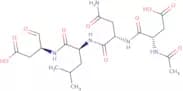
CAS :Caspase-3/7 Inhibitor II Ac-Asp-Asn-Leu-Asp-aldehyde (pseudo acid) is a peptide inhibitor of caspases. It blocks the activation of these proteases and their subsequent cleavage of substrates in the apoptotic pathway. This drug has potent inhibitory activity against caspases 3, 7, 8, 9, and 10. Caspase-3/7 Inhibitor II Ac-Asp-Asn-Leu-Asp-aldehyde (pseudo acid) specifically interacts with the active site and inhibits the enzyme by binding to an aspartic acid residue at position D197 in human caspase 3. Caspase 3/7 Inhibitor II Ac-Asp-Asn-Leu-Asp-aldehyde (pseudo acid) is localized to mitochondria and binds to acetyldeviceine (acDEV), a substrate for caspasesFormule :C20H31N5O10Degré de pureté :Min. 95%Masse moléculaire :501.49 g/molAc-Leu-Val-Phe-aldehyde
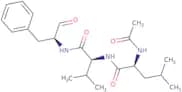
CAS :Ac-Leu-Val-Phe-aldehyde is a synthetic compound that inhibits the catalytic activity of carboxyl enzymes. It binds to the catalytic site of the enzyme via a noncovalent interaction with residues on the polypeptide chain, thereby preventing the formation of an active complex with other cofactors such as metal ions, amino acids, and ATP. Ac-Leu-Val-Phe-aldehyde can be used in analytical chemistry for determination of carboxyl groups in organic compounds or for determining protein content in biological samples. Ac-Leu-Val-Phe-aldehyde has also been shown to bind to antibodies which are specific for carboxyl groups.Formule :C22H33N3O4Degré de pureté :Min. 95%Masse moléculaire :403.52 g/molAc-Val-Glu-Ile-Asp-aldehyde (pseudo acid)
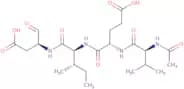
CAS :Ac-Val-Glu-Ile-Asp-aldehyde is a pseudo acid that has been shown to induce apoptotic cell death in cultured cells. It is localized in the cerebellar granule and mitochondria of HL-60 cells and HK-2 cells. Ac-Val-Glu-Ile-Asp-aldehyde induces necrotic cell death when it binds to the serine protease zymogen, which is localized in the mitochondrial membrane. It also induces apoptosis by disrupting the mitochondrial membrane potential, leading to a release of cytochrome c into the cytosol. Ac-Val-Glu-Ile-Asp-aldehyde can bind to annexin and tubule cells, which are important for β cell function.Formule :C22H36N4O9Degré de pureté :Min. 95%Masse moléculaire :500.54 g/mol3-(3-Chlorophenyl)propionaldehyde
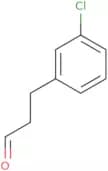
CAS :Please enquire for more information about 3-(3-Chlorophenyl)propionaldehyde including the price, delivery time and more detailed product information at the technical inquiry form on this pageFormule :C9H9ClODegré de pureté :Min. 95%Masse moléculaire :168.62 g/moltrans-2-Hexenal
CAS :Trans-2-hexenal is a natural compound that has been used as a model system for studying the toxicity of sodium salts. It is also used in studies on the enzyme activities of leaves and its carcinogenic potential. Trans-2-hexenal exhibits genotoxic effects, which may be due to its reaction with DNA or by inhibiting the polymerase chain reaction. In addition, this compound can inhibit enzymes involved in the synthesis of fatty acids, leading to cell death. Trans-2-hexenal is also found in plants and fruits such as apples, bananas, and pineapples.Formule :C6H10ODegré de pureté :Min. 97 Area-%Couleur et forme :Clear LiquidMasse moléculaire :98.14 g/molAc-N-Me-Tyr-Val-Ala-Asp-aldehyde (pseudo acid)
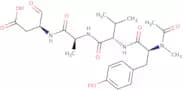
CAS :Please enquire for more information about Ac-N-Me-Tyr-Val-Ala-Asp-aldehyde (pseudo acid) including the price, delivery time and more detailed product information at the technical inquiry form on this pageFormule :C24H34N4O8Degré de pureté :Min. 95%Masse moléculaire :506.55 g/mol4,6-Dimethoxysalicylaldehyde
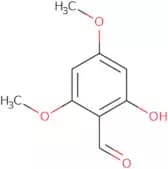
CAS :4,6-Dimethoxysalicylaldehyde is a protonated molecule with a cyclohexane ring and 4 hydroxyl groups. Its chemical formula is C6H8O3. The compound has low bioavailability due to the presence of an intramolecular hydrogen bond that causes high redox potential. There are two amines on the aromatic ring which can coordinate with metal ions to form a complex. This compound's structural analysis has been conducted using X-ray crystallography, NMR spectroscopy, and IR spectroscopy. The structure of 4,6-dimethoxysalicylaldehyde is unsymmetrical due to the presence of two asymmetric carbon atoms in the molecule. It forms hydrogen bonds with other molecules due to its hydroxyl group and intramolecular hydrogen bond. Hydrogen bonding interactions occur between this compound and other molecules including water, alcohols, ammonia, amines, and carboxylic acids.Formule :C9H10O4Degré de pureté :Min. 95%Couleur et forme :Off-White PowderMasse moléculaire :182.17 g/molAc-Tyr-Val-Ala-Asp-aldehyde (pseudo acid)
CAS :Ac-Tyr-Val-Ala-Asp-aldehyde is a sesquiterpene lactone that has been shown to have anti-inflammatory properties. It inhibits the inflammatory response by inhibiting the production of pro-inflammatory cytokines and chemokines, such as IL1β, IL6, and TNFα. Ac-Tyr-Val-Ala-Asp-aldehyde also inhibits the activity of cyclooxygenase 2 (COX2) and lipoxygenase (LOX), which are enzymes that produce prostaglandins from arachidonic acid. Acetylsalicylic acid is an example of a drug with similar properties. Acetylsalicylic acid has been shown to inhibit the growth of cancer cells in tissue culture studies and in animal models. This compound may also be used to treat bowel disease, congestive heart failure, or other diseases that are characterized by increased apoptosis.Formule :C23H32N4O8Degré de pureté :Min. 95%Masse moléculaire :492.52 g/mol