Aldéhydes
8576 produits trouvés pour "Aldéhydes"
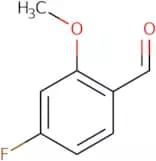
4-Fluoro-2-methoxybenzaldehyde
CAS :4-Fluoro-2-methoxybenzaldehyde (4FMBA) is a potential PET radioligand that binds to the serotonin 5-HT2A receptor. 4FMBA has been shown to be an efficient and selective 5-HT2A antagonist with low molecular weight and high affinity. The binding of 4FMBA to the serotonin 5-HT2A receptor can be inhibited by ketanserin, which is a nonselective 5-HT2A antagonist. This drug may be used for cancer diagnosis, as it has a low detection limit and can detect endogenous serotonin in the brain. It also shows anti-depressant properties, which may be due to its ability to bind to the orthosteric site of the serotonin 5-HT2A receptor.Formule :C8H7FO2Degré de pureté :Min. 95%Couleur et forme :Off-White PowderMasse moléculaire :154.14 g/mol3,4-Dihydroxy-2-nitrobenzaldehyde
CAS :3,4-Dihydroxy-2-nitrobenzaldehyde is a high quality chemical that is used as a reagent and as an intermediate in the synthesis of complex compounds. It has many uses, including being a useful building block for speciality chemicals, research chemicals, and reaction components. 3,4-Dihydroxy-2-nitrobenzaldehyde is versatile and can be used in the synthesis of various types of compounds. This compound is also an excellent scaffold for drug discovery.Formule :C7H5NO5Degré de pureté :Min. 95%Couleur et forme :PowderMasse moléculaire :183.12 g/mol4-Nitrocinnamaldehyde
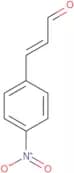
CAS :4-Nitrocinnamaldehyde is a diazonium salt that is used as an efficient method for the synthesis of nitro compounds. Nitro compounds are used in the production of explosives, insecticides, and herbicides. 4-Nitrocinnamaldehyde reacts with hydrochloric acid to produce trifluoroacetic acid, which is then reacted with an organic compound to produce a nitro compound. This reaction has been shown to be irreversible and not sensitive to functional groups. 4-Nitrocinnamaldehyde binds to the enzyme cytochrome P450 reductase, inhibiting its function. The binding of 4-nitrocinnamaldehyde to enzymes such as pyruvate kinase and acetylcholinesterase has also been observed in binding experiments.
Formule :C9H7NO3Degré de pureté :Min. 95%Couleur et forme :PowderMasse moléculaire :177.16 g/mol3-Chlorobenzaldehyde
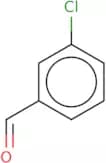
CAS :3-Chlorobenzaldehyde is a chemical that is used as a diagnostic agent for mitochondrial diseases. 3-Chlorobenzaldehyde can be used to detect mutations in the mtDNA and diagnose deficiencies of enzymes involved in energy metabolism. It has been shown to inhibit the activity of dehydrogenase enzymes and the synthesis of acyl-coa from zirconium oxide, which is an important component in polymerase chain reactions. This chemical also inhibits mitochondrial functions and enzyme activities, making it useful for screening for drugs that affect these processes. 3-Chlorobenzaldehyde has also been shown to inhibit hydrogen fluoride, which is often found in industrial environments.Formule :C7H5ClOCouleur et forme :Colorless Clear LiquidMasse moléculaire :140.57 g/mol4-Fluoro-2-(trifluoromethyl)benzaldehyde
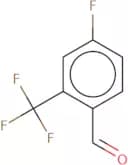
CAS :4-Fluoro-2-(trifluoromethyl)benzaldehyde is a chemical compound that can be used as a reagent in the formylation reaction. This product is soluble in ether, chloroform and benzene. The crystallographic data of this product are available and show that it has an isotropic crystal structure with a monoclinic unit cell. The molecular weight of this product is 150.38 g/mol and the molecular formula is C8H6F3O. The wavelength at which maximum absorption occurs for this product is 266 nm.Formule :C8H4F4ODegré de pureté :Min. 95%Couleur et forme :Clear LiquidMasse moléculaire :192.11 g/molAtranol
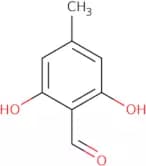
CAS :Atranol is a phenolic compound that is found in plants such as the leaves of the white willow tree. It has been shown to have anti-inflammatory properties and is being researched for its potential use in treatment of inflammatory bowel disease. Atranol has been shown to inhibit the production of inflammatory cytokines such as tumor necrosis factor-α (TNF-α) and interleukin-1β (IL-1β), which are key mediators of inflammation, by inhibiting NFκB activation. The reaction mechanism for atranol's inhibition of IL-1β production involves atranol binding with the cystein residue on IκB kinase β, which prevents phosphorylation and thus activation.
Formule :C8H8O3Degré de pureté :Min. 95%Couleur et forme :Brown Yellow PowderMasse moléculaire :152.15 g/mol3-Hydroxy-2,2-dimethylpropanal
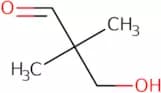
CAS :3-Hydroxy-2,2-dimethylpropanal is a condensation product of formaldehyde and glycol. It is the simplest of the three aldehydes that are produced by this reaction. The catalyst for this reaction is usually dibutyltin oxide, which can be replaced with calcium chloride or sodium carbonate. 3-Hydroxy-2,2-dimethylpropanal reacts with neopentyl glycol to form a dimer and glycol ester. This reaction mechanism has been studied extensively using solution kinetics.
Formule :C5H10O2Degré de pureté :(%) Min. 95%Couleur et forme :White PowderMasse moléculaire :102.13 g/mol2-Naphthaldehyde oxime
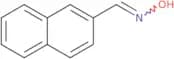
CAS :2-Naphthaldehyde oxime is a reactive aldoxime that can be used as an oxidant in organic chemistry. It is able to increase the rate of hydrolysis by acid catalysts, and has been shown to cause biomolecular damage due to its ability to react with functional groups such as amines and alcohols. 2-Naphthaldehyde oxime reacts with silicon, styrene, and polystyrene. The reaction produces carbon dioxide, hydrogen, and water. This product also has the capability of solvating organic compounds through the use of water molecules. Hypervalent oxidation reactions may occur with 2-naphthaldehyde oxime due to its ability to form multiple bonds with oxygen atoms.
Formule :C11H9NODegré de pureté :Min. 95%Couleur et forme :PowderMasse moléculaire :171.2 g/mol5-Cyanoindole-3-carboxaldehyde
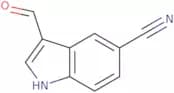
CAS :5-Cyanoindole-3-carboxaldehyde is an aldehyde that is used in synthesis of β-unsaturated aldehydes. It is prepared by the reaction of 3-cyanoindole with formaldehyde. 5-Cyanoindole-3-carboxaldehyde has antibacterial activity against gram positive and gram negative bacteria. It also has a high yield and can be purified by filtration or by condensation with chlorobenzene. 5-Cyanoindole-3-carboxaldehyde can be activated by irradiation, which makes it useful for the production of pharmaceuticals.Formule :C10H6N2ODegré de pureté :Min. 95%Masse moléculaire :170.17 g/mol3-Cyanopropionaldehydedimethylacetal
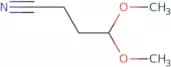
CAS :3-Cyanopropionaldehydedimethylacetal (3CPDMA) is a reactive compound that inhibits the proliferation of muscle cells. It has been shown to inhibit the synthesis of 3-hydroxy-3-methylglutaryl coenzyme A, which is required for the production of cholesterol and fatty acids. This inhibition leads to a decrease in the growth of cells and their ability to divide. 3CPDMA has also been shown to have an inhibitory effect on picolinic acid, which is involved in the activation of receptors that induce cellular proliferation. The inhibition of this receptor may be due to its ability to compete with other ligands for binding sites on the receptor. It has been shown that 3CPDMA acts as an antagonist against acarids, which are mites that feed on skin cells. This property may be due to its antagonistic effects on amino acid composition, which may affect calcium uptake by cells or cell membrane permeability.Formule :C6H11NO2Degré de pureté :Min. 95%Couleur et forme :PowderMasse moléculaire :129.16 g/mol4-Chlorobenzaldehyde oxime
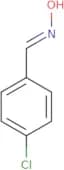
CAS :4-Chlorobenzaldehyde oxime is an antibacterial agent that is classified as a chloroamine. It has been shown to be an effective inhibitor of bacterial growth, with a low toxicity to mammalian cells. 4-Chlorobenzaldehyde oxime has been shown to be activated by amines and hydroxylamine, and the resulting intermediate can cleave a variety of bonds in the bacterial cell wall. The molecular orbitals of this compound have been calculated using crystallographic data and functional theory. 4-Chlorobenzaldehyde oxime also binds to chloride ions and forms a complex with ammonium nitrate, which may account for its activity against some bacteria that are resistant to chlorinated compounds (e.g., Clostridium difficile). This compound also contains functional groups that may react with disulfides present in the bacterial cell wall.Formule :C7H6ClNODegré de pureté :Min. 95%Couleur et forme :PowderMasse moléculaire :155.58 g/mol4-(Dimethylamino)benzaldehyde
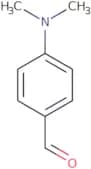
CAS :4-(Dimethylamino)benzaldehyde (4DMAB) is an analytical reagent used to identify sulfa drugs. It has been shown to react with sulfonamides by the formation of a complex ion, which can be detected by analytical methods such as electrochemical impedance spectroscopy or ultraviolet spectroscopy. 4DMAB has also been studied for its anticarcinoid properties. The carcinoid syndrome is characterized by a tumor that releases serotonin and other substances into the bloodstream, causing severe diarrhea, flushing, and bronchial spasms. Studies have shown that 4DMAB inhibits the release of serotonin in this condition. As a result, it may be effective against carcinoid syndrome.Formule :C9H11NODegré de pureté :Min. 95%Couleur et forme :White Slightly Yellow PowderMasse moléculaire :149.19 g/mol2-(4-Chlorophenyl)-4,4-dimethyl-1-cyclohexene-1-carboxaldehyde
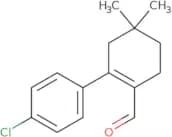
CAS :2-(4-Chlorophenyl)-4,4-dimethyl-1-cyclohexene-1-carboxaldehyde is a high quality reagent that can be used as a useful intermediate in the production of complex compounds. It is also a fine chemical with CAS No. 1228837-05-5 and is useful scaffold for the production of speciality chemicals. This compound has been identified as a useful building block with versatile uses in research and development, such as reaction components in organic synthesis.Formule :C15H17ClODegré de pureté :Min. 95%Couleur et forme :Clear LiquidMasse moléculaire :248.75 g/mol2-Methoxy-5-(trifluoromethoxy)benzaldehyde
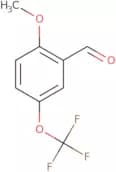
CAS :2-Methoxy-5-(trifluoromethoxy)benzaldehyde is a tachykinin antagonist that inhibits the binding of neurokinin to its receptor with high affinity. This compound has shown potential as a drug for the treatment of pain and other conditions such as asthma, allergies, and depression. The efficacy of 2-methoxy-5-(trifluoromethoxy)benzaldehyde has been demonstrated in high-throughput screening for the detection of nk1 receptor antagonists. Further studies have shown that modification of this molecule may increase its potency and reduce side effects.Formule :C9H7F3O3Degré de pureté :Min. 95%Couleur et forme :Clear LiquidMasse moléculaire :220.15 g/mol3-Methoxybenzaldehyde
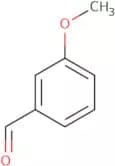
CAS :3-Methoxybenzaldehyde is a chemical compound that is used as an intermediate in the synthesis of organic compounds. This compound has shown to be a potent inhibitor of several enzymes, including diamine tetraacetic acid (DAT)-dependent aminotransferase, trimethyl amine N-oxide reductase, and hydrochloric acid hydrolases. 3-Methoxybenzaldehyde also inhibits the growth of hepg2 cells and induces apoptosis. The chemical structure of this compound contains a boron nitride group that can form hydrogen bonds with other molecules and fatty acids that can act as a substrate for oxidation reactions.
Formule :C8H8O2Degré de pureté :Min. 98 Area-%Couleur et forme :Clear LiquidMasse moléculaire :136.15 g/mol4-Fluoro-3-phenoxybenzaldehyde
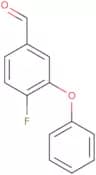
CAS :4-Fluoro-3-phenoxybenzaldehyde is a chiral organic compound that has been synthesized in the laboratory. This compound has a linear response to peroxide and can be used as an environmental pollutant indicator. It is produced by the reaction of phenol with peroxide in deionized water, which is catalyzed by acid. The reaction time is dependent on the diluent used, and ultrasonic irradiation can be used to speed up the reaction. 4-Fluoro-3-phenoxybenzaldehyde's structure consists of two isomers, each containing either a fluorine atom or hydrogen atom on one of the phenyl rings. 4-Fluoro-3-phenoxybenzaldehyde can be purified using distillation or recrystallization techniques.Formule :C13H9FO2Degré de pureté :Min. 95%Couleur et forme :LiquidMasse moléculaire :216.21 g/molo-Anisaldehyde
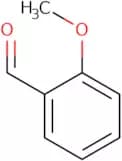
CAS :o-Anisaldehyde is a chemical compound that has the molecular formula CH3CHO. It is an aromatic compound that contains a hydroxyl group (-OH) bonded to a benzene ring. o-Anisaldehyde is soluble in water and reacts with copper chloride to form copper (II) o-anisate, which can be used as a reagent for oxidation reactions. It also forms coordination compounds with metal ions like zinc and iron. The crystal structure of o-anisaldehyde has been determined by x-ray crystallography and shows that it contains two asymmetric carbon atoms, which are oriented in opposite directions. This molecule can be synthesized from phenol or catechol by heating them with an acidified solution of sodium nitrite in ethanol. The reaction mechanism of this process involves the formation of an oxime intermediate followed by hydrolysis. The kinetics data of this reaction have been obtained using titration calorimetry and kinetic energy measurements show that the reactionFormule :C8H8O2Degré de pureté :Min. 95%Couleur et forme :PowderMasse moléculaire :136.15 g/moltrans-2-Heptenal
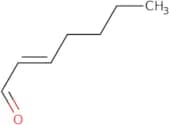
CAS :2-Heptenal is a fatty acid that is found in small quantities in the human body. It has been shown to inhibit the activity of lipases and esterases, which are enzymes that break down fats. 2-Heptenal can be used as an analog for fatty acids and as a sample preparation agent when preparing fatty acids for analysis. 2-Heptenal has been shown to exhibit degenerative disease properties, such as Alzheimer's disease. Researchers have used 2-heptenal as a model system to study the aggregation process of amyloid proteins, which may lead to the development of drugs for treatment of these diseases.
Formule :C7H12ODegré de pureté :Min. 95.0 Area-%Couleur et forme :Colorless Slightly Yellow Clear LiquidMasse moléculaire :112.17 g/mol3-Sulfobenzaldehyde sodium salt
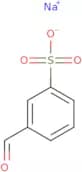
CAS :3-Sulfobenzaldehyde sodium salt is a novel anticancer agent that inhibits the activity of HDACs. It has shown a strong inhibitory effect on cancer cells in vivo, and can be used for the treatment of tumors. 3-Sulfobenzaldehyde sodium salt has an anti-proliferative effect on cancer cells, which may be due to its ability to inhibit the activity of HDACs and acetylation mediated by these enzymes. This drug also has an anti-proliferative effect in tumor growth, which may be due to its ability to inhibit the HDAC cycle and acetylation, leading to cell death.Formule :C7H5NaO4SDegré de pureté :85%MinCouleur et forme :PowderMasse moléculaire :208.17 g/mol3,5-Dibromobenzaldehyde
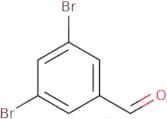
CAS :3,5-Dibromobenzaldehyde is an analytical reagent that has been used as a chemosensor. The compound was synthesized by the reaction of benzaldehyde with bromine and potassium hydroxide (KOH). 3,5-Dibromobenzaldehyde has a skeleton consisting of three phenyl groups and two aldehyde groups. The compound also contains two active methylene groups and two vinylene groups. 3,5-Dibromobenzaldehyde can be detected by fluorescence probe or low energy electron diffraction. This chemical is an effective antibacterial agent with an LD50 value of 1.6 milligrams per kilogram in rats.Formule :C7H4Br2ODegré de pureté :Min. 95%Couleur et forme :White PowderMasse moléculaire :263.91 g/mol