Aldéhydes
8576 produits trouvés pour "Aldéhydes"
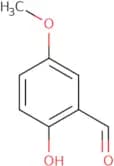
2-Hydroxy-5-methoxybenzaldehyde
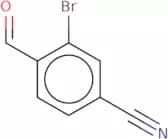
CAS :2-Hydroxy-5-methoxybenzaldehyde is a colorless, water-soluble liquid that has been used as a chemical intermediate in the synthesis of pharmaceuticals. It is also an antiinflammatory agent that inhibits acetylcholinesterase. 2-Hydroxy-5-methoxybenzaldehyde binds to copper ions by means of hydrogen bonding interactions and forms stable complexes with nitrogen atoms such as amides, nitriles, and hydrazones. 2HMB has been shown to have antiinflammatory activity in animal studies. This compound has a redox potential of -0.8 V, which indicates it can be oxidized by strong oxidizing agents or reduced by strong reducing agents.Formule :C8H8O3Degré de pureté :Min. 95%Couleur et forme :Colorless Clear LiquidMasse moléculaire :152.15 g/mol2-Bromo-4-cyanobenzaldehyde
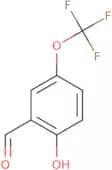
CAS :2-Bromo-4-cyanobenzaldehyde is a potent protease inhibitor and can be used as an antiviral agent. It inhibits the NS3 protease of hepatitis C virus (HCV) with IC50 of 0.2 μM. 2-Bromo-4-cyanobenzaldehyde has been evaluated for its ability to inhibit replicons from HCV genotypes 1, 2, 3, 4 and 5 with varying degrees of potency. In vitro studies have shown that 2-bromo-4-cyanobenzaldehyde is a potent inhibitor of HCV NS3 protease, demonstrating activity against all major HCV genotypes in cell culture. This molecule has also been shown to inhibit the replication of HIV, herpes simplex virus type 1 and human rhinovirus type 2 in cell culture.Formule :C8H4BrNODegré de pureté :Min. 95%Couleur et forme :PowderMasse moléculaire :210.03 g/mol5-(Trifluoromethoxy)salicylaldehyde
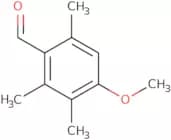
CAS :5-(Trifluoromethoxy)salicylaldehyde is a ligand that binds to the active site of the enzyme catalysis, thereby inhibiting its activity. It has been shown to be effective in colon cancer and other cancers due to its ability to inhibit protein synthesis. 5-(Trifluoromethoxy)salicylaldehyde also inhibits the production of prostaglandins, which may prevent inflammation. The compound is also used in supramolecular chemistry and biological studies as a tool for studying protein-ligand interactions. 5-(Trifluoromethoxy)salicylaldehyde has been shown to have dose-dependent effects on cell proliferation and protein synthesis.Formule :C8H5F3O3Degré de pureté :Min. 95%Couleur et forme :PowderMasse moléculaire :206.12 g/mol4-Methoxy-2,3,6-trimethylbenzaldehyde
CAS :4-Methoxy-2,3,6-trimethylbenzaldehyde (MTMB) is a chemical intermediate that can be used as a building block for the synthesis of complex compounds. It has a high quality and is a versatile building block. MTMB is also known to react with other chemical compounds to form an aromatic ring. This compound is used in research and development as well as in fine chemical production.Formule :C11H14O2Degré de pureté :Min. 95%Couleur et forme :PowderMasse moléculaire :178.23 g/molEnalapril diketopiperazine
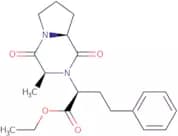
CAS :Enalapril is a potassium-sparing diuretic that belongs to the group of angiotensin-converting enzyme (ACE) inhibitors. It is used in the treatment of high blood pressure and congestive heart failure. Enalapril is activated by hydrolysis to enalaprilat, which in turn inhibits the formation of angiotensin II and prevents its effects on blood vessels and kidneys. Enalapril also prevents the conversion of captopril to enalaprilat, thereby reducing its effectiveness as an ACE inhibitor.Formule :C20H26N2O4Degré de pureté :Min. 95%Couleur et forme :PowderMasse moléculaire :358.43 g/mol4-Acetyl syringaldehyde
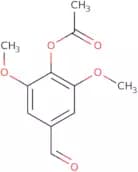
CAS :4-Acetyl syringaldehyde is a gaseous compound that has been shown to have antitumor properties. It is synthesized from 5-iodovanillin, which can be found in Australian marine sponge and organic acids such as citric acid. 4-Acetyl syringaldehyde has been shown to inhibit the growth of human colorectal cancer cells (HCT116) and induce apoptosis. This compound also inhibits the growth of bacteria by binding to the bacterial dna gyrase and dna topoisomerase, inhibiting their ability to maintain the integrity of bacterial DNA. 4-Acetyl syringaldehyde undergoes a number of reactions when exposed to chlorine or nitro compounds, including oxidation products that are formed when it reacts with formic acid and hct116 cells.Formule :C11H12O5Degré de pureté :Min. 95%Couleur et forme :PowderMasse moléculaire :224.21 g/mol2-Chloro-6-fluorobenzaldehyde
CAS :2-Chloro-6-fluorobenzaldehyde is an impurity that can be found in wastewater. It has been shown to be a reactive intermediate for the synthesis of streptochlorin, which is a natural product with potential antibiotic activity. 2-Chloro-6-fluorobenzaldehyde is produced by the reaction of chlorine and anhydrous sodium, with acid as catalyst. The molecule has two fluorine atoms and one chloride atom. This compound can also be used in the treatment of waste water due to its ability to react with hydroxyl ions and chloride ions in the presence of hydrogen chloride or hydrochloric acid. The pain model was evaluated using nmr spectra and optical properties.Formule :C7H4ClFODegré de pureté :Min. 95%Couleur et forme :White PowderMasse moléculaire :158.56 g/mol2,6-Dichloro-4-hydroxybenzaldehyde
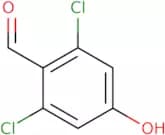
CAS :2,6-Dichloro-4-hydroxybenzaldehyde is a chlorinated organic compound that can be synthesized by the chlorination of 2,6-dichlorobenzaldehyde. It has non-polar properties and can be used as an analytical reagent. Due to its chlorine atoms, it is used in the analysis of chlorine content in water and other substances. It is a formyl derivative and a homologue of formaldehyde. There are two isomers: 2,4-dichloro-6-hydroxybenzaldehyde (2,4 DCHA) and 2,5-dichloro-6-hydroxybenzaldehyde (2,5 DCHA).Formule :C7H4Cl2O2Degré de pureté :Min. 95%Couleur et forme :Yellow PowderMasse moléculaire :191.01 g/mol2-(3,4-Dimethoxyphenyl)acetaldehyde
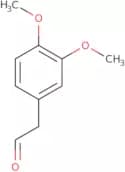
CAS :2-(3,4-Dimethoxyphenyl)acetaldehyde is a bioactive molecule that has shown anti-cancer properties in vitro and in vivo. It inhibits the activity of aldehyde dehydrogenase, an enzyme responsible for the oxidation of alcohols to aldehydes. This inhibition leads to accumulation of acetaldehyde in cells and induces apoptosis or cell death by caspase-independent mechanisms. 2-(3,4-Dimethoxyphenyl)acetaldehyde also has been shown to induce acidolysis reactions in the presence of acid. This reaction mechanism may be due to protonation of the phenolic hydroxyl group. The resulting 3,4-dimethoxyphenylacetic acid analog can inhibit cells' proliferation and induce apoptosis by blocking protein synthesis and cell division.
Formule :C10H12O3Degré de pureté :Min. 95%Couleur et forme :Clear LiquidMasse moléculaire :180.2 g/mol4-Methyl-3-nitrobenzaldehyde
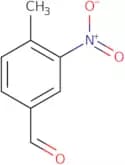
CAS :4-Methyl-3-nitrobenzaldehyde is an aldehyde that is synthesized in vitro and used as a replication inhibitor. It has been shown to inhibit the replication of dsDNA, ssDNA, and RNA viruses. 4-Methyl-3-nitrobenzaldehyde binds to nucleic acids by forming hydrogen bonds with the carboxylic acid group on the molecule and the acceptor, which are usually hydroxyl groups or amino groups. 4-Methyl-3-nitrobenzaldehyde can be used for the synthesis of viologens, which are molecules that can be used as electron acceptors in organic reactions.Formule :C8H7NO3Degré de pureté :Min. 95%Couleur et forme :PowderMasse moléculaire :165.15 g/mol4'-(3,4-Difluorophenoxy)benzaldehyde
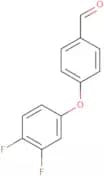
CAS :4'-(3,4-Difluorophenoxy)benzaldehyde is an organic compound that yields a bright yellow color. It is used in the replication of DNA and RNA in the laboratory. This compound has been shown to interact with environmental conditions and significant effects have been observed for cultivars of wheat.Formule :C13H8F2O2Degré de pureté :Min. 95%Masse moléculaire :234.2 g/molPhloroglucinol aldehyde triethyl ether
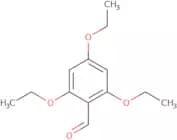
CAS :Phloroglucinol aldehyde triethyl ether is a high quality, research chemical, speciality chemical and versatile building block. It is used in the synthesis of complex compounds that are useful as intermediates or fine chemicals. The CAS No. for this compound is 59652-88-9.Formule :C13H18O4Degré de pureté :Min. 95%Masse moléculaire :238.28 g/mol4-Chlorobenzaldehyde
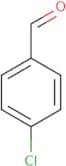
CAS :4-Chlorobenzaldehyde is a chemical compound with the molecular formula C6H5ClO. It can be synthesized by reacting malonic acid with sephadex g-100, copper chloride, and diphenolase. This reaction mechanism is shown in Figure 1. The product then reacts with copper to form a copper complex. 4-Chlorobenzaldehyde has been shown to have anticancer activity against carcinoma cell lines and squamous carcinoma cells. The mechanism of action for this compound may be due to its ability to inhibit the synthesis of picolinic acid, which is an important precursor for the synthesis of nicotinamide adenine dinucleotide (NAD).Formule :C7H5ClODegré de pureté :Min. 95%Couleur et forme :White Clear LiquidMasse moléculaire :140.57 g/mol4,4'-Biphenyldicarboxaldehyde
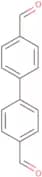
CAS :4,4'-Biphenyldicarboxaldehyde is a n-dimethyl formamide that has been shown to be neuroprotective in animal models of Parkinson's disease (PD). 4,4'-Biphenyldicarboxaldehyde binds to sulfoxide and chloride ions and reduces the hydrophobic effect. This leads to the formation of an imine intermediate. The reaction mechanism is believed to be similar to that of biphenyls, which are used as fungicides. 4,4'-Biphenyldicarboxaldehyde is easily detected by fluorescence analysis and has low toxicity. It is also soluble in organic solvents such as benzene or chloroform.
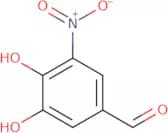
Formule :C14H10O2Degré de pureté :Min. 95%Couleur et forme :White PowderMasse moléculaire :210.23 g/mol3,4-Dihydroxy-5-nitrobenzaldehyde
CAS :3,4-Dihydroxy-5-nitrobenzaldehyde is a chemical substance that is used in an analytical method to measure the level of methoxy groups in chronic kidney disease. The methanol solvent and hydrochloric acid are used to dissolve the sample, which is then titrated with trifluoroacetic acid. The chloride ion reacts with the methylene group from the 3,4-dihydroxy-5-nitrobenzaldehyde molecule to form a new compound that can be detected by ultraviolet light at 254 nm. The active methylene group is quantified by measuring its absorbance at this wavelength and comparing it with a calibration curve using known concentrations of sodium salts. This test has been shown to be more sensitive than other chromatographic methods for detecting methoxy groups in chronic kidney disease.Formule :C7H5NO5Degré de pureté :Min. 95%Couleur et forme :Yellow PowderMasse moléculaire :183.12 g/mol3,5-Difluoro-4-hydroxybenzaldehyde
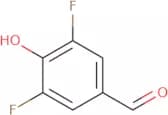
CAS :3,5-Difluoro-4-hydroxybenzaldehyde is a biochemical that belongs to the group of anticancer agents. It is activated by hydroxyl radicals and inhibits cancer cells. 3,5-Difluoro-4-hydroxybenzaldehyde inhibits protein synthesis in the cell by binding to messenger RNA and preventing its translation into protein. This compound also has inhibitory properties against DNA polymerase, which prevents DNA replication and transcription. 3,5-Difluoro-4-hydroxybenzaldehyde can be used as a template for oligodeoxynucleotides (ODN) to enhance photochemical properties.
Formule :C7H4F2O2Degré de pureté :Min. 95%Couleur et forme :Off-White PowderMasse moléculaire :158.1 g/molCinnamaldehyde
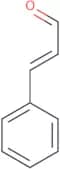
CAS :Cinnamaldehyde is an aldehyde that occurs naturally in plants such as cinnamon, apples, and cumin. It is used as a flavoring agent for foods and beverages, as well as in perfumes. Cinnamaldehyde has been shown to have minimal toxicity and minimal mutagenic or carcinogenic potential. This compound has been shown to exhibit antimicrobial activity against bacteria by inhibition of bacterial cell growth through inhibition of the synthesis of proteins essential for cell division. Cinnamaldehyde also exhibits anti-inflammatory properties by inhibiting prostaglandin synthesis. The antimicrobial effects of cinnamaldehyde are due to its ability to bind to the enzyme alcohol dehydrogenase, which prevents the conversion of alcohols into aldehydes. Cinnamaldehyde can be found in many natural compounds such as cinnamic acid and eugenol.
Formule :C6H5CHCHCHODegré de pureté :Min. 95%Couleur et forme :Colorless Clear LiquidMasse moléculaire :132.16 g/mol2-Hydroxy-3,4-dimethoxybenzaldehyde
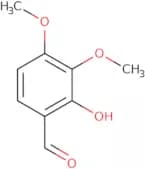
CAS :2-Hydroxy-3,4-dimethoxybenzaldehyde is a molecule that has an acidic character. It has been shown to be able to form a copper complex with good optical properties. A method using this compound as the monomer was found to be efficient for synthesizing polymers with size exclusion chromatography. 2-Hydroxy-3,4-dimethoxybenzaldehyde is a monocarboxylic acid that contains an aliphatic hydrocarbon and hydroxyl group. It can also act as a monomer in polymerization reactions and can be used in chemical structures such as multidrugs, which are made from large molecules of different types of atoms. The acid catalyst is required for these reactions to take place.Formule :C9H10O4Degré de pureté :Min. 95%Couleur et forme :PowderMasse moléculaire :182.17 g/mol2-Hydroxy-5-iodo-3-methoxybenzaldehyde
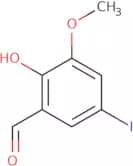
CAS :Please enquire for more information about 2-Hydroxy-5-iodo-3-methoxybenzaldehyde including the price, delivery time and more detailed product information at the technical inquiry form on this pageFormule :C8H7IO3Degré de pureté :Min. 98%Couleur et forme :PowderMasse moléculaire :278.04 g/mol4-Hydroxy-3-methylbenzaldehyde
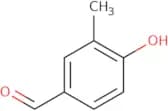
CAS :4-Hydroxy-3-methylbenzaldehyde is a fungicidal agent that has been shown to have activity against Cryptococcus neoformans. It inhibits the mitochondrial functions of this fungus, which leads to cell death by disrupting the synthesis of fatty acids and other cellular components. 4-Hydroxy-3-methylbenzaldehyde binds to C. neoformans with high affinity, producing a reaction product that interferes with the organism's ability to produce butyric acid. The molecular modelling of this compound shows that it is a pyrazole ring with two benzyl groups on either side of an aldehyde group. This chemical also inhibits gram-negative bacteria by binding to fatty acids in their outer membrane.Formule :C8H8O2Degré de pureté :Min. 95%Couleur et forme :PowderMasse moléculaire :136.15 g/mol