Anilines
102 produits trouvés pour "Anilines".
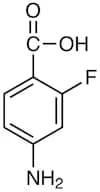
4-Amino-2-fluorobenzoic Acid
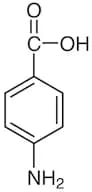
CAS :Formule :C7H6FNO2Degré de pureté :>98.0%(GC)(T)Couleur et forme :White to Orange to Green powder to crystalMasse moléculaire :155.134-Aminobenzoic Acid
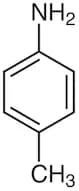
CAS :Formule :C7H7NO2Degré de pureté :>99.0%(T)(HPLC)Couleur et forme :White to Light yellow to Light orange powder to crystalMasse moléculaire :137.14p-Toluidine
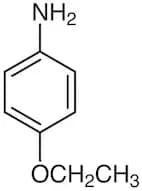
CAS :Formule :C7H9NDegré de pureté :>99.0%(GC)(T)Couleur et forme :White to Light yellow powder to crystalMasse moléculaire :107.16p-Phenetidine
CAS :Formule :C8H11NODegré de pureté :>98.0%(GC)Couleur et forme :Colorless to Light orange to Yellow clear liquidMasse moléculaire :137.184-Hexylaniline
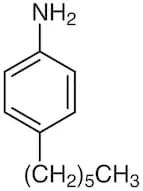
CAS :Formule :C12H19NDegré de pureté :>98.0%(GC)(T)Couleur et forme :Colorless to Yellow clear liquidMasse moléculaire :177.294-Amylaniline
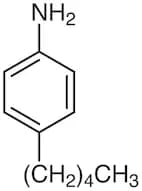
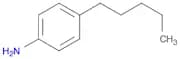
CAS :Formule :C11H17NDegré de pureté :>97.0%(GC)(T)Couleur et forme :Colorless to Brown clear liquidMasse moléculaire :163.264-Heptylaniline
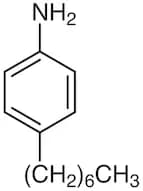
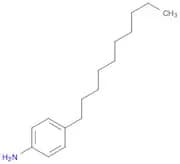
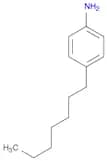
CAS :Formule :C13H21NDegré de pureté :>98.0%(GC)(T)Couleur et forme :Colorless to Yellow to Orange clear liquidMasse moléculaire :191.324-Decylaniline
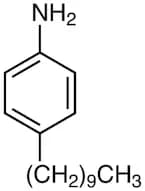
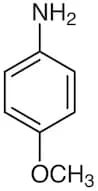
CAS :Formule :C16H27NDegré de pureté :>98.0%(GC)(T)Couleur et forme :Colorless to Brown clear liquidMasse moléculaire :233.40p-Anisidine
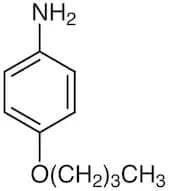
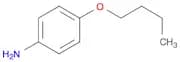
CAS :Formule :C7H9NODegré de pureté :>98.0%(GC)(T)Couleur et forme :White to Amber powder to crystalMasse moléculaire :123.164-Butoxyaniline
CAS :Formule :C10H15NODegré de pureté :>98.0%(GC)(T)Couleur et forme :Colorless to Brown clear liquidMasse moléculaire :165.244-Bromoaniline
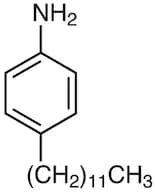
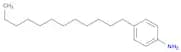
CAS :Formule :C6H6BrNDegré de pureté :>99.0%(GC)(T)Couleur et forme :White to Almost white powder to crystalMasse moléculaire :172.034-Dodecylaniline
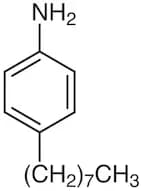
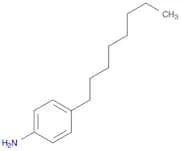
CAS :Formule :C18H31NDegré de pureté :>98.0%(GC)(T)Couleur et forme :White to Light yellow to Light orange powder to crystalMasse moléculaire :261.454-n-Octylaniline
CAS :Formule :C14H23NDegré de pureté :>97.0%(GC)(T)Couleur et forme :White or Colorles to Yellow to Orange powder to lump to clear liquidMasse moléculaire :205.354-hexylaniline
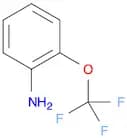
CAS :Formule :C12H19NDegré de pureté :95%Couleur et forme :LiquidMasse moléculaire :177.28602-(Trifluoromethoxy)aniline
CAS :Formule :C7H6F3NODegré de pureté :97%Couleur et forme :LiquidMasse moléculaire :177.1238Benzoic acid, 4-amino-3-(trifluoromethoxy)-
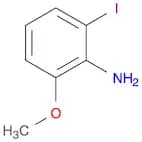
CAS :Formule :C8H6F3NO3Degré de pureté :97%Couleur et forme :SolidMasse moléculaire :221.1333BENZENAMINE, 2-IODO-6-METHOXY-
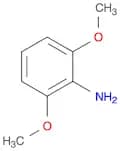
CAS :Formule :C7H8INODegré de pureté :95%Couleur et forme :SolidMasse moléculaire :249.04902,6-Dimethoxyaniline
CAS :Formule :C8H11NO2Degré de pureté :98%Couleur et forme :SolidMasse moléculaire :153.1784Ref: IN-DA003G55
500gÀ demander250mg22,00€1g24,00€5g31,00€10g53,00€25g80,00€50g122,00€100g170,00€250g545,00€5kg6.464,00€10kg12.440,00€25kg30.455,00€4-Ethylaniline
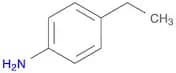
CAS :Formule :C8H11NDegré de pureté :98%Couleur et forme :LiquidMasse moléculaire :121.1796Ref: IN-DA003LBU
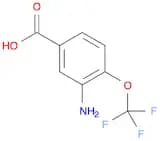
5g20,00€10g24,00€25g25,00€50g28,00€100g46,00€250g69,00€500g128,00€1kg189,00€5kg556,00€10kg724,00€25kg1.845,00€50kg3.351,00€3-Amino-4-(trifluoromethoxy)benzoic acid
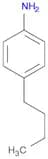
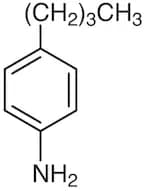
CAS :Formule :C8H6F3NO3Degré de pureté :97%Couleur et forme :SolidMasse moléculaire :221.13334-Butylaniline
CAS :Formule :C10H15NDegré de pureté :97%Couleur et forme :LiquidMasse moléculaire :149.23284-N-DECYLANILINE
CAS :Formule :C16H27NDegré de pureté :98.0%Couleur et forme :LiquidMasse moléculaire :233.3923Benzenamine, 4-octyl-
CAS :Formule :C14H23NDegré de pureté :98%Couleur et forme :LiquidMasse moléculaire :205.33914-Butoxyaniline
CAS :Formule :C10H15NODegré de pureté :97%Couleur et forme :LiquidMasse moléculaire :165.23224-Dodecylaniline
CAS :Formule :C18H31NDegré de pureté :97%Couleur et forme :SolidMasse moléculaire :261.44544-Amino-2-fluorobenzoic acid
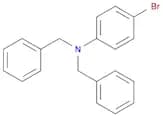
CAS :Formule :C7H6FNO2Degré de pureté :98%Couleur et forme :SolidMasse moléculaire :155.1264N,N-Dibenzyl-4-bromoaniline
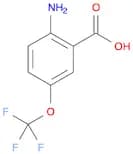
CAS :Formule :C20H18BrNDegré de pureté :95%Couleur et forme :SolidMasse moléculaire :352.26762-Amino-5-(trifluoromethoxy)benzoic acid
CAS :Formule :C8H6F3NO3Degré de pureté :95%Couleur et forme :SolidMasse moléculaire :221.13334-Pentylaniline
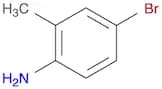
CAS :Formule :C11H17NDegré de pureté :96%Couleur et forme :LiquidMasse moléculaire :163.25944-Bromo-2-methylaniline
CAS :Formule :C7H8BrNDegré de pureté :98%Couleur et forme :SolidMasse moléculaire :186.0491Ref: IN-DA003KX7
5g20,00€10g24,00€25g24,00€50g28,00€100g50,00€250g78,00€500g122,00€1kg173,00€10kg1.421,00€25kg3.572,00€4-Aminobenzoic acid
CAS :Formule :C7H7NO2Degré de pureté :97%Couleur et forme :SolidMasse moléculaire :137.1360Ref: IN-DA0033WK
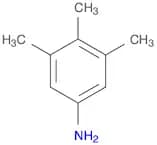
25g19,00€100g24,00€250g29,00€500g37,00€1kg52,00€5kg152,00€10kg205,00€25kg648,00€50kg712,00€100kg1.421,00€250kg3.638,00€Benzenamine, 3,4,5-trimethyl-
CAS :Formule :C9H13NDegré de pureté :98%Couleur et forme :SolidMasse moléculaire :135.20622-Amino-3-(trifluoromethoxy)benzoic acid
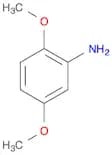
CAS :Formule :C8H6F3NO3Degré de pureté :97%Couleur et forme :SolidMasse moléculaire :221.1333Benzenamine, 2,5-dimethoxy-
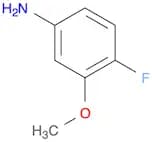
CAS :Formule :C8H11NO2Degré de pureté :98%Couleur et forme :SolidMasse moléculaire :153.1784Benzenamine, 4-fluoro-3-methoxy-
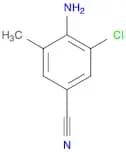
CAS :Formule :C7H8FNODegré de pureté :98%Couleur et forme :SolidMasse moléculaire :141.1429Benzonitrile, 4-amino-3-chloro-5-methyl-
CAS :Formule :C8H7ClN2Degré de pureté :98%Couleur et forme :SolidMasse moléculaire :166.6076N,N-Dibenzyl-4-bromoaniline
CAS :Formule :C20H18BrNDegré de pureté :>98.0%(GC)Couleur et forme :White to Orange to Green powder to crystalineMasse moléculaire :352.284-Butylaniline
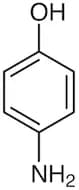
CAS :Formule :C10H15NDegré de pureté :>97.0%(GC)(T)Couleur et forme :Colorless to Red to Green clear liquidMasse moléculaire :149.244-Aminophenol
CAS :Formule :C6H7NODegré de pureté :>98.0%(GC)(T)Couleur et forme :White to Yellow to Orange powder to crystalMasse moléculaire :109.134-Fluoro-3-methoxyaniline
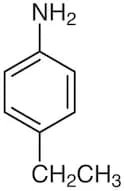
CAS :Formule :C7H8FNODegré de pureté :>98.0%(GC)(T)Couleur et forme :White to Gray to Brown powder to crystalMasse moléculaire :141.154-Ethylaniline
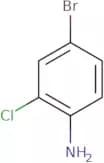
CAS :Formule :C8H11NDegré de pureté :>99.0%(GC)(T)Couleur et forme :Colorless to Light orange to Yellow clear liquidMasse moléculaire :121.184-Bromo-2-chloroaniline
CAS :4-Bromo-2-chloroaniline (4BCA) is an exciplex that forms in the presence of hydrogen peroxide and chloride ions. It is unreactive with fluconazole and other related molecules, but is able to photoreduce hydrogen peroxide. The molecular mechanism of 4BCA is a result of its ability to form a covalent bond with DNA containing pyrimidine bases. This reaction results in the formation of pyrimidine dimers, which can lead to cell death through the inhibition of DNA synthesis and repair. 4BCA has been shown to be effective against cancer cells at high concentrations, but does not affect healthy cells. The effectiveness against cancer cells may be due to the fact that this exciplex reacts with uv irradiation and irradiation, which leads to a higher concentration of reactive oxygen species (ROS).
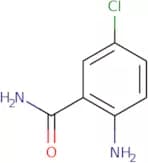
Formule :C6H5BrClNDegré de pureté :Min. 95%Couleur et forme :PowderMasse moléculaire :206.47 g/mol2-Amino-5-chlorobenzamide
CAS :2-Amino-5-chlorobenzamide is a fluorescence probe that has been shown to react with anthranilic acid, which is a structural component of many active substances. It is used in organic solvents as an indicator for the presence of active oxygen. 2-Amino-5-chlorobenzamide can be used as a linker to connect different molecules and can be activated by dehydrating agents, such as sodium sulfite. This compound has been demonstrated to have a linear response over a wide range of concentrations. The molecular target of 2-amino-5-chlorobenzamide is unknown at this time, but it has been suggested that it may interact with amino acids or proteins. The structural formula for 2-amino-5-chlorobenzamide is C6H4ClN2O2.Formule :C7H7ClN2ODegré de pureté :Min. 95%Couleur et forme :PowderMasse moléculaire :170.6 g/mol3,5-Dibromoaniline
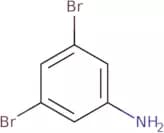
CAS :3,5-Dibromoaniline is a chemical compound that belongs to the group of anilines. It can be used as an intermediate in organic synthesis. 3,5-Dibromoaniline can be obtained by gravimetric analysis and has a solute of about 0.1 g/100 mL in water. The melting point for this compound is about 245 °C and the boiling point is about 330 °C at normal atmospheric pressure. 3,5-Dibromoaniline has been shown to inhibit the growth of Trichophyton mentagrophytes and Coumarin derivatives, which are fungi that cause ringworm infections. This drug also has photophysical properties and can be used as a fluorescence probe for DNA hybridization studies.Formule :C6H5NBr2Degré de pureté :Min. 98%Couleur et forme :Brown To Black SolidMasse moléculaire :250.92 g/mol3,4,5-Trihydroxybenzamide
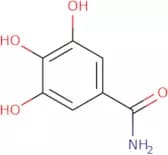
CAS :3,4,5-Trihydroxybenzamide (THB) is an active agent that inhibits the synthesis of prostaglandin J2. It has been shown to inhibit the uptake of fatty acids in rat liver cells by blocking fatty acid binding proteins. THB has also been shown to inhibit the chemical structures of nitro and epidermal growth factor. 3,4,5-Trihydroxybenzamide can be used as a cancer treatment by inhibiting the growth and spread of cancer cells. This drug is also believed to have a protective effect on the skin by reducing inflammation and increasing cell proliferation.
THB is currently being researched for its ability to suppress histone proteins and growth factors such as HGF or EGF in human HL60 cells.Formule :C7H7NO4Degré de pureté :Min. 98 Area-%Couleur et forme :Off-White PowderMasse moléculaire :169.13 g/mol2-(Trifluoromethoxy)aniline
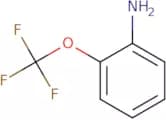
CAS :2-(Trifluoromethoxy)aniline is a heterocyclic aromatic compound that can act as an electrophilic catalyst. It is a strong nucleophile and reacts with various types of nucleophiles. 2-(Trifluoromethoxy)aniline has been used for the synthesis of aliphatic sulfoxides under acidic conditions, including alcohols, phenols, and thiols. The reaction mechanism is often a 1,2-addition of the nucleophile to the carbonyl group of 2-(trifluoromethoxy)aniline. This reaction is catalytic and produces a stable dimerized product. 2-(Trifluoromethoxy)aniline also has mesoporous properties, which allow it to be used in reactions involving alcohols or other polar molecules because they are soluble in the pores.Formule :C7H6F3NODegré de pureté :Min. 95%Couleur et forme :Clear LiquidMasse moléculaire :177.12 g/mol4-Hydroxybenzamide
CAS :4-Hydroxybenzamide is a fatty acid with the hydroxyl group at the 4 position. It has been shown to inhibit the activity of human protein by interfering with hydrogen bonding and amide formation. The chemical structures of 4-hydroxybenzamide have been studied by electrochemical impedance spectroscopy (EIS) and found to be a competitive inhibitor of 1-hydroxy-2-naphthoic acid, an adenosine receptor antagonist, and p-hydroxybenzoic acid. This compound has also been shown to be acutely toxic in rats at high doses.Formule :C7H7NO2Degré de pureté :90%Couleur et forme :PowderMasse moléculaire :137.14 g/molN,N-Diisobutyl-2-(octylphenylphosphoryl)acetamide
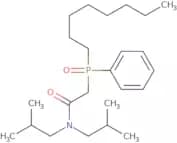
CAS :N,N-Diisobutyl-2-(octylphenylphosphoryl)acetamide is a redox active extractant that is used for the extraction of metals from acidic solutions. It has been shown to have an adsorption mechanism that includes hydrogen bonding and intramolecular hydrogen bonding. N,N-Diisobutyl-2-(octylphenylphosphoryl)acetamide also has a high redox potential and fluorescence properties. This extractant can be used as a metal chelate to extract copper from hydroxide or carbonate solutions. It can also be used in titration calorimetry experiments.Formule :C24H42NO2PDegré de pureté :Min. 98 Area-%Couleur et forme :White To Off-White SolidMasse moléculaire :407.57 g/mol4-Methylbenzamide
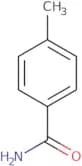
CAS :4-Methylbenzamide is a palladium complex that has been used in the synthesis of imatinib, a drug used to treat chronic myeloid leukemia. 4-Methylbenzamide has been shown to form a hydrogen bond with water molecules and also exhibits cavity effects. The cavity effect can be explained by intermolecular hydrogen bonding and the deuterium isotope effect. The deuterium isotope effect is observed when an atom of deuterium replaces an atom of hydrogen in a molecule. This substitution leads to reduced boiling point and increased solubility for the compound. 4-Methylbenzamide is also known for its inhibitory effects on p38 kinase, which are seen through titration calorimetry.Formule :C8H9NODegré de pureté :Min. 95%Couleur et forme :PowderMasse moléculaire :135.16 g/mol