Étalons pharmaceutiques
Sous-catégories appartenant à la catégorie "Étalons pharmaceutiques"
- APIs pour la recherche et les impuretés(277.271 produits)
- Activateurs et inhibiteurs d'enzymes(2.829 produits)
- Nitrosamines(2.661 produits)
- Composés et métabolites pharmaceutiques et vétérinaires(2.891 produits)
- Toxicologie(13.367 produits)
8131 produits trouvés pour "Étalons pharmaceutiques"
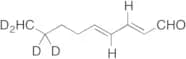
trans,trans-2,4-Nonadienal-D4
CAS :Produit contrôléFormule :C9D4H10OCouleur et forme :NeatMasse moléculaire :142.232Midazolam Methyl Ester
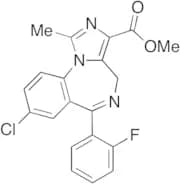
CAS :Produit contrôléApplications 8-Chloro-6-(2-fluorophenyl)-1-methyl-4H-imidazo[1,5-a][1,4]benzodiazepine-3-carboxylic Acid Methyl Ester is an imidazodiaepine derivative and an impurity of Midazolam (M343000), an anesthetic, anticonvulsant, sedative and hypotic agent.
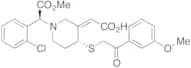
Formule :C20H15ClFN3O2Couleur et forme :NeatMasse moléculaire :383.8(S,R)-cis-Clopidogrel-MP Derivative
CAS :Produit contrôléFormule :C25H26ClNO6SCouleur et forme :NeatMasse moléculaire :504.02,2'-[Oxybis(2,1-ethanediylimino)]bis-ethanol-d8
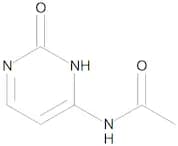
CAS :Produit contrôléFormule :C8D8H12N2O3Couleur et forme :NeatMasse moléculaire :200.305N4-Acetylcytosine
CAS :Produit contrôléApplications N4-ACETYLCYTOSINE (cas# 14631-20-0) is a useful research chemical.
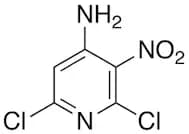
Formule :C6H7N3O2Couleur et forme :NeatMasse moléculaire :153.13874-Amino-2,6-dichloro-3-nitropyridine
CAS :Produit contrôléApplications 4-Amino-2,6-dichloro-3-nitropyridine (cas# 2897-43-0) is a compound useful in organic synthesis.
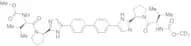
References Palmer, A., et al.: Bioorg. Med. Chem., 16, 1511 (2008),Formule :C5H3Cl2N3O2Couleur et forme :NeatMasse moléculaire :208.00Daclatasvir RRRR Isomer-d3
CAS :Produit contrôléFormule :C40D3H47N8O6Couleur et forme :NeatMasse moléculaire :741.8944-Chlorobiphenyl-2',3',4',5',6'-d5
CAS :Produit contrôléApplications 4-Chlorobiphenyl-2',3',4',5',6'-d5 (CAS# 51624-37-4) is a useful isotopically labeled research compound.
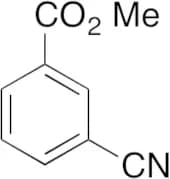
Formule :C12H4D5ClCouleur et forme :NeatMasse moléculaire :193.683-Cyanobenzoic Acid Methyl Ester
CAS :Produit contrôléApplications 3-Cyanobenzoic Acid Methyl Ester, is an intermediate for the synthesis of 3-Carbamoylbenzoic Acid Derivatives as Inhibitors of Human Apurinic/Apyrimidinic Endonuclease 1 (APE1). It can also be used for the preparation of 3-[5-(2-Fluorophenyl)-1,2,4-oxadiazol-3-yl]benzoic Acid Sodium Salt (F596070).
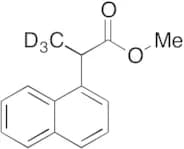
References Aiello, F., et al.: ChemMedChem, 7, 1825 (2012);Formule :C9H7NO2Couleur et forme :NeatMasse moléculaire :161.16a-Methyl-1-naphthaleneacetic Acid-d3 Methyl Ester
CAS :Produit contrôléApplications α-Methyl-1-naphthaleneacetic Acid Methyl Ester is an isotope labelled intermediate in the synthesis of 5-Methylchrysene (M265135), methylated derivative of chrysenes (MeChry), an aryl hydrocarbon receptor (AhR) agonist.
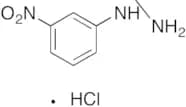
References Abd, E.A., et al.: Poly. Arom. Comp., 33, 331 (2013); Galatsis, P., et al.: Bioorg. Med. Chem. Lett., 20, 5089 (2010);Formule :C14H11D3O2Couleur et forme :NeatMasse moléculaire :217.283-Nitrophenylhydrazine Hydrochloride
CAS :Applications 3-Nitrophenylhydrazine Hydrochloride acts as a reagent in the preparation of isosteviol-fused pyrazolines and pyrazoles as potential anticancer agents, preparation of pyrazolobenzothiazines as inhibitors of hepatitis C virus replication.
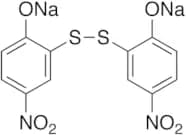
References Zhu, S., et al.: Eur. J. Med. Chem., 65, 70 (2013); Barreca, M. L., et al.: J. Med. Chem., 56, 2270 (2013);Formule :C6H7N3O2·HClCouleur et forme :Yellow to Dark Yellow SolidMasse moléculaire :189.6Bis(2-hydroxy-5-nitrophenol)disulfide Disodium Salt
CAS :Produit contrôléApplications Used in the synthesis of phenacetin metabolites.
References Focella, A. et al.: Can. J. Chem. 50, 2025 (1972)Formule :C12H6N2Na2O6S2Couleur et forme :BeigeMasse moléculaire :384.2951-Naphthalenemethanol
CAS :Produit contrôléApplications 1-Naphthalenemethanol (cas# 4780-79-4) is a useful research chemical.
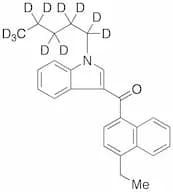
Formule :C11H10OCouleur et forme :Off-WhiteMasse moléculaire :158.191-(Pentyl-d11)-3-(4-ethyl-naphthoyl)indole JWH 210-d11 (1.0mg/ml in Acetonitrile)
CAS :Produit contrôléFormule :C26H16D11NOCouleur et forme :Single SolutionMasse moléculaire :380.571,2-Dihydrobudesonide
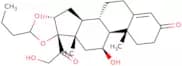
CAS :1,2-Dihydrobudesonide is a synthetic glucocorticosteroid that has a molecular structure similar to prednisolone. It is used for the treatment of inflammatory skin conditions such as eczema and psoriasis. 1,2-Dihydrobudesonide has been shown to have a high oral bioavailability and low systemic bioavailability. The molecule is metabolized in the liver to produce hydrocortisone, which accounts for its oral bioavailability. 1,2-Dihydrobudesonide is classified as an acetal because it contains an acetal linkage between the 16-carbon (C16) steroid nucleus and the 17-carbon (C17) side chain. This connection results in a more stable molecule than desonide, which is not acetalated. In vitro data indicates that 1,2-dihydrobudesonide has a lower binding affinity with human liver cytosolic receptors than desFormule :C25H36O6Degré de pureté :Min. 95%Masse moléculaire :432.55 g/molS-Ethylisothio urea, hydrobromide
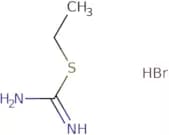
CAS :S-Ethylisothio urea, hydrobromide is a nitric oxide (NO) synthase inhibitor that prevents the conversion of arginine to NO. It has been shown to inhibit protein synthesis in cells, which may be due to its ability to inhibit guanylate cyclase and intracellular calcium concentrations. S-Ethylisothio urea, hydrobromide has been used in experimental models as an anti-inflammatory drug for the treatment of autoimmune diseases like rheumatoid arthritis. This compound also blocks the production of NO by inhibiting the oxygen transport system in the lungs, which is required for redox potential. S-Ethylisothio urea, hydrobromide is a cyclase inhibitor that prevents the conversion of dehydroascorbic acid to ascorbic acid. It can be used as an antioxidant by scavenging reactive oxygen species and preventing oxidative damage.Formule :C3H9BrN2SDegré de pureté :Min. 95%Masse moléculaire :185.09 g/mol9-cisRetinol
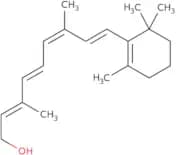
CAS :9-cisRetinol is a form of vitamin A that plays an important role in the synthesis of lipids and proteins. It has been shown to inhibit acid formation in the liver and to stimulate growth in some types of cancer cells. 9-cisRetinol is converted to all-trans retinoic acid, which is a nuclear hormone receptor that regulates gene expression. It also has been shown to be effective in clinical studies for the treatment of congenital amaurosis and cancer. 9-cisRetinol can inhibit phospholipase A2, which prevents the release of arachidonic acid from membrane phospholipids, as well as inhibit prostaglandin synthesis. The optimum pH for 9-cisRetinol activity is between 7 and 8.Formule :C20H30ODegré de pureté :Min. 95%Masse moléculaire :286.45 g/molIsoamyl cinnamate
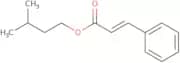
CAS :Isoamyl cinnamate is a synthetic compound that is used as an intermediate for the production of detergents. It has been shown to inhibit the growth of yeast and fungi, such as Cryptococcus neoformans and Candida glabrata. Isoamyl cinnamate also has anti-microbial properties that may be related to its ability to produce propionate, which can kill bacteria in urine samples. This compound is not known to bioaccumulate or cause toxicity in humans at normal doses.Formule :C14H18O2Degré de pureté :Min. 95%Couleur et forme :Clear LiquidMasse moléculaire :218.29 g/mol1,8-Dinitropyrene
CAS :1,8-Dinitropyrene is a genotoxic and mutagenic potential agent. It has been shown to induce nitric oxide synthase activity in rat liver microsomes, which may be due to its ability to activate the redox potential of the cells. 1,8-Dinitropyrene also induces enzyme activities such as p450 and nitroreductase in rat liver microsomes. This chemical has an analytical detection limit of 0.05 ppm and can be used as a marker for environmental exposure. 1,8-Dinitropyrene is genotoxic and carcinogenic in rats but not mice. It has been shown to induce mutations at the thymidine position of calf-thymus DNA and is potent inducer of genetic mutation in vitro.Formule :C16H8N2O4Degré de pureté :Min. 95%Couleur et forme :PowderMasse moléculaire :292.25 g/mol24(S)-Hydroxycholesterol
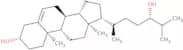
CAS :Produit contrôlé24(S)-Hydroxycholesterol is a cholesterol metabolite that is synthesized by the liver and can be found in human serum. It has been shown to be an important inducer of transcriptional regulation, as it regulates the expression of genes involved in lipid metabolism and inflammatory response. 24(S)-Hydoxycholesterol is also an activator of the peroxisome proliferator-activated receptor (PPAR) and may cause hepatic steatosis. This molecule has potent activity in inducing polymerase chain reaction (PCR) and protein synthesis in neuronal cells, leading to neuronal death. The molecule also induces apoptosis by caspase-independent cell death, which is mediated by mitochondrial membrane potential. 24(S)-Hydoxycholesterol may serve as a biomarker for nonsteroidal anti-inflammatory drugs (NSAIDs), with low potency against these drugs.br>
Formule :C27H46O2Degré de pureté :Min. 95%Couleur et forme :PowderMasse moléculaire :402.65 g/mol

![2,2'-[Oxybis(2,1-ethanediylimino)]bis-ethanol-d8](/_next/image/?url=https%3A%2Fstatic.cymitquimica.com%2Fproducts%2FTR%2Fthumb-webp%2FO870522.webp&w=3840&q=75)