Étalons pharmaceutiques
Sous-catégories appartenant à la catégorie "Étalons pharmaceutiques"
- APIs pour la recherche et les impuretés(277.446 produits)
- Activateurs et inhibiteurs d'enzymes(2.829 produits)
- Nitrosamines(2.668 produits)
- Composés et métabolites pharmaceutiques et vétérinaires(2.891 produits)
- Toxicologie(13.339 produits)
8162 produits trouvés pour "Étalons pharmaceutiques"
3-O-Methyl norbuprenorphine
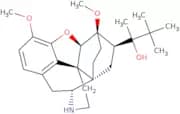
CAS :Produit contrôléPlease enquire for more information about 3-O-Methyl norbuprenorphine including the price, delivery time and more detailed product information at the technical inquiry form on this pageFormule :C26H37NO4Degré de pureté :Min. 95%Masse moléculaire :427.58 g/mol2-Methylnaphthalene
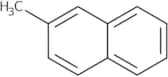
CAS :2-Methylnaphthalene is a carcinogenic compound that is used as a solid catalyst. It has been shown to increase the activity of hydrochloric acid, an inorganic acid, and acylation reactions. 2-Methylnaphthalene also has been found to be a good catalyst for cyclohexane ring formation and activation energies. The reaction mechanism of 2-methylnaphthalene is not completely understood but it is thought that the carbonyl group on the benzene ring may be involved. 2-Methylnaphthalene can react with piperonyl butoxide, which is an organic compound, and naphthalene to form 1-methylnaphthalene.Formule :C11H10Degré de pureté :Min. 95%Couleur et forme :PowderMasse moléculaire :142.2 g/molAcetyl-L-methionine sulfoxide
CAS :Please enquire for more information about Acetyl-L-methionine sulfoxide including the price, delivery time and more detailed product information at the technical inquiry form on this page
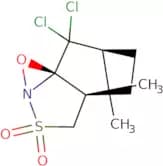
Formule :C7H13NO4SDegré de pureté :Min. 95%Couleur et forme :PowderMasse moléculaire :207.25 g/mol(+)-(8,8-Dichlorocamphorylsulfonyl)oxaziridine
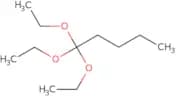
CAS :Please enquire for more information about (+)-(8,8-Dichlorocamphorylsulfonyl)oxaziridine including the price, delivery time and more detailed product information at the technical inquiry form on this pageFormule :C10H13Cl2NO3SDegré de pureté :Min. 95%Masse moléculaire :298.19 g/molTriethyl Orthovalerate
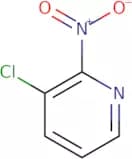
CAS :Triethyl orthovalerate is an amide with a cyclic structure. It is used as a model protein for the study of the effects of structural modifications on protein stability and function. Triethyl orthovalerate has been shown to be an inhibitor of prostaglandin synthesis in human cells, which may be due to its ability to inhibit the enzyme amidase.Formule :C11H24O3Degré de pureté :Min. 95%Masse moléculaire :204.31 g/mol3-Chloro-2-nitropyridine
CAS :3-Chloro-2-nitropyridine is a chemical compound that has been shown to have anticancer activity. It is a structural analog of the nucleophilic piperazine, which can react with hydrogen fluoride in an electrophilic substitution reaction to form 3-chloro-2-nitropyridine oxide. The anticancer activity of this compound may be due to its ability to inhibit the growth of tumor cells by binding to the d4 receptor, inhibiting the production of inflammatory cytokines and growth factors. 3-Chloro-2-nitropyridine has also been shown to have antiinflammatory activities, which may be due to its inhibition of nitric oxide synthesis and 5'-lipoxygenase.Formule :C5H3N2O2ClDegré de pureté :Min. 95%Couleur et forme :PowderMasse moléculaire :158.54 g/mol(aR)-a-[[[2-(4-Nitrophenyl)ethyl]amino]methyl]benzenemethanol
CAS :(aR)-a-[[[2-(4-Nitrophenyl)ethyl]amino]methyl]benzenemethanol is a chiral, carbonyl compound that has been used in the synthesis of mirabegron. It is synthesized by reacting an amide with a hydrochloric acid salt. The product yield of (aR)-a-[[[2-(4-Nitrophenyl)ethyl]amino]methyl]benzenemethanol is high and it does not react with aluminium or amide impurities. This compound can be used for the industrial synthesis of mirabegron, which is a drug for the treatment of urinary incontinence. The reduction reaction and hydrolysis reactions are both important to this process.
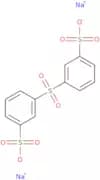
Degré de pureté :Min. 95%Diphenylsulfone-3,3'-disulfonic Acid Disodium Salt
CAS :Please enquire for more information about Diphenylsulfone-3,3'-disulfonic Acid Disodium Salt including the price, delivery time and more detailed product information at the technical inquiry form on this pageDegré de pureté :Min. 95%2,4,6-Trichloro-5-nitropyrimidine
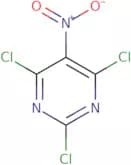
CAS :2,4,6-Trichloro-5-nitropyrimidine is a purine derivative that inhibits the cell proliferation of cancer cells. It has been shown to inhibit the activity of kinases and to induce apoptosis in human cancer cells in vitro. This drug also has antiproliferative potential against erythrocytes and is being investigated as a treatment for renal disease. 2,4,6-Trichloro-5-nitropyrimidine shows inhibitory effects on the phosphorylation of roscovitine by ATP and may be used to treat patients with glomerulonephritis. 2,4,6-Trichloro-5-nitropyrimidine can be synthesized from 2,4,6-trichloropyrimidinethiol and nitric acid according to the following equation: CClNO + HNO → CClNOH + NO 2 Cl + 3 HNO
Formule :C4Cl3N3O2Degré de pureté :Min. 97 Area-%Masse moléculaire :228.42 g/molVedaprofen
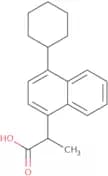
CAS :Vedaprofen is a nonsteroidal anti-inflammatory drug that belongs to the class of drugs known as NSAIDs. It inhibits the activity of the enzyme cyclooxygenase (COX), which causes inflammation and pain. Vedaprofen has been shown to be effective in treating bowel disease, inflammatory bowel disease, and autoimmune diseases, such as arthritis. Vedaprofen also has antimicrobial properties, inhibiting bacterial growth by binding to the COX enzyme in the cell membrane. The α subunit is one of the effector proteins for COX-1 and COX-2, and vedaprofen binds to this protein preventing its activation. This inhibitory effect on COX-1 and COX-2 leads to a reduction in production of prostaglandins (PGs) that are responsible for inflammatory responses. Vedaprofen may be administered orally or intravenously depending on the severity of symptoms. The oral route is preferred because it does not require
Formule :C19H22O2Degré de pureté :Min. 95%Masse moléculaire :282.38 g/mol4-Nitrophenyl hexanoate
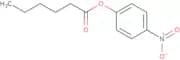
CAS :4-Nitrophenyl hexanoate is an acyl phosphate monoclonal antibody (aMAb) that binds to the enzyme hydroxylase, which converts 4-nitrophenol to p-nitrophenol. This aMAb has been shown to inhibit the activity of this enzyme and its conversion of 4-nitrophenol to p-nitrophenol, leading to its use in biochemical studies as a model for monooxygenase enzymes. The reaction mechanism for this aMAb is believed to be that it reacts with the acyl chain of hydroxylase and hinders the active site from binding 4-nitrophenol. 4-Nitrophenyl hexanoate also has a cationic surfactant that can bind or react with proteins or nucleic acids by electrostatic interactions or hydrogen bonding. It is also able to form polymers with other monoclonal antibodies and has been used in protein purification processesFormule :C12H15NO4Degré de pureté :Min. 98 Area-%Couleur et forme :Colorless Clear LiquidMasse moléculaire :237.25 g/mol(Asp371)-Tyrosinase (369-377) (human) acetate salt
CAS :Tyrosinase protein:
Peptide Tyrosinase (Asp371) – HLA-A*0201 (YMDGTMSQV) is a human tyrosinase-derived (369-377) peptide by posttranslational conversion of the sequence YMNGTMSQV. Tyrosinase is an oxidase membrane-bound protein. Tyrosinase play a key role in the melanin synthesis pathway. Tyrosinase is presented on the surface of HLA-A*02:01 melanomas and also expressed in melanocytes. Tyrosinase has been still suggested to be a tumor antigen and might be implicated in improvement of immunotherapeutic strategies such as for efficient anticancer vaccine development.
Applications of Peptide Tyrosinase (Asp371) – HLA-A*0201 (YMDGTMSQV):
Peptide Tyrosinase (Asp371) – HLA-A*0201 (YMDGTMSQV) is used to stimulate specific cytotoxic T lymphocytes (CTL) in PBMCs and then to analyze CTL response especially the cytokine production by ELISPOT assay. Peptide Tyrosinase (Asp371) – HLA-A*0201 (YMDGTMSQV) is also involved in experimental therapies of metastatic melanoma by allogeneic hematopoietic stem cell transplantation. In fact, cytotoxic T cells were generated from peripherical blood mononuclear cells (PBMCs) of HLA-A*02:01 healthy donors after being stimulated by injection of Asp371 antigen (2). This strategy raises issues which concern the graft versus tumor (GvT) effect and graft versus host disease (GvHD).Formule :C42H66N10O16S2Degré de pureté :Min. 95%Masse moléculaire :1,031.16 g/molOxazepam Related Compound A
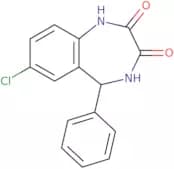
CAS :Produit contrôléPlease enquire for more information about Oxazepam Related Compound A including the price, delivery time and more detailed product information at the technical inquiry form on this pageFormule :C15H11ClN2O2Degré de pureté :Min. 95%Masse moléculaire :286.71 g/molCefdinir related compound B
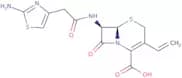
CAS :Please enquire for more information about Cefdinir related compound B including the price, delivery time and more detailed product information at the technical inquiry form on this pageFormule :C14H14N4O4S2Degré de pureté :Min. 95%Masse moléculaire :366.42 g/mol9-Chloro-11beta,17,21-trihydroxy-16beta-methylpregna-1,4-diene-3,20-dione 17-valerate
CAS :Produit contrôléPrednisolone is a synthetic corticosteroid that is used in the treatment of a number of lung diseases, including asthma. Prednisolone is used to decrease the inflammation and swelling around the airways and lungs. Prednisolone is used to treat certain skin conditions, such as eczema and dermatitis. This drug also decreases the activity of the immune system by inhibiting production of substances that cause inflammation. The onset of action for prednisolone is typically one day with a duration of up to two weeks. It has been shown to be more effective when taken orally than when applied topically. It may be taken with or without food and can be given as an oral or an intravenous dose. Prednisolone tablets must be dissolved in water before they are placed under the tongue (sublingual). The tablets will dissolve quickly under the tongue, releasing prednisolone into your bloodstream. Enteric-coated tablets should not be crushed or chewed
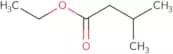
Formule :C27H37ClO6Degré de pureté :Min. 95%Masse moléculaire :493.03 g/molEthyl isovalerate
CAS :Ethyl isovalerate is a chemical with the formula CH3CH2CH2C(O)CH=CH2. It is an ester of acetic acid and valeric acid. It has a boiling point of 114°C and a density of 0.8994 g/mL at 20°C. Ethyl isovalerate has been shown to be thermally unstable, with significant expansion occurring when heated to 100°C. This chemical has been shown to have antibacterial properties against bacterial strains that are resistant to carvacrol, thymol, and cinnamaldehyde. Ethyl isovalerate also produces propionic acid when mixed with benzoic acid in liquid phase microextraction (LPME). The production of propionic acid may be due to the reaction between ethyl isovalerate and hydrogen fluoride on the surface of activated carbon particles in LPME. Ethyl decanoate can also be produced from this reaction by adding ethyl decFormule :C7H14O2Degré de pureté :Min. 95%Couleur et forme :Clear LiquidMasse moléculaire :130.18 g/mol2'-[(1H-Tetrazol-5-yl)biphenyl-4-yl]methanol
CAS :Please enquire for more information about 2'-[(1H-Tetrazol-5-yl)biphenyl-4-yl]methanol including the price, delivery time and more detailed product information at the technical inquiry form on this pageFormule :C14H12N4ODegré de pureté :Min. 95%Masse moléculaire :252.27 g/molSalbutamol sulphate impurity B
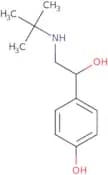
CAS :Salbutamol sulphate impurity B is a substance that is an impurity in salbutamol sulfate. It is a white crystalline powder and is soluble in organic solvents. Salbutamol sulfate impurity B can be detected by liquid chromatography, which separates the substances based on their solubility in different phases. The substances are detected at a specific wavelength, and it is possible to identify peaks of the substances on the chromatogram synchronously. Salbutamol sulfate impurity B can be found as a part of other medicines or substances by using this detection method.
Formule :C12H19NO2Degré de pureté :Min. 95%Masse moléculaire :209.28 g/mol3-O-Acetyl-26-hydroxy cholesterol
CAS :Produit contrôléPlease enquire for more information about 3-O-Acetyl-26-hydroxy cholesterol including the price, delivery time and more detailed product information at the technical inquiry form on this pageFormule :C29H48O3Degré de pureté :Min. 95%Masse moléculaire :444.69 g/molall-trans 5,6-Epoxy retinoic acid
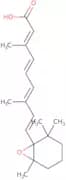
CAS :5,6-Epoxy retinoic acid is a synthetic retinoid that has been shown to have biological properties in tissue culture and rat liver microsomes. It is an agonist of the retinoic acid receptor (RAR) and binds to DNA at the same site as all-trans retinoic acid. 5,6-Epoxyretinoic acid also has effects on gene expression in human serum and inhibits the proliferation of cancer cells by inducing apoptosis. The synthetic retinoid can be used as a novel chemotherapeutic agent for breast cancer or leukemia.Formule :C20H28O3Degré de pureté :Min. 95 Area-%Couleur et forme :Yellow PowderMasse moléculaire :316.43 g/mol


![(aR)-a-[[[2-(4-Nitrophenyl)ethyl]amino]methyl]benzenemethanol](/_next/image/?url=https%3A%2Fstatic.cymitquimica.com%2Fproducts%2F3D%2Fthumb-webp%2FFN75044.webp&w=3840&q=75)

![2'-[(1H-Tetrazol-5-yl)biphenyl-4-yl]methanol](/_next/image/?url=https%3A%2Fstatic.cymitquimica.com%2Fproducts%2F3D%2Fthumb-webp%2FFT28188.webp&w=3840&q=75)