Glycosciences
La glycosciences est l'étude des glucides et de leurs dérivés, ainsi que des interactions et des fonctions biologiques auxquelles ils participent. Ce domaine de recherche est crucial pour comprendre une grande variété de processus biologiques, y compris la reconnaissance cellulaire, la signalisation, la réponse immunitaire et le développement des maladies. La glycosciences a des applications importantes en biotechnologie, en médecine et dans le développement de nouveaux médicaments et thérapies. Chez CymitQuimica, nous proposons une large sélection de produits de haute qualité et pureté pour la recherche en glycosciences. Notre catalogue comprend des monosaccharides, des oligosaccharides, des polysaccharides, des glyconjugués et des réactifs spécifiques, conçus pour soutenir les chercheurs dans leurs études sur la structure, la fonction et les applications des glucides dans les systèmes biologiques. Ces ressources sont destinées à faciliter les découvertes scientifiques et les applications pratiques dans divers domaines des biosciences et de la médecine.
Sous-catégories appartenant à la catégorie "Glycosciences"
- Aminosucres(108 produits)
- Anticorps Glyco-Related(282 produits)
- Glycolipides(46 produits)
- Glycosaminoglycanes (GAGs)(55 produits)
- Glycosides(419 produits)
- Monosaccharides(6.622 produits)
- Oligosaccharides(3.682 produits)
- Polysaccharides(503 produits)
11041 produits trouvés pour "Glycosciences"
Trier par
Degré de pureté (%)
0
100
|
0
|
50
|
90
|
95
|
100
1,2:4,5-Di-O-isopropylidene-D-glycero-D-manno-heptitol
<p>1,2:4,5-Di-O-isopropylidene-D-glycero-D-manno-heptitol is a synthetic monosaccharide that can be used as a methylation substrate. The compound can be custom synthesized and has been shown to have good purity. It is found in polysaccharides and saccharides and can be modified with fluorination. This product is a complex carbohydrate with high purity and can serve as an intermediate for the synthesis of oligosaccharides and polysaccharides.</p>Degré de pureté :Min. 95%Tert.Butyl 2-deoxy-4,5-O-isopropylidene-D-gluconate(mannonate)
<p>Tert.Butyl 2-deoxy-4,5-O-isopropylidene-D-gluconate(mannonate) is an oligosaccharide that is synthesized from D-mannose and D-glucuronic acid. It has a high purity and is custom synthesized to meet customer requirements. Tert.Butyl 2-deoxy-4,5-O-isopropylidene-D-gluconate(mannonate) has been modified with fluorine, methylation and click chemistry for various purposes.</p>Degré de pureté :Min. 95%Isorhamnetin 3-glucoside-7-rhamnoside
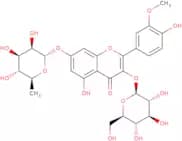
CAS :<p>Isorhamnetin 3-glucoside-7-rhamnoside is a type of flavonoid that is found in plants and has the chemical formula C14H12O5. It is a glycoside that is converted to its aglycone, rhamnetin, in the body. Isorhamnetin 3-glucoside-7-rhamnoside has shown potential as an antiinflammatory agent by inhibiting the ubiquitin proteasome pathway and Cox2 inhibitory activity. It also inhibits protease activity and can be used to treat inflammatory diseases such as arthritis. Isorhamnetin 3-glucoside-7-rhamnoside is synergistic with other molecules, so it can be used to prevent or treat inflammation when combined with other drugs.</p>Formule :C28H32O16Degré de pureté :Min. 95%Couleur et forme :White PowderMasse moléculaire :624.54 g/molMonofucosyl (1-2)-iso-lacto-N-octaose II
<p>Monofucosyl (1-2)-iso-lacto-N-octaose II is an oligosaccharide that is found in human milk</p>Degré de pureté :Min. 95%Laminaritriose hendecaacetate
<p>Fully acetylated laminaritriose</p>Formule :C40H54O27Degré de pureté :Min. 95%Masse moléculaire :966.84 g/mol5-Azido-5-deoxy-2,3-O-isopropylidene-L-lyxono-1.4-lactone
<p>5-Azido-5-deoxy-2,3-O-isopropylidene-L-lyxono-1.4-lactone is a carbohydrate that is a modification of the saccharide, oligosaccharide, sugar, and fluorinated complex carbohydrate group. It is synthesized from 5-(azidomethyl)-5'-deoxyfuranose by methylation and glycosylation followed by click modification. 5-(Azidomethyl)-5'-deoxyfuranose can be synthesized from L-(+)-glyceraldehyde and methyl azide in the presence of sodium hydride via a sequence of reactions involving hydrolysis, reduction, and hydrogenation.</p>Degré de pureté :Min. 95%GQ1b-Ganglioside sodium
CAS :<p>GQ1b ganglioside (sodium salt) has a core tetrasaccharide structure (Galβ1,3GalNAcβ1,4Galβ1,4Glc) with two sialic acids (NeuAc) linked α2,3/α2,8 to the inner galactose residue, two sialic acids (NeuAc) linked α2,3/α2,8 to the terminal galactose residue and ceramide linked β to position 1 on the reducing terminal glucose residue (Ledeen, 2009). Anti-GQ1b ganglioside antibody is associated with Miller Fisher syndrome and is also found in patients with related conditions that may share the same pathogenic mechanism, such as, Bickerstaff brainstem encephalitis. Thus, the measurement of the anti-GQ1b antibody in suspected cases of Miller Fisher syndrome is a useful diagnostic marker (Paparounas, 2004). It has been found that GQ1b ganglioside contributes to synaptic transmission and synapse formation. Low concentrations of GQ1b ganglioside, evoked dopamine (DA) release from laboratory tissues (Chen, 2018).</p>Formule :C106H182N6O56·4NaDegré de pureté :Min. 95%Couleur et forme :White PowderMasse moléculaire :2,528.55 g/mol4-Methoxyphenyl 4-O-{4-O-[[3-O-[2,4-di-O-(3,4,6-tri-O-acetyl-2-deoxy-2-phthalimido-β-D-glucopyranosyl)-3,6-di-O-benzyl-α-D-mannopyra nosyl]-4,6-O-benzylidene-2-O-levulinoyl-β-D-glucopyranosyl]]-3,6-di-O-benzyl-2-deoxy-2-phthalimido-β-D-glucopyranosyl}
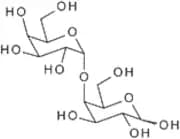
<p>4-Methoxyphenyl 4-O-{4-O-[3,6-di-O-(3,4,6-tri-O-acetyl-2-deoxy-2-phthalimido-bDglucopyranosyl)-2,4,6-trihydroxybenzylidene]-aDmannopyra nosyl} -3,6diO(benzyl) -2deoxy2phthalimido -bDglucopyranoside is a high purity synthetic oligosaccharide. It is a complex carbohydrate with a high degree of polymerization. This product has been synthesized by Click modification and fluorination. The product contains an acetate group at the reducing end of the sugar chain and may be glycosylated. The CAS number for this product is</p>Formule :C161H160N4O48Degré de pureté :Min. 95%Masse moléculaire :2,918.99 g/mol4-O-(a-D-Galactopyranosyl)-D-galactopyranose
CAS :<p>Used as enzyme substrates, analytical standards and for in vitro diagnostics</p>Formule :C12H22O11Degré de pureté :Min. 97 Area-%Couleur et forme :White PowderMasse moléculaire :342.3 g/mol2-13C-a-D-Mannose-1-phosphate dipotassium salt
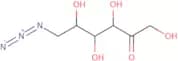
<p>2-13C-a-D-Mannose-1-phosphate dipotassium salt is a custom synthesis of a complex carbohydrate. It is a monosaccharide that can be used as a substrate for glycosylation, methylation, or click modification. This product is available in high purity and good quality.</p>Degré de pureté :Min. 95%6-Azido-6-deoxy-D-fructose
CAS :<p>6-Azido-6-deoxy-D-fructose is a piperidine that condenses with glyceraldehyde in the presence of aldolase and produces D-glyceraldehyde. This reaction is stereospecifically catalyzed by aldolase, which converts the product to D-glyceraldehyde 3-phosphate. 6Azido-6deoxy-D-fructose has been shown to exhibit polyhydroxylated properties.</p>Formule :C6H11N3O5Degré de pureté :Min. 95%Couleur et forme :Clear LiquidMasse moléculaire :205.17 g/molD-Fructose-1,6-diphosphate dicalcium salt
CAS :<p>D-Fructose-1,6-diphosphate dicalcium salt is an inorganic compound that is used as a pharmaceutical ingredient. It is the calcium salt of D-fructose-1,6-diphosphate. D-Fructose-1,6-diphosphate dicalcium salt can be isolated from a variety of sources, including by reprecipitation from ethanol and isolation from impurities in monophosphates. This product is obtained through ion exchange with alkali and calcium. The purity of this compound is confirmed by its free acidity (pH less than 1) and the absence of contaminating phosphate ions.</p>Formule :C6H10Ca2O12P2Couleur et forme :PowderMasse moléculaire :416.24 g/molN-[2-(3'-Nitrophenylacetonitrile)]-2,3,4,6-tetra-O-pivaloyl-D-glucopyranoside
<p>N-[2-(3'-Nitrophenylacetonitrile)]-2,3,4,6-tetra-O-pivaloyl-D-glucopyranoside is a high purity custom synthesis sugar. It is synthesized through Click modification and fluorination. This chemical has been used as a building block for glycosylation and methylation. The CAS number is 95825-78-8.</p>Formule :C34H49N3O11Degré de pureté :Min. 95%Masse moléculaire :675.77 g/mol7-Deoxy-1,2:4,5-di-O-isopropylidene-L-glycero-D-gluco-heptitol
<p>7-Deoxy-1,2:4,5-di-O-isopropylidene-L-glycero-D-glucoheptitol is a high purity synthetic compound that can be custom synthesized to order. It is a white powder with a molecular weight of 264.27 grams per mole and is soluble in water and DMSO. The CAS No. for this compound is 2206188-76-3. It has been fluorinated at the C2 position and has been modified with a click chemistry reaction to create an oligosaccharide or polysaccharide. This product is available for purchase from our store at www.sigmaaldrichchemicals.com/7deoxy1,2:4,5diOisopropylideneLglyceroDglucoheptitol</p>Degré de pureté :Min. 95%N- [(3S, 4R, 5S, 6R) - 4, 5- Dihydroxy- 6- (hydroxymethyl) - 3- piperidinyl] -acetamide
<p>N- [(3S, 4R, 5S, 6R) - 4, 5- Dihydroxy- 6- (hydroxymethyl) - 3- piperidinyl] -acetamide is a fluorinated monosaccharide that has been synthesized in the laboratory. The compound is a synthetic oligosaccharide with an acetamide group at position 2. N- [(3S, 4R, 5S, 6R) - 4, 5- Dihydroxy- 6- (hydroxymethyl) - 3- piperidinyl] -acetamide is also a glycosylated polysaccharide that has been modified by methylation and click chemistry.</p>Degré de pureté :Min. 95%2-Chloroethyl-b-D-fructopyranoside
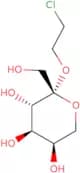
CAS :<p>2-Chloroethyl-b-D-fructopyranoside is a stable reagent that is used to prepare 2,4-dichloroacetophenone (2,4-DAAP), which can be used as a crosslinking agent. This reagent is reactive and should be handled with care. It forms a hemoglobin adduct by reacting with the amino groups of hemoglobin. The reaction can be catalyzed by dialdehydes. Affinities for tissue proteins are created through stepwise reactions involving ring-opening reactions or methemoglobin formation. 2-Chloroethyl-b-D-fructopyranoside can be used to synthesize a polymerized affinity column by using the ring opening reaction in an affinity chromatography process.</p>Formule :C8H15ClO6Degré de pureté :Min. 95%Couleur et forme :PowderMasse moléculaire :242.65 g/mol(1S) -1- [(2S, 3R) - 3- Hydroxy- 1- azetidinyl] -1, 2- ethanediol hydrochloride
CAS :<p>(1S) -1- [(2S, 3R) - 3- Hydroxy- 1- azetidinyl] -1, 2- ethanediol hydrochloride is a custom synthesis that has been modified with fluorination, methylation, and monosaccharide modification. It is a synthetic compound that has been developed for use in the synthesis of oligosaccharides and saccharides. This product also has CAS No. 1338054-24-2 and is listed as Polysaccharide, Glycosylation, sugar, Carbohydrate, complex carbohydrate.</p>Formule :C5H11NO3·HClDegré de pureté :Min. 95%Masse moléculaire :169.61 g/mol2-Azido-2-deoxy-3,5-O-isopropylidene-D-xylono-1,4-lactone
<p>2-Azido-2-deoxy-3,5-O-isopropylidene-D-xylono-1,4-lactone is a methylated saccharide that has been synthesized from D-xylonolactone. It has a CAS Number of 122758-81-6 and is available for custom synthesis. This molecule is a modified form of the natural product xyloglucan. It can be used as a glycosylation or fluorination reagent to create more complex carbohydrates.<br>2-Azido -2 deoxy -3,5 O -isopropylidene -D -xylono -1,4 lactone is prepared by the reaction of 2 moles of nitrous acid with 1 mole of D -xylonolactone in an organic solvent such as ethanol or acetone at room temperature. The product can then be purified by recrystallization from a mixture of</p>Degré de pureté :Min. 95%N- [[(2R, 3R, 4S) - 4- [(Acetyloxy) methyl] - 3- (phenylmethoxy) - 1- (phenylmethyl) - 2- azetidinyl] methyl] -acetamide
CAS :<p>N-[[(2R, 3R, 4S) - 4- [(Acetyloxy) methyl] - 3- (phenylmethoxy) - 1- (phenylmethyl) - 2- azetidinyl] methyl] -acetamide is a modified carbohydrate with the molecular formula C14H19NO5. This product is a white to off-white crystalline solid, which can be used in the synthesis of various carbohydrates and sugars. It has been shown that this compound has good solubility in water and DMSO. N-[[(2R, 3R, 4S) - 4- [(Acetyloxy) methyl] - 3- (phenylmethoxy) - 1- (phenylmethyl) - 2- azetidinyl] methyl] -acetamide is an acetamide derivative of N-[2-(acetoxymethyl)-1-[3-(4′′′′′′′′′′</p>Formule :C23H28N2O4Degré de pureté :Min. 95%Masse moléculaire :396.48 g/molSedoheptulose anhydride monohydrate
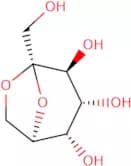
CAS :<p>Sedoheptulose anhydride is a derivative of sedoheptulose, a seven-carbon atoms carbohydrate.</p>Formule :C7H12O6·H2ODegré de pureté :Min. 90 Area-%Couleur et forme :White PowderMasse moléculaire :210.18 g/molMethyl a-D-mannopyranoside
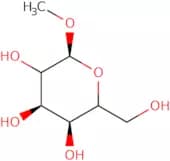
CAS :<p>Methyl alpha-D-mannopyranoside is a methylated sugar used as an inhibitor of lectin-conjugate binding. It is commonly used in protein purification for eluting glycoproteins and other glycoconjugates from affinity chromatography columns of agarose lectin. In addition, Methyl alpha-D-mannopyranoside can be used in the mannosylation of lipid nanoparticles (LNPs) for vaccine or drug delivery which targets Antigen Presenting Cells (APCs) through mannose receptors. Methyl alpha-D-mannopyranoside is also known as Methyl alpha-D-mannoside or alpha-Methyl-D-mannoside.</p>Formule :C7H14O6Degré de pureté :Min. 99 Area-%Couleur et forme :White PowderMasse moléculaire :194.18 g/mol1-O-Methyl-β-D-glucopyranoside
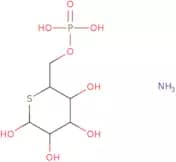
CAS :<p>1-O-Methyl-β-D-glucopyranoside is a β-glucosidase inducer.</p>Formule :C7H14O6Degré de pureté :Min. 98.0 Area-%Masse moléculaire :194.19 g/mol5-Thio-D-glucose-6-phosphate diammonium salt
CAS :<p>Glucose 6-phosphatase substrate</p>Formule :C6H11O8PS·N2H8Degré de pureté :Min. 95%Couleur et forme :PowderMasse moléculaire :310.26 g/molN-(Succinyl)-O-b-D-lactosylhydroxylamine
<p>N-(Succinyl)-O-b-D-lactosylhydroxylamine is a methylation product of b-D-lactosylhydroxylamine. It has a CAS number and can be modified with Click chemistry, which is a method of chemical modification using copper (II) ions. N-(Succinyl)-O-b-D-lactosylhydroxylamine can also be modified with other chemicals, such as an amine or carboxylic acid, to create an oligosaccharide. This product is synthesized in high purity and has a high glycosylation yield. It is used for research purposes and can be custom synthesized for any desired sugar.</p>Degré de pureté :Min. 95%3-C-Methyl-1-deoxy-psicose
<p>3-C-Methyl-1-deoxy-psicose is a sugar that is used in the synthesis of complex carbohydrates. This synthetic sugar is synthesized by the click modification of 3,4-dihydroxybenzaldehyde with 1,2,3,4-tetraacetylated benzyl chloride. The compound has a molecular weight of 228.22 and an empirical formula of C6H8O6F2. It's CAS number is 52714-32-0 and it's Oligosaccharide number is 976.</p>Degré de pureté :Min. 95%1-Deoxymannojirimycin HCl
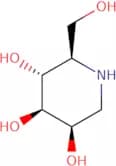
CAS :<p>Potent and specific inhibitor of α-mannosidase I. It is active against the Golgi isoform (GMI) of the enzyme and blocks carbohydrate branch elongation from immature to complex and hybrid N-glycans. Its anti-viral activity against HIV-1 is characterized by the alteration of N-glycan pattern and shift to high-mannose glycans on viral glycoprotein gp120, resulting in decreased infectivity of newly synthesized virions.</p>Formule :C6H13NO4·HClDegré de pureté :Min. 98 Area-%Couleur et forme :White Off-White PowderMasse moléculaire :199.63 g/mol2,4-Anhydro-3,5:6,7-di-O-isopropylidene-D-glycero-D-gulo-heptonic acid benzylamide
<p>2,4-Anhydro-3,5:6,7-di-O-isopropylidene-D-glycero-D-gulo-heptonic acid benzylamide is a glycosylation agent that is used in the synthesis of complex carbohydrate. It can be methylated and fluorinated to produce saccharides with desired properties. It also has a variety of chemical modifications for use as a synthetic sugar or oligosaccharide. 2,4-Anhydro-3,5:6,7-di-O-isopropylidene-D-glycero-D -gulo heptonic acid benzylamide is typically synthesized in high purity for use in pharmaceuticals or other applications requiring high purity.</p>Degré de pureté :Min. 95%3,4-Di-O-acetyl-D-arabinal
CAS :<p>3,4-Di-O-acetyl-D-arabinal is a spiroketal monofluoride that is known to be an efficient method for the synthesis of β-unsaturated aldehydes. It can be prepared by the hydration of enantiopure allyl chloroformate followed by reductive elimination with triflic acid and acidic hydrolysis. 3,4-Di-O-acetyl-D-arabinal has been used in the synthesis of biologically active molecules such as polyketides, peptides and natural products.</p>Formule :C9H12O5Degré de pureté :Min. 97 Area-%Couleur et forme :Colorless Clear LiquidMasse moléculaire :200.19 g/mol(2R, 4S) - 3- Fluoro- 2,4- azetidinedimethanol
<p>(2R, 4S) - 3- Fluoro- 2,4- azetidinedimethanol is a fluorinated monosaccharide. It is a synthetic compound that has been modified by methylation and Click chemistry. The fluorination of the sugar allows for high purity and modification of the carbohydrate. This compound is used in the synthesis of oligosaccharides and polysaccharides.</p>Degré de pureté :Min. 95%NGA3 N-Glycan
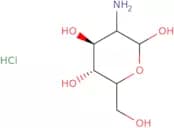
CAS :<p>NGA3 N-Glycan is a high purity, custom synthesis, sugar-containing glycoprotein. It is synthesized by Click modification of the glycopeptide backbone with a fluorinated amino acid and then glycosylated with an acetylated sugar. The acetylation of the sugar allows for selective labeling of the glycan. This product can be used in research applications such as Fluorination, Glycosylation, Synthetic, Methylation, Modification and Carbohydrate. It has CAS No. 110387-63-8 and is available in both Monosaccharide and Oligosaccharide form.</p>Formule :C58H97N5O41Degré de pureté :Min. 90 Area-%Couleur et forme :PowderMasse moléculaire :1,520.4 g/molD-Galactosamine hydrochloride
CAS :<p>D-Galactosamine (GalN) is an aldohexose (2-Amino-2-deoxygalactose) in which the hydroxyl group at position 2 is replaced by an amino group (Collins, 2006). Galactosamine (as the N-Acetyl derivative) forms a key part of both N- and O-linked glycoproteins, glycolipids and glycosaminoglycans. Treatment of experimental animals with D-galactosamine / lipopolysaccharide causes lethal liver injury characterized by apoptosis of the hepatocyte and it is used as a laboratory model to study the effect of therapeutic agents (Hirono, 2001).</p>Formule :C6H14ClNO5Masse moléculaire :215.63 g/mol3'-Sialyl Lewis X 16-sp - biotin
<p>3'-Sialyl Lewis X 16-sp - biotin is a modified oligosaccharide that is synthesized by the addition of a sialic acid residue to the terminal position of the carbohydrate. This product has a CAS number and can be custom synthesized to meet specific customer requirements. 3'-Sialyl Lewis X 16-sp - biotin is an important glycosylation site for many proteins, including CD45 and CD47, which are present in erythrocytes and leukocytes respectively. It is also used as an important substrate for methylation reactions due to its susceptibility to S-adenosyl methionine. 3'-Sialyl Lewis X 16-sp - biotin is soluble in water and has a high purity. The structure of this oligosaccharide includes a complex carbohydrate composed of mono-, di-, tri-, tetra-, penta-, hexa-, hepta-, octa-, nona-, deca-sac</p>Formule :C56H95N7O26SDegré de pureté :Min. 95%Couleur et forme :White PowderMasse moléculaire :1,314.45 g/mol2-Azidomethyl-2-deoxy-D-ribono-1.5-lactone
<p>2-Azidomethyl-2-deoxy-D-ribono-1.5-lactone is a custom synthesis of an oligosaccharide with a carbohydrate chain that has been modified by methylation and glycosylation. It is a high purity product that can be used in the synthesis of complex carbohydrates, such as polysaccharides, and has been fluorinated to create a click modification. This compound has an CAS number and can be used in the synthesis of saccharides or sugars. It can also be used for the preparation of complex carbohydrates, such as polysaccharides, and has been fluorinated to create a click modification.</p>Degré de pureté :Min. 95%1,2,3,4,6-Penta-O-benzoyl-D-glucopyranoside
CAS :<p>Penta-O-benzoyl-D-glucopyranoside is a carbohydrate that has been prepared in a preparative scale. It is an organic compound and the structural formula is C12H22O11. The diameter of this molecule is around 1.5 nm, which makes it mesoporous. Penta-O-benzoyl-D-glucopyranoside has been analysed by high performance liquid chromatography (HPLC) and mass spectrometry (MS). The tree ring processability of this product is good and can be processed thermally.</p>Formule :C41H32O11Degré de pureté :Min. 95%Masse moléculaire :700.69 g/mol1,6-Anhydro-β-D-cellotriose
CAS :<p>Produced by the fast pyrolysis of cellulose</p>Formule :C18H30O15Degré de pureté :Min. 95%Couleur et forme :PowderMasse moléculaire :486.42 g/molBis(p-methylbenzylidene)sorbitol
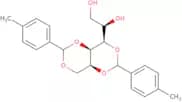
CAS :<p>Bis(p-methylbenzylidene)sorbitol is an organic solvent that has been used in a variety of applications, including polyolefin production, as an additive for plastics, and as a surface treatment for metals. Bis(p-methylbenzylidene)sorbitol also has been used to reduce the weight of paper and textiles. It is synthesized by the reaction of vinyl alcohol with dibenzylidene sorbitol in the presence of base. Bis(p-methylbenzylidene)sorbitol can be identified by its crystalline structure, which consists of three molecules of glucose linked together. Bis(p-methylbenzylidene)sorbitol is a colorless liquid that has no odor or taste and it has a low viscosity. This chemical is also soluble in organic solvents such as benzene or ethylene glycol ethers.</p>Formule :C22H26O6Degré de pureté :Min. 95%Couleur et forme :PowderMasse moléculaire :386.44 g/molAllyl 2,3,4-tri-O-benzyl b-D-galactopyranoside
<p>Allyl 2,3,4-tri-O-benzyl b-D-galactopyranoside is a custom synthesis of an oligosaccharide with a complex carbohydrate and a high purity. Allyl 2,3,4-tri-O-benzyl b-D-galactopyranoside can be used for a variety of applications including as an intermediate for the production of other chemicals or as a food additive. It is also used in the synthesis of other carbohydrates and saccharides. This compound has been shown to be effective in methylation reactions and glycosylation reactions.</p>Degré de pureté :Min. 95%1,4-Anhydro-D-glucitol
CAS :<p>Intermediate in the synthesis of prostaglandins</p>Formule :C6H12O5Degré de pureté :Min. 97 Area-%Couleur et forme :White Off-White PowderMasse moléculaire :164.16 g/molDextran sulfate potassium salt
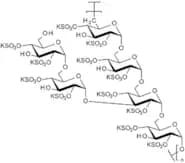
CAS :<p>Dextran sulphate is a dextran derivative whose ulcer (colitis) -causing properties were first reported in hamsters and extrapolated a few years later to mice and rats. The exact mechanisms through which dextran sulphate induces intestinal inflammation are unclear but may be the result of direct damage of the monolayer of epithelial cells in the colon, leading to the crossing of intestinal contents (for e.g. commensal bacteria and their products) into underlying tissue and therefore induction of inflammation. The dextran sulphate sodium-induced ulceration model in laboratory animals has some advantages when compared to other animal models of colitis due to its simplicity and similarities to human inflammatory bowel disease. <br>MW is in the range of 40,000Da</p>Degré de pureté :Min. 95%Couleur et forme :White PowderThiocellobiose
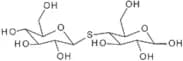
CAS :<p>Competitive inhibitor of β-glucosidase from Streptomyces sp. and Paenibacillus polymyxa, occupying enzyme’s aglycone-binding site. The compound is also a potent inducer of cellulase and other lignin-degrading enzymes in Schizophyllum commune.</p>Formule :C12H22O10SDegré de pureté :Min. 95%Couleur et forme :Off-White PowderMasse moléculaire :358.36 g/mol1,1,1,1,1-Kestoheptaose
CAS :<p>Kestoheptaose is a long-chain inulin with a molecular weight of 1,000 Da. It is found in the plant family Asteraceae and is the only natural polysaccharide with seven glucose units. Kestoheptaose has been shown to be involved in the regulation of muscle glycogen levels and can be used as a supplement for athletes or those who are active. The biochemical functions of Kestoheptaose have been validated using an oral ethanol extract, which was shown to increase muscle glycogen levels by up to 132%. This extract also decreased malondialdehyde concentrations by up to 41% and increased urea nitrogen levels by up to 89%.</p>Formule :C42H72O36Degré de pureté :Min. 75 Area-%Couleur et forme :White PowderMasse moléculaire :1,153 g/molTri-mannuronic acid sodium salt
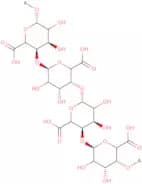
CAS :<p>Tri-mannuronic acid sodium salt (b-1,4-linked sodium mannuronotriose) is one of a number of oligosaccharides obtained from alginate which is a polysaccharide in brown seaweeds containing: blocks of repeating mannuronic acid sequences (M-M-M-M etc), repeating guluronic acid sequences (G-G-G-G etc), and alternating M-G-M-G sequences.Oligosaccharides can be released using several methods (Lua, 2015; Yanga, 2004) and claims have been published that mannuronic acid oligosaccharides for example, can be effective in the prophylaxis and treatment of Alzheimer's disease, or for the prophylaxis and treatment of diabetes (USP 8835403B2, 2014).</p>Formule :C18H23O19Na3Degré de pureté :Min. 98 Area-%Couleur et forme :White PowderMasse moléculaire :612.33 g/molBenzyl-2,3,3,6-tetra-O-acetyl-tio-D-glucopyranoside
<p>This compound is a custom synthesis, modification and fluorination of an acetylated glycoside. It is a methylated monosaccharide with a saccharide at the reducing end. This product can be used in the synthesis of oligosaccharides, glycosylation and sugar modifications. The CAS number for this compound is 58907-27-3.</p>Degré de pureté :Min. 95%7-(2-(2-((N-2-Deoxy-acetamido-β-D-glucopyranosyl)-(N-methyl)-aminooxy)ethoxy)ethoxy)-naphthalene-1,3-disulfonate
CAS :<p>7-(2-(2-((N-2-Deoxy-acetamido-beta-D-glucopyranosyl)-(N-methyl)-aminooxy)ethoxy)ethoxy)-naphthalene-1,3-disulfonate is a synthetic compound that can be custom synthesized. It has been specifically designed for the modification of complex carbohydrates by click chemistry. The binding site of 7-(2-(2-((N-2-Deoxy-acetamido-beta-D-glucopyranosyl)-(N-methyl)-aminooxy)ethoxy)ethoxy)-naphthalene 1,3 disulfonate is the anomeric carbon of the sugar moiety. This compound has a CAS number of 2365081–65–6 and can be used in many different applications including glycosylation, oligosaccharide synthesis, and methylation.</p>Formule :C23H32N2O14S2Degré de pureté :Min. 95%Couleur et forme :PowderMasse moléculaire :624.64 g/mol1,2,3,4-Tetra-O-acetyl-6-O-(2,3,4,6-tetra-O-acetyl-a-D-galactopyranosyl)-b-D-thioglucopyranose
CAS :<p>A tetra-O-acetyl-6-O-(2,3,4,6-tetra-O-acetyl-a-D-galactopyranosyl)-b-D-thioglucopyranose is a 1,2,3,4 tetraol. It is synthesized by the modification of a disaccharide that has been modified with fluorine and methyl groups on the C1 and C4 positions of the sugar. The complex carbohydrate is a glycosylated sugar that is composed of one monosaccharide and one oligosaccharide. This product is CAS No. 1820574-50-2.</p>Formule :C28H38O18SDegré de pureté :Min. 95%Masse moléculaire :694.66 g/molEthyl 2-deoxy-2-trichloroacetamido-b-D-thioglucopyranoside
<p>Ethyl 2-deoxy-2-trichloroacetamido-b-D-thioglucopyranoside is a modified sugar which is synthesized by reacting an ethyl glycoside with trichloroacetonitrile. This product is a white, crystalline powder that can be used in the synthesis of complex carbohydrates and saccharides, as well as other chemical modifications such as fluorination and methylation. It has been shown to have high purity and custom synthesis capabilities.</p>Degré de pureté :Min. 95%Methyl 2-acetamido-2-deoxy-3-O-(a-L-fucopyranosyl)-b-D-glucopyranoside
CAS :<p>Methyl 2-acetamido-2-deoxy-3-O-(a-L-fucopyranosyl)-b-D-glucopyranoside is a glycosylation product of the natural sugar, galactose. It is a synthetic compound that has been modified with methyl groups and fluorine to form an active pharmaceutical ingredient. Methyl 2-acetamido-2-deoxy-3-O-(a-L-fucopyranosyl)-b-D-glucopyranoside can be used as a monosaccharide or oligosaccharide in the synthesis of complex carbohydrates.</p>Formule :C15H27NO10Degré de pureté :Min. 95%Couleur et forme :PowderMasse moléculaire :381.38 g/molmyo-Inositol 1,2,4,5,6-pentakisphosphate
<p>Myo-inositol 1,2,4,5,6-pentakisphosphate (IP) is a phosphate of inositol that is found in the cytosol. It is an important component of polyphosphates and can be used for oxygen transport. It has been shown to inhibit the growth of cancer cells by binding to monoclonal antibodies that are targeted against CD20 and CD22 on cancer cells. IP also inhibits the activity of kinases and phosphatases in mammalian cells. This may be due to the inhibition of cytokine release from macrophages treated with IL-1β. Inositol phosphates are involved in many cellular responses including platelet-derived growth factor activation, cell proliferation, and protein synthesis.</p>Formule :C6H17O21P5Degré de pureté :Min. 95%Masse moléculaire :580.06 g/molDiethyl stilbestrol β-D-glucuronide
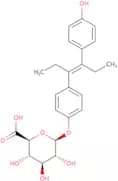
CAS :<p>Diethylstilbestrol (DES) is an endogenous substance that has been shown to be a potent estrogen. It is metabolized in the body to form stilbestrol glucuronide, which is excreted in the urine. Radiolabeling studies have shown that DES has a chemical structure similar to estradiol, although its pharmacologic effects are not as potent. Diethylstilbestrol glucuronide can be used for the diagnosis of cancer and other diseases by using nuclear medicine techniques such as positron emission tomography (PET) and single-photon emission computed tomography (SPECT). Studies have also demonstrated that DES can induce erythropoietic protoporphyria in animals.</p>Formule :C24H28O8Degré de pureté :Min. 95%Couleur et forme :White to off-white powder.Masse moléculaire :444.47 g/molGum karaya
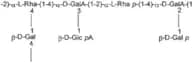
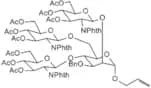
CAS :<p>Gum karaya is exuded from Sterculia urens, a bushy tree found in dry regions of North India. Due to its extensive swelling capacity in water it is used as a laxative and as a denture adhesive. The structure consists of D-galactose, D-glucuronic acid and L-rhamnose but the detailed molecular structure is still incompletely known.</p>Degré de pureté :Min. 95%Couleur et forme :PowderAllyl 2,4,6-tri-O-(3,4,6-tri-O-acetyl-2-deoxy-2-phthalimido-b-D-glucopyranosyl)-3-O-benzyl-a-D-mannopyranoside
<p>Allyl 2,4,6-tri-O-(3,4,6-tri-O-acetyl-2-deoxy-2-phthalimido-b-D-glucopyranosyl)-3-O-benzyl a -D -mannopyranoside is a glycosylated oligosaccharide. It is synthesized from 3,4,6 tri O acetyl 2 deoxy 2 phthalimido b D glucopyranosyl chloride and allyl alcohol by the click reaction with sodium azide in the presence of palladium catalysis. This product has been fluorinated at the 6 position of allose. The purity of this product is high and it has been modified on the saccharide chain with methyl groups at the C1 and C2 positions of glucose. Allyl 2,4,6 tri O (3 4 6 tri O acetyl 2 deoxy 2 phthalimido b D gluc</p>Formule :C76H79N3O33Degré de pureté :Min. 95%Masse moléculaire :1,562.44 g/mol1,6-Anhydro-2-azido-3-O-benzoyl-4-O-(2,3-di-O-benzyl-6-methyl-b-D-glucopyranuronosyl)-b-D-glucopyranose
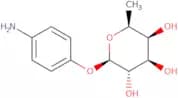
<p>1,6-Anhydro-2-azido-3-O-benzoyl-4-O-(2,3-di-O-benzyl-6-methyl-b-Dglucopyranosyl)-bDglucopyranose is a custom synthesis that is an oligosaccharide with a molecular weight of 672.1 Da. It is a complex carbohydrate that has been modified to include saccharides and sugars, with the addition of methylation and glycosylation. This molecule has been fluorinated for the purpose of synthesizing a synthetic molecule.</p>Degré de pureté :Min. 95%4-Aminophenyl b-L-fucopyranoside
CAS :<p>4-Aminophenyl b-L-fucopyranoside is a synthetic, fluorinated carbohydrate with the CAS number 69936-58-9. It can be used in the synthesis of glycosides and oligosaccharides. This product is available for custom synthesis and modification.</p>Formule :C12H17NO5Degré de pureté :Min. 97 Area-%Couleur et forme :White Beige PowderMasse moléculaire :255.27 g/molSalicylic acid D-glucuronide
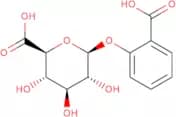
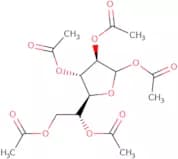
CAS :<p>Salicylic acid D-glucuronide is the major metabolite of aspirin, which is formed by hydrolysis of acetylsalicylic acid. It has been demonstrated to have anti-inflammatory and analgesic effects. Salicylic acid D-glucuronide is excreted in urine and can be detected in human serum. The formation rate of this metabolite varies with the individual's age, sex, and kidney function.<br>Salicylic acid D-glucuronide can be formed in vitro using hydrochloric acid and acetylsalicylic acid as substrates. This reaction is catalyzed by the enzyme uridine diphosphate glucuronyltransferase (UGT). Salicylic acid D-glucuronide has been shown to form covalent adducts with hydroxyl groups from other molecules in vivo and in vitro, including proteins (e.g., albumin) and DNA bases (e.g.,</p>Formule :C13H14O9Degré de pureté :Min. 95%Couleur et forme :PowderMasse moléculaire :314.24 g/mol1,2,3,5,6-Penta-O-acetyl-D-galactofuranose
CAS :<p>1,2,3,5,6-Penta-O-acetyl-D-galactofuranose is a condensation product of a 4-methylumbelliferone with the anomeric form of D-galactose. It is a white crystalline solid that can be obtained in yields up to 200 g per multigram of reactants. This compound has been shown to react with chloride ion and zinc chloride at elevated temperatures to yield the corresponding chloride or zinc salt. The crystal structure of this compound has been studied by x-ray diffraction and found to have an anomeric configuration and a space group P2(1)22(1). Carbohydrates are polyhydroxyaldehydes or polyhydroxyketones containing at least one hemiacetal or hemiketal group in their structure. The general formula for carbohydrates is (Cx(H2O)y)z where x is usually 2 or 3, y is</p>Formule :C16H22O11Degré de pureté :Min. 95%Couleur et forme :PowderMasse moléculaire :390.4 g/molMethyl 2,3-di-O-acetyl-4,6-O-benzylidene-a-D-galactopyranoside
CAS :<p>Methyl 2,3-di-O-acetyl-4,6-O-benzylidene-a-D-galactopyranoside is a custom synthesis of a complex carbohydrate that can be modified with a methyl group on the C2 position. This compound has been fluorinated and glycosylated in the laboratory. This product has high purity and is insoluble in water.</p>Formule :C18H22O8Degré de pureté :Min. 95%Masse moléculaire :366.37 g/molMethyl-β-D-thiogalactopyranoside
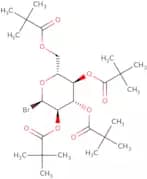
CAS :<p>Methyl-beta-D-thiogalactopyranoside is a monosaccharide that is a member of the galactose family. It can be found in some foods, such as dairy products or soybean milk. Methyl-beta-D-thiogalactopyranoside has been shown to promote lactose transport in cells. This compound is also used as a diagnostic marker for certain types of cancers and can be used to study sugar transport in cells. Methyl-beta-D-thiogalactopyranoside has been shown to inhibit the enzyme activity of phosphatases and may be used for research purposes as a control for other experiments.</p>Formule :C7H14O5SDegré de pureté :Min. 98.0 Area-%Masse moléculaire :210.25 g/mol2,3,4,6-Tetra-O-pivaloyl-a-D-glucopyranosyl bromide - stabilised with CaCO3
CAS :<p>Intermediate in the synthesis of dapagliflozin</p>Formule :C26H43BrO9Degré de pureté :Min. 95%Couleur et forme :White To Off-White SolidMasse moléculaire :579.52 g/molGentiobiose
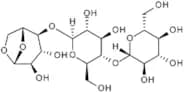
CAS :<p>Used to differentiate microorganisms based on their metabolic properties.</p>Formule :C12H22O11Degré de pureté :Min. 98.0 Area-%Masse moléculaire :342.30 g/molPullulan
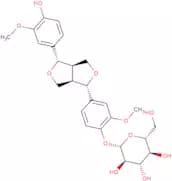
CAS :<p>Pullulan is a glucan elaborated by the fungus Aureobasidium pullulans. The chemical structure is essentially repeating units of maltotriose joined by α-1,6 linkages. Pullulan dissolves readily in water to form stable, viscous solutions that do not gel. The polysaccharide can be moulded, made into fibres and forms clear soluble films. Applications are in foods as a low calorie ingredient and the polysaccharide forms water soluble films that have been used as seed coatings and to coat fruit. Pullulan can also be used in industrial applications as a binder, film former and in pharmaceutical applications. Average MW is typically 100-200kDa. Viscosity is ca 120 mm2/s.<br>The image was kindly provided by Dr. Chris Lawson.</p>Couleur et forme :White Powder(+)-pinoresinol-b-D-glucoside
CAS :<p>(+)-Pinoresinol-b-D-glucoside is a fluorinated, monosaccharide that is synthetically produced by glycosylation. It can also be modified using methylation and click chemistry. The chemical formula for (+)-pinoresinol-b-D-glucoside is C10H14O8. It has a molecular weight of 288.24 g/mol and an empirical formula of (C10H14O8)2. The CAS number for this compound is 69251-963. This product is in the Carbohydrate family and has a purity level of >99%.</p>Formule :C26H32O11Degré de pureté :Min. 95%Couleur et forme :PowderMasse moléculaire :520.53 g/mol1,6-Anhydro-3-O-b-D-glucopyranosyl-b-D-glucopyranose
<p>1,6-Anhydro-3-O-b-D-glucopyranosyl-b-D-glucopyranose is a glycosylation agent that is used in the synthesis of complex carbohydrates. It has been modified by methylation, click modification, and fluorination to produce 1,6 anhydro-3-[2-(N′-[1-(4-chlorophenyl)ethylidene]amino)-2-(N′-[1-(4-chlorophenyl)ethylidene]amino)]ethylidene]-b -D glucopyranoside. This product is CAS No. 60932-82-7 and can be custom synthesized to produce high purity and low impurities.</p>Degré de pureté :Min. 95%Heptakis-(6-azido-6-deoxy)-b-cyclodextrin
CAS :<p>This beta-cyclodextrin (β-CD) derivative is an azido-functionalized cyclic oligosaccharide composed of seven glucose units, characterized by a hydrophilic exterior and a lipophilic cavity (bigger than α-CD and smaller than γ-CDs), which allows it to encapsulate various guest molecules. This structural feature facilitates its use in multiple applications, including pharmaceuticals, food enhancement, and cosmetics. In the pharmaceutical industry, it enhances the solubility and stability of poorly water-soluble drugs, improving their bioavailability and efficacy while also masking unpleasant tastes. The food sector utilizes it as a stabilizer for flavors, colors, and nutrients, extending shelf life by protecting sensitive ingredients from degradation. In cosmetics, it serves as a complexing agent for fragrances and active components, ensuring their stability and controlled release. Its use expands to many other fields, including nanotechnology for drug delivery systems, environmental remediation for extracting organic pollutants, textiles for slow-release fragrances, and analytical chemistry for chiral separation.</p>Formule :C42H63N21O28Degré de pureté :Min. 95%Couleur et forme :White PowderMasse moléculaire :1,310.07 g/molMethyl mandelate glucoside
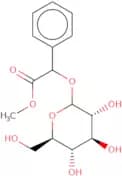
<p>Methyl mandelate glucoside is a glycosylation product that is custom synthesized for its fluorination and methylation. The molecule has a complex structure, consisting of monosaccharides and polysaccharides. Methyl mandelate glucoside is a high-purity compound with a CAS number. This chemical is also modified by click chemistry to create an oligosaccharide.</p>Formule :C15H20O8Degré de pureté :Min. 95%Masse moléculaire :328.31 g/mol5'-Hydroxypropranolol-b-D-glucuronoside
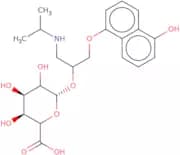
<p>5'-Hydroxypropranolol-b-D-glucuronoside is a synthetic glycosylate of 5'-hydroxypropranolol. It can be modified with fluorine, methyl or click chemistry. The chemical name is O-(2,3,4,5-tetrafluorobenzoyl)glycine and the CAS number is 878183-10-6. This compound has a molecular weight of 471.8 g/mol and an empirical formula of C14H9F5NO5. It can be used in the synthesis of oligosaccharides and polysaccharides.</p>Formule :C22H29NO9Degré de pureté :Min. 95%Masse moléculaire :451.47 g/mol2,5-Anhydro-D-mannofuranose
CAS :<p>2,5-Anhydro-D-mannofuranose is a biologically active compound that belongs to the group of inorganic acids. It has been shown to be an inhibitor of heparin-induced thrombocytopenia. 2,5-Anhydro-D-mannofuranose inhibits platelet aggregation and prolongs bleeding time in rats by blocking glycosidic bond formation. This compound is also found as a constituent of oligosaccharides and nitrous oxide. Structural analysis has revealed that this molecule contains reactive groups and is acidic in nature. The analytical method for this compound is α1-acid glycoprotein. Monoclonal antibodies against fatty acid have been used for its detection in human serum.</p>Formule :C6H10O5Degré de pureté :Min. 85 Area-%Couleur et forme :PowderMasse moléculaire :162.14 g/molL-Arabinaric acid dipotassium salt
CAS :<p>L-Arabinaric acid dipotassium salt is a custom synthesis of an L-arabinaric acid, which is a monosaccharide that is found in the cell wall of bacteria. This compound has been modified to be resistant to fluorination, methylation, and click chemistry. The modification process includes the use of Oligosaccharides, saccharides, and polysaccharides as well as glycosylation and sugar. L-Arabinaric acid dipotassium salt can also be used for the synthesis of complex carbohydrates.</p>Formule :C5H6K2O7Degré de pureté :Min. 98 Area-%Couleur et forme :PowderMasse moléculaire :256.29 g/molneo-Inositol
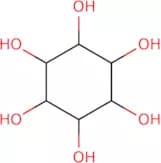
CAS :<p>Neo-inositol is a type of inositol that is not found naturally in the body, but can be synthesized. It has been shown to inhibit the growth of cancer cells and have a physiological effect on ovarian cells. Neo-inositol has also been shown to inhibit certain types of cancer cells by interfering with their ability to produce energy. Neo-inositol was also shown to increase levels of cytosolic Ca2+ in a model system, which may contribute to its cytotoxic effects.</p>Formule :C6H12O6Degré de pureté :Min. 95 Area-%Couleur et forme :White PowderMasse moléculaire :180.16 g/mol1, 4:3, 6- Dianhydro-D- iditol
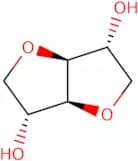
CAS :<p>1,4:3,6-Dianhydro-D-iditol is an organic compound. It is the L-enantiomer of 1,4:3,6-dianhydro-L-iditol. This compound can be used as a substrate for the cytochrome P450 system and soluble guanylate cyclase. 1,4:3,6-Dianhydro-D-iditol has been shown to have an inhibitory effect on both tissues and guanylate cyclase in vitro. This compound also inhibits the production of reactive oxygen species by oxidases.</p>Formule :C6H10O4Degré de pureté :Min. 95%Masse moléculaire :146.14 g/molIsomalto oligomers (Dp 4-8)
<p>Isomalto oligomers are a custom synthesis of polysaccharide oligosaccharides. These compounds are modified with methylation, glycosylation, and fluorination to create a high purity product that is free of undesirable contaminants. Isomalto oligomers (DP 4-8) are synthesized from sugars and can be used in the modification of saccharide chains during glycosylation reactions. This product also has the ability to produce click chemistry modifications.</p>Degré de pureté :ReportedCouleur et forme :Powder(1R) -1- [(2S, 3R,4S) -4-(Acetylamino)methyl-N-butyl-3- hydroxy- 1- azetidinyl] -1, 2- ethanediol
<p>(1R) -1- [(2S, 3R,4S) -4-(Acetylamino)methyl-N-butyl-3- hydroxy- 1- azetidinyl] -1, 2- ethanediol is a synthetic glycoside that has been modified with fluorine. It has a number of applications in the synthesis of saccharides and polysaccharides for use as pharmaceuticals or food additives.</p>Degré de pureté :Min. 95%Poly-D-galacturonic acid methyl ester
CAS :<p>Poly-D-galacturonic acid methyl ester (PDGME) is a natural compound that has been shown to possess anti-inflammatory and anti-diabetic properties. PDGME has been shown to increase the expression of pro-apoptotic proteins in mouse macrophages, as well as inhibit the activity of toll-like receptor 4, which may be due to its ability to induce caspase-independent cell death. PDGME also inhibits the growth of Clostridium difficile and other bacteria by inhibiting their enzyme activities. PDGME is water soluble and can be used as a reagent for biochemical studies.</p>Degré de pureté :Min. 98 Area-%Couleur et forme :White Off-White PowderD-Altrose
CAS :<p>D-Altrose is an alpha-hydroxy acid that is synthesized from D-arabinose and trifluoroacetic acid. It has been shown to be a substrate for the synthesis of oligosaccharides, which are important in carbohydrate chemistry. This molecule can also be used as a reagent in the preparation of carbohydrates with a specific configuration at C2. One use of this product is in generating analytical methods that can distinguish between D-altrose and D-arabinose by monitoring the ratio of hydrogen fluoride to carbonyl group signals. D-Altrose may also be used in asymmetric synthesis, where it is a useful chiral building block for the construction of galacturonic acid derivatives.</p>Formule :C6H12O6Degré de pureté :Min. 98 Area-%Couleur et forme :White PowderMasse moléculaire :180.16 g/mol2-Acetamido-2,6-dideoxy-L-galactose
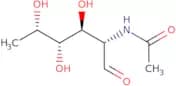
CAS :<p>2-Acetamido-2,6-dideoxy-L-galactose (ADG) is a sugar that belongs to the group of monosaccharides. It is produced by the enzyme synthase and is found in bacteria such as type strain S. mutans and P. aeruginosa. ADG has been shown to be an inhibitor of cell lysis and can be used for the treatment of staphylococcus infections. In addition, it has shown to have anti-inflammatory properties due to its ability to inhibit hydrogen fluoride induced inflammation in mice.</p>Formule :C8H15NO5Degré de pureté :Min. 98 Area-%Couleur et forme :PowderMasse moléculaire :205.21 g/molRaffinose-sp-biotin
<p>Raffinose-sp-biotin is a Custom synthesis, Modification, Fluorination, Methylation, Monosaccharide, Synthetic, Click modification, Oligosaccharide, saccharide. It is available in CAS No. and has the molecular formula C6H14O6. Raffinose-sp-biotin is a polysaccharide with a complex carbohydrate structure.</p>Degré de pureté :Min. 95%(2S, 3S, 4R) -3- [[[(2S, 3S, 4R) - 3- Azido- 4- [[[(1, 1- dimethylethyl) dimethylsilyl] oxy] methyl] - 1- (phenylmethyl) - 2- azetid inyl] carbonyl] amino] - 4- [[[(1, 1- dimethylethyl) dimethylsilyl] oxy] methyl] - 1- (phenylmethyl) -2- azetidinecarb
<p>The synthesis starts with a commercially available, methyl-protected, phenyl-protected 2-azetidinecarboxylic acid. The carbonyl group is then converted to an amide by reaction with ammonia in the presence of a base (such as triethylamine) and an appropriate coupling agent (such as HOBt). The amide is then deprotected by treatment with hydrochloric acid to give the desired product. This compound has not been characterized fully yet but it is expected to be a complex carbohydrate.</p>Degré de pureté :Min. 95%Sialyl lewis X pentaose
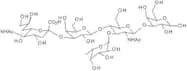
<p>The blood group antigen Sialyl Lewis X (SLeX) is an oligosaccharide which plays a vital role in cell-cell recognition processes. SLeX is a terminal residue on glycolipids that are present on the surface of white blood cells and plays a key role in inflamation processes (Collins, 2006). The inital adhesion of white blood cells to a site of injury is mediated by E-selectins which specifically interact with SLeX. Cell-cell recognition between leukocytes and endothelial cells in blood is believed to occur in part through interactions between lectins and oligosaccharide ligands (Munro, 1992).</p>Formule :C37H61N2O28NaDegré de pureté :Min. 70%Couleur et forme :PowderMasse moléculaire :1,004.87 g/mol3,6-Di-O-acetyl-a-cyclodextrin
<p>Alpha-cyclodextrin (α-CD) derivative with a hydrophilic exterior and lipophilic cavity (smaller than β-CDs and γ-CDs) to allocate certain guest molecules. This structural characteristic enables applications in molecular encapsulation, solubility enhancement, and stabilization across multiple industries. In pharmaceuticals, it serves as a drug delivery vehicle, enhancing the bioavailability and stability of active ingredients. The food industry utilizes it as a stabilizer for flavors, colors, and nutrients, as well as a functional ingredient for its effects on lipid metabolism. In cosmetics, it acts as a complex agent for fragrances and active components. Its applications extend to analytical chemistry for chiral separation and to materials science for developing smart materials and nanosystems.</p>Formule :C60H84O42Degré de pureté :Min. 95%Masse moléculaire :1,477.28 g/molp-Lacto-N-hexaose
CAS :<p>Neutral hexasasaccharide naturally present in human breast milk</p>Formule :C40H68N2O31Degré de pureté :Min. 95%Couleur et forme :PowderMasse moléculaire :1,072.96 g/mol2,6-Anhydro-D-glycero-D-gluo-heptonic acid methylamide
<p>2,6-Anhydro-D-glycero-D-gluo-heptonic acid methylamide is a synthetic sugar that is used as a building block for the synthesis of oligosaccharides and monosaccharides. The glycosylation of 2,6-Anhydro-D-glycero-D-gluo-heptonic acid methylamide can be catalyzed by any of the glycosylators that use saccharides as substrates. This modification can also be achieved by methylation to produce methylated 2,6-Anhydro-D-glycero-D-gluo heptonic acid methylamide. It has been shown to exhibit antiviral activity against herpes simplex virus type 1.</p>Degré de pureté :Min. 95%3b,19a-dihydroxyurs-12-en-28-oic acid 28-b-D-glucopyranosyl ester
<p>3b,19a-dihydroxyurs-12-en-28-oic acid 28-b-D-glucopyranosyl ester is an Methylated saccharide. It is a white to off-white crystalline powder that is soluble in water and methanol. The CAS number for this product is 805829-15-6. This product can be custom synthesized with a modification of the glycosylation site, or glycosylation can be removed by Click chemistry.</p>Degré de pureté :Min. 95%6-O-Malonylgenistin, free acid
CAS :<p>Genistin is an isoflavone found in soybeans and other plants. It has antioxidative properties, which may be due to its ability to scavenge free radicals. Genistin also has protein-binding activity, and it can inhibit the growth of certain insects by binding to their DNA. Genistin can also bind to a number of enzymes and affect their activities, including amylase, chymotrypsin, trypsin, and lipase. It is also involved in energy metabolism and protein synthesis. The physiological effects of genistin are not well understood but may be related to its ability to act as a phytoestrogen or mimic estrogen.</p>Formule :C24H22O13Degré de pureté :Min. 95%Couleur et forme :Slightly Brown PowderMasse moléculaire :518.42 g/molD-Galactosamine hydrochloride
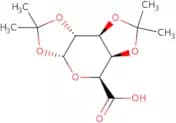
CAS :<p>D-Galactosamine (GalN) is an aldohexose (2-amino-2-deoxygalactose) in which the hydroxyl group at position 2 is replaced by an amino group (Collins, 2006). Galactosamine (as the N-acetyl derivative) forms a key part of both N- and O-linked glycoproteins, glycolipids and glycosaminoglycans. Treatment of experimental animals with D-galactosamine / lipopolysaccharide causes lethal liver injury characterized by apoptosis of the hepatocyte and it is used as a laboratory model to study the effect of therapeutic agents (Hirono, 2001).</p>Formule :C6H13NO5·HClDegré de pureté :Min. 98 Area-%Couleur et forme :White Off-White PowderMasse moléculaire :215.63 g/mol1,2:3,4-Di-O-isopropylidene-a-D-galacturonide
CAS :<p>1,2:3,4-Di-O-isopropylidene-a-D-galacturonide is an intermediate in the synthesis of D-galactosamine. It is a white crystalline solid with a melting point of 217°C. The compound has been shown to have biological properties including antiviral and immuno-stimulatory activities. This chemical is synthesized by the stepwise addition of chlorides to the hydroxyls of 1,2:3,4-di-O-isopropylideneacetone.</p>Formule :C12H18O7Degré de pureté :Min. 95%Couleur et forme :PowderMasse moléculaire :274.27 g/mol3-Deoxy-1,2:5,6-di-O-isopropylidene-3-trifluoromethyl-a-D-glucofuranose
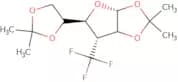
CAS :<p>3-Deoxy-1,2:5,6-di-O-isopropylidene-3-trifluoromethyl-a-D-glucofuranose is a carbohydrate that has the following modifications: methylation at the 6 position of the 3rd carbon atom, glycosylation at the 2nd and 4th positions of the 5th carbon atom, fluorination at the 1st position of the 5th carbon atom. This carbohydrate has a CAS number 1426243-44-8 and can be found under Polysaccharide in CAS.</p>Formule :C13H19F3O5Degré de pureté :Min. 95%Masse moléculaire :312.28 g/mol4-Methylphenyl 2-O-acetyl-3-O-benzyl-b-D-thioglucuronide
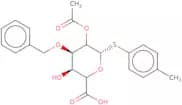
<p>4-Methylphenyl 2-O-acetyl-3-O-benzyl-β-D-thioglucuronide is a modification of the oligosaccharide, carbohydrate complex carbohydrate. It is synthesized by custom synthesis. This product has CAS No. and is a monosaccharide, methylation and glycosylation. The molecular weight of this product is 676.4 Da and it contains no other functional groups except for a fluorine atom in its structure.</p>Formule :C22H24O7SDegré de pureté :Min. 95%Masse moléculaire :432.49 g/molN-(2-Fluorobenzyliden)imino-2,3,4,6-tetra-O-pivaloyl-b-D-glucopyranoside
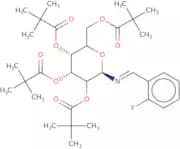
<p>N-(2-Fluorobenzyliden)imino-2,3,4,6-tetra-O-pivaloyl-b-D-glucopyranoside is a custom synthesis of a high purity glycosylated oligosaccharide. It is modified with fluorine and has a methyl group on the 2' position of the sugar. The CAS number for this product is 1093457-52-1.</p>Formule :C33H48FNO9Degré de pureté :Min. 95%Masse moléculaire :621.73 g/mol2,3,4,6-Tetra-O-acetyl-α-D-glucopyranosyl chloride
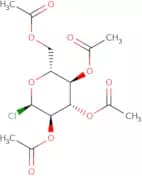
CAS :<p>2,3,4,6-Tetra-O-acetyl-a-D-glucopyranosyl chloride (TAOC) is a nuclear magnetic resonance (NMR) probe that has been used to study the structure of nuclei. It is synthesised by reacting acetyl chloride with sucrose in a reaction catalyzed by sodium hydroxide. The compound can be detected in quadrupole and resonance spectroscopy due to its high sensitivity to nuclear magnetic resonance. This NMR probe is typically used to study the structures of nuclei or for the analysis of polysaccharides.</p>Formule :C14H19ClO9Degré de pureté :Min. 95%Couleur et forme :PowderMasse moléculaire :366.8 g/mol2-Acetamido-2-deoxy-4-O-(β-D-[UL-13-C-6]-galactopyranosyl)-D-glucopyranose 6-sulfate
<p>2-Acetamido-2-deoxy-4-O-(beta-D-[UL-13-C-6]-galactopyranosyl)-D-glucopyranose 6-sulfate is an oligosaccharide that has been fluorinated and methylated. This compound has a CAS number and can be custom synthesized, as well as modified with a click reaction. It is a high purity, complex carbohydrate that can be modified with a variety of modifications.</p>Formule :C6C8H25NO14SDegré de pureté :Min. 95%Masse moléculaire :469.37 g/molGM2-Oligosaccharide
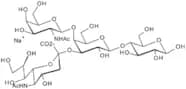
<p>GM2-oligosaccharide (sodium salt) is a trisaccharide (GalNAcβ1,4Galβ1,4Glc) with sialic acid linked α2,3 to the central galactose residue (Ledeen, 2009). The parent GM2 ganglioside is present on neuronal cells and plays a key role in the regulation of dendritogenesis in cortical pyramidal neurons. In lysosomal storage disorders, such as, Tay-Sachs and Sandhoff disease, where hexosaminases A and B are deficient, GM2 ganglioside accumulates in the nervous system (Cachon-Gonzalez, 2018). GM2 ganglioside is also overexpressed in melanomas and other tumours of neuro-ecto origin (Yoshida, 2020). Moreover, the sugar moiety of GM2 ganglioside is a receptor allowing viral infection of cells with reovirus and rotavirus (Zhu, 2018).</p>Formule :C31H51N2O24NaDegré de pureté :Min. 95%Couleur et forme :PowderMasse moléculaire :858.73 g/mol1,4-b-D-Xylotetraose decasulfate sodium salt
<p>1,4-b-D-Xylotetraose decasulfate sodium salt is a highly purified and custom synthesized carbohydrate. It is used as a reagent in biochemical research. 1,4-b-D-Xylotetraose decasulfate sodium salt can be modified with various reagents to produce desired properties for use in various applications. Modifications can include methylation, saccharide, Polysaccharide, Click modification, or Modification. Carbohydrate modifications can include Oligosaccharide or Custom synthesis. Fluorination of 1,4-b-D-Xylotetraose decasulfate sodium salt is an available modification that produces the product with high purity and reduced viscosity. <br>1,4-b-D-Xylotetraose decasulfate sodium salt has a CAS number of 52878-68-9 and is available for custom synthesis at</p>Degré de pureté :Min. 95%Methyl 2,3-di-O-benzyl-4,6-O-(4-methoxybenzylidene)-a-D-mannopyranoside
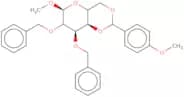
CAS :<p>Methyl 2,3-di-O-benzyl-4,6-O-(4-methoxybenzylidene)-a-D-mannopyranoside is a custom synthesis of a complex carbohydrate. It has been modified to include an Oligosaccharide and Polysaccharide, which are saccharides. This product can be used for the synthesis of glycosylation and carbonylation reactions. Methyl 2,3-di-O-benzyl-4,6-O-(4-methoxybenzylidene)-a-D-mannopyranoside is high purity with a fluorination process that ensures the highest quality.</p>Formule :C29H32O7Degré de pureté :Min. 95%Masse moléculaire :492.57 g/molMethyl 2,3-O-isopropylidene-b-D-allopyranoside
<p>Methyl 2,3-O-isopropylidene-b-D-allopyranoside is a glycosylation agent used in the synthesis of complex carbohydrates. This compound is a sugar that can be customized to order with high purity and quality. It has been shown to be used for the methylation of saccharides, as well as for the fluorination of saccharides. Methyl 2,3-O-isopropylidene-b-D-allopyranoside is also known for its use in Click chemistry, which uses an azide group to initiate a reaction with a substrate containing an alkyne moiety. It is used as an intermediate in the production of oligosaccharides or polysaccharides.</p>Degré de pureté :Min. 95%Man-7 Glycan, 2-AB labelled
<p>Man-7 Glycan is a synthetic, 2-AB labelled fluorinated monosaccharide. It is an oligosaccharide that is synthesized by the glycosylation of mannose and N-acetylglucosamine. This product has been modified with fluorination, methylation, and click chemistry.</p>Degré de pureté :Min. 95%1,2,3,4-Tetra-O-acetyl-6-S-acetyl-6-deoxy-6-thio-b-D-glucopyranose
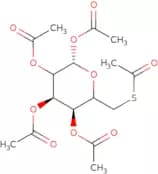
<p>1,2,3,4-Tetra-O-acetyl-6-S-acetyl-6-deoxy-6-thio-b-D-glucopyranose is a synthetic compound that is used as a building block for the synthesis of other compounds. It is an acetylated oligosaccharide that can be modified with fluorine atoms to form 1,2,3,4-tetra-[F]fluoro-[F]deoxy-[F]thio-[F]hexose. This product has high purity and can be used in glycosylation reactions.</p>Formule :C16H22O10SDegré de pureté :Min. 95%Masse moléculaire :406.41 g/mol(3S, 4R) -3, 4- Dihydroxy- 2- methyl-D- proline
<p>(3S, 4R) -3, 4-Dihydroxy-2-methyl-D-proline is a synthetic monosaccharide. It is an intermediate in the synthesis of (3S, 4R)-3,4-dihydroxy-2-methyl-D-proline and can be used for the production of glycosylated products. This carbohydrate has been synthesized by fluorination followed by methylation and glycosylation. This is a high purity product that can be custom synthesized to meet your needs.</p>Degré de pureté :Min. 95%1-Amino-2,4-O-benzylidene-D-butane-2,3,4-triol
<p>1-Amino-2,4-O-benzylidene-D-butane-2,3,4-triol is a custom synthesis. This compound is an oligosaccharide that has been modified with methylation, glycosylation, and click modification. Carbohydrate molecules are saccharides that have a sugar as their backbone. Saccharides can be classified as monosaccharides (simple sugars) or polysaccharides (complex carbohydrates). This compound is a high purity synthetic that has been fluorinated and has undergone glycose chemistry to produce a desired product.</p>Degré de pureté :Min. 95%N-Benzyl-3,5-dideoxy-3,5-imino-1,2-O-isopropylidene-b-L-lyxofuranose
<p>N-Benzyl-3,5-dideoxy-3,5-imino-1,2-O-isopropylidene-b-L-lyxofuranose is an oligosaccharide with a 3,5 dideoxy sugar. It is a modification of the natural carbohydrate L -lyxohexaose. This synthetic compound was custom synthesized and has high purity. The CAS No. for this compound is: 233878-37-6. N -Benzyl -3,5 -dideoxy -3,5 -imino -1,2--O--isopropylidene--b--L--lyxofuranose is not a monosaccharide or polysaccharide but rather a sugar that can be methylated or glycosylated. It has fluorination and saccharides that are modified with fluorine.</p>Degré de pureté :Min. 95%N-(2-Carboxyethyl)-2,5-dideoxy-2,5-imino-D-mannonic acid
<p>N-(2-Carboxyethyl)-2,5-dideoxy-2,5-imino-D-mannonic acid is a hydrogen bonded compound that has a low melting point and crystallizes in the form of a five membered ring. The molecule has an unusual conformation due to the presence of two carboxylic acid moieties and two hydroxy groups. The molecule's zwitterionic nature arises from the presence of two negative charges on one side of the molecule and two positive charges on the other side. It is a weak acceptor for hydrogen bonding with an intermolecular distance of 3.4 Å and an intramolecular distance of 2.3 Å.</p>Degré de pureté :Min. 95%GM3-Ganglioside sodium
CAS :<p>Ganglioside GM3 (sodium salt) has a core disaccharide structure (Galβ1,4Glc) with sialic acid linked α2,3 to the galactose residue and ceramide linked β to position 1 on the reducing terminal glucose residue (Ledeen, 2009). Ganglioside GM3 is strongly associated with human tumors, such as: lung, brain and melanomas, where it is over expressed. It is seen as a possible tumor-associated carbohydrate antigen for cancer immunotherapy (Changping, 2019). GM3 ganglioside is implicated in various other diseases involving chronic inflammation, such as: insulin resistance, leptin resistance, T-cell function and immune disorders (e.g., allergic asthma). It has also been shown to play an essential role in murine and human auditory systems, and a common pathological feature of GM3S deficiency is deafness (Inokuchi, 2018).</p>Formule :C64H118N2O21·xNaDegré de pureté :Min. 98 Area-%Couleur et forme :White PowderMasse moléculaire :1,252 g/mol





![N-[2-(3'-Nitrophenylacetonitrile)]-2,3,4,6-tetra-O-pivaloyl-D-glucopyranoside](/_next/image/?url=https%3A%2Fstatic.cymitquimica.com%2Fproducts%2F3D%2Fthumb-webp%2FMN08451.webp&w=3840&q=75)
![N- [(3S, 4R, 5S, 6R) - 4, 5- Dihydroxy- 6- (hydroxymethyl) - 3- piperidinyl] -acetamide](/_next/image/?url=https%3A%2Fstatic.cymitquimica.com%2Fproducts%2F3D%2Fthumb-webp%2FMD163935.webp&w=3840&q=75)
![(1S) -1- [(2S, 3R) - 3- Hydroxy- 1- azetidinyl] -1, 2- ethanediol hydrochloride](/_next/image/?url=https%3A%2Fstatic.cymitquimica.com%2Fproducts%2F3D%2Fthumb-webp%2FMH163414.webp&w=3840&q=75)
![N- [[(2R, 3R, 4S) - 4- [(Acetyloxy) methyl] - 3- (phenylmethoxy) - 1- (phenylmethyl) - 2- azetidin…](/_next/image/?url=https%3A%2Fstatic.cymitquimica.com%2Fproducts%2F3D%2Fthumb-webp%2FMA163471.webp&w=3840&q=75)














![(1R) -1- [(2S, 3R,4S) -4-(Acetylamino)methyl-N-butyl-3- hydroxy- 1- azetidinyl] -1, 2- ethanediol](/_next/image/?url=https%3A%2Fstatic.cymitquimica.com%2Fproducts%2F3D%2Fthumb-webp%2FMA163406.webp&w=3840&q=75)

![(2S, 3S, 4R) -3- [[[(2S, 3S, 4R) - 3- Azido- 4- [[[(1, 1- dimethylethyl) dimethylsilyl] oxy] methy…](/_next/image/?url=https%3A%2Fstatic.cymitquimica.com%2Fproducts%2F3D%2Fthumb-webp%2FMA163462.webp&w=3840&q=75)


![2-Acetamido-2-deoxy-4-O-(β-D-[UL-13-C-6]-galactopyranosyl)-D-glucopyranose 6-sulfate](/_next/image/?url=https%3A%2Fstatic.cymitquimica.com%2Fproducts%2F3D%2Fthumb-webp%2FOA08512.webp&w=3840&q=75)