Glycosciences
La glycosciences est l'étude des glucides et de leurs dérivés, ainsi que des interactions et des fonctions biologiques auxquelles ils participent. Ce domaine de recherche est crucial pour comprendre une grande variété de processus biologiques, y compris la reconnaissance cellulaire, la signalisation, la réponse immunitaire et le développement des maladies. La glycosciences a des applications importantes en biotechnologie, en médecine et dans le développement de nouveaux médicaments et thérapies. Chez CymitQuimica, nous proposons une large sélection de produits de haute qualité et pureté pour la recherche en glycosciences. Notre catalogue comprend des monosaccharides, des oligosaccharides, des polysaccharides, des glyconjugués et des réactifs spécifiques, conçus pour soutenir les chercheurs dans leurs études sur la structure, la fonction et les applications des glucides dans les systèmes biologiques. Ces ressources sont destinées à faciliter les découvertes scientifiques et les applications pratiques dans divers domaines des biosciences et de la médecine.
Sous-catégories appartenant à la catégorie "Glycosciences"
- Aminosucres(108 produits)
- Anticorps Glyco-Related(282 produits)
- Glycolipides(46 produits)
- Glycosaminoglycanes (GAGs)(55 produits)
- Glycosides(419 produits)
- Monosaccharides(6.622 produits)
- Oligosaccharides(3.682 produits)
- Polysaccharides(503 produits)
11041 produits trouvés pour "Glycosciences"
Trier par
Degré de pureté (%)
0
100
|
0
|
50
|
90
|
95
|
100
Hyaluronate fluorescein - Molecular Weight - 1500kDa
<p>Hyaluronate fluorescein is a synthetic, high purity complex carbohydrate with a molecular weight of 1500kDa. It is a modification of the naturally occurring polysaccharide hyaluronan. It is composed of repeating units of the monosaccharide D-glucuronic acid and the disaccharide N-acetyl-D-glucosamine. Hyaluronate fluorescein is synthesized by methylation and glycosylation of D-glucuronic acid, followed by fluorination to produce the fluorinated saccharide hexafluoro-D-glucuronic acid, which reacts with N-acetyl-D-glucosamine in an amidation reaction. The product can then be modified to produce hyaluronate fluorescein.</p>Degré de pureté :Min. 95%2,4-Dideoxy-2,4-difluoro-D-galactose
<p>2,4-Dideoxy-2,4-difluoro-D-galactose is a high purity custom synthetic monosaccharide that is modified with fluorine. It has been synthesized by the methylation of 2,4-dideoxy-2,4-difluoroglucose followed by the click modification of the methyl group. This compound is a complex carbohydrate and an oligosaccharide. It can be used as an intermediate in the synthesis of polysaccharides and saccharides. 2,4-Dideoxy-2,4-difluoro D galactose has CAS No.: 157099-27-1.</p>Degré de pureté :Min. 95%2-Acetamido-2-deoxy-b-D-glucopyranosyl serine
<p>2-Acetamido-2-deoxy-b-D-glucopyranosyl serine is a carbohydrate that can be modified in many ways. It can be synthesized from D-glucose and acetamide, which are its only starting materials. The synthesis of 2-acetamido-2-deoxy-b -D -glucopyranosyl serine involves the use of fluoride as a reagent to introduce fluorine atoms at specific positions on the sugar molecule. This modification is used to create oligosaccharides or complex carbohydrates with unique chemical and biological properties. Click chemistry allows for the modification of 2-acetamido-2-deoxy-b -D -glucopyranosyl serine with methyl groups at specific positions on the sugar molecule. With this process, glycosylation reactions can be carried out with ease. 2 acetamido 2 deoxy b D glucopyranosyl serine has</p>Degré de pureté :Min. 95%2,3,5-Tri-O-p-chlorobenzoyl-D-ribofuranoside
CAS :<p>2,3,5-Tri-O-p-chlorobenzoyl-D-ribofuranoside is a fluorinated and modified sugar that is synthesized in the laboratory. The chemical name is 2,3,5-Tri-O-p-chlorobenzoyl-D-(+)-ribofuranoside. It is a white to off white crystalline solid with a melting point of 154°C. The molecular weight of this compound is 366.2 g/mol and its empirical formula is C12H14ClO7. The CAS number for this compound is 29755-02-0.</p>Formule :C26H19Cl3O8Degré de pureté :Min. 95%Masse moléculaire :565.78 g/mol1,2,3,4-Tetra-O-acetyl-a-D-galacturonic acid methyl ester
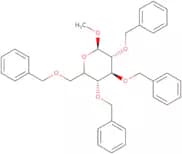
CAS :<p>1,2,3,4-Tetra-O-acetyl-a-D-galacturonic acid methyl ester is a custom synthesis that has been modified with fluorination and methylation. The monosaccharide is an acetylated form of galacturonic acid. This synthetic compound has been shown to be effective in inhibiting the glycosylation of polysaccharides. Its saccharide chain includes four monosaccharides linked by glycosidic bonds. 1,2,3,4-Tetra-O-acetyl-a-D-galacturonic acid methyl ester is used as a sugar in the production of complex carbohydrates.</p>Degré de pureté :Min. 95%Methyl 2,3,4,6-tetra-O-benzyl-D-mannopyranoside
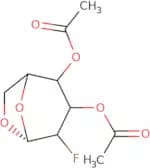
CAS :<p>Methyl 2,3,4,6-tetra-O-benzyl-D-mannopyranoside is a benzylated sugar that has been glycosidically linked to an amino acid. This product has been shown to be a contaminant in the synthesis of other compounds and can be used as a chloride or benzylating reagent. It is used in the preparation of glycosyl halides and condensations. Methyl 2,3,4,6-tetra-O-benzyl-D-mannopyranoside is also used in the synthesis of natural products such as flavones and alkaloids.</p>Formule :C35H38O6Degré de pureté :Min. 95%Masse moléculaire :554.67 g/mol3,4-Di-O-acetyl-1,6-anhydro-2-deoxy-2-fluoro-b-D-glucopyranose
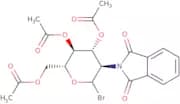
CAS :<p>3,4-Di-O-acetyl-1,6-anhydro-2-deoxy-2-fluoro-b-D-glucopyranose is a synthetic sugar that has been modified to include a fluorine atom. It is a complex carbohydrate that is used in the synthesis of glycosides. 3,4-Di-O-acetyl-1,6-anhydro-2,3 -difluoro b D glucopyranose can be used in the synthesis of an acetylated glycoside with click chemistry. This modification can be achieved through methylation and/or glycosylation reactions. 3,4 Di O acetyl 1,6 anhydro 2 deoxy 2 fluoro b D glucopyranose can also be used in the synthesis of oligosaccharides or saccharides by modifying either its glycone or reducing end.</p>Formule :C10H13FO6Degré de pureté :Min. 95%Masse moléculaire :248.21 g/mol3,4,6-Tri-O-acetyl-2-deoxy-2-phthalimido-D-glucopyranosyl bromide
CAS :<p>3,4,6-Tri-O-acetyl-2-deoxy-2-phthalimido-D-glucopyranosyl bromide is a synthetic compound that has been used in the synthesis of glycosides and oligosaccharides. It can be used to prepare an artificial sugar with a click modification. The chemical structure consists of three acetyl groups on the 2′ position on the sugar ring, which may be methylated or fluorinated. The compound is insoluble in water and melts at 161°C. 3,4,6-Tri-O-acetyl-2-deoxy-2-phthalimido-D-glucopyranosyl bromide is classified as a carbohydrate and is soluble in alcohols, ethers, and chloroform.</p>Formule :C20H20BrNO9Degré de pureté :Min. 95%Masse moléculaire :498.28 g/molMethyl 2,3,4-tri-O-acetyl-b-D-thiogalacturonide methyl ester
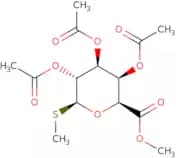
CAS :<p>Methyl 2,3,4-tri-O-acetyl-b-D-thiogalacturonide methyl ester is a modified carbohydrate that has been synthesized for use as a building block in the synthesis of complex carbohydrates. The compound is readily available and can be custom synthesized to meet your specifications. It is also available as a fluorinated form. This product is manufactured by a process called Click chemistry and it has been shown to have high purity, making it suitable for use in pharmaceuticals and other applications.</p>Formule :C14H20O9SDegré de pureté :Min. 95%Masse moléculaire :364.37 g/molMethyl 5,7,8,9-tetra-O-acetyl-4-acylamino-2,6-anhydro-3,4-dideoxy-D-glycero-D-galacto-2-enonate
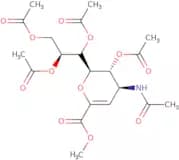
CAS :<p>Methyl 5,7,8,9-tetra-O-acetyl-4-acylamino-2,6-anhydro-3,4-dideoxy-D-glycero-D-galacto-2-enonate is a synthetic sugar that is used as a building block for the synthesis of polysaccharides. This compound can be modified with click chemistry and fluorination to create an array of possible saccharide structures. Methylated sugar derivatives are also used in custom synthesis applications.</p>Formule :C20H27NO12Degré de pureté :Min. 95%Masse moléculaire :473.43 g/mol3-Demethyl thiocolchicine 2-O-(2,3,4-tri-O-acetyl-b-D-glucuronide methyl ester)
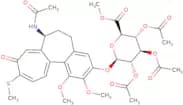
CAS :<p>3-Demethyl thiocolchicine 2-O-(2,3,4-tri-O-acetyl-b-D-glucuronide methyl ester) is a custom synthesis of 3-demethyl thiocolchicine. It is a fluorinated glycoside that can be used to synthesize oligosaccharides and monosaccharides. The modification of this substance with acetyl groups gives it a degree of solubility in organic solvents that is not found in the parent compound.</p>Formule :C34H39NO14SDegré de pureté :Min. 95%Masse moléculaire :717.74 g/mol1-O-Acetyl-2,3,5-tri-O-benzyl-b-D-ribofuranose
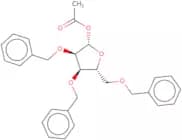
CAS :<p>1-O-Acetyl-2,3,5-tri-O-benzyl-b-D-ribofuranose is a synthetic sugar that has been modified with various chemical groups. It is a methylated saccharide and can be used for the synthesis of oligosaccharides or polysaccharides. 1-O-Acetyl-2,3,5-tri-O-benzyl-b-D-ribofuranose is soluble in water and ethanol. The purity of this product is greater than 98% and the CAS number is 91110–24–6.</p>Formule :C28H30O6Degré de pureté :Min. 95%Couleur et forme :Colourless syrup.Masse moléculaire :462.53 g/molValproic acid b-D-glucuronide
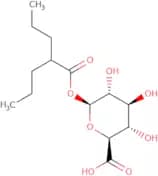
CAS :Produit contrôlé<p>Valproic acid b-D-glucuronide is a drug that belongs to the group of anticonvulsants. Valproic acid b-D-glucuronide inhibits the activity of glutamate, which is an excitatory neurotransmitter in the brain. It also causes irreversible inhibition of GluCl channels and increases diastolic pressure. Valproic acid b-D-glucuronide has been shown to have anti-inflammatory properties, as it reduces the production of prostaglandins and cytokines. The drug has been used in animal models to study pain perception and chronic pain syndromes such as bone cancer or metabolic disorders. Valproic acid b-D-glucuronide also blocks GABA receptors, causing increased levels of gamma aminobutyric acid (GABA) and dopamine. The drug has been shown to induce a state of deep sleep in rats that are deprived from REM sleep for three weeks.</p>Formule :C14H24O8Degré de pureté :Min. 95%Couleur et forme :PowderMasse moléculaire :320.34 g/molTri-b-GalNAc-gly-C6-DBCO
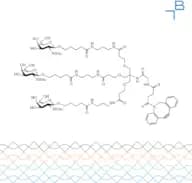
<p>Tri-b-GalNAc-Gly-C6-DBCO is used for targeted siRNA therapies for liver diseases. This synthetic molecule boasts three terminal beta-N-acetylgalactosamine (GalNAc) sugars (tri-antennary GalNAc) enabling high-affinity binding to the asialoglycoprotein receptor (ASGPR) on hepatocyte surfaces. This specific recognition promotes efficient cellular uptake of these cluster conjugates via ASGPR-mediated endocytosis. Crucially, the presence of a C6 spacer and a dibenzoeylcyclooctynone (DBCO) group allows for the attachment of siRNA molecules through bioorthogonal click chemistry. This versatile approach facilitates the development of targeted siRNA conjugates that can be delivered specifically to hepatocytes for RNA interference (RNAi) applications in the liver.</p>Formule :C84H130N12O30Degré de pureté :Min. 95%Masse moléculaire :1,787.99 g/molTri-b-GalNAc-PEG2000-DSPE
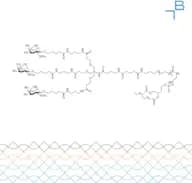
CAS :<p>Tri-b-GalNAc-PEG2000 is a multivalent ligand containing three GalNAc moieties linked to a polyethylene glycol (PEG) spacer designed to selectively bind to the asialoglycoprotein receptor (ASGPR) expressed on hepatocytes. It can be used to create targeted drug delivery vehicles, such as liposomes or lipid nanoparticles, that specifically deliver therapeutic agents to the liver. The multivalent GalNAc ligands have high affinity for ASGPR, allowing for enhanced accumulation of drugs in the target organ while minimizing exposure to non-target tissues. The compound is typically conjugated to a phospholipid, such as 1,2-distearoyl-sn-glycero-3-phosphoethanolamine (DSPE), to create DSPE-PEG2000-triGalNAc. This lipid-based construct can be readily incorporated into liposomes or lipid nanoparticles during formulation, enabling the development of targeted drug delivery systems.</p>Formule :(C2H4O)nC97H180N9O38PH3NDegré de pureté :Min. 95%Tri-b-GalNAc-b-alanine-PEG3-FITC
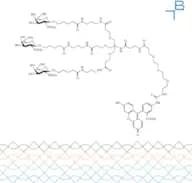
<p>Tri-b-GalNAc-b-alanine-PEG3-FITC is a synthetic probe consisting of three GalNAc ( N-acetylgalactosamine) residues linked to a beta-alanine spacer, followed by a PEG3 linker and a fluorescein isothiocyanate (FITC) fluorophore. This probe is designed to mimic the natural glycosylation patterns found in mucins and other glycoproteins, allowing for the investigation of carbohydrate-protein interactions, particularly those involving the asialoglycoprotein receptor (ASGPR) expressed on hepatocytes. The PEG3 linker provides flexibility and spacing between the glycan and the fluorescent tag, while the FITC moiety enables the detection and tracking of the probe using fluorescence-based techniques such as flow cytometry, fluorescence microscopy, and high-throughput screening assays. This versatile tool is valuable for researchers studying glycobiology, cell-cell interactions, and the development of targeted drug delivery systems.</p>Formule :C94H143N13O37SDegré de pureté :Min. 95%Masse moléculaire :2,079.3 g/molTri-b-GalNAc-gly-biotin
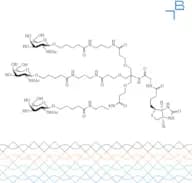
<p>Tri-b-GalNAc-Gly-biotin is used for studying ASGPR-mediated processes. This molecule combines three terminal beta-N-acetylgalactosamine (GalNAc) sugars for efficient ASGPR binding with a glycine (Gly) spacer and a biotin moiety. The GalNAc moiety facilitates specific targeting to hepatocytes, while the glycine spacer provides flexibility. The terminal biotin group serves a dual purpose: it allows for straightforward purification of ASGPR-interacting molecules via affinity chromatography and enables further bioconjugation via established streptavidin-biotin conjugation strategies. This combination makes tri-b-GalNAc-Gly-biotin valuable for isolating ASGPR-binding ligands from complex mixtures, studying ASGPR-ligand interactions, and potentially developing targeted probes for in vitro and in vivo applications.</p>Formule :C73H127N13O30SDegré de pureté :Min. 95%Masse moléculaire :1,698.93 g/mol4-Methylphenyl 2-azido-3,4,6-tri-O-(4-chlorobenzyl)-2-deoxy-b-D-thiogalactopyranoside
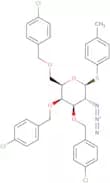
CAS :<p>4-Methylphenyl 2-azido-3,4,6-tri-O-(4-chlorobenzyl)-2-deoxy-b-D-thiogalactopyranoside is a synthetic glycosylation agent that has been shown to be a potent inhibitor of the synthesis of bacterial polysaccharides. It is also used in the modification of saccharides and oligosaccharides. 4MPAPG is an azide sugar that can be modified with chlorobenzyl groups by click chemistry. The resulting product is a potent inhibitor of bacterial polysaccharide production. This product has been shown to have high purity and is synthesized in custom quantities on request.</p>Formule :C34H32Cl3N3O4SDegré de pureté :Min. 95%Masse moléculaire :685.06 g/mol2-Acetamido-3-O-allyl-4,6-O-benzylidene-2-deoxy-b-D-glucopyranosyl azide
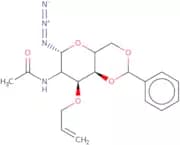
CAS :<p>2-Acetamido-3-O-allyl-4,6-O-benzylidene-2,3-deoxy-bDglucopyranosyl azide is a sugar that can be synthesized from an acetamido group and an allyl group. It is used in the synthesis of complex carbohydrates. 2A3BPGA is a monosaccharide with a glycosylation pattern of alpha 1,2. The methylation of the hydroxyl groups on the glucose rings leads to the formation of 2A3BPGAM. This modification has been shown to alter the solubility and reactivity of this sugar.</p>Formule :C18H22N4O5Degré de pureté :Min. 95%Masse moléculaire :374.4 g/mol3,4,6-Tri-O-acetyl-a-D-glucopyranose 1,2-(methyl orthoacetate)
CAS :<p>3,4,6-Tri-O-acetyl-a-D-glucopyranose 1,2-(methyl orthoacetate) is an iridoid glucoside. It has been shown to have a protective effect against eye disorders in rats and was found to have low toxicity in the eye. 3,4,6-Tri-O-acetyl-a-D-glucopyranose 1,2-(methyl orthoacetate) can be used for treatment of cardiac diseases such as heart disease. The compound may also be able to provide protection against neurologic impairment by inhibiting the production of free radicals due to its antioxidant properties.</p>Formule :C15H22O10Degré de pureté :Min. 95%Couleur et forme :PowderMasse moléculaire :362.33 g/mol