Glycosciences
Sous-catégories appartenant à la catégorie "Glycosciences"
- Aminosucres(108 produits)
- Anticorps Glyco-Related(284 produits)
- Glycolipides(46 produits)
- Glycosaminoglycanes (GAGs)(55 produits)
- Glycosides(419 produits)
- Monosaccharides(6.622 produits)
- Oligosaccharides(3.693 produits)
- Polysaccharides(506 produits)
11036 produits trouvés pour "Glycosciences"
(2R, 3R) -3- [(3aR, 4R, 6aS) - 2, 2- Diethyltetrahydro- 5- (phenylmethyl) - 4H- 1, 3- dioxolo[4, 5- c] pyrrol- 4- yl] - 3- [[(1, 1- dimethylethyl) dimethylsilyl] oxy] - 1, 2- propanediol
(2R, 3R) -3- [(3aR, 4R, 6aS) - 2, 2- Diethyltetrahydro- 5- (phenylmethyl) - 4H- 1, 3- dioxolo[4, 5- c] pyrrol- 4- yl] - 3-[(1, 1-dimethylethyl) dimethylsilyl]oxy]-1, 2- propanediol is a synthetic carbohydrate that is used as a building block for saccharide synthesis. It can be modified with Click chemistry to introduce reactive groups on its molecules. This compound has been shown to react with oligosaccharides and polysaccharides by glycosylation and methylation reactions. The high purity of this product makes it suitable for use in pharmaceuticals and other chemical applications.
Degré de pureté :Min. 95%3,4-Di-O-acetyl-D-fucal
CAS :3,4-Di-O-acetyl-D-fucal is a synthetic carbohydrate with two orientations. It is a synthon for the synthesis of carbohydrates and can be used as a ligand in biomolecular design. The synthetic carbohydrate has been shown to have chemotherapeutic effects, which may be due to its ability to inhibit glycan synthesis. This synthetic carbohydrate also has conformational parameters that are similar to those of natural fucose, which makes it an attractive candidate as a potential drug target.
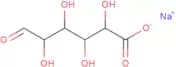
Formule :C10H14O5Degré de pureté :Min. 95%Couleur et forme :PowderMasse moléculaire :214.22 g/molL-Iduronic acid sodium salt
CAS :L-iduronic acid (IdoA) (Collins, 2006) is the major uronic acid component of the glycosaminoglycans dermatan sulfate, chondroitin sulfate and heparin. Iduronic acid is also present in heparan sulfate, although in a minor amount relative to glucuronic acid. Glycosaminoglycans represent a physiologically important group of molecules involved in a variety of biological functions, such as, cell proliferation, cell-to-cell communication, wound healing, coagulation, morphogenesis, and pathogenesis. Glycosaminoglycans present an intriguing target for the design of new approaches for diagnostic and therapeutic agents against various infectious diseases (Kamhi, 2013).
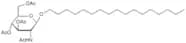
Formule :C6H9NaO7Degré de pureté :Min. 95%Couleur et forme :Slightly Yellow PowderMasse moléculaire :216.12 g/molHeptadecyl 2-acetamido-3,4,6-tri-O-acetyl-2-deoxy-b-D-glucopyranoside
CAS :Heptadecyl 2-acetamido-3,4,6-tri-O-acetyl-2-deoxy-b-D-glucopyranoside is a custom synthesis, fluorinated carbohydrate.
Formule :C31H55NO9Degré de pureté :Min. 95%Masse moléculaire :585.77 g/mol2-Azido-2-deoxy-2-C-methyl-3,5-di-O-tert.butyldimethylsilyl-D-ribono-1.4-lactone
2-Azido-2-deoxy-2-C-methyl-3,5-di-O-tert.butyldimethylsilyl-D-ribono-1.4-lactone is a custom synthesis that has been modified with a click chemistry reaction and fluorination. It is an oligosaccharide and polysaccharide, which are carbohydrates that contain multiple saccharides. This product also contains high purity, which means it's of the highest grade available on the market. The modification of this product is done through the use of a monosaccharide or sugar, which can be synthesized in the laboratory.
Degré de pureté :Min. 95%2-Deoxy-2-fluoro-D-galactose
CAS :Please enquire for more information about 2-Deoxy-2-fluoro-D-galactose including the price, delivery time and more detailed product information at the technical inquiry form on this page
Formule :C6H11FO5Degré de pureté :Min. 97 Area-%Masse moléculaire :182.15 g/mol1,6-Anhydro-b-D-cellobiose
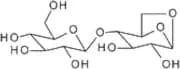
CAS :Produced by the fast pyrolysis of cellulose
Formule :C12H20O10Degré de pureté :Min. 95 Area-%Couleur et forme :White PowderMasse moléculaire :324.28 g/molSucrose octasulfate sodium salt
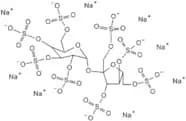
CAS :This compound is generally known as sucralfates and are medications primarily taken to treat active duodenal ulcers. They are also used for the treatment of gastroesophageal reflux disease (GERD) and stress ulcers. Sucralfate is a sucrose sulfate-aluminium complex that binds to the ulcer, creating a physical barrier that protects the gastrointestinal tract from stomach acid and prevents the degradation of mucus. It also promotes bicarbonate production and acts like an acid buffer with cytoprotective properties.
Formule :C12H14Na8O35S8Degré de pureté :Min. 98 Area-%Couleur et forme :White PowderMasse moléculaire :1,158.66 g/molGlycogen - from oyster
CAS :Glycogen is a highly branched polysaccharide of glucose that serves as a form of energy storage in animals and fungi. It is the main storage form of glucose in the body. In humans, glycogen is made and stored primarily in liver and muscle cells and functions as the second most important energy storage molecule to fat which is held in adipose tissue. Glycogen is analogous to starch and has a structure similar to amylopectin, but is more extensively branched and compact than starch. It occurs as granules in the cytosol/cytoplasm in many cell types, and plays an important role in the glucose cycle.
Formule :C24H42O21Couleur et forme :PowderMasse moléculaire :666.58 g/molL(+)-Ascorbic acid sodium salt
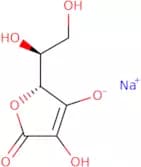
CAS :L(+)-Ascorbic acid sodium salt is the L-isomer of ascorbic acid. It is an essential nutrient for humans and animals, and a cofactor for many enzymes involved in cellular metabolism. Ascorbic acid is an effective metal chelator, which can be used to treat infectious diseases such as tuberculosis. L(+)-Ascorbic acid sodium salt has been shown to have antioxidant properties. It also has antineoplastic activity against skin tumors when used at optimum concentration.
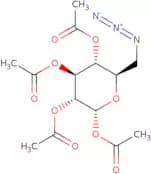
Formule :C6H7NaO6Degré de pureté :Min. 97 Area-%Couleur et forme :White PowderMasse moléculaire :198.11 g/mol1,2,3,4-Tetra-O-acetyl-6-azido-6-deoxy-α-D-glucopyranose
CAS :Tetra-O-acetyl-6-azido-6-deoxy-a-D-glucopyranose is a carbohydrate that has been modified to include a fluorine atom. This modification can be carried out using a variety of methods, including chlorination or bromination with elemental fluorine or chlorine gas, or by direct replacement of the hydroxyl group with a fluorine atom. Tetra-O-acetyl-6-azido-6-deoxy-aDglucopyranose is used in the synthesis of complex carbohydrates and glycosides. It can also be methylated, glycosylated, and click modified.Formule :C14H19N3O9Degré de pureté :Min. 95%Masse moléculaire :373.32 g/molLactonamycin
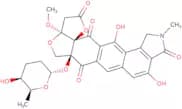
CAS :Lactonamycin is a linker that contains an oxygenated functional group. It can be found in some active natural products and has been synthesized in the laboratory. Lactonamycin is used as a model system for biosynthesis, where it was shown to efficiently produce glycosidic bonds when supplied with carbon sources such as glucose. The biological properties of Lactonamycin include its ability to inhibit microbial infection and inflammation, which may be due to its hydroxy group.
Formule :C28H27NO12Degré de pureté :Min. 95%Masse moléculaire :569.51 g/molKonjac glucomannan
CAS :Konjac glucomannan is an acetylated (1,4)-β-D-glucomannan obtained from the tubers of Amorphophallus konjac or Konnyaku root. It is widely used in foods, pharmaceuticals paints and explosives. It has been shown that ternary mixtures of konjac glucomannan, xanthan gum and sodium alginate can form a non-covalently linked complex which exhibits enhanced rheological properties of value in, for example, functional foods.
Degré de pureté :Min. 75%Couleur et forme :White PowderFructosazine
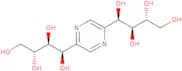
CAS :Fructosazine is a natural compound that is found in the bark of the fructus quinquefoliae tree. It has been shown to have antimicrobial properties when it reacts with hydrochloric acid. Fructosazine inhibits the growth of bacteria by reacting with their cell walls and interfering with their metabolism. Fructosazine may also have physiological effects, such as reducing blood pressure and body weight gain, which are not fully understood. The reaction mechanism for fructosazine is not yet known, but it may be due to its reactive nature. More research needs to be done on this compound before we can understand its full potential.
Formule :C12H20N2O8Degré de pureté :Min. 96 Area-%Couleur et forme :PowderMasse moléculaire :320.3 g/molRef: 3D-MF10551
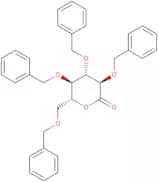
Produit arrêté2,3,4,6-Tetra-O-benzyl-D-glucono-1,5-lactone
CAS :Intermediate in the synthesis of tofogliflozin
Formule :C34H34O6Degré de pureté :Min. 95%Couleur et forme :PowderMasse moléculaire :538.63 g/mol2,6-Dideoxy-2-fluoro-L-mannose
2,6-Dideoxy-2-fluoro-L-mannose is a monosaccharide that is a fluorinated glycosylate. It is used in the synthesis of oligosaccharides and has been shown to be useful for click modification of proteins. This compound is also used as a substrate for methylation reactions. 2,6-Dideoxy-2-fluoro-L-mannose contains an oxygen atom at the C1 position and two hydroxyl groups at the C3 and C4 positions on the ring. The molecular weight of this compound is 180.16 g/mol.
Degré de pureté :Min. 95%2,3-O-Isopropylidene-5-O-tosyl-D-ribonic acid-1,4-lactone
CAS :2,3-O-Isopropylidene-5-O-tosyl-D-ribonic acid-1,4-lactone is a synthetic 2,3:5,6-diisopropylidene glycoside of D-ribose. It is a methylated sugar with an alpha-(2,3)-linked D-(+)-glucopyranosyl moiety and an alpha-(2,5)-linked L(+)-fucopyranosyl moiety. This compound can be used as a building block for the synthesis of polysaccharides and glycoconjugates. 2,3:5,6-Diisopropylidene glycoside of D-ribose is also used to synthesize oligosaccharides in carbohydrate chemistry.
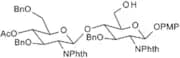
Formule :C12H14O7SDegré de pureté :Min. 95%Couleur et forme :White PowderMasse moléculaire :302.04 g/mol4-Methoxyphenyl 4-O-(4-O-acetyl-3,6-di-O-benzyl-2-deoxy-2-phthalimido-b-D-glucopyranosyl)-3-O-benzyl-2-deoxy-2-phthalimido-b-D-gluco pyranoside
4-Methoxyphenyl 4-O-(4-O-acetyl-3,6-di-O-benzyl-2-deoxy-2-phthalimido-b-D-glucopyranosyl)-3,6,2′,4′″triphosphate (4MPP) is a methylated saccharide. It can be modified with click chemistry and has been shown to inhibit the synthesis of glycogen in the liver. 4MPP is a high purity product that has been synthesized from naturally occurring carbohydrates. It is also fluorinated for use in research.
Formule :C58H54N2O15Degré de pureté :Min. 95%Masse moléculaire :1,019.05 g/molPhosphatidyl inositol - 10mg/ml solution in chloroform:methanol(4:1)
Phosphatidyl inositol-10mg/ml solution in chloroform:methanol(4:1) is a carbohydrate that is a complex carbohydrate. It is synthesized by the modification of the phosphatidyl inositol molecule with fluorination and methylation. The CAS number for this compound is 91228-52-5. This product can be custom synthesized as per customer's requirements. It has a high purity and excellent quality, and is available at competitive prices.
Formule :C47H83O13PDegré de pureté :Min. 95%Couleur et forme :PowderMasse moléculaire :887.13 g/mol4-(3-(2,3-O-Isopropylidene-lyxofuranos-5-yl)propan-2-one-1-yl)piperidine-2,6-dione
4-(3-(2,3-O-Isopropylidene-lyxofuranos-5-yl)propan-2-one-1-yl)piperidine-2,6-dione is a high purity custom synthesis sugar. It is synthesized by Click modification, Fluorination, Glycosylation and Synthetic. 4-(3-(2,3-O-Isopropylidene-lyxofuranos-5-yl)propan-2-one 1 - yl)piperidine 2,6 dione has CAS No., Oligosaccharide and Carbohydrate as its properties. It is a saccharide which belongs to the class of complex carbohydrate.
Degré de pureté :Min. 95%