Glycosciences
Sous-catégories appartenant à la catégorie "Glycosciences"
- Aminosucres(108 produits)
- Anticorps Glyco-Related(284 produits)
- Glycolipides(46 produits)
- Glycosaminoglycanes (GAGs)(55 produits)
- Glycosides(419 produits)
- Monosaccharides(6.622 produits)
- Oligosaccharides(3.696 produits)
- Polysaccharides(506 produits)
11035 produits trouvés pour "Glycosciences"
3-Epicasuarine
CAS :3-Epicasuarine is an Oligosaccharide, which is a carbohydrate with a low molecular weight. It has two monosaccharides, which are the structural units of carbohydrates. 3-Epicasuarine is a glycosylation product of sucrose and glycine and has been fluorinated at the 8-position. The chemical formula for 3-Epicasuarine is C6H14FO4S2. This compound can be custom synthesized to meet your specifications or it can be purchased from us at a reasonable price.
A variety of modifications are available including methylation, click chemistry, and modification with saccharride residues such as maltose or glucose.
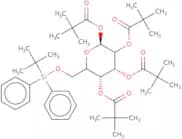
3-Epicasuarine may be used in the synthesis of oligosaccharides or as an intermediate in the synthesis of complex carbohydrates. It has been shown to have high purity and can be synthesized at any desired purity level.Formule :C8H15NO5Degré de pureté :Min. 95%Masse moléculaire :205.21 g/mol1,2,3,4-Tetra-O-pivaloyl-6-O-(tert-butyldiphenylsilyl)-b-D-glucopyranose
1,2,3,4-Tetra-O-pivaloyl-6-O-(tert-butyldiphenylsilyl)-b-D-glucopyranose is a custom synthesis of an oligosaccharide with a polysaccharide. The carbohydrate is modified with fluorination and methylation. This product has high purity and is synthesized using click chemistry. Monosaccharides are attached to the sugar backbone in order to form complex carbohydrates. This product can be used as a synthetic sugar or in the production of other oligosaccharides.
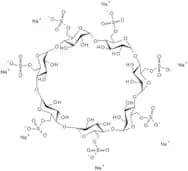
Formule :C42H62O10SiDegré de pureté :Min. 95%Masse moléculaire :755.04 g/molb-Cyclodextrin hydrogen sulfate, sodium salt
CAS :This beta-cyclodextrin (β-CD) derivative is a functionalized cyclic oligosaccharide composed of seven glucose units, characterized by a hydrophilic exterior and a lipophilic cavity (bigger than α-CD and smaller than γ-CDs), which allows it to encapsulate various guest molecules. This structural feature facilitates its use in multiple applications, including pharmaceuticals, food enhancement, and cosmetics. In the pharmaceutical industry, it enhances the solubility and stability of poorly water-soluble drugs, improving their bioavailability and efficacy while also masking unpleasant tastes. The food sector utilizes it as a stabilizer for flavors, colors, and nutrients, extending shelf life by protecting sensitive ingredients from degradation. In cosmetics, it serves as a complexing agent for fragrances and active components, ensuring their stability and controlled release. Its use expands to many other fields, including nanotechnology for drug delivery systems, environmental remediation for extracting organic pollutants, textiles for slow-release fragrances, and analytical chemistry for chiral separation.
Degré de pureté :Min. 95%Couleur et forme :Powder6-Chloro-6-deoxy-b-cyclodextrin
This beta-cyclodextrin (β-CD) derivative is a functionalized cyclic oligosaccharide composed of seven glucose units, characterized by a hydrophilic exterior and a lipophilic cavity (bigger than α-CD and smaller than γ-CDs), which allows it to encapsulate various guest molecules. This structural feature facilitates its use in multiple applications, including pharmaceuticals, food enhancement, and cosmetics. In the pharmaceutical industry, it enhances the solubility and stability of poorly water-soluble drugs, improving their bioavailability and efficacy while also masking unpleasant tastes. The food sector utilizes it as a stabilizer for flavors, colors, and nutrients, extending shelf life by protecting sensitive ingredients from degradation. In cosmetics, it serves as a complexing agent for fragrances and active components, ensuring their stability and controlled release. Its use expands to many other fields, including nanotechnology for drug delivery systems, environmental remediation for extracting organic pollutants, textiles for slow-release fragrances, and analytical chemistry for chiral separation.
Formule :C42H63Cl7O28Degré de pureté :Min. 95%Masse moléculaire :1,264.1 g/mol(3aS, 7S, 9S, 9aR, 9bR) -9- [[(1, 1- Dimethylethyl) dimethylsilyl] oxy] - 2, 2- diethylhexahydro- 7- methyl-1, 3- dioxolo[4, 5- a] i ndolizin- 6(4H) - one
(3aS, 7S, 9S, 9aR, 9bR) -9- [[(1, 1- Dimethylethyl) dimethylsilyl] oxy] - 2, 2- diethylhexahydro- 7- methyl-1, 3- dioxolo[4, 5- a] i ndolizin- 6(4H) - one is an oligosaccharide made of sugar and saccharide. This compound is synthesized in the laboratory by clicking modification. It has a high purity and is custom synthesis. The CAS No. for this compound is 251788-72-8.
Degré de pureté :Min. 95%Hydroxyethyl cellulose - Viscosity 2400 to 2800(1% aqueous solution)
CAS :Water thickener; rheological control additive; has industrial appplications
Degré de pureté :Min. 95%Globotriose
CAS :an important cell surface epitope that acts as the receptor for Shiga-like toxin
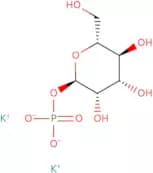
Formule :C18H32O16Degré de pureté :Min. 95%Couleur et forme :PowderMasse moléculaire :504.44 g/mola-D-Mannose-1-phosphate dipotassium salt
CAS :a-D-Mannose-1-phosphate dipotassium salt (DMDK) is a synthetic oligosaccharide that was designed and synthesized for use as a potential drug in the treatment of cancer. DMDK has been shown to be an inhibitor of protein glycosylation, which may lead to the prevention of tumor formation. It also has anti-inflammatory properties and can inhibit the growth of bacteria by binding to bacterial 16S ribosomal RNA and inhibiting protein synthesis.Formule :C6H11K2O9PDegré de pureté :Min. 95%Couleur et forme :PowderMasse moléculaire :336.32 g/molGinsenoside Ft1
Ginsenoside Ft1 is a saponin and bioactive compound, which is derived from the roots of Panax notoginseng, a plant known for its traditional medicinal uses. The mode of action of Ginsenoside Ft1 involves multiple biochemical pathways, including the modulation of signaling pathways related to inflammation, apoptosis, and angiogenesis. Its ability to influence these pathways underpins its potential therapeutic applications.
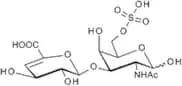
Degré de pureté :Min. 95%GlcA[3S]b(1-3)Galb(1-4)GlcNAcb(1-2)Mana-Ethylazide
GlcA[3S]b(1-3)Galb(1-4)GlcNAcb(1-2)Mana-Ethylazide is an oligosaccharide used in glycosylation and esterification reactions. It is a complex carbohydrate that consists of a methylated mannosamine backbone, with alpha-D-glucose and alpha-D-galactose units attached to the mannosamine. GlcA[3S]b(1-3)Galb(1-4)GlcNAcb(1-2)Mana-Ethylazide has a fluorinated ethyl group at the 3 position of the mannosamine, which can be modified with other reactive groups. The CAS number for this compound is 84726-43-7.
Formule :C28H44N4Na20O25SDegré de pureté :Min. 95%Masse moléculaire :1,328.52 g/molb-D-glucan-from oat
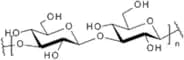
CAS :Oat β-glucans are water-soluble β-glucans derived from the endosperm of oat kernels, which contain β-1,3 and β-1,4 linkages. They are known for cholesterol lowering and hypoglycemic properties, as well as their use in various cosmetic applications. Recent research has shown their potential application in immunomodulation and wound healing.
Degré de pureté :Min. 90%Couleur et forme :White PowderOctyl 3,4,6-tri-O-benzoyl-a-D-mannopyranoside
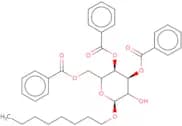
CAS :Octyl 3,4,6-tri-O-benzoyl-a-D-mannopyranoside is a carbohydrate that has been custom synthesized. It has a molecular weight of 614.4 g/mol and the chemical formula C30H50O8. This compound is an oligosaccharide with a polysaccharide backbone. Octyl 3,4,6-tri-O-benzoyl-a-D-mannopyranoside is soluble in water and ethanol, but insoluble in hexane or ether. It has CAS No. 19308-45-3 and can be modified by methylation or glycosylation. The molecule contains three sugar residues that have been linked through glycosidic bonds to form a triose sugar (a sugar containing three carbon atoms). The molecule also contains an acetal group at the C1 position of the mannose moiety that can be fluorinated with b
Formule :C35H40O9Degré de pureté :Min. 95%Masse moléculaire :604.69 g/mol2-Acetamido-1,3,6-tri-O-benzyl-2-deoxy-b-D-glucopyranoside
CAS :2-Acetamido-1,3,6-tri-O-benzyl-2-deoxy-b-D-glucopyranoside is a synthetic monosaccharide that can be modified to the desired structures. It is used as a building block for the synthesis of polysaccharides and oligosaccharides. It is also used as an intermediate in the preparation of saccharides. 2 - Acetamido - 1,3,6 - tri - O - benzyl - 2 - deoxy - b - D - glucopyranoside is available in high purity and custom synthesis.
Formule :C29H33NO6Degré de pureté :Min. 95%Couleur et forme :PowderMasse moléculaire :491.58 g/mol1,2-O-Benzylidene -β- L- idofuranuronic acid γ-lactone
1,2-O-Benzylidene -beta- L- idofuranuronic acid gamma-lactone is a custom synthesis of a fluorinated monosaccharide. The modification of the sugar is accomplished by methylation and click chemistry. The monosaccharide can be used as a building block for oligosaccharides and polysaccharides. It is also used as an intermediate in the glycosylation process that produces complex carbohydrates.
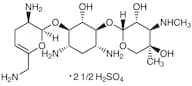
Degré de pureté :Min. 95%Sisomicin Sulfate
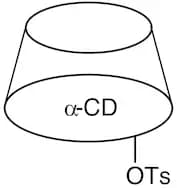
CAS :Formule :C19H37N5O7H2SO4Degré de pureté :>98.0%(HPLC)Couleur et forme :White to Almost white powder to crystalMasse moléculaire :692.71Mono-2-O-(p-toluenesulfonyl)-α-cyclodextrin
CAS :Formule :C43H66O32SDegré de pureté :>98.0%(HPLC)Couleur et forme :White to Almost white powder to crystalMasse moléculaire :1,127.03Chondroitin disaccharide 6S sodium salt
CAS :Chondroitin disaccharide 6S sodium salt is a synthetic, fluorinated, oligosaccharide that has been custom synthesized and glycosylated. It is a sugar-based compound with a high purity and excellent solubility in water. It was synthesized by click modification of the sugar monomer with an amine group at the reducing end. The chondroitin disaccharide 6S sodium salt was further modified with methylation to yield a product with a higher purity.
Formule :C14H21NO15S·2NaDegré de pureté :Min. 90 Area-%Couleur et forme :PowderMasse moléculaire :521.36 g/molFructodecasaccharide
Fructodecasaccharide is a methylated, custom-synthesized oligosaccharide that is a polysaccharide with the molecular formula C10H17O11. Fructodecasaccharide is a complex carbohydrate that consists of a monosaccharide and two disaccharides. It has been modified to include fluorine atoms in the glycosidic linkages between the sugar residues. This modification can alter the physical properties of fructodecasaccharide, such as increasing its solubility and stabilizing its structure. Fructodecasaccharide is used in many industries as a high-purity, synthetic product for use in medical applications, including pharmaceuticals and cosmetics.
Formule :C60H102O51Degré de pureté :Min. 95%Couleur et forme :PowderMasse moléculaire :1,639.42 g/molFucogalactan - from Undaria pinnatifida
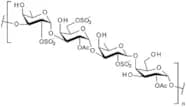
CAS :Fucogalactan (GFS) is a polysaccharide isolated and purified from the brown seaweed Undaria pinnatifida. The polysaccharide is a sulphated galactose containing fucan. Fucogalactan is currently under investigation for possible therapeutic indications including anti-inflammatory properties, immuno- modulating activities, inhibition of tumor growth, stem cell replentishment, antiviral activity, dementia and ulcer healing.Fucoidan ≥ 75 %
The image was kindly provided by Prof Mike Guiry from Cork who runs ‘The Seaweed Site’.Degré de pureté :(%) Min. 75%Couleur et forme :Off-White Powderα-D-Lactose 1-phosphate barium salt
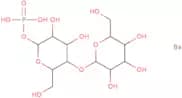
CAS :a-D-Lactose 1-phosphate barium salt is a modification of a D-lactose monosaccharide. It is a complex carbohydrate that has been synthesized using the polyol method. The CAS number for this product is 103404-65-5. This product is available in high purity and the molecular weight of this compound is 576. a-D-Lactose 1-phosphate barium salt can be used as an ingredient in pharmaceuticals, food products, and cosmetics. It has been shown to have anticariogenic activities and may be used as a substitute for sucrose in food products.
Formule :C12H21O14P·BaDegré de pureté :Min. 95%Couleur et forme :PowderMasse moléculaire :557.59 g/mol


![(3aS, 7S, 9S, 9aR, 9bR) -9- [[(1, 1- Dimethylethyl) dimethylsilyl] oxy] - 2, 2- diethylhexahydro- …](/_next/image/?url=https%3A%2Fstatic.cymitquimica.com%2Fproducts%2F3D%2Fthumb-webp%2FMD168732.webp&w=3840&q=75)


![GlcA[3S]b(1-3)Galb(1-4)GlcNAcb(1-2)Mana-Ethylazide](/_next/image/?url=https%3A%2Fstatic.cymitquimica.com%2Fproducts%2F3D%2Fthumb-webp%2FOG44930.webp&w=3840&q=75)