Glycosciences
La glycosciences est l'étude des glucides et de leurs dérivés, ainsi que des interactions et des fonctions biologiques auxquelles ils participent. Ce domaine de recherche est crucial pour comprendre une grande variété de processus biologiques, y compris la reconnaissance cellulaire, la signalisation, la réponse immunitaire et le développement des maladies. La glycosciences a des applications importantes en biotechnologie, en médecine et dans le développement de nouveaux médicaments et thérapies. Chez CymitQuimica, nous proposons une large sélection de produits de haute qualité et pureté pour la recherche en glycosciences. Notre catalogue comprend des monosaccharides, des oligosaccharides, des polysaccharides, des glyconjugués et des réactifs spécifiques, conçus pour soutenir les chercheurs dans leurs études sur la structure, la fonction et les applications des glucides dans les systèmes biologiques. Ces ressources sont destinées à faciliter les découvertes scientifiques et les applications pratiques dans divers domaines des biosciences et de la médecine.
Sous-catégories appartenant à la catégorie "Glycosciences"
- Aminosucres(108 produits)
- Anticorps Glyco-Related(282 produits)
- Glycolipides(46 produits)
- Glycosaminoglycanes (GAGs)(55 produits)
- Glycosides(419 produits)
- Monosaccharides(6.624 produits)
- Oligosaccharides(3.682 produits)
- Polysaccharides(503 produits)
11046 produits trouvés pour "Glycosciences"
Trier par
Degré de pureté (%)
0
100
|
0
|
50
|
90
|
95
|
100
1,2:3,4-Di-O-isopropylidene-α-D-fucopyranose
CAS :<p>1,2:3,4-Di-O-isopropylidene-a-D-fucopyranose is a tailored drug that was developed to have the same chemical structure as endogenous natural fucopyranosides. It has been shown to be a potent inhibitor of bacterial growth in vitro. The drug has been shown to have anti-inflammatory effects in vivo and may be useful for the treatment of autoimmune diseases. 1,2:3,4-Di-O-isopropylidene-a-D-fucopyranose has been observed to inhibit the production of inflammatory cytokines such as IL1β and TNFα by macrophages at concentrations of 10 μM or less. It has also been shown to inhibit NFκB activation by inhibiting IκB kinase activity.</p>Formule :C12H20O5Degré de pureté :Min. 95%Couleur et forme :Clear colourless to yellow oil.Masse moléculaire :244.28 g/molL-Ribonic acid-1,4-lactone
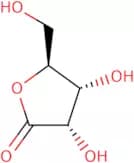
CAS :<p>L-Ribonic acid-1,4-lactone is a synthetic process that is used as an antiviral agent. It is a sugar reactant in the production of riboflavin. L-Ribonic acid-1,4-lactone has been shown to inhibit the synthesis of viral RNA and DNA, which prevents replication of the virus. The mechanism of L-ribonic acid lactone's antiviral activity is not currently known.</p>Formule :C5H8O5Degré de pureté :(%) Min. 90%Couleur et forme :PowderMasse moléculaire :148.12 g/mol2,3,4,6-Tetra-O-acetyl-D-glucopyranose
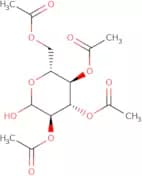
CAS :<p>2,3,4,6-Tetra-O-acetyl-D-glucopyranose is a carbohydrate that is used in the synthesis of besifloxacin. This compound has been studied as an analog for many other natural compounds and its derivatives have shown to be effective against bacteria such as Staphylococcus aureus and Clostridium perfringens. The acetyl groups on this molecule allow it to be easily converted into other compounds with desired properties. This compound has been found to be acidic and can be used as a medicinal preparation or analytical chemistry reagent. The hydroxyl group on the 2 carbon atom allows the molecule to form glycoside derivatives. The halides on this molecule are also important for making new molecules by replacing one of the hydrogen atoms with another halogen atom. The phenylpropanoid glycosides are found in plants and may contain an enantiomeric form of 2,3,4</p>Formule :C14H20O10Degré de pureté :Min. 95%Couleur et forme :White PowderMasse moléculaire :348.3 g/molDodecyl b-D-maltopyranoside
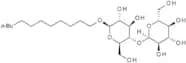
CAS :<p>Dodecyl maltoside (DDM), also known as lauryl maltoside, is a non-ionic surfactant that consists of a hydrophilic maltose head and a hydrophobic long chain alkyl tail. It has a relatively low critical micelle concentration of 0.17 mM and is considered a gentle but powerful detergent. DDM is often the best tool for solubilising/crystallising membrane proteins. Membrane proteins usually have α-helical structures that are easily destroyed when the protein is released from its membrane environment. DDM can often preserve these structures during the solubilisation. In addition, membrane proteins can often be renatured when isolated with DDM.</p>Formule :C24H46O11Degré de pureté :Min. 99 Area-%Couleur et forme :White PowderMasse moléculaire :510.62 g/mol2,6-Dideoxy-D-arabino-hexose
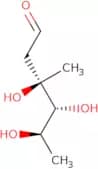
CAS :<p>2,6-Dideoxy-D-arabino-hexose is a hydrogenolysis product of 2,6-dideoxy-D-ribo-hexose. It has been shown to have a solvolytic activity and can be used for the dehalogenation of several halogenated compounds. 2,6-Dideoxy-D-arabino-hexose is also stereoselective and can be used as an estimator in population genetics. This sugar is also regulatory, catalytic, and crystalline. It is found in many carbohydrates, including weighting disaccharides such as sucrose.</p>Degré de pureté :Min. 95%Ethyl 2,3,4,6-tetra-O-benzyl-b-D-thiogalactopyranoside
CAS :<p>Ethyl 2,3,4,6-tetra-O-benzyl-b-D-thiogalactopyranoside is a synthetically produced saccharide typically used as a building block in oligo-saccharide synthesis.</p>Formule :C36H40O5SDegré de pureté :Min. 98 Area-%Masse moléculaire :584.77 g/mol5-Thio-D-glucose
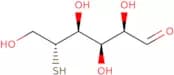
CAS :<p>Thiosugar hexokinase inhibitor; inhibits cellular transport of D-glucose</p>Formule :C6H12O5SDegré de pureté :Min. 97 Area-%Couleur et forme :White PowderMasse moléculaire :196.22 g/molMethyl 3,4,6-tri-O-acetyl-2-deoxy-2-phthalimido-b-D-thioglucopyranoside
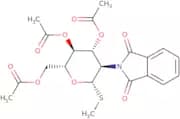
CAS :<p>Methyl 3,4,6-tri-O-acetyl-2-deoxy-2-phthalimido-b-D-thioglucopyranoside (MTATP) is a drug that has been shown to be effective in treating pancreatitis and colitis. It has also shown promise as an anticancer agent. MTATP is a small molecule that inhibits the growth of cancer cells by inhibiting the enzyme phosphodiesterase 4B. This enzyme plays a role in the regulation of intracellular signaling pathways and is involved in cell proliferation and differentiation. MTATP has been shown to inhibit the activity of this enzyme, preventing cancer cells from proliferating and promoting their differentiation instead.</p>Formule :C21H23NO9SDegré de pureté :Min. 95%Couleur et forme :White Off-White PowderMasse moléculaire :465.47 g/molD-Leucrose
CAS :<p>Leucrose (5-O-a-d-glucopyranosyl-D-fructose) is formed by enzymatic synthesis using Leuconostoc mesenteroides in the presence of sucrose.</p>Formule :C12H22O11Degré de pureté :Min. 95%Couleur et forme :PowderMasse moléculaire :342.3 g/mol1,2:3,5-Di-O-isopropylidene-a-D-xylofuranose
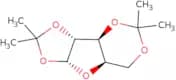
CAS :1,2:3,5-Di-O-isopropylidene-a-D-xylofuranose is a synthetic glycoside that is used in the synthesis of complex carbohydrates. It has been used for the modification of polysaccharides and oligosaccharides. This compound has also been modified with fluorine to form 1,2:3,5-Di-O-isopropylidene-a-D-(1'-fluoro)-xylofuranose. The chemical name of this product is CAS No. 20881-04-3.Formule :C11H18O5Degré de pureté :Min. 95%Couleur et forme :White PowderMasse moléculaire :230.26 g/molTorachrysone 8-O-glucoside
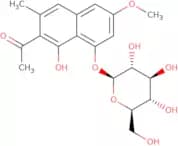
CAS :Torachrysone 8-O-glucoside is a natural product found in the rhizome of Chinese medicinal plant Rhubarb. It is an antiinflammatory that has been shown to be effective in vitro against inflammation induced by spleen, blood, and the stomach. Torachrysone 8-O-glucoside has also been shown to have protective effects on the kidney and bladder.Formule :C20H24O9Degré de pureté :Min. 95%Couleur et forme :White PowderMasse moléculaire :408.4 g/molEthyl 2,3-di-O-benzoyl-4,6-O-benzylidene-b-D-thioglucopyranoside
Ethyl 2,3-di-O-benzoyl-4,6-O-benzylidene-b-D-thioglucopyranoside is a modified sugar that is used as an intermediate in the synthesis of saccharides and oligosaccharides. It is synthesized by a modification of the Knorr reaction. This product has been shown to be high purity and can be custom synthesized with a variety of functional groups, such as fluorination. Ethyl 2,3-di-O-benzoyl-4,6-O-benzylidene-b-D-thioglucopyranoside is also available in CAS No. 11764719.Formule :C29H28O7SDegré de pureté :Min. 95%Couleur et forme :White To Off-White SolidMasse moléculaire :520.59 g/mol[2S- (2a, 3b, 4a, 5b) ] - 1-Benzyl - 2-methyl-3, 4, 5- piperidinetriol
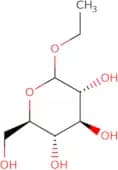
<p>This product is a custom synthesis. It is a fluorinated, modified monosaccharide that has been synthesized by click chemistry and contains an O-glycosyl group. This product can be used in the synthesis of glycosylated polysaccharides and oligosaccharides, or as a building block for modification of complex carbohydrates to produce new compounds with novel properties, such as fluorescence.</p>Degré de pureté :Min. 95%Ethyl β-D-glucopyranoside
CAS :<p>Ethyl β-D-glucopyranoside is a fatty acid with the chemical formula CH 3 (CHOH) 2 CH(OH)CH 2 OH. It is a reaction product of inulin and levulinate. Ethyl β-D-glucopyranoside can be used as a control agent for urine samples to test for microbial infection. It also has an inhibitory effect on the growth of microbes, such as bacteria and fungi, which may be due to its ability to disrupt the cell membrane. Ethyl β-D-glucopyranoside is also known to have detergent properties that can be used in soaps and detergents.</p>Formule :C8H16O6Degré de pureté :Min. 98 Area-%Couleur et forme :Clear Viscous Liquid Solidified MassMasse moléculaire :208.21 g/molMethyl 2,3-di-O-benzoyl-4,6-O-(4-methoxybenzylidene)-a-D-glucopyranoside
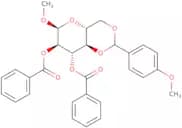
CAS :Methyl 2,3-di-O-benzoyl-4,6-O-(4-methoxybenzylidene)-a-D-glucopyranoside is a synthetic carbohydrate. The chemical name is methyl 2,3-di-O-benzoyl-4,6--O-(4--methoxybenzylidene) -a -D--glucopyranoside. It is a white or off white powder that is soluble in water and methanol. This product can be used as a monosaccharide for glycosylation or polysaccharide for saccharide modification.Formule :C29H28O9Degré de pureté :Min. 95%Masse moléculaire :520.54 g/mol4-Aminophenyl β-D-galactopyranoside
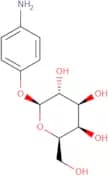
CAS :<p>4-Aminophenyl-beta-D-galactopyranoside is a substrate for beta-galactosidase. 4-aminophenol is released upon cleavage by beta-galactosidase. 4-aminophenol can be assayed by electro-oxidation to 4-imino quinone while recording changes in potential or current of a galvanic system. 4-Aminophenyl-beta-D-galactopyranoside can be used in affinity chromatography for the isolation of galactose-binding lectins.</p>Formule :C12H17NO6Degré de pureté :Min. 95%Couleur et forme :PowderMasse moléculaire :271.27 g/mol2-Acetamido-2-deoxy-4-O-(a-L-fucopyranosyl)-D-glucopyranose
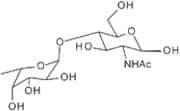
CAS :<p>2-Acetamido-2-deoxy-4-O-(a-L-fucopyranosyl)-D-glucopyranose is a methylated, custom synthesized oligosaccharide. It has been modified to include a fluorine atom at the C4 position on the glucose residue. The product is highly pure and in crystalline form, with a CAS number of 76211-71-7.</p>Formule :C14H25NO10Degré de pureté :90%Couleur et forme :White PowderMasse moléculaire :367.35 g/molGlucose spacer fluorescein
Glucose spacer fluorescein is a sugar that is used in glycosylation reactions. It has a molecular weight of 368.2 g/mol, CAS No. 605-85-8, and the chemical formula C6H10O5. Glucose spacer fluorescein is synthesized by reacting glucose with an activator such as sodium borohydride or tris(dibenzylideneacetone)dipalladium(0) (Pd). The synthesis of glucose spacer fluorescein can be modified to include methylation, glycosylation, or other modifications. Glucose spacer fluorescein is composed of two monosaccharides and one saccharide residue. This sugar consists of a glucose molecule linked to a fluorinated 1-deoxy-D-ribofuranose via an ether bond at position 3' and a glucosamine residue attached to the 5Degré de pureté :Min. 95%Mono(6-(1,6-hexamethylenediamine)-6-deoxy)-β-cyclodextrin
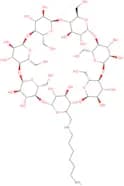
CAS :Mono(6-(1,6-hexamethylenediamine)-6-deoxy)-beta-cyclodextrin is a complex compound that is used as a research chemical, speciality chemical and versatile building block in the synthesis of other chemicals. Mono(6-(1,6-hexamethylenediamine)-6-deoxy)-beta-cyclodextrin can be used as an intermediate in the synthesis of complex compounds. It has been shown to be a useful scaffold for the construction of new molecules. Mono(6-(1,6-hexamethylenediamine)-6-deoxy)-beta-cyclodextrin is commercially available from suppliers at high quality and low price.Formule :C48H84N2O34Degré de pureté :Min. 95%Couleur et forme :PowderMasse moléculaire :1,233.17 g/molLacto-N-tetraose - 90%
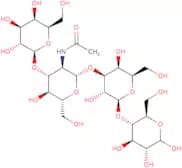
CAS :<p>Core human milk oligosaccharide</p>Formule :C26H45NO21Degré de pureté :Min. 90 Area-%Couleur et forme :White PowderMasse moléculaire :707.63 g/molD-Galactose - non-animal origin
CAS :<p>D-Galactose is a monosaccharide that is found in the form of a white, odorless powder. It has many applications, including as an additive in foods and beverages, as an intermediate in the production of other modified sugars, and as an important component of glycoproteins. D-Galactose is also used to produce glycogen or lactose by modifying it with phosphate or acetate groups. The synthesis of D-galactose is done by methylation of D-glucose followed by glycosylation reactions. This product can be custom synthesized to meet your needs.</p>Formule :C6H12O6Degré de pureté :Min. 99 Area-%Masse moléculaire :180.16 g/molD-Glucopyranosyl thiosemicarbazide
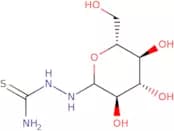
CAS :D-Glucopyranosyl thiosemicarbazide is a synthetic molecule that reacts with halides to produce regiospecifically substituted aldehydes. It has been used in the synthesis of glycosylated heterocycles and for the conversion of amines into reactive intermediates. D-Glucopyranosyl thiosemicarbazide can be prepared by reacting 2,3-dichloro-5,6-dicyanobenzoquinone with sodium nitrite in methanol followed by hydrolysis with water. This reaction produces an intermediate that reacts with sulfur dioxide to form the desired product. The structure of this molecule was determined using X-ray crystallography on crystals obtained from aspergillus mold.Formule :C7H15N3O5SDegré de pureté :Min. 95%Couleur et forme :White to off-white powder.Masse moléculaire :253.28 g/mol3,4,6-Tri-O-acetyl-2-azido-2-deoxy-β-D-galactopyranosyl trichloroacetimidate
CAS :<p>3,4,6-Tri-O-acetyl-2-azido-2-deoxy-beta-D-galactopyranosyl trichloroacetimidate is a custom synthesis that has been modified with fluorination and methylation. It is a monosaccharide containing the sugar galactose and it can be found in a saccharide or polysaccharide. This compound was synthesized using click chemistry.</p>Formule :C14H17Cl3N4O8Degré de pureté :Min. 95 Area-%Masse moléculaire :475.67 g/mol3-Deoxygalactosone
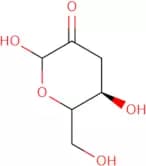
CAS :<p>3-Deoxygalactosone is a reactive compound that is formed by the reaction of glyoxal and galactose. The glyoxal molecule reacts with the hydroxyl group on the galactose to form a new aldehyde, which can then react with another molecule of glyoxal or galactose to form 3-deoxygalactosone. 3-Deoxygalactosone has been shown to have health effects in clinical studies. It also has been shown to decrease the dry weight of rats fed a high-fat diet. This compound also is an intermediate in the formation of 5-hydroxymethylfurfural, which is produced during the Maillard reaction between sugars and amino acids. 3-Deoxygalactosone binds to proteins, forming hydrogen bonds with amino acid side chains and affecting their biological function.</p>Formule :C6H10O5Degré de pureté :90%Couleur et forme :Yellow PowderMasse moléculaire :162.14 g/molD-Glucosamine 6-phosphate
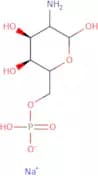
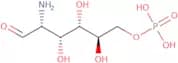
CAS :<p>D-Glucosamine 6-phosphate is a non-essential amino acid that belongs to the group of nucleotide sugar phosphates. It is a metabolite of the sugar D-glucose and it plays an important role in the energy metabolism of bacteria, plants, and animals. It has been shown to have anti-cancer effects on prostate cancer cells. D-Glucosamine 6-phosphate inhibits methyltransferase activity by binding to the enzyme's active site. This inhibition prevents DNA synthesis, leading to cell death. The structural analysis has been done using NMR spectroscopy on d-arabinose as a model substrate.</p>Formule :C6H14NO8PDegré de pureté :Min. 98 Area-%Couleur et forme :White PowderMasse moléculaire :259.15 g/molMethyl b-D-cellobioside
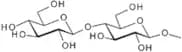
CAS :<p>Methyl β-D-cellobioside is the β-configured glycosylation product of cellobiose and methanol. It is a cellobiose mimetic without the reactive (reducing) properties of the cellobiose aldehyde/hemiacetal. As a highly water soluble, non-reducing mimetic of cellobiose (the repeating disaccharide of cellulose), methyl β-D-cellobioside has been applied as inhibitor of binding events involving cellulose-binding domains (CBD) in proteins, for instance as part of the eluent in the related affinity chromatography. It is also a substrate for various β-glucosidases and glycosyltransferases, and the scaffold is a useful starting material for the chemical synthesis of inhibitors of the latter types of enzymes.</p>Formule :C13H24O11Degré de pureté :Min. 95%Couleur et forme :PowderMasse moléculaire :356.32 g/mol1-Azido-1-deoxy-D-fructose
CAS :<p>Fructose with azide functional handle</p>Formule :C6H11N3O5Degré de pureté :Min. 95 Area-%Masse moléculaire :605.17 g/mol2- Acetamido- 2, 4- dideoxy-D- xylo- hexose
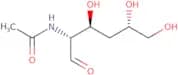
CAS :<p>2-Acetamido-2,4-dideoxy-D-xylo-hexose is a synthetic monosaccharide that is modified with fluorine, methylation and acetamidodeoxysugar. The product is used as an intermediate in the synthesis of oligosaccharides and polysaccharides. It can also be used to modify saccharides with modifications such as click chemistry, fluorination and saccharide modification. 2-Acetamido-2,4-dideoxy-D-xylo-hexose (2A6DH) has CAS number 40555-55-3.</p>Formule :C8H15NO5Degré de pureté :Min. 95%Masse moléculaire :205.21 g/mol(5R, 6S, 7R) -6, 7- Dihydro- 5- [(1R) - 1- hydroxyethyl] - 5H- pyrrolotetrazole- 6, 7- diol
<p>(5R, 6S, 7R) -6, 7- Dihydro- 5- [(1R) - 1- hydroxyethyl] - 5H- pyrrolotetrazole- 6, 7- diol is a synthetic compound used in the synthesis of various complex carbohydrates. It is a methylated derivative of 2-(2-(4-nitrophenyl) diazenyl)-5H-pyrrolo[2,3-d]pyrimidine and can be synthesized by the click modification of an oligosaccharide or polysaccharide (such as cellulose). This compound has been modified with fluorine and is highly pure. It belongs to the group of monosaccharides and sugars.</p>Degré de pureté :Min. 95%Methyl N-Benzyl-3-fluoro-2,3,4-trideoxy-2,4-imino-a-L-ribopyranoside
<p>Methyl N-Benzyl-3-fluoro-2,3,4-trideoxy-2,4-imino-a-L-ribopyranoside is a fluorinated monosaccharide that is synthesized from an oligosaccharide. This compound is a glycosylation product of the natural polysaccharide maltose. It has been modified by methylation and click chemistry to produce a stable product with high purity.<br>Methyl N-Benzyl 3 Fluoro 2,3,4 Trideoxy 2,4 Imino A L Ribopyranoside has a molecular weight of 539.62 and is soluble in water at 25°C. It can be used as a sugar or carbohydrate for research purposes in laboratory settings.</p>Degré de pureté :Min. 95%(1R) -1- [(2S, 3S) - N-Methyl-3- hydroxy- 1- azetidinyl] -1, 2- ethanediol
<p>(1R) -1- [(2S, 3S) - N-Methyl-3- hydroxy- 1- azetidinyl] -1, 2- ethanediol is a synthetic sugar that is used in the manufacture of other chemical compounds. It has a CAS number of 93908-06-6 and can be custom synthesized to fit your needs. This product is highly pure and can be modified with methylation or glycosylation. The synthesis of this product can be done with click chemistry.</p>Degré de pureté :Min. 95%2,3,5-Tri-O-benzyl-1,4-dideoxy-1,4-epithio-D-arabinitol
CAS :<p>2,3,5-Tri-O-benzyl-1,4-dideoxy-1,4-epithio-D-arabinitol is a compound that belongs to the family of thiosugars. It has been isolated from a variety of plant sources and has been shown to have inhibitory activity against the growth of bacteria. 2,3,5-Tri-O-benzyl-1,4-dideoxy-1,4 epithio D arabinitol inhibits bacterial growth by binding to the enzyme formate dehydrogenase and thereby prevents the formation of formate. This compound also inhibits salacinol and thiosugar synthesis in extracts of plants such as Salacia reticulata. 2,3,5 Tri O Benzyl 1,4 dideoxy 1 4 epithio D arabinitol is also found in the Ayurvedic medicine water extract known as voglibose.</p>Formule :C26H28O3SDegré de pureté :Min. 95%Masse moléculaire :420.56 g/mol2-Azido-2-deoxy-3,4-O-isopropylidene-L-lyxonic acid methyl ester
<p>2-Azido-2-deoxy-3,4-O-isopropylidene-L-lyxonic acid methyl ester is a custom synthesis, modification, fluorination and methylation of a monosaccharide. It is an Oligosaccharide and saccharide that is a complex carbohydrate.</p>Degré de pureté :Min. 95%2-Azido- 2- deoxy- 2- C- methyl-3,5-di-O-toluenesulfonyl-D- ribono-1,4- lactone
<p>2-Azido-2-deoxy-2-C-methyl-3,5-di-O-toluenesulfonyl-D-[alpha]-ribono--1,4--lactone is a glycosylation agent that has been modified with a click chemistry reaction. It has been shown to be effective in the synthesis of complex carbohydrates and saccharides. This compound is also capable of modifying sugar chains, oligosaccharides, and polysaccharides. 2AzoDS is available for custom synthesis in high purity and CAS number.</p>Degré de pureté :Min. 95%N- (2, 5- Anhydro- 3- azido- 3- deoxy-4,6-O-isopropylidene- D- idonoyl) - 2, 5- anhydro- 3- amino- 3- deoxy-4,6-O-isopropylidene- D- idonic acid propyl ester
<p>N- (2, 5-Anhydro-3-azido-3-deoxy-4,6-O-isopropylidene-D-idonoyl)-2,5-anhydro-3-amino-3-deoxy--4,6--O--isopropylidene--D-- idonic acid propyl ester is a glycoconjugate consisting of a saccharide and an azido group. It is synthesized by the Click chemistry method. This compound has shown to inhibit the growth of bacteria in vitro by binding to bacterial ribosomes. N-(2, 5 -Anhydro - 3 -azido - 3 -deoxy - 4, 6 - O - isopropylidene - D - idonoyl) 2, 5 anhydro 3 amino 3 deoxy 4, 6 O isopropylidene D idonic acid propyl ester consists of</p>Degré de pureté :Min. 95%3-O-Benzyl-1,2-O-isopropylidene-b-L-lyxofuranose
CAS :<p>3-O-Benzyl-1,2-O-isopropylidene-b-L-lyxofuranose is an oligosaccharide that is a member of the class of carbohydrates. It has a saccharide sequence that is composed of three monosaccharides: b-D-glucopyranose, L-xylopyranose, and β-(3’,4’)-benzylidene erythritol. The carbohydrate is modified with fluorine atoms at the two hydroxyl positions on the glucose unit and a benzyl group at the C4 position on the xylopyranose unit. 3-O-Benzyl-1,2-O-isopropylidene -b -L -lyxofuranose is useful for click chemistry reactions due to its reactive benzyl group. This product has high purity and can be custom synthesized to</p>Formule :C15H20O5Degré de pureté :Min. 95%Masse moléculaire :280.32 g/molN-Benzyl-3,5-dideoxy-3,5-imino-1,2-O-isopropylidene-b-L-lyxofuranose
<p>N-Benzyl-3,5-dideoxy-3,5-imino-1,2-O-isopropylidene-b-L-lyxofuranose is an oligosaccharide with a 3,5 dideoxy sugar. It is a modification of the natural carbohydrate L -lyxohexaose. This synthetic compound was custom synthesized and has high purity. The CAS No. for this compound is: 233878-37-6. N -Benzyl -3,5 -dideoxy -3,5 -imino -1,2--O--isopropylidene--b--L--lyxofuranose is not a monosaccharide or polysaccharide but rather a sugar that can be methylated or glycosylated. It has fluorination and saccharides that are modified with fluorine.</p>Degré de pureté :Min. 95%3b,19a-dihydroxyurs-12-en-28-oic acid 28-b-D-glucopyranosyl ester
<p>3b,19a-dihydroxyurs-12-en-28-oic acid 28-b-D-glucopyranosyl ester is an Methylated saccharide. It is a white to off-white crystalline powder that is soluble in water and methanol. The CAS number for this product is 805829-15-6. This product can be custom synthesized with a modification of the glycosylation site, or glycosylation can be removed by Click chemistry.</p>Degré de pureté :Min. 95%2,6-Anhydro-D-glycero-D-gluo-heptonic acid methylamide
<p>2,6-Anhydro-D-glycero-D-gluo-heptonic acid methylamide is a synthetic sugar that is used as a building block for the synthesis of oligosaccharides and monosaccharides. The glycosylation of 2,6-Anhydro-D-glycero-D-gluo-heptonic acid methylamide can be catalyzed by any of the glycosylators that use saccharides as substrates. This modification can also be achieved by methylation to produce methylated 2,6-Anhydro-D-glycero-D-gluo heptonic acid methylamide. It has been shown to exhibit antiviral activity against herpes simplex virus type 1.</p>Degré de pureté :Min. 95%(2S, 3S, 4R) -3- [[[(2S, 3S, 4R) - 3- Azido- 4- [[[(1, 1- dimethylethyl) dimethylsilyl] oxy] methyl] - 1- (phenylmethyl) - 2- azetid inyl] carbonyl] amino] - 4- [[[(1, 1- dimethylethyl) dimethylsilyl] oxy] methyl] - 1- (phenylmethyl) -2- azetidinecarb
<p>The synthesis starts with a commercially available, methyl-protected, phenyl-protected 2-azetidinecarboxylic acid. The carbonyl group is then converted to an amide by reaction with ammonia in the presence of a base (such as triethylamine) and an appropriate coupling agent (such as HOBt). The amide is then deprotected by treatment with hydrochloric acid to give the desired product. This compound has not been characterized fully yet but it is expected to be a complex carbohydrate.</p>Degré de pureté :Min. 95%β,β-Trehalose
CAS :β,β-Trehalose is a carbohydrate that is synthesized by the expression of a trehalose synthase enzyme from the yeast Saccharomyces cerevisiae. β,β-Trehalose is an acidic sugar with two glucose subunits. It has been shown to have an enzymatic mechanism similar to that of glucose. β,β-Trehalose has been found to increase the solubility and stability of proteins in acidic phs (pHs) by binding to hydroxyl groups on protein surfaces. β,β-Trehalose also binds to alcohols such as ethanol and methanol, which may be due to its ability to form hydrogen bonds between oxygen atoms. This sugar also forms hexamers in solution, which may contribute to its effectiveness as a stabilizer for proteins and other molecules. The optimum ph for β,β-trehalose synthesis is around 5.5-6.0 and it can be used at higher phFormule :C12H22O11Degré de pureté :Min. 99 Area-%Couleur et forme :White Off-White PowderMasse moléculaire :342.3 g/molTrehalose-6-phosphate dipotassium salt
CAS :<p>Trehalose-6-phosphate dipotassium salt is a natural sugar that is found in plants, animals, and fungi. It functions as a carbohydrate reserve and protects cells against osmotic stress. Trehalose-6-phosphate dipotassium salt can be synthesized by the enzyme trehalase from the sugar trehalose and 6-phosphate. It has been shown to protect cells from weevil infestation, which may be due to its ability to produce abiotic or biotic stress. Trehalose-6-phosphate dipotassium salt can be purified using hydrophilic interaction chromatography on an on-line system.</p>Formule :C12H21O14PK2Degré de pureté :Min. 95%Couleur et forme :White PowderMasse moléculaire :498.46 g/molD-Glucosamine-6-phosphate sodium salt
CAS :<p>D-Glucosamine-6-phosphate sodium salt is a custom synthesis of an oligosaccharide, polysaccharide, and carbohydrate. The chemical modification of this compound includes methylation, glycosylation, and carbamylation. This product has high purity with a fluorination level of 98%.</p>Formule :C6H14NO8P·NaDegré de pureté :Min. 95%Couleur et forme :White Yellow PowderMasse moléculaire :282.14 g/molChitosan oligomer - Molecular weight 5000 - 15000 Da
CAS :<p>Chitosan is the deacetylated form of chitin. The polysaccharide is deacetylated in order to render it soluble, which is then possible at pH values of less than 7 (normally in dilute acid). This then allows the material to be used in a number of industrial applications as a binder and film former.</p>Couleur et forme :PowderBenzyl-alpha-S-GalNAc
CAS :<p>Please enquire for more information about Benzyl-alpha-S-GalNAc including the price, delivery time and more detailed product information at the technical inquiry form on this page</p>Formule :C15H21NO5SDegré de pureté :Min. 98 Area-%Masse moléculaire :327.4 g/molLipid X
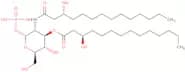
CAS :<p>Lipid X is a monosaccharide precursor of E. coli lipid A. It is an N-acyl-D-glucosamine 1-phosphate where the N-acyl group is (R)-3-hydroxytetradecanoyl and carrying an additional (R)-3-hydroxytetradecanoyl, and it is a component of the cell wall of Gram-negative bacteria. Due to its physiological functions and biological properties, Lipid X can be used to treat infectious diseases, autoimmune diseases, and HIV infection. It has also been shown to inhibit the production of inflammatory cytokines such as tumor necrosis factor alpha (TNF-α) and interleukin-1β (IL-1β). This effect is due to its ability to disrupt hydrogen bonds between lipids in the cell membrane. As a biosynthetic intermediate of Lipid A, it seems to play a role in bacterial virulence and can trigger an immune response in humans, and protect against endotoxins.</p>Formule :C34H66NO12PDegré de pureté :Min. 95%Masse moléculaire :711.86 g/molVerbascose
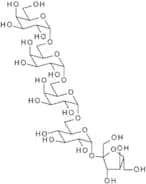
CAS :<p>Immunomodulatory pentasaccharide; prebiotic</p>Formule :C30H52O26Degré de pureté :Min. 95 Area-%Couleur et forme :White PowderMasse moléculaire :828.72 g/mol6-Chloro-6-deoxy-b-cyclodextrin
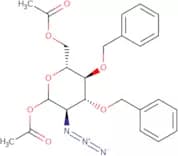
<p>This beta-cyclodextrin (β-CD) derivative is a functionalized cyclic oligosaccharide composed of seven glucose units, characterized by a hydrophilic exterior and a lipophilic cavity (bigger than α-CD and smaller than γ-CDs), which allows it to encapsulate various guest molecules. This structural feature facilitates its use in multiple applications, including pharmaceuticals, food enhancement, and cosmetics. In the pharmaceutical industry, it enhances the solubility and stability of poorly water-soluble drugs, improving their bioavailability and efficacy while also masking unpleasant tastes. The food sector utilizes it as a stabilizer for flavors, colors, and nutrients, extending shelf life by protecting sensitive ingredients from degradation. In cosmetics, it serves as a complexing agent for fragrances and active components, ensuring their stability and controlled release. Its use expands to many other fields, including nanotechnology for drug delivery systems, environmental remediation for extracting organic pollutants, textiles for slow-release fragrances, and analytical chemistry for chiral separation.</p>Formule :C42H63Cl7O28Degré de pureté :Min. 95%Masse moléculaire :1,264.1 g/mol2-Azido-1,6-di-O-acetyl-3,4-di-O-benzyl-D-glucopyranoside
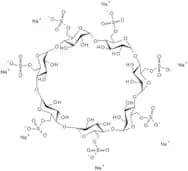
CAS :2-Azido-1,6-di-O-acetyl-3,4-di-O-benzyl-D-glucopyranoside is a modification of the glucopyranoside sugar. It has been synthesized by methylating and glycosyling an oligosaccharide. The chemical composition of this compound is C14H14N2O7. This product is available in high purity and monosaccharide form.Degré de pureté :Min. 95%b-Cyclodextrin hydrogen sulfate, sodium salt
CAS :<p>This beta-cyclodextrin (β-CD) derivative is a functionalized cyclic oligosaccharide composed of seven glucose units, characterized by a hydrophilic exterior and a lipophilic cavity (bigger than α-CD and smaller than γ-CDs), which allows it to encapsulate various guest molecules. This structural feature facilitates its use in multiple applications, including pharmaceuticals, food enhancement, and cosmetics. In the pharmaceutical industry, it enhances the solubility and stability of poorly water-soluble drugs, improving their bioavailability and efficacy while also masking unpleasant tastes. The food sector utilizes it as a stabilizer for flavors, colors, and nutrients, extending shelf life by protecting sensitive ingredients from degradation. In cosmetics, it serves as a complexing agent for fragrances and active components, ensuring their stability and controlled release. Its use expands to many other fields, including nanotechnology for drug delivery systems, environmental remediation for extracting organic pollutants, textiles for slow-release fragrances, and analytical chemistry for chiral separation.</p>Degré de pureté :Min. 95%Couleur et forme :Powder




![[2S- (2a, 3b, 4a, 5b) ] - 1-Benzyl - 2-methyl-3, 4, 5- piperidinetriol](/_next/image/?url=https%3A%2Fstatic.cymitquimica.com%2Fproducts%2F3D%2Fthumb-webp%2FMB163330.webp&w=3840&q=75)


![(5R, 6S, 7R) -6, 7- Dihydro- 5- [(1R) - 1- hydroxyethyl] - 5H- pyrrolotetrazole- 6, 7- diol](/_next/image/?url=https%3A%2Fstatic.cymitquimica.com%2Fproducts%2F3D%2Fthumb-webp%2FMD163944.webp&w=3840&q=75)

![(1R) -1- [(2S, 3S) - N-Methyl-3- hydroxy- 1- azetidinyl] -1, 2- ethanediol](/_next/image/?url=https%3A%2Fstatic.cymitquimica.com%2Fproducts%2F3D%2Fthumb-webp%2FMM163409.webp&w=3840&q=75)


![(2S, 3S, 4R) -3- [[[(2S, 3S, 4R) - 3- Azido- 4- [[[(1, 1- dimethylethyl) dimethylsilyl] oxy] methy…](/_next/image/?url=https%3A%2Fstatic.cymitquimica.com%2Fproducts%2F3D%2Fthumb-webp%2FMA163462.webp&w=3840&q=75)