Glycosciences
La glycosciences est l'étude des glucides et de leurs dérivés, ainsi que des interactions et des fonctions biologiques auxquelles ils participent. Ce domaine de recherche est crucial pour comprendre une grande variété de processus biologiques, y compris la reconnaissance cellulaire, la signalisation, la réponse immunitaire et le développement des maladies. La glycosciences a des applications importantes en biotechnologie, en médecine et dans le développement de nouveaux médicaments et thérapies. Chez CymitQuimica, nous proposons une large sélection de produits de haute qualité et pureté pour la recherche en glycosciences. Notre catalogue comprend des monosaccharides, des oligosaccharides, des polysaccharides, des glyconjugués et des réactifs spécifiques, conçus pour soutenir les chercheurs dans leurs études sur la structure, la fonction et les applications des glucides dans les systèmes biologiques. Ces ressources sont destinées à faciliter les découvertes scientifiques et les applications pratiques dans divers domaines des biosciences et de la médecine.
Sous-catégories appartenant à la catégorie "Glycosciences"
- Aminosucres(108 produits)
- Anticorps Glyco-Related(282 produits)
- Glycolipides(46 produits)
- Glycosaminoglycanes (GAGs)(55 produits)
- Glycosides(419 produits)
- Monosaccharides(6.622 produits)
- Oligosaccharides(3.682 produits)
- Polysaccharides(503 produits)
11041 produits trouvés pour "Glycosciences"
Trier par
Degré de pureté (%)
0
100
|
0
|
50
|
90
|
95
|
100
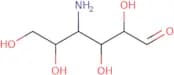
4-Amino-4-deoxy-D-glucopyranose
CAS :<p>4-Amino-4-deoxy-D-glucopyranose is an anticancer agent that has been found to be effective against cancer cells. It is a chitosan derivative that acts as an inhibitor of apoptosis in cancer cells. This compound has been detected in urine and has been shown to inhibit the growth of human cancer cells by inhibiting kinase activity. 4-Amino-4-deoxy-D-glucopyranose is an analog of glucose and can be used as a potential therapeutic agent for the treatment of tumors. It specifically targets kinases involved in the regulation of cell growth and protein synthesis, which makes it a promising candidate for cancer treatment.</p>Formule :C6H13NO5Degré de pureté :Min. 95%Masse moléculaire :179.17 g/mol1,3,6-Tri-O-benzoyl-2-deoxy-a-D-glucopyranoside
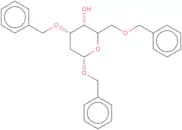
<p>1,3,6-Tri-O-benzoyl-2-deoxy-a-D-glucopyranoside is a glycosylation molecule that is synthesized by the addition of a benzoyl group to the C1 position of glucose. This product is an example of an oligosaccharide with a triester linkage. The synthesis of this product involves methylation and fluorination reactions. 1,3,6-Tri-O-benzoyl-2-deoxy-a-D-glucopyranoside is stable in acidic environments and can be custom synthesized at high purity level.</p>Formule :C27H30O5Degré de pureté :Min. 95%Masse moléculaire :434.52 g/molIsopropyl-β-D-thioglucopyranoside
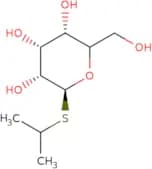
CAS :<p>Isopropyl-beta-D-thioglucopyranoside is a carbohydrate derivative that has the same chemical formula as glucose but with a different spatial arrangement. It is also known as beta-D-thioglucose or thioisopropylglucose, and it is an intermolecular hydrogen bond donor and acceptor. Isopropyl-beta-D-thioglucopyranoside absorbs light at wavelengths of 265 nm, 280 nm, and 320 nm. Carbohydrates are compounds containing carbon, hydrogen and oxygen atoms in a ratio of 1:2:1 by weight, with the general formula CHON. They consist of many isomers that differ from each other in the configurations of their carbonyl group and hydroxyl group. The molecular system for isopropyl-beta-D-thioglucopyranoside consists of one molecule with two hydrogen bonds to two other molecules.</p>Formule :C9H18O5SMasse moléculaire :238.3 g/molPhenyl 2-acetamido-2-deoxy-a-D-galactopyranoside
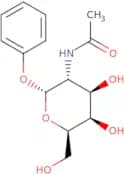
CAS :<p>Phenyl 2-acetamido-2-deoxy-a-D-galactopyranoside is a high purity, custom synthesis, and synthetic carbohydrate. It is a modification of the natural sugar D-galactose by the addition of two acetamido groups at the C2 and C3 positions. Phenyl 2-acetamido-2-deoxy-a-D-galactopyranoside has been fluorinated to allow for chemoselective binding to DNA. This product is methylated at the C1 position, glycosylated at the C6 position, and click modified at the C5 position.</p>Formule :C14H19NO6Degré de pureté :Min. 95%Masse moléculaire :297.3 g/molMethyl 2,3-dideoxy-3-fluoro-5-O-pivaloyl-a-D-ribofuranoside
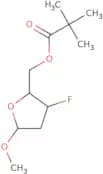
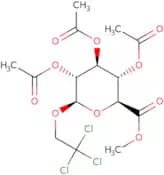
CAS :<p>Methyl 2,3-dideoxy-3-fluoro-5-O-pivaloyl-a-D-ribofuranoside is a custom synthesis of the monosaccharide methyl 2,3-dideoxy-3-fluoro-5-(O-(2,2,2,-trifluoroethoxy)carbonyl)a-D-ribofuranoside. It has been modified by the addition of a pivaloyl group in order to enhance its stability and inhibit enzymatic degradation. This product is available for purchase as a custom synthesis with high purity and modification for use in oligosaccharides and polysaccharides.</p>Degré de pureté :Min. 95%Trichloroethyl 2,3,4-tri-O-acetyl-b-D-glucopyranosiduronic acid methyl ester
CAS :<p>Trichloroethyl 2,3,4-tri-O-acetyl-b-D-glucopyranosiduronic acid methyl ester is a synthetic carbohydrate that can be used for glycosylation reactions. Trichloroethyl 2,3,4-tri-O-acetyl-b-D-glucopyranosiduronic acid methyl ester is an intermediate in the synthesis of oligosaccharides and complex carbohydrates. It can be used to modify the sugar component of glycoproteins and glycopeptides.</p>Formule :C15H19Cl3O10Degré de pureté :Min. 95%Masse moléculaire :465.66 g/molDulcitol
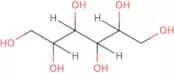
CAS :<p>Dulcitol is a sugar alcohol that is used in the food industry and as an alternative to sucrose. Dulcitol can be found in wastewater treatment and has been shown to be an inhibitor of wild-type strains of Escherichia coli and Bacteroides fragilis. It also inhibits the growth of Gram-positive bacteria, such as Staphylococcus aureus, by inhibiting their ability to synthesize DNA. Dulcitol is metabolized through a number of metabolic transformations, including hydrolysis by esterases or glucuronidases, oxidation by cytochrome P450 enzymes, reduction by glutathione reductase, or conjugation with glucuronic acid. Dulcitol can also inhibit the activity of certain enzymes such as protein kinase C (PKC).</p>Formule :C6H14O6Degré de pureté :Min. 99.0 Area-%Masse moléculaire :182.17 g/molRef: 3D-D-9500
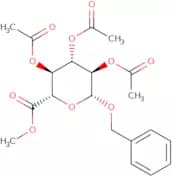
1kgÀ demander5kgÀ demander10kgÀ demander25kgÀ demander2500gÀ demander-Unit-kgkgÀ demanderBenzyl b-D-glucopyranosiduronic acid methyl ester triacetate
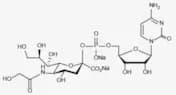
CAS :<p>Benzyl b-D-glucopyranosiduronic acid methyl ester triacetate is a synthetic sugar that can be modified to produce a wide range of oligosaccharides. It is suitable for glycosylation reactions, such as the synthesis of complex carbohydrates. This compound has high purity and is custom synthesized according to customer specifications. Benzyl b-D-glucopyranosiduronic acid methyl ester triacetate has been fluorinated, methylated, and monosaccharide modifications. These modifications provide this compound with many potential uses in the food industry, medicine, and other industries.</p>Formule :C20H24O10Degré de pureté :Min. 95%Masse moléculaire :424.4 g/molCMP-Neu5Gc sodium salt
CAS :<p>Please enquire for more information about CMP-Neu5Gc sodium salt including the price, delivery time and more detailed product information at the technical inquiry form on this page</p>Formule :C20H29N4Na2O17PMasse moléculaire :674.41 g/molTri-b-GalNAc-C12-amido-C3-azide
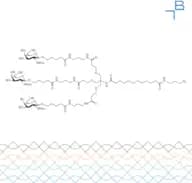
<p>Tri-b-GalNAc-C12-amido-C3-azide is a unique bifunctional ligand for ASGPR-targeted applications. The three terminal GalNAc sugars can bind to ASGPR receptors that permit hepatocyte uptake, the C12-amide linker offers a stable spacer and the C3-azide moiety enables tailored bioconjugation via CuAAC click chemistry. This design has the potential for targeted delivery of therapeutic cargo (drugs, siRNA, nanoparticles) to hepatocytes, development of LYTACs for selective protein degradation, and creation of in vivo ASGPR imaging probes.</p>Formule :C76H136N14O29Degré de pureté :Min. 95%Masse moléculaire :1,709.97 g/molTri-b-GalNAc-triazolyl-C5-amine
CAS :<p>Tri-b-GalNAc-triazolyl-C5-amine is used for ASGPR-targeted delivery research. This molecule features three ASGPR-binding groups connected by a five-carbon alkyl (C5-alkyl) linker and a reactive amine group for attaching other molecules. When tri-b-GalNAc-triazolyl-C5-amine binds to ASGPR on cells, the entire complex is efficiently taken up into the cell and allows easy conjugation to various cargos such as RNA or Cas9 complexes, specifically to liver cells (hepatocytes). Additionally, tri-GalNAc-C5-amine can be used to create targeted chimeric molecules (LYTACs) or be attached to dyes for cellular imaging.</p>Formule :C67H118N14O31Degré de pureté :Min. 95%Masse moléculaire :1,615.73 g/molTri-b-GalNAc-PEG5-sulfo-NHS ester
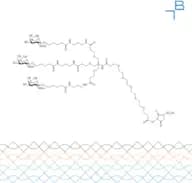
<p>Tri-b-GalNAc-PEG5-sulfo-NHS ester is similar to tri-b-GalNAc-PEG5-NHS ester with the difference of the presence of a sulfo group introducing a negative charge to this molecule, potentially influencing its stability and interaction with biological systems. This negatively charged group can improve water solubility further compared to uncharged PEG linkers and potentially influence the biodistribution of the conjugate. The NHS ester, which permits further conjugation, and the unique properties of the sulfo group, permit the development of unique targeted drug-GalNAc conjugates for new therapies.</p>Formule :C79H136N11NaO40SDegré de pureté :Min. 95%Masse moléculaire :1,935.03 g/mol4-Pentenyl 2,4-di-O-(3,4,6-tri-O-acetyl-2-deoxy-2-phthalimido b-D-glucopyranosyl)-3,6-di-O-benzyl-a-D-mannopyranoside
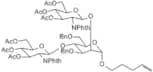
<p>4-Pentenyl 2,4-di-O-(3,4,6-tri-O-acetyl-2-deoxy-2-phthalimido b-D-glucopyranosyl)-3,6-di-O-benzyl a D mannopyranoside is an oligosaccharide that is synthesized by the modification of 2,4 di O-(3,4,6 tri O acetyl 2 deoxy 2 phthalimido b D glucopyranosyl) 3 6 di O benzyl a D mannopyranoside. It is a complex carbohydrate and has the CAS number 59061–68–0. It is soluble in water and has a molecular weight of 1,000. The molecular formula is C22H34N2O11. The structure of this compound consists of two monosaccharides: 4 pentenyl (C5H10) and 2</p>Formule :C65H70N2O24Degré de pureté :Min. 95%Masse moléculaire :1,263.25 g/mol2C-Hydroxymethyl-2,3:5,6-di-O-isopropylidene-D-talono-1,4-lactone
CAS :<p>2C-Hydroxymethyl-2,3:5,6-di-O-isopropylidene-D-talono-1,4-lactone is a synthetic monosaccharide that is used in the synthesis of oligosaccharides and polysaccharides. It can be fluorinated or methylated to form 2C-Fluoromethyl-2,3:5,6-di-O-(methyl)idene)-D-(talono)-1,4-lactone or 2C-(Methoxy)methyl -2,3:5,6 -di -O-(methyl)idene)-D-(talono)-1,4 -lactone. This product has been shown to have antiviral properties against HIV and influenza A virus.</p>Formule :C13H20O7Degré de pureté :Min. 95%Masse moléculaire :288.29 g/molN-[(e-Benzyloxycarbonylamino)caproyl]-b-L-fucopyranosylamine
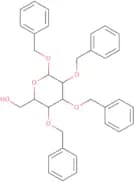
CAS :<p>N-[(e-Benzyloxycarbonylamino)caproyl]-b-L-fucopyranosylamine is a high purity, methylated, glycosylated, custom synthesized carbohydrate. It's a complex carbohydrate with an oligosaccharide structure. This product can be used for research purposes.</p>Formule :C20H30N2O7Degré de pureté :Min. 95%Masse moléculaire :410.46 g/mol1,2,3,4-Tetra-O-benzyl-b-D-galactopyranoside
CAS :<p>1,2,3,4-Tetra-O-benzyl-b-D-galactopyranoside is a high purity oligosaccharide that can be custom synthesized. It is a complex carbohydrate that can be modified with methylation, glycosylation, and carbonylation. It has CAS No. 35017-04-0 and is a synthetic compound that can be fluorinated or click modified. This product also has high purity and is a synthetic saccharide sugar.</p>Formule :C34H36O6Degré de pureté :Min. 95%Masse moléculaire :540.65 g/molEthyl 2,3-di-O-benzoyl-b-D-thiogalactopyranoside
CAS :<p>Ethyl 2,3-di-O-benzoyl-b-D-thiogalactopyranoside is a modification of the sugar galactose. It is an oligosaccharide that is a complex carbohydrate with a high purity and CAS No. 154391-05-6. This product is supplied as white powder and can be used in a number of applications including custom synthesis and synthetic chemistry. Ethyl 2,3-di-O-benzoyl-b-D-thiogalactopyranoside can be modified by methylation, glycosylation, and polysaccharide synthesis. The molecule has been fluorinated to create ethyl 2,3,4,5,6-[F]fluorohexanedioate.</p>Degré de pureté :Min. 95%5-Azido-5-deoxy-1,2-O-isopropylidene-b-D-fructose
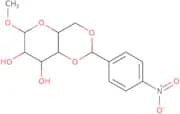
CAS :<p>5-Azido-5-deoxy-1,2-O-isopropylidene-b-D-fructose is an oligosaccharide that is custom synthesized to your specifications. This compound has been modified with a methyl group at position C1 and has been fluorinated at C2. It has also undergone glycosylation at the reducing end of the molecule and can be used as a saccharide in the synthesis of complex carbohydrates.</p>Formule :C9H15N3O5Degré de pureté :Min. 95%Masse moléculaire :245.23 g/molMethyl 4,6-O-(4-nitrophenyl)methylene-a-D-galactopyranoside
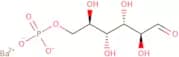
CAS :<p>Methyl 4,6-O-(4-nitrophenyl)methylene-a-D-galactopyranoside is a custom synthesis of a complex carbohydrate. This glycosylation can be modified by methylation and fluorination. The product is available in high purity and has CAS No. 849366-08-1.</p>Degré de pureté :Min. 95%D-Mannose-6-phosphate barium salt hydrate
CAS :<p>D-Mannose-6-phosphate barium salt hydrate is a glycosylation agent, which can be used in the synthesis of complex carbohydrates and other saccharides. It is also a methylation agent and can be used to modify polysaccharides. D-Mannose-6-phosphate barium salt hydrate is fluorinated with trifluoromethanesulfonic acid to introduce Fluorination groups, which can then be modified with other reagents. The compound has been shown to have Click modification activity. D-Mannose-6-phosphate barium salt hydrate is a synthetic sugar that can be custom synthesized according to the customer’s requirements. This compound has CAS number 104872-94-8 and is available in high purity, which makes it suitable for use in pharmaceutical applications.</p>Formule :C6H11BaO9P·2H2ODegré de pureté :Min. 95%Couleur et forme :SolidMasse moléculaire :395.45 g/mol



![N-[(e-Benzyloxycarbonylamino)caproyl]-b-L-fucopyranosylamine](/_next/image/?url=https%3A%2Fstatic.cymitquimica.com%2Fproducts%2F3D%2Fthumb-webp%2FMB04503.webp&w=3840&q=75)