Glycosciences
La glycosciences est l'étude des glucides et de leurs dérivés, ainsi que des interactions et des fonctions biologiques auxquelles ils participent. Ce domaine de recherche est crucial pour comprendre une grande variété de processus biologiques, y compris la reconnaissance cellulaire, la signalisation, la réponse immunitaire et le développement des maladies. La glycosciences a des applications importantes en biotechnologie, en médecine et dans le développement de nouveaux médicaments et thérapies. Chez CymitQuimica, nous proposons une large sélection de produits de haute qualité et pureté pour la recherche en glycosciences. Notre catalogue comprend des monosaccharides, des oligosaccharides, des polysaccharides, des glyconjugués et des réactifs spécifiques, conçus pour soutenir les chercheurs dans leurs études sur la structure, la fonction et les applications des glucides dans les systèmes biologiques. Ces ressources sont destinées à faciliter les découvertes scientifiques et les applications pratiques dans divers domaines des biosciences et de la médecine.
Sous-catégories appartenant à la catégorie "Glycosciences"
- Aminosucres(108 produits)
- Anticorps Glyco-Related(282 produits)
- Glycolipides(46 produits)
- Glycosaminoglycanes (GAGs)(55 produits)
- Glycosides(419 produits)
- Monosaccharides(6.622 produits)
- Oligosaccharides(3.682 produits)
- Polysaccharides(503 produits)
11041 produits trouvés pour "Glycosciences"
Trier par
Degré de pureté (%)
0
100
|
0
|
50
|
90
|
95
|
100
Benzyl 2-acetamido-4,6-di-O-acetyl-2-deoxy-a-D-glucopyranoside
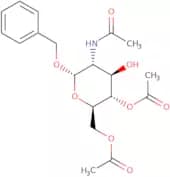
CAS :<p>Benzyl 2-acetamido-4,6-di-O-acetyl-2-deoxy-a-D-glucopyranoside is a custom synthesis that has been modified with fluorination. This product is a white crystalline solid and can be used as an Oligosaccharide, Polysaccharide and saccharide. It has been shown to have high purity and can be used for Carbohydrate Modification.</p>Formule :C19H25NO8Degré de pureté :Min. 95%Masse moléculaire :395.41 g/mol(5-Hydroxy rosiglitazone)-b-D-glucuronide
CAS :<p>(5-Hydroxy rosiglitazone)-b-D-glucuronide is a custom synthesis of a fluorinated derivative of rosiglitazone. This compound is modified by methylation, monosaccharide, and glycosylation to form a complex carbohydrate. The saccharide structure includes glucose, galactose, xylose, and arabinose. This molecule has CAS number 288853-59-8 and is listed in the Polysaccharides category.</p>Formule :C24H27N3O10SDegré de pureté :Min. 95%Couleur et forme :Off-white solid.Masse moléculaire :549.55 g/molBenzyl 2,3,4-tri-O-acetyl-4-nitromethyl-b-D-arabinopyranose
CAS :<p>Benzyl 2,3,4-tri-O-acetyl-4-nitromethyl-b-D-arabinopyranose is a water soluble, white solid that is a glycosylation product of Benzyl 2,3,4-tri-O-acetyl b D arabinopyranose and 4 nitrobenzaldehyde. It can be used for the modification of polysaccharides and as an intermediate in the synthesis of oligosaccharides. This compound has been shown to be effective in inhibiting the growth of Mycobacterium tuberculosis and Mycobacterium avium complex.</p>Formule :C19H23NO10Degré de pureté :Min. 95%Masse moléculaire :425.39 g/mol1,5-a-L-Arabinoheptaose
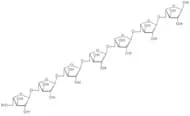
CAS :<p>1,5-a-L-Arabinoheptaose is a sugar that is found in the cell walls of bacteria. The chemical modification of this sugar has been studied extensively. The modification of this sugar with methyl groups and click chemistry has been shown to alter its properties, such as binding affinity and solubility. This modified sugar can be used for glycosylation reactions or custom synthesis. 1,5-a-L-Arabinoheptaose is also available in high purity and with a custom synthesis.</p>Formule :C35H58O29Degré de pureté :Min. 95%Couleur et forme :PowderMasse moléculaire :942.82 g/mol(-)-1,4-Di-O-benzyl-L-threitol
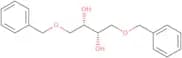
CAS :<p>(-)-1,4-Di-O-benzyl-L-threitol is an organic compound that belongs to the group of homochiral compounds. It can be synthesized from l-tartaric acid and benzaldehyde. The reaction starts with a base addition to the carbonyl group of the acid, followed by nucleophilic attack at the carbonyl carbon by a hydroxyl group on the benzaldehyde. This reaction is mechanistic, showing electron transfer as well as desymmetrization. (-)-1,4-Di-O-benzyl-L-threitol can be used for asymmetric synthesis of alkanes and tetrahydrofurans without requiring any chiral reagents or catalysts. It has also been shown to react with acetone and ethylene glycol in dioxolane and alkylation reactions.</p>Formule :C18H22O4Degré de pureté :Min. 95%Masse moléculaire :302.36 g/molBenzyl 2-azido-2-deoxy-a-D-galactopyranoside
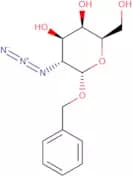
CAS :<p>Benzyl 2-azido-2-deoxy-a-D-galactopyranoside (α-OBn GalN3) is a compound based on the structural features of α-OBn GalNAc. It features an azide functionality at C2 instead of the N-acetyl. α-OBn GalN3 inhibits glycosyltransferases responsible for O-GalNAc-type glycosylation and induces apoptosis in PC/AA/C1/SB10C and HCA7/C29 cells. The compound was tested at 0.5 mM for 4 days with different colorectal cell lines and showed an inhibition of cell growth. α-OBn GalN3 was also used as an intermediate for the total synthesis of (+)-Neocarzinostatin chromophore.</p>Formule :C13H17N3O5Degré de pureté :Min. 95%Masse moléculaire :295.29 g/mola-L-Rhamnopyranosyl bromide tribenzoate
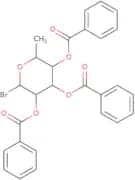
CAS :<p>a-L-Rhamnopyranosyl bromide tribenzoate is a methylated saccharide that can be used in the synthesis of oligosaccharides and polysaccharides. It is a fluorinated compound, which can be used in click chemistry and has been shown to have anti-inflammatory properties. a-L-Rhamnopyranosyl bromide tribenzoate has been shown to inhibit the growth of cancer cells by inhibiting protein synthesis. This methylation product is water soluble and is available as a white powder at high purity. It can also be used in glycosylation reactions as well as custom syntheses.</p>Degré de pureté :Min. 95%2,3,4,6-Tetra-O-acetyl-a-D-glucopyranose
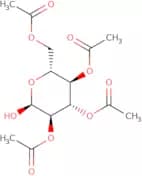
CAS :<p>2,3,4,6-Tetra-O-acetyl-a-D-glucopyranose is a chemical compound that is the product of the reaction between metabisulfite and anhydrous acetone in a refluxing process. The reaction can be done in two ways: one with thiourea and sodium metabisulfite or another with recycled acetone. The yield of this compound is dependent on the reaction time and process. 2,3,4,6-Tetra-O-acetyl-a-D-glucopyranose has been used as a raw material for the production of pharmaceuticals such as steroids and antibiotics.</p>Formule :C14H20O10Degré de pureté :Min. 95%Masse moléculaire :348.3 g/molGalacturonan DP3/DP4 sodium salt
<p>A mixture of sodium trigalacturonate & tetragalacturonate (α-1,4 sodium galacturonotriose + α-1,4 sodium galacturonotetraose) is derived from pectin or pectic acid, by enzymatic or partial acid hydrolysis (Combo, 2012). It is used inâ¯galacturonic acidâ¯metabolism research as a substrate to identify, differentiate, and characterize endo- and exopolygalacturonase(s), and gluconase(s) (Jayani, 2005). The addition of very short fragments of homogalacturonan, tri-galacturonate, and tetra-galacturonate oligosaccharides, restore development in dark-grown, de-etiolated seedling mutants, suggesting that they are unable to generate de-methylesterified pectin fragments. A model of spatiotemporally separated photoreceptive and signal-responsive cell types has been proposed, that contains overlapping subsets of the regulatory network of light-dependent seedling development (Sinclair, 2017).</p>Degré de pureté :Min. 95%Couleur et forme :Powder1,2,3-Tri-O-Acetyl-5-deoxy-D-ribose
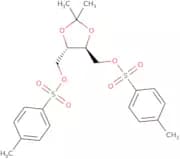
CAS :<p>1,2,3-Tri-O-acetyl-5-deoxy-D-ribose is an efficient and environmentally benign method for the synthesis of acyclic acetals. The condensation process involves the use of a chloroformate to introduce the carbonyl group into a hydroxyl group on the sugar. This reaction can be carried out in an organic solvent or water as well. The reaction rate is fast due to a high nucleophilicity of the chloride ion. The product can then be converted into an amide by reacting it with ammonia in a basic medium. This reaction results in a high yield and is useful for recycling acetonitrile that would otherwise be released into the environment.</p>Formule :C11H16O7Degré de pureté :Min. 95%Masse moléculaire :260.24 g/mol2,3-O-Isopropylidene-1,4-di-O-tosyl-L-threitol
CAS :<p>2,3-O-Isopropylidene-1,4-di-O-tosyl-L-threitol is a custom synthesis of the sugar 2,3-O-isopropylidene-1,4-di(tosyl)-L-threitol. The monomeric sugar is fluorinated and methylated before glycosylation. This modification prevents enzymatic degradation and increases the stability of the compound.</p>Formule :C21H26O8S2Degré de pureté :Min. 95%Masse moléculaire :470.56 g/mol2-O-Methyl-a-D-N-glycoloylneuraminic acid
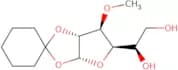
CAS :<p>2-O-Methyl-a-D-N-glycoloylneuraminic acid (2OMG) is a synthetic sugar that is used as a monosaccharide. It can be used to modify the glycosylation of saccharides, such as mono-, oligo-, and polysaccharides. The chemical structure of 2OMG includes one sugar unit and one methyl group in the alpha position, which makes it useful for click chemistry. This product is available in high purity and has a CAS number of 14206-42-9.</p>Formule :C12H21NO10Degré de pureté :Min. 95%Masse moléculaire :339.3 g/mol1,2-O-Cyclohexylidene-3-O-methyl-a-D-glucofuranose
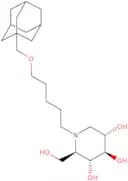
CAS :<p>1,2-O-Cyclohexylidene-3-O-methyl-a-D-glucofuranose is a synthetic cyclic oligosaccharide that can be modified with methyl groups or fluorine atoms. It is a monosaccharide that has been shown to have potential for use as a drug delivery system.</p>Formule :C13H22O6Degré de pureté :Min. 95%Masse moléculaire :274.31 g/molAMP-Deoxynojirimycin - Solution in ethanol
CAS :<p>Potent inhibitor of non-lysosomal glucosylceramidase, without having any effect on glucosylceramide synthase and glucosidases. Anti-inflammatory and immunosuppressive effect of AMP-DNM demonstrated in a model of hapten-induced colitis in vivo. Reduces glycosphingolipids and increases insulin sensitivity in murine models of obesity-related insulin resistance. Induces sterol regulatory element-binding protein (SREBP) target genes in HepG2 cells, activating cholesterol biosynthesis.</p>Formule :C22H39NO5Degré de pureté :Min. 95%Couleur et forme :Colorless Clear LiquidMasse moléculaire :397.55 g/mol5-Deoxy-1,2-O-isopropylidene-5-[(2S-phenylpyrrolidine)-1-yl]-a-D-xylofuranose
CAS :<p>5-Deoxy-1,2-O-isopropylidene-5-[(2S-phenylpyrrolidine)-1-yl]-a-D-xylofuranose is a monosaccharide that was synthesized by the fluorination of D-xylose in the presence of a catalytic amount of boron trifluoride. The methylation of the hydroxyl group at C5 with dimethyl sulfate followed by a click modification to introduce a terminal alkyne moiety, which can be reacted with amines, alcohols, or thiols to produce glycosides. This compound is an oligosaccharide that is classified as a complex carbohydrate. It has been used as a substrate for glycosylation reactions and has shown potential for use in polysaccharide synthesis.</p>Formule :C18H25NO4Degré de pureté :Min. 95%Masse moléculaire :319.4 g/molMethyl α-D-glucopyranoside 2,3,4,6-tetrasulfate potassium
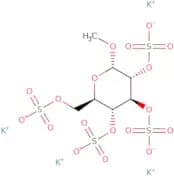
CAS :<p>Methyl a-D-glucopyranoside 2,3,4,6-tetrasulfate potassium salt is a custom synthesis. It is a modification of a monosaccharide and an oligosaccharide with the use of click chemistry. The product is synthesized by fluorinating the methyl group of the glycosyl hydroxyl group in order to increase its stability. The resulting compound has been shown to have inhibitory effects on bacterial growth and to be effective against methicillin resistant Staphylococcus aureus (MRSA).</p>Formule :C7H14O18S4•K4Degré de pureté :Min. 95%Masse moléculaire :670.83 g/molDecyl glucose neopentyl glycol
CAS :<p>Decyl glucose neopentyl glycol is a molecule that is commonly used in cell-based assays to measure the hydrogen peroxide release by cells. It is also used to transport hydrogen peroxide, which is a reactive oxidative species, intracellularly and extracellularly. Decyl glucose neopentyl glycol has been shown to have a range of different isoforms in cellular systems. This allows it to be used as an effective fluorescent marker for the detection of hydrogen peroxide mediated events.</p>Formule :C35H68O12Degré de pureté :Min. 95%Masse moléculaire :680.91 g/molDi-a-D-galactosyl-mannopentaose
<p>Di-a-D-galactosyl-mannopentaose is a mannopentaose derivative that has been modified with a methyl group at the C2 position and fluorinated at the C6 position. This compound can be used as an intermediate in the production of oligosaccharides and polysaccharides, which are complex carbohydrates that contain many sugar molecules. The product is of high purity, with no detectable impurities. It was synthesized using a custom synthesis approach, which allows for modification of the chemical structure to produce desired properties. This product is stable when stored at room temperature and does not require refrigeration. It does not contain any organic solvents or volatile compounds and is free from endotoxins or heavy metals.</p>Degré de pureté :Min. 95%Masse moléculaire :1,153 g/molDipyridamole mono-O-b-D-glucuronide
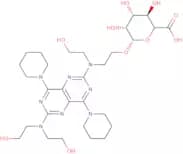
CAS :<p>Dipyridamole is a synthetic fluorinated sugar that is used in research as a model for natural oligosaccharides. It has been shown to be useful for investigating the glycosylation reactions of polysaccharides and proteins, as well as for studying carbohydrate-protein interactions. Dipyridamole mono-O-b-D-glucuronide is an example of a product that can be custom synthesized by our laboratory. The product has purity of >99% and CAS No. 63912-02-7.</p>Formule :C30H48N8O10Degré de pureté :Min. 95%Couleur et forme :Yellow solid.Masse moléculaire :680.75 g/mol4-Nitrophenyl 2-benzoyl-4,6-O-benzylidene-a-D-mannopyranoside
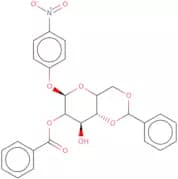
CAS :<p>4-Nitrophenyl 2-benzoyl-4,6-O-benzylidene-a-D-mannopyranoside is a glycosylated sugar that has been modified with methyl groups and fluorine atoms. It is a synthetic, monosaccharide oligosaccharide that can be custom synthesized to suit your needs. This product is CAS No. 94063-92-0 and it is available in high purity.</p>Formule :C26H23NO9Degré de pureté :Min. 95%Masse moléculaire :493.46 g/mol




![5-Deoxy-1,2-O-isopropylidene-5-[(2S-phenylpyrrolidine)-1-yl]-a-D-xylofuranose](/_next/image/?url=https%3A%2Fstatic.cymitquimica.com%2Fproducts%2F3D%2Fthumb-webp%2FMD07491.webp&w=3840&q=75)