Glycosciences
Sous-catégories appartenant à la catégorie "Glycosciences"
- Aminosucres(108 produits)
- Anticorps Glyco-Related(284 produits)
- Glycolipides(46 produits)
- Glycosaminoglycanes (GAGs)(55 produits)
- Glycosides(419 produits)
- Monosaccharides(6.622 produits)
- Oligosaccharides(3.693 produits)
- Polysaccharides(506 produits)
11036 produits trouvés pour "Glycosciences"
Phenyl 2,3,4-tri-O-acetyl-b-D-thioglucuronide methyl ester
CAS :Phenyl 2,3,4-tri-O-acetyl-b-D-thioglucuronide methyl ester is a custom synthesis. It is a complex carbohydrate with an Oligosaccharide and Polysaccharide structure. The modification of saccharides with Methylation, Glycosylation, or Carbohydrate changes the chemical properties of this compound. Phenyl 2,3,4-tri-O-acetyl-b-D-thioglucuronide methyl ester has a CAS No. 62812-42-2 and is also known as sugar. This compound is fluorinated at the phenolic hydroxyl group to produce a stable molecule with high purity.
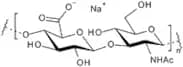
Degré de pureté :Min. 95%Hyaluronic sodium - Average MW 0.2-0.5 million Daltons
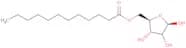
CAS :The sodium salt of hyaluronic acid is a glycosaminoglycan found in many organs, where it functions as a joint lubricant and shock absorber. It is obtained principally from synovial fluid, vitreous humor of the eye, umbilical tissue and cocks comb. The chemical structure of hyaluronic is a disaccharide repeat of β-(1,3) glucuronic acid and β-(1,4) N-acetyl glucosamine.Formule :(C14H20NO11Na)nDegré de pureté :Min. 95%Couleur et forme :Powder5-O-Lauryl-D-xylofuranose
CAS :5-O-Lauryl-D-xylofuranose is a lipase that can hydrolyze pentoses and hexoses. This enzyme has been shown to be active at temperatures between 0°C and 40°C, with optimal activity at 30°C. 5-O-Lauryl-D-xylofuranose is also thermostable and can be immobilized on silica gel or alumina. It is used in the manufacture of lysine, L-arabinose, and D-xylose. The enzyme catalyzes the reaction by removing a hydroxyl group from the pentoses or hexoses through an ester linkage with a dodecanoate group. The aliphatic chain of 5-O-lauryl dodecanoate is attached to the pentose or hexose molecule in an ester linkage by a thioether bond.
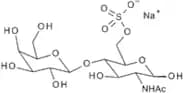
Formule :C17H32O6Degré de pureté :Min. 95%Masse moléculaire :332.43 g/mol2-Acetamido-2-deoxy-4-O-(b-D-galactopyranosyl)-6-sulfo-D-glucopyranose sodium salt
CAS :2-Acetamido-2-deoxy-4-O-(b-D-galactopyranosyl)-6-sulfo-D-glucopyranose sodium salt is a synthetic compound that is used in glycosylation reactions. It can be used for the production of oligosaccharides and complex carbohydrates, as well as for the modification of natural products. 2 Acetamido -2 deoxy -4 O-(b-D galactopyranosyl) -6 sulfo D glucopyranose sodium salt has a purity of 98% and was synthesized by fluorination. The CAS number is 145447 78 5.
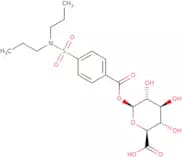
Formule :C14H24NO14S·NaDegré de pureté :90%Couleur et forme :White PowderMasse moléculaire :485.39 g/molProbenecid acyl b-D-glucuronide
CAS :Probenecid is a weak acid that is rapidly converted to an active metabolite in the body. It is used as an analgesic, antipyretic, and anti-inflammatory drug. Probenecid has been shown to inhibit the formation of biliary acids in animals and humans and has been used in the treatment of chronic inflammatory conditions such as rheumatoid arthritis. The most common route of administration for this drug is orally, although it can also be given intravenously or intramuscularly. Probenecid also acts as a nonsteroidal anti-inflammatory drug (NSAID). This means that it inhibits prostaglandin synthesis by blocking cyclooxygenase enzymes. This reduces inflammation, pain, and fever by inhibiting the production of prostaglandins that play a role in these processes.
Formule :C19H27NO10SDegré de pureté :Min. 95%Couleur et forme :White To Off-White SolidMasse moléculaire :461.48 g/molGalactosyl isomaltol
CAS :Galactosyl isomaltol is a sugar molecule that is produced by the enzymatic hydrolysis of lactose. It has been shown to have antimicrobial activity against human pathogens and can be used as an antioxidant. Galactosyl isomaltol binds to lysine residues on bacterial cell walls, preventing the formation of new cells and causing cell death by interfering with protein synthesis. The addition of galactosyl isomaltol to food decreases the levels of phycocyanin, which are a type of fluorescent pigment found in blue green algae. This compound also has magnetic resonance analysis properties that could be used for diagnosis.
Formule :C12H16O8Degré de pureté :Min. 95%Couleur et forme :PowderMasse moléculaire :288.25 g/mol3-Deoxy-D-gluconic acid
CAS :3-Deoxy-D-gluconic acid is a chemical compound that has the chemical structure of C6H12O6. It is a white crystalline solid that can be found in nature as a reaction product of glucose and oxygen. 3-Deoxy-D-gluconic acid can also be synthesized by reacting D-glucose with nitrous acid or sulfur dioxide. 3-Deoxy-D-gluconic acid is an organic acid and has been shown to inhibit the growth of filamentous fungi by acting on their glycosidic bonds. This chemical compound has not been shown to have any adverse health effects in humans, although it may cause irritation if it comes into contact with skin or eyes.
Formule :C6H12O6Degré de pureté :Min. 95%Masse moléculaire :180.16 g/molOctyl b-D-thiogalactopyranoside
CAS :Octyl b-D-thiogalactopyranoside is a methylated derivative of galactose. It is a polysaccharide that is used to modify saccharides and oligosaccharides for research purposes. The product is used in glycosylation reactions and can be custom synthesized to meet specific requirements. Octyl b-D-thiogalactopyranoside has been modified with fluorine, which increases its stability against hydrolysis. The product is also available in high purity, making it ideal for use in synthesis reactions.
Formule :C14H28O5SCouleur et forme :PowderMasse moléculaire :308.44 g/mol3-Epicasuarine
CAS :3-Epicasuarine is an Oligosaccharide, which is a carbohydrate with a low molecular weight. It has two monosaccharides, which are the structural units of carbohydrates. 3-Epicasuarine is a glycosylation product of sucrose and glycine and has been fluorinated at the 8-position. The chemical formula for 3-Epicasuarine is C6H14FO4S2. This compound can be custom synthesized to meet your specifications or it can be purchased from us at a reasonable price.
A variety of modifications are available including methylation, click chemistry, and modification with saccharride residues such as maltose or glucose.
3-Epicasuarine may be used in the synthesis of oligosaccharides or as an intermediate in the synthesis of complex carbohydrates. It has been shown to have high purity and can be synthesized at any desired purity level.Formule :C8H15NO5Degré de pureté :Min. 95%Masse moléculaire :205.21 g/molDi-O-isopropylidene psicose
Di-O-isopropylidene psicose is a synthetic sugar that is a modification of the natural compound, psicose. It can be used for the synthesis of oligosaccharides, polysaccharides and other complex carbohydrates. Di-O-isopropylidene psicose can be methylated and glycosylated to form other sugar derivatives or fluorinated to form fluoroquinolones. This sugar has been shown to have high purity and stability under a wide range of conditions.
Degré de pureté :Min. 95%2-Deoxy-D-ribose
CAS :Used in synthetic organic chemistry and natural product synthesis. Induces apoptosis by inhibiting the synthesis and increasing the efflux of glutathione. It is used for synthesis of optically active dipyrrolyl alkanols from pyrroles on the surface of montmorillonite KSF clay.
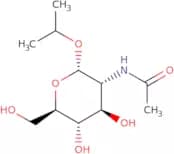
Formule :C5H10O4Degré de pureté :Min. 99.0 Area-%Masse moléculaire :134.13 g/molIsopropyl 2-acetamido-2-deoxy-α-D-glucopyranoside
CAS :Isopropyl 2-acetamido-2-deoxy-α-D-glucopyranoside is a modification of an oligosaccharide. It has been synthesized and characterized by NMR spectroscopy. This carbohydrate is custom synthesized as a complex carbohydrate. It is also a synthetic carbohydrate. Isopropyl 2-acetamido-2-deoxy-α-D-glucopyranoside is used as a monosaccharide, in glycosylation, methylation, polysaccharides, and other sugar chemistry reactions. Isopropyl 2-acetamido-2-deoxy-α-D-glucopyranoside can be used for fluorination or saccharides.
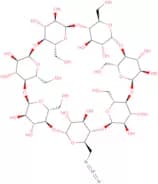
Formule :C11H21NO6Degré de pureté :Min. 95%Couleur et forme :PowderMasse moléculaire :263.29 g/mol6-Azido-6-deoxy-b-cyclodextrin
CAS :This beta-cyclodextrin (β-CD) derivative is a functionalized cyclic oligosaccharide composed of seven glucose units, characterized by a hydrophilic exterior and a lipophilic cavity (bigger than α-CD and smaller than γ-CDs), which allows it to encapsulate various guest molecules. This structural feature facilitates its use in multiple applications, including pharmaceuticals, food enhancement, and cosmetics. In the pharmaceutical industry, it enhances the solubility and stability of poorly water-soluble drugs, improving their bioavailability and efficacy while also masking unpleasant tastes. The food sector utilizes it as a stabilizer for flavors, colors, and nutrients, extending shelf life by protecting sensitive ingredients from degradation. In cosmetics, it serves as a complexing agent for fragrances and active components, ensuring their stability and controlled release. Its use expands to many other fields, including nanotechnology for drug delivery systems, environmental remediation for extracting organic pollutants, textiles for slow-release fragrances, and analytical chemistry for chiral separation.
Formule :C42H69N3O34Degré de pureté :Min. 98 Area-%Couleur et forme :PowderMasse moléculaire :1,160 g/molHydroxyethyl cellulose - Viscosity 2400 to 2800(1% aqueous solution)
CAS :Water thickener; rheological control additive; has industrial appplications
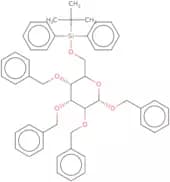
Degré de pureté :Min. 95%1,2,3,4-Tetra-O-benzyl-6-O-tert-butyldiphenylsilyl-a-D-mannopyranose
CAS :1,2,3,4-Tetra-O-benzyl-6-O-tert-butyldiphenylsilyl-a-D-mannopyranose is a synthetic glycoside that can be used as a building block for the synthesis of complex carbohydrates. It is a fluorinated sugar that can be modified with methyl groups and other functional groups. This product is available in high purity and can be custom synthesized to meet your specific needs.
Formule :C50H54O6SiDegré de pureté :Min. 95%Masse moléculaire :779.07 g/molL-Idose - Aqueous solution
CAS :L-Idose is an aqueous solution of dextrose and anhydrous dextrose. It is a carbohydrate that provides energy to the body. L-Idose can be used to minimize the effects of certain organisms, such as bacteria, yeast, and fungi. It also helps to maintain blood glucose levels in people with diabetes by providing a source of glucose for their metabolism. L-Idose can be found in fruits and other foods that contain carbohydrates, such as breads, cereals, pastas, rice, potatoes, pasta sauces, chips, and crackers.
Formule :C6H12O6Degré de pureté :Min. 98 Area-%Couleur et forme :Colorless Clear LiquidMasse moléculaire :180.16 g/molD-Galactosamine hydrochloride
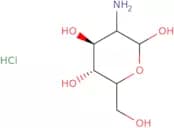
CAS :D-Galactosamine (GalN) is an aldohexose (2-amino-2-deoxygalactose) in which the hydroxyl group at position 2 is replaced by an amino group (Collins, 2006). Galactosamine (as the N-acetyl derivative) forms a key part of both N- and O-linked glycoproteins, glycolipids and glycosaminoglycans. Treatment of experimental animals with D-galactosamine / lipopolysaccharide causes lethal liver injury characterized by apoptosis of the hepatocyte and it is used as a laboratory model to study the effect of therapeutic agents (Hirono, 2001).
Formule :C6H13NO5·HClDegré de pureté :Min. 98 Area-%Couleur et forme :White Off-White PowderMasse moléculaire :215.63 g/mol2,3-O-Isopropylidene-5-O-tosyl-D-ribonic acid-1,4-lactone
CAS :2,3-O-Isopropylidene-5-O-tosyl-D-ribonic acid-1,4-lactone is a synthetic 2,3:5,6-diisopropylidene glycoside of D-ribose. It is a methylated sugar with an alpha-(2,3)-linked D-(+)-glucopyranosyl moiety and an alpha-(2,5)-linked L(+)-fucopyranosyl moiety. This compound can be used as a building block for the synthesis of polysaccharides and glycoconjugates. 2,3:5,6-Diisopropylidene glycoside of D-ribose is also used to synthesize oligosaccharides in carbohydrate chemistry.
Formule :C12H14O7SDegré de pureté :Min. 95%Couleur et forme :White PowderMasse moléculaire :302.04 g/molBlood group A type 4 linear trisaccharide-NGL
Useful oligosaccharide-lipid conjugate for raising antibodies.
Degré de pureté :Min. 95%Octanoyl D-glucopyranoside
CAS :Octanoyl D-glucopyranoside is a potent inhibitor of histidine-mediated endocytosis and the activation of NF-κB signaling in human osteoarthritic chondrocytes. It has also been shown to inhibit viral replication by adenovirus. Octanoyl D-glucopyranoside inhibits the activity of several enzymes, including protein kinase C (PKC), nf-kappa B (NF-κB), and photolyase, which are all involved in inflammation. This compound also inhibits transcription, polymerization, and genotype expression. Octanoyl D-glucopyranoside has been shown to be effective against necrosis factor alpha (TNFα) and interleukin 1 beta (IL1β).
Formule :C14H26O7Degré de pureté :Min. 95%Couleur et forme :White to off-white solid.Masse moléculaire :306.35 g/mol