Glycosciences
Sous-catégories appartenant à la catégorie "Glycosciences"
- Aminosucres(108 produits)
- Anticorps Glyco-Related(284 produits)
- Glycolipides(46 produits)
- Glycosaminoglycanes (GAGs)(55 produits)
- Glycosides(419 produits)
- Monosaccharides(6.622 produits)
- Oligosaccharides(3.693 produits)
- Polysaccharides(506 produits)
11036 produits trouvés pour "Glycosciences"
6'-Fucosyllactose
CAS :6'-Fucosyllactose is a fucosylated form of lactose, which is a complex carbohydrate. It is a custom synthesis and has been synthesized in high purity. 6'-Fucosyllactose has CAS No. 80756-86-1 and can be found as an oligosaccharide or polysaccharide. 6'-Fucosyllactose is a monosaccharide that has been methylated and glycosylated to increase its stability. The saccharides are modified with fluorination to make it more soluble in water and to improve its solubility in organic solvents.
Formule :C18H32O15Degré de pureté :Min. 95%Couleur et forme :PowderMasse moléculaire :488.44 g/molMethyl 3-O-benzyl-b-D-xylopyranoside
Methyl 3-O-benzyl-b-D-xylopyranoside is a modified oligosaccharide that is used in the synthesis of complex carbohydrate structures. It has been shown to be a good substrate for glycosylation. Methyl 3-O-benzyl-b-D-xylopyranoside is also a monosaccharide, and can be fluorinated to produce a saccharide with potential antiholistic properties.
Degré de pureté :Min. 95%a-D-Arabinopyranosyl azide
CAS :a-D-Arabinopyranosyl azide is a new modified sugar that has been synthesized by the Click chemistry method. It is a complex carbohydrate with different substituents at the C2, C4, and C6 positions. This compound can be used for methylation, saccharide, polysaccharide, glycosylation or other custom synthesis. The CAS No. for this product is 138892-04-3, and it has a purity of >99%.
Formule :C5H9N3O4Degré de pureté :Min. 95%Masse moléculaire :175.14 g/mol3-Amino-3-deoxy-D-glucose HCl
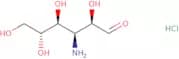
CAS :3-Amino-3-deoxy-D-glucose HCl is a synthetic compound that inhibits the efflux of glucose from cells. It has been shown to inhibit growth in Saccharomyces cerevisiae, which may be due to its ability to inhibit the function of an efflux pump. 3-Amino-3-deoxy-D-glucose HCl has also shown antifungal activity against Candida albicans and Aspergillus fumigatus.
Formule :C6H13NO5·HClDegré de pureté :Min. 98 Area-%Couleur et forme :Slightly Yellow PowderMasse moléculaire :215.63 g/moln-Dodecyl-β-D-maltoside
CAS :Dodecyl maltoside (DDM) is a non-ionic detergent that consists of a hydrophilic maltose head and a hydrophobic long chain alkyl tail. It has a relatively low critical micelle concentration of 0.17 mM and is considered a gentle but powerful detergent. DDM is often the best tool for solubilising/crystallising membrane proteins. Membrane proteins usually have α-helical structures that are easily destroyed when the protein is released from its membrane environment. DDM can often preserve these structures during the solubilisation. In addition, membrane proteins can often be renatured when isolated with DDM.
Formule :C24H46O11Masse moléculaire :510.63 g/mol(2R, 3S, 4R, 5S) -2- Butyl-3, 4, 5- piperidinetriol
(2R, 3S, 4R, 5S) -2- Butyl-3, 4, 5- piperidinetriol is a custom synthesis of a fluorinated saccharide. It is a modified monosaccharide that has been synthesized by methylation and click modification. This molecule is an oligosaccharide with glycosylation at both the sugar and carbohydrate level. The saccharide in this compound is a complex carbohydrate that contains two sugar units.
Degré de pureté :Min. 95%2,3-O-Isopropylidene-5-O-tosyl-D-ribonic acid-1,4-lactone
CAS :2,3-O-Isopropylidene-5-O-tosyl-D-ribonic acid-1,4-lactone is a synthetic 2,3:5,6-diisopropylidene glycoside of D-ribose. It is a methylated sugar with an alpha-(2,3)-linked D-(+)-glucopyranosyl moiety and an alpha-(2,5)-linked L(+)-fucopyranosyl moiety. This compound can be used as a building block for the synthesis of polysaccharides and glycoconjugates. 2,3:5,6-Diisopropylidene glycoside of D-ribose is also used to synthesize oligosaccharides in carbohydrate chemistry.
Formule :C12H14O7SDegré de pureté :Min. 95%Couleur et forme :White PowderMasse moléculaire :302.04 g/molL-Fucose
CAS :L-Fucose is a monosaccharide that is an important component of glycoproteins and glycolipids. L-Fucose is also found in the cell wall of bacteria. The most abundant sources of L-fucose are from the hydrolysis of lactose or sucrose by bacteria, or as a result of intestinal microbial fermentation. L-Fucose has been shown to be involved in the regulation of many metabolic processes, including the glomerular filtration rate and sephadex g-100 binding capacity in the kidney. It has also been shown to improve growth in infant rats with protein malnutrition. The enzyme that catalyzes the conversion of D-arabinose to L-fucose is known as fucokinase.
Formule :C6H12O5Degré de pureté :Min. 98.0 Area-%Masse moléculaire :164.16 g/molRef: 3D-F-8060
Produit arrêtéBlood group A type 4 linear trisaccharide-NGL
Useful oligosaccharide-lipid conjugate for raising antibodies.
Degré de pureté :Min. 95%O-(2,3,4,6-Tetra-O-acetyl-a-D-mannopyranosyl)-L-serine benzyl ester
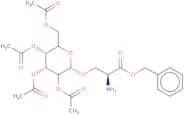
CAS :A protected mannose amino acid
Formule :C24H31NO12Degré de pureté :Min. 95 Area-%Couleur et forme :PowderMasse moléculaire :525.5 g/molMono(6-mercapto-6-deoxy)-β-cyclodextrin
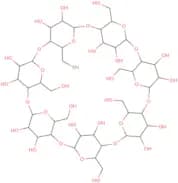
CAS :This beta-cyclodextrin (β-CD) derivative is a functionalized cyclic oligosaccharide composed of seven glucose units, characterized by a hydrophilic exterior and a lipophilic cavity (bigger than α-CD and smaller than γ-CDs), which allows it to encapsulate various guest molecules. This structural feature facilitates its use in multiple applications, including pharmaceuticals, food enhancement, and cosmetics. In the pharmaceutical industry, it enhances the solubility and stability of poorly water-soluble drugs, improving their bioavailability and efficacy while also masking unpleasant tastes. The food sector utilizes it as a stabilizer for flavors, colors, and nutrients, extending shelf life by protecting sensitive ingredients from degradation. In cosmetics, it serves as a complexing agent for fragrances and active components, ensuring their stability and controlled release. Its use expands to many other fields, including nanotechnology for drug delivery systems, environmental remediation for extracting organic pollutants, textiles for slow-release fragrances, and analytical chemistry for chiral separation.Formule :C42H70O34SDegré de pureté :Min. 95%Couleur et forme :PowderMasse moléculaire :1,151.05 g/molRef: 3D-GDA64455
Produit arrêté4-O-[(2-Azidoethoxyimino)-6-deoxy-β-D-galactopyranosyl]-2-deoxy-α-D-glucopyranose-2,1-oxazoline
CAS :Please enquire for more information about 4-O-[(2-Azidoethoxyimino)-6-deoxy-β-D-galactopyranosyl]-2-deoxy-α-D-glucopyranose-2,1-oxazoline including the price, delivery time and more detailed product information at the technical inquiry form on this page
Formule :C16H25N5O10Degré de pureté :Min. 95%Masse moléculaire :447.4 g/molDextran sulfate sodium salt - MW 9,000-16,000
CAS :Dextran sulfate sodium salt is a water-soluble polymer that is used as a drug carrier and has many applications in the pharmaceutical industry. It is an oligosaccharide with an average molecular weight of 9,000 to 16,000 Daltons. Dextran sulfate sodium salt can be used for the treatment of cavities, especially those that are infected or in which there is a risk of infection. It can also be used for intubation and has been shown to be effective at reducing allergic reactions by blocking the release of histamine by mast cells. Dextran sulfate sodium salt also has kinetic properties and can be used to study enzymatic reactions. This polymer is not toxic because it cannot be absorbed through the skin or gastrointestinal tract.
Formule :(C6H7Na3O14S3)n4-Aminophenyl β-D-glucuronide
CAS :4-Aminophenyl b-D-glucuronide sodium is a glycosylation reagent used in the synthesis of complex carbohydrates, polysaccharides and oligosaccharides.
Formule :C12H15NO7Degré de pureté :Min. 95%Masse moléculaire :285.25 g/molPhenyl 2,3,4-tri-O-acetyl-b-D-thioglucuronide methyl ester
CAS :Phenyl 2,3,4-tri-O-acetyl-b-D-thioglucuronide methyl ester is a custom synthesis. It is a complex carbohydrate with an Oligosaccharide and Polysaccharide structure. The modification of saccharides with Methylation, Glycosylation, or Carbohydrate changes the chemical properties of this compound. Phenyl 2,3,4-tri-O-acetyl-b-D-thioglucuronide methyl ester has a CAS No. 62812-42-2 and is also known as sugar. This compound is fluorinated at the phenolic hydroxyl group to produce a stable molecule with high purity.
Degré de pureté :Min. 95%L-g-Ethylidene glutanic acid
L-g-Ethylidene glutamic acid is an organic compound that is used in the production of pharmaceuticals, agrochemicals, and other chemicals. It can be synthesized by the methylation of L-glutamic acid with formaldehyde and sodium cyanoborohydride. L-g-Ethylidene glutamic acid has also been modified by a click reaction to create a fluorinated derivative. This product is a white crystalline solid that has a CAS number. The product is available at high purity and can be ordered as either monosaccharide or polysaccharide.
L-g-Ethylidene glutamic acid is a sugar that belongs to the carbohydrate family and can be classified as complex carbohydrates because it comprises two or more sugars linked together. This product may also be referred to as an oligosaccharide or polysaccharide, depending on its molecular size.Degré de pureté :Min. 95%2,6-Dideoxy-2-fluoro-L-mannose
2,6-Dideoxy-2-fluoro-L-mannose is a monosaccharide that is a fluorinated glycosylate. It is used in the synthesis of oligosaccharides and has been shown to be useful for click modification of proteins. This compound is also used as a substrate for methylation reactions. 2,6-Dideoxy-2-fluoro-L-mannose contains an oxygen atom at the C1 position and two hydroxyl groups at the C3 and C4 positions on the ring. The molecular weight of this compound is 180.16 g/mol.
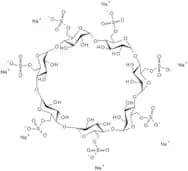
Degré de pureté :Min. 95%b-Cyclodextrin hydrogen sulfate, sodium salt
CAS :This beta-cyclodextrin (β-CD) derivative is a functionalized cyclic oligosaccharide composed of seven glucose units, characterized by a hydrophilic exterior and a lipophilic cavity (bigger than α-CD and smaller than γ-CDs), which allows it to encapsulate various guest molecules. This structural feature facilitates its use in multiple applications, including pharmaceuticals, food enhancement, and cosmetics. In the pharmaceutical industry, it enhances the solubility and stability of poorly water-soluble drugs, improving their bioavailability and efficacy while also masking unpleasant tastes. The food sector utilizes it as a stabilizer for flavors, colors, and nutrients, extending shelf life by protecting sensitive ingredients from degradation. In cosmetics, it serves as a complexing agent for fragrances and active components, ensuring their stability and controlled release. Its use expands to many other fields, including nanotechnology for drug delivery systems, environmental remediation for extracting organic pollutants, textiles for slow-release fragrances, and analytical chemistry for chiral separation.
Degré de pureté :Min. 95%Couleur et forme :PowderGalactosyl isomaltol
CAS :Galactosyl isomaltol is a sugar molecule that is produced by the enzymatic hydrolysis of lactose. It has been shown to have antimicrobial activity against human pathogens and can be used as an antioxidant. Galactosyl isomaltol binds to lysine residues on bacterial cell walls, preventing the formation of new cells and causing cell death by interfering with protein synthesis. The addition of galactosyl isomaltol to food decreases the levels of phycocyanin, which are a type of fluorescent pigment found in blue green algae. This compound also has magnetic resonance analysis properties that could be used for diagnosis.
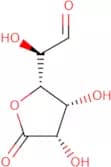
Formule :C12H16O8Degré de pureté :Min. 95%Couleur et forme :PowderMasse moléculaire :288.25 g/molD-Glucuronolactone
CAS :D-Glucuronolactone is supposed to be involved in detoxification processes.
Formule :C6H8O6Masse moléculaire :176.13 g/mol





![4-O-[(2-Azidoethoxyimino)-6-deoxy-β-D-galactopyranosyl]-2-deoxy-α-D-glucopyranose-2,1-oxazoline](/_next/image/?url=https%3A%2Fstatic.cymitquimica.com%2Fproducts%2F3D%2Fthumb-webp%2FOA183930.webp&w=3840&q=75)