Glycosciences
Sous-catégories appartenant à la catégorie "Glycosciences"
- Aminosucres(108 produits)
- Anticorps Glyco-Related(284 produits)
- Glycolipides(46 produits)
- Glycosaminoglycanes (GAGs)(55 produits)
- Glycosides(419 produits)
- Monosaccharides(6.622 produits)
- Oligosaccharides(3.701 produits)
- Polysaccharides(505 produits)
11034 produits trouvés pour "Glycosciences"
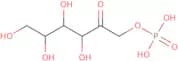
D-Tagatose 1-phosphate
CAS :D-tagatose 1-phosphate is a cytosolic intermediate of tagatose, which is found in many dietary sources. It has been shown to have regulatory effects on mitochondrial membrane potential and peroxisome proliferation in human cells. D-tagatose 1-phosphate also has been shown to have clinical relevance for humans with liver disease, as it enhances aerobic glycolysis and increases adenine nucleotide levels.
Formule :C6H13O9PDegré de pureté :Min. 95%Masse moléculaire :260.14 g/molHydroxyethyl Starch (HES) 450/0.7
CAS :Please enquire for more information about Hydroxyethyl Starch (HES) 450/0.7 including the price, delivery time and more detailed product information at the technical inquiry form on this page
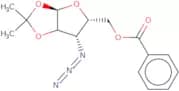
Formule :(C6H10O5)m•(C2H5O)n3-Azido-5-O-benzoyl-3-deoxy-1,2-O-isopropylidene-a-D-ribofuranose
3-Azido-5-O-benzoyl-3-deoxy-1,2-O-isopropylidene a D-ribofuranose (3ABI) is a synthetic monosaccharide that can be synthesized via a custom synthesis. 3ABI is an oligosaccharide that has the ability to modify glycosylation and polysaccharide synthesis. The fluorination of this sugar provides it with high purity and stability. 3ABI has been shown to have a CAS number of 44793-23-2.
Formule :C15H17N3O5Degré de pureté :Min. 95%Masse moléculaire :319.31 g/molGlcnacβ(1-2)man-α-ethylazide
CAS :Glcnacβ(1-2)man-α-ethylazide is a modified oligosaccharide that has been synthesized from the sugar GlcNAcβ(1-2)mannose. It is a complex carbohydrate with a high purity, which can be used as a custom synthesis. The synthesis of this product involves fluorination and saccharide methylation. The CAS number for this product is 1858224-15-3.
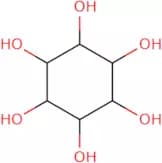
Formule :C16H28N4O11Degré de pureté :Min. 95%Masse moléculaire :452.41 g/molMyo-inositol-d6
CAS :Myo-inositol-d6 is a stable isotope of myo-inositol. It is used to monitor the biosynthesis of myo-inositol in yeast cells. Myo-inositol is a carbohydrate that has regulatory functions in yeast cells. Myo-inositol-d6 can be used as an extracellular bioassay for determining the uptake and intracellular distribution of myo-inositol in mammalian cells.
Formule :C6H12O6Degré de pureté :Min. 95%Couleur et forme :PowderMasse moléculaire :186.19 g/mol4-Aminophlorizin
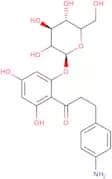
CAS :4-Aminophlorizin is a chemical compound that inhibits the uptake of azide by red blood cells. It has been shown to be effective against intestinal parasites and trophozoites. 4-Aminophlorizin is a potent inhibitor of the membrane system, which may be due to its interaction with the semenza, or membrane protein.
Formule :C21H25NO9Degré de pureté :Min. 95%Masse moléculaire :435.42 g/molNefopam glucuronide
Nefopam is a compound that has been used as an analgesic and antipyretic. It is structurally related to the benzodiazepine class of drugs, but is not chemically equivalent to any other known drug. Nefopam has a low therapeutic index and can cause severe toxic effects in overdose. The most common adverse effects of nefopam are dizziness, drowsiness, headache, nausea and vomiting. An overdose can lead to death by respiratory paralysis or cardiac arrest.
Formule :C23H27NO7Degré de pureté :Min. 95%Masse moléculaire :429.46 g/molTopiramate didesacetal impurity
CAS :Topiramate didesacetal impurity is a Custom synthesis, Modification, Fluorination, Methylation, Monosaccharide, Synthetic compound. It is used in the production of saccharides and polysaccharides. The Carbohydrate has a variety of uses including food additives and sweeteners.
Formule :C6H13NO8SDegré de pureté :Min. 95%Masse moléculaire :259.24 g/molb-Cyclodextrin dihydrogen phosphate, sodium salt
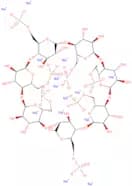
CAS :This beta-cyclodextrin (β-CD) derivative is a functionalized cyclic oligosaccharide composed of seven glucose units, characterized by a hydrophilic exterior and a lipophilic cavity (bigger than α-CD and smaller than γ-CDs), which allows it to encapsulate various guest molecules. This structural feature facilitates its use in multiple applications, including pharmaceuticals, food enhancement, and cosmetics. In the pharmaceutical industry, it enhances the solubility and stability of poorly water-soluble drugs, improving their bioavailability and efficacy while also masking unpleasant tastes. The food sector utilizes it as a stabilizer for flavors, colors, and nutrients, extending shelf life by protecting sensitive ingredients from degradation. In cosmetics, it serves as a complexing agent for fragrances and active components, ensuring their stability and controlled release. Its use expands to many other fields, including nanotechnology for drug delivery systems, environmental remediation for extracting organic pollutants, textiles for slow-release fragrances, and analytical chemistry for chiral separation.
Formule :C42H70O35Degré de pureté :Min. 95%Masse moléculaire :1,134.98 g/mol3'-N-Glycolylneuraminyl-D-lactose sodium salt
3'-N-Glycolylneuraminyl-D-lactose sodium salt is a carbohydrate that has been modified by the addition of glycosylation, methylation and fluorination. It belongs to the group of complex carbohydrates and is a monosaccharide. 3'-N-Glycolylneuraminyl-D-lactose sodium salt can be used for the synthesis of oligosaccharides and polysaccharides, such as cellulose, chitin and glycogen. This product is high purity, custom synthesis and synthetic.
Degré de pureté :Min. 95%Thiamine galactoside
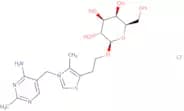
CAS :Thiamine galactoside is a custom synthesis of a monosaccharide. It is modified with fluorination, methylation and saccharide. The resulting product has a molecular weight of 578.08 g/mol and the chemical formula C24H34N6O18S2.
Formule :C18H27O6N4S·C2H3O2Degré de pureté :Min. 95%Masse moléculaire :486.54 g/mol4-Deoxy-D-glucose
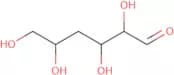
CAS :4-Deoxy-D-glucose is a sugar that is synthesized by the condensation of two molecules of erythrose. It has been shown to be an efficient donor substrate for nucleophilic attack, which can lead to the synthesis of glycosides and other natural products. 4-Deoxy-D-glucose is also a competitive inhibitor of uridine diphosphate (UDP) glucose, which is an enzyme involved in the biosynthesis of UDP sugars and glycoproteins. The concentration of 4-deoxy-D-glucose affects its catalytic mechanism, as it acts as a competitive inhibitor at high concentrations. Molecular modeling has revealed that this molecule adopts a chair conformation with significant solvent exposure.
Formule :C6H12O5Degré de pureté :Min. 98 Area-%Couleur et forme :PowderMasse moléculaire :164.16 g/molo-(A-D-Galactopyranosyl)-D-galactose
CAS :O-(A-D-Galactopyranosyl)-D-galactose is a sugar that is used in the synthesis of complex carbohydrates. O-(A-D-Galactopyranosyl)-D-galactose can be fluorinated and methylated to produce o-(A-D-Galactopyranosyl)-2,6-dideoxy--glucose. This sugar has been shown to inhibit the growth of bacteria such as Mycobacterium tuberculosis and Mycobacterium avium complex. Synthesis of this sugar is done through a custom synthesis process with high purity and quality.
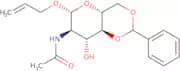
Formule :C12H22O11Degré de pureté :Min. 95%Masse moléculaire :342.3 g/molAllyl 2-acetamido-4,6-O-benzylidene-2-deoxy-b-D-glucopyranoside
CAS :Allyl 2-acetamido-4,6-O-benzylidene-2-deoxy-b-D-glucopyranoside is a synthetic compound that belongs to the class of carbohydrates. It is used as a reagent in sugar chemistry and glycosylation reactions. Allyl 2-acetamido-4,6-O-benzylidene-2-deoxy-b-D-glucopyranoside is also used for the modification of polysaccharides and fluorination reactions. This product has been shown to be effective as a substrate for site specific methylation reactions. Allyl 2 acetamido 4,6 O benzylidene 2 deoxy b D glucopyranoside has been tested in vitro against methicillin resistant Staphylococcus aureus (MRSA) with promising results.
Formule :C18H23NO6Degré de pureté :Min. 95%Masse moléculaire :349.39 g/molD-Arabino-5-hexulosonic acid
CAS :D-Arabino-5-hexulosonic acid is an intermediate in the pentose phosphate pathway. It is a component of the hexuronate, which is an important precursor for galactitol, 6-phosphate, and acid dehydrogenase. D-Arabino-5-hexulosonic acid is also an important intermediate in the glycolytic pathway for ATP production. The gene product has been shown to be involved in aerobic glycolysis, which is utilized by Staphylococcus aureus to produce energy from glucose fermentation. D-Arabino-5-hexulosonic acid plays a role in ion exchange and mitochondrial metabolism as well.
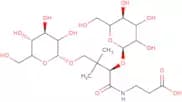
Formule :C6H10O7Degré de pureté :Min. 95%Masse moléculaire :194.14 g/molPantothenic acid 2,4-di-O-b-D-galactopyranoside
Pantothenic acid 2,4-di-O-b-D-galactopyranoside is a custom synthesis of Methylated Pantothenic Acid 2,4-Di-O-b-D-Galactopyranoside. The compound is an oligosaccharide composed of two glucose molecules and one galactose molecule. It contains a fluorine atom at the 4th position of the sugar chain. This modification was made to increase the solubility in water. Pantothenic acid 2,4-di-O-b-D-galactopyranoside can be used in industry as a food additive or pharmaceutical intermediate.
Formule :C21H37NO15Degré de pureté :Min. 95%Masse moléculaire :543.52 g/molD-Allose-1,2,3,4,5,6-13C6
CAS :D-Allose is a sugar that is modified with a fluorine atom at position 6. This modification can be used to trace the origin of D-allose in complex carbohydrates such as glycogen and glycosylated proteins. The addition of a 13C6 atom allows for the identification of this sugar through mass spectrometry and nuclear magnetic resonance (NMR) analysis.
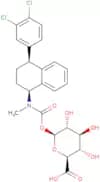
Formule :C6H12O6Degré de pureté :Min. 95%Couleur et forme :White PowderMasse moléculaire :186.06 g/molSertraline carbamoyl glucuronide
CAS :Sertraline is a selective serotonin reuptake inhibitor (SSRI) that is used primarily in the treatment of depression and anxiety. It inhibits the serotonin transporter protein, making more serotonin available for binding to postsynaptic receptors. Sertraline also has a minor inhibitory effect on norepinephrine and dopamine reuptake, but its primary function is as a selective serotonin reuptake inhibitor. The major metabolite of sertraline is sertraline carbamoyl glucuronide, which is formed through glucuronidation by UGT2B7. This metabolite has been found to be bifurcated with one half being excreted in urine and the other half being excreted in faeces. The half that undergoes urinary excretion has been shown to have a half-life of 24 hours whereas the other half has a much shorter half-life of 2 hours. Carbamoylation of sertraline may
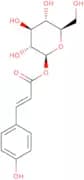
Formule :C24H25Cl2NO8Degré de pureté :Min. 95%Masse moléculaire :526.36 g/molp-Coumaroyl-b-D-glucose
CAS :P-Coumaroyl-b-D-glucose is a flavanone that belongs to the class of flavonoids. It is an intermediate in the synthesis of many other flavonoids, such as apigenin, labiatae, and rhamnetin. P-Coumaroyl-b-D-glucose has been shown to downregulate the expression of genes encoding proteins involved in the biosynthesis of proanthocyanidins and anthocyanins. This compound also induces apoptosis by binding to the mitochondria membrane and increasing reactive oxygen species production. P-Coumaroyl-b-D-glucose can be used as a marker for phenylpropanoid metabolism in plants.
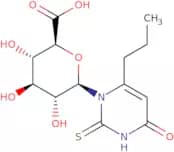
Formule :C15H18O8Degré de pureté :Min. 95%Couleur et forme :White PowderMasse moléculaire :326.3 g/molPropylthiouracil N-b-D-glucuronide
CAS :Propylthiouracil N-b-D-glucuronide is a glycosylation product of propylthiouracil, which is the active form of this drug. It has been shown to inhibit thyroid hormone synthesis by binding to the enzyme thyroid peroxidase. Propylthiouracil N-b-D-glucuronide is used in the treatment of thyrotoxicosis, and can also be used as an antithyroid agent for hyperthyroidism. It is chemically synthesized from propylthiouracil with a glycosyl group added at the C3 position on the thiourea ring by glycosyltransferases. This compound has also been fluorinated and polysaccharided, modified and saccharided, oligosaccharided or sugar, synthetic or monosaccharide, custom synthesis or high purity.
Formule :C13H18N2O7SDegré de pureté :Min. 95%Masse moléculaire :346.36 g/mol