Composés apparentés aux enzymes, aux peptides et aux protéines
Les composés liés aux enzymes, peptides et protéines sont essentiels pour étudier et manipuler les voies biochimiques. Ces composés incluent des enzymes qui catalysent les réactions biochimiques, des peptides qui servent d'hormones et de molécules de signalisation, et des protéines qui accomplissent une vaste gamme de fonctions au sein des organismes. Cette catégorie comprend des inhibiteurs, activateurs, substrats et autres réactifs indispensables pour l'enzymologie, la protéomique et la recherche sur les peptides. Chez CymitQuimica, nous proposons une sélection variée de composés de haute qualité pour faciliter vos recherches en cinétique enzymatique, fonction des protéines et synthèse des peptides, garantissant des résultats précis et fiables.
Sous-catégories appartenant à la catégorie "Composés apparentés aux enzymes, aux peptides et aux protéines"
- Acides aminés (AA)(40.540 produits)
- Enzymes(3.561 produits)
- Peptides(30.717 produits)
- Protéines(15.020 produits)
1312 produits trouvés pour "Composés apparentés aux enzymes, aux peptides et aux protéines"
Trier par
Degré de pureté (%)
0
100
|
0
|
50
|
90
|
95
|
100
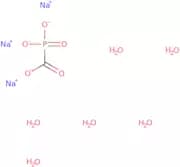
Trisodium phosphonoformate hexahydrate
CAS :<p>Trisodium phosphonoformate hexahydrate is a cytotoxic drug that is used to treat cytomegalovirus infections. It acts by inhibiting viral DNA polymerase and RNA synthesis, leading to cell death. Trisodium phosphonoformate hexahydrate can be used in combination with other antiviral drugs such as ganciclovir or foscarnet sodium for the treatment of HIV-1 infection. Trisodium phosphonoformate hexahydrate can also be used for prophylactic treatment against cytomegalovirus infection in immunosuppressed patients. This drug has been shown to be effective in reducing the incidence of CMV disease and mortality in transplant recipients who were undergoing low-dose chemotherapy. Trisodium phosphonoformate hexahydrate has been shown to be more effective than foscarnet sodium alone in preventing CMV disease and mortality during low-dose chemotherapy.</p>Formule :CH12O11Na3PDegré de pureté :Min. 95%Couleur et forme :PowderMasse moléculaire :300.04 g/molHydrocortisone 17-butyrate 21-propionate
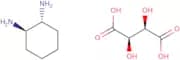
CAS :Produit contrôlé<p>Hydrocortisone 17-butyrate 21-propionate is a synthetic glucocorticoid with anti-inflammatory and immunosuppressive properties. This drug is a prodrug that is hydrolyzed in the liver to hydrocortisone, its active form, by esterases. Hydrocortisone 17-butyrate 21-propionate has been used to treat inflammatory bowel disease and various skin disorders. It also has been shown to inhibit the production of malonic acid, which may be due to inhibition of fatty acid synthase and/or enhanced absorption of hydrocortisone from the gastrointestinal tract. The drug also interacts with other drugs such as dimethyl fumarate, which inhibits the metabolism of hydrocortisone by cytochrome P450 enzymes. This can lead to increased blood concentrations of hydrocortisone and serious side effects such as metabolic disorders or high blood pressure.</p>Formule :C28H40O7Degré de pureté :Min. 95%Couleur et forme :White/Off-White SolidMasse moléculaire :488.61 g/mol(1R,2R)-(+)-1,2-Diaminocyclohexane L-tartrate
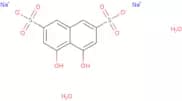
CAS :<p>(1R,2R)-(+)-1,2-Diaminocyclohexane L-tartrate is a synthetic compound that is soluble in methanol, ethanol and 2-propanol. It has been shown to be soluble in other solvents with low boiling points. The solubility data for this compound are available in the experimental section below. The apelblat equation has been used to calculate the parameters of this compound based on experimental solubility data. For more information about the apelblat equation, please see the "Solubility Parameters" section below.</p>Formule :C10H20N2O6Degré de pureté :Min. 95%Masse moléculaire :264.28 g/molChromotropic acid disodium salt dihydrate - ACS reagent
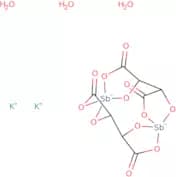
CAS :<p>Chromotropic acid is a reactive compound that has been shown to be adsorbed on the surface of activated carbon. The adsorption mechanism and the kinetic constants for this reaction have been studied in detail. Chromotropic acid decomposes at high temperatures, releasing hydrogen chloride gas and water vapor. This chemical is also used in pharmaceutical preparations as an additive to inhibit oxidation reactions. It may also serve as a photoreceptor, reacting with tyramine hydrochloride and other compounds to produce a color change.</p>Formule :C10H6O8S2Na2·2H2OCouleur et forme :PowderMasse moléculaire :400.29 g/molAntimony potassium tartrate trihydrate
CAS :<p>Antimony potassium tartrate trihydrate is a compound that contains antimony, potassium, and tartaric acid. It is used in the treatment of bladder cancer. Antimony potassium tartrate trihydrate has been shown to have cytotoxic and genotoxic properties in humans. This compound has lysing effects on the cells of the bladder and can lead to cell death by inhibiting enzymes in the cell's metabolic pathway. The mechanism of action for this drug is not completely understood but it may be due to its ability to reduce adenine nucleotide levels or through cell lysis caused by kinetic or cytotoxicity studies. Antimony potassium tartrate trihydrate also has toxic effects on cardiac tissue and liver lesions, which may be due to its ability to inhibit atp levels or transport properties.</p>Formule :C8H4K2O12Sb2·3H2ODegré de pureté :Min. 95%Couleur et forme :White/Off-White SolidMasse moléculaire :667.87 g/molKetanserin tartrate
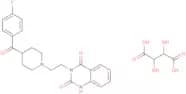
CAS :<p>5-HT2A serotonin receptor antagonist</p>Formule :C22H22FN3O3•C4H6O6Degré de pureté :Min. 95%Couleur et forme :White Off-White PowderMasse moléculaire :545.51 g/molBis(2-ethylhexyl) fumarate
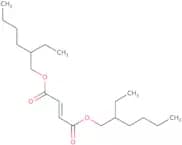
CAS :<p>Bis(2-ethylhexyl) fumarate is a synthetic chemical compound that has been used in the synthesis of clostridium botulinum. It is a white solid with a constant melting point. This compound can be synthesized via the reaction of propiolic acid and maleic anhydride, which produces a carbon-carbon bond. Bis(2-ethylhexyl) fumarate is not estrogenic, but it does bind to the human estrogen receptor. The binding affinity for this receptor has been shown to be lower than other compounds such as diethylstilbestrol and ethinyl estradiol. Bis(2-ethylhexyl) fumarate also reacts with polyvinyl chloride and crotonic acid, forming crosslinked polymers that are photoreactive.</p>Formule :C20H36O4Degré de pureté :Min. 95%Couleur et forme :Clear LiquidMasse moléculaire :340.5 g/molRisedronic acid monohydrate
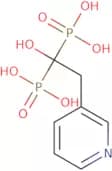
CAS :<p>Risedronic acid monohydrate is a bisphosphonate that inhibits bone resorption by inhibiting the activity of osteoclasts. It is used to treat postmenopausal women with osteoporosis and bowel disease, as well as to prevent bone loss in men with prostate cancer. Risedronic acid monohydrate has been shown to be more effective than alendronate for decreasing bone mineral density in women with breast cancer who have undergone chemotherapy. Risedronic acid monohydrate binds to the active site of the enzyme polymerase chain reaction (PCR) and blocks DNA synthesis, preventing the formation of new cells. Risedronic acid monerate also binds to the active site of nonsteroidal anti-inflammatory drugs (NSAIDs), thereby blocking their ability to inhibit cyclooxygenase enzymes, which are responsible for prostaglandin synthesis. This leads to reduced inflammation and pain.</p>Formule :C7H11NO7P2·H2ODegré de pureté :Min. 95%Couleur et forme :White PowderMasse moléculaire :301.13 g/molS-(-)-Carbidopa monohydrate
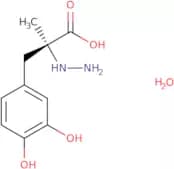
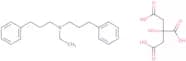
CAS :Produit contrôlé<p>Inhibitor of peripheral decarboxylase</p>Formule :C10H14N2O4·H2ODegré de pureté :Min. 95%Couleur et forme :White PowderMasse moléculaire :244.24 g/molN-Ethyl-3,3'-diphenyldipropylamine citrate
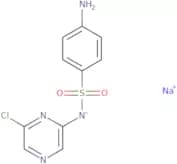
CAS :<p>N-Ethyl-3,3'-diphenyldipropylamine citrate is a nonsteroidal anti-inflammatory drug (NSAID) that inhibits the activity of cyclooxygenase and lipoxygenase. It reduces pain, fever, and inflammation. The drug has been shown to be effective in the treatment of inflammatory bowel disease and colitis. N-Ethyl-3,3'-diphenyldipropylamine citrate is used for the relief of chronic and acute pain associated with osteoarthritis, rheumatoid arthritis, ankylosing spondylitis, or other forms of joint inflammation; as well as for temporary relief from the symptoms of minor aches or pains due to headache, toothache, muscular aches, backache, or menstrual cramps. N-Ethyl-3,3'-diphenyldipropylamine citrate also has been found to be effective in reducing symptoms associated with leukemia</p>Formule :C26H35NO7Degré de pureté :Min. 95%Couleur et forme :White Off-White PowderMasse moléculaire :473.56 g/molSulfaclozine sodium monohydrate
CAS :<p>Sulfaclozine sodium monohydrate is an extractant that is used in sample preparation. It has a molecular weight of 273.5 daltons and can be used to separate and purify proteins, which are often found in the extracellular matrix. Sulfaclozine sodium monohydrate binds to the protein matrix, which prevents other substances from binding to it and causing interference with the results of the experiment. This extractant is commonly used in research involving coccidiosis, collagen, lectins, and animal cells. Sulfaclozine sodium monohydrate also has been shown to be effective against human serum proteins when it is used as an extractant for sample preparation.</p>Formule :C10H8ClN4O2SNa·H2ODegré de pureté :Min. 95%Couleur et forme :PowderMasse moléculaire :324.72 g/molCopeptin (human) trifluoroacetate salt
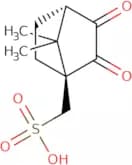
CAS :<p>Copeptin is a human protein that is found in the blood and urine. It functions as a competitive inhibitor of lysine-specific proteases, such as cathepsin D, elastase, and trypsin. Copeptin binds to the active site of these enzymes and prevents them from cleaving their substrates. Copeptin is also an antigen used in immunohistochemistry with an antibody against it for use in detection of various cancers. The biotinylated form of copeptin can be used for binding to avidin or streptavidin coated plates or antibodies (e.g., peroxidase-conjugated antibody) for use in enzyme-linked immunosorbent assays (ELISA). Copeptin binds to primary antibodies raised against it by the immune system, which are then detected using fluorescent secondary antibodies or peroxidase-conjugated antibodies.</p>Formule :C177H279N49O58•xC2HO2F3Degré de pureté :Min. 95%Masse moléculaire :4,021.4 g/molCamphorquinone-10-sulfonic acid hydrate
CAS :<p>Camphorquinone-10-sulfonic acid hydrate is a soybean trypsin inhibitor that is used as a preparative agent in organic synthesis. It reacts with histidine, lysine residues, and other molecules to form a light-chain kinase that inhibits the action of the enzyme trypsin. Camphorquinone-10-sulfonic acid hydrate has been shown to be resistant to proteolysis by gastrointestinal enzymes. This agent also has diabetogenic properties by inhibiting the activity of membrane potential and chloride channels in pancreatic β cells. Camphorquinone-10-sulfonic acid hydrate forms an ion pair with choline, which can inhibit the enzyme acetylcholinesterase, leading to accumulation of acetylcholine at nerve endings.</p>Formule :C10H16O6SDegré de pureté :Min. 95 Area-%Couleur et forme :Yellow PowderMasse moléculaire :264.3 g/molVeratraldoxime
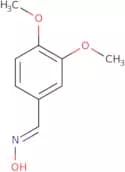
CAS :<p>Veratraldoxime is a synthetic compound that is the diacetate ester of oxime and has been used in the treatment of inflammatory bowel disease. It has been shown to be effective in some patients, but not all, with ulcerative colitis. Veratraldoxime inhibits the production of inflammatory mediators by inhibiting the activity of cyclooxygenase-2 and lipoxygenase. This drug also has anti-inflammatory properties by inhibiting prostaglandin synthesis at the level of phospholipase A2 and cyclooxygenase-1. The mechanism of action for this drug is similar to that of other nonsteroidal anti-inflammatory drugs (NSAIDs). Veratraldoxime also inhibits protein synthesis by blocking the formation of amide bonds, thereby inhibiting bacterial growth. The oxidation products are responsible for its antibiotic properties. Veratraldoxime binds to copper chromite to form a coordination complex, which is</p>Formule :C9H11NO3Degré de pureté :Min. 95%Couleur et forme :PowderMasse moléculaire :181.19 g/molOchratoxin A
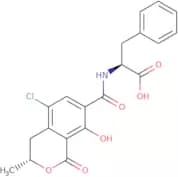
CAS :Produit contrôlé<p>Ochratoxin A is a mycotoxin that is found in cereals and cereal products. It can be detected by an analytical method that utilizes high performance liquid chromatography with fluorescence detection. Ochratoxin A has been implicated in the development of bowel diseases and has also been shown to inhibit catalase, peroxidase, and glucose-6-phosphate dehydrogenase activities. It also inhibits DNA polymerase, RNA polymerase, and mitochondrial enzymes involved in energy production. There is evidence that ochratoxin A may be genotoxic by inhibiting the repair of DNA damage caused by reactive oxygen species. The optimum concentration for ochratoxin A is between 0.1 and 1 micrograms per liter.br><br>Ochratoxin A is metabolized in plants via the phenylalanine pathway. This leads to increased levels of phenylalanine and p-hydroxybenzoic acid in the plant's tissues.br></p>Formule :C20H18ClNO6Degré de pureté :(%) Min. 95%Couleur et forme :White PowderMasse moléculaire :403.81 g/molTributyl Citrate
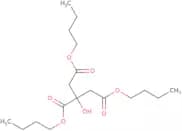
CAS :<p>Tributyl Citrate is a catalyst used in organic synthesis. It is typically used as a reaction solvent and to increase the rate of reactions. Tributyl Citrate reacts with water to produce citric acid, which can then be used as an acidic catalyst. In addition, Tributyl Citrate has been shown to have anticancer properties and is being studied for use in bowel disease and autoimmune diseases. The mechanism of this drug's anticancer properties is not fully understood, but it may have something to do with the ability of Tributyl Citrate to bind water molecules and alter their permeability through cell membranes.</p>Formule :C18H32O7Degré de pureté :Min. 95%Masse moléculaire :360.44 g/molIron bis(tetrafluoroborate) hexahydrate
CAS :<p>Iron bis(tetrafluoroborate) hexahydrate is a ferrimagnetic, thermally stable coordination compound that has been shown to interact with bidentate ligands. Iron bis(tetrafluoroborate) hexahydrate can be used as a mononuclear section in analogy to the octahedral section of nickel bis(tetrafluoroborate) hexahydrate. The ligands are methyl groups, which are diffracted at 2θ values of 12.8° and 18.3°. The compound is stable in solvents such as dimethylsulfoxide and tetrahydrofuran. It also has chelate ligand transfer properties, which are due to the presence of two hydroxyl groups on each iron atom.</p>Formule :Fe(BF4)2•(H2O)6Degré de pureté :Min. 95%Couleur et forme :SolidMasse moléculaire :337.55 g/molOchratoxin B
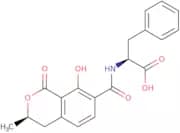
CAS :<p>Ochratoxin B is a mycotoxin that belongs to the group of toxic substances produced by fungi. It is found in animal feed and can contaminate food and water. Ochratoxin B has been shown to be genotoxic, inducing DNA damage in human serum, ochratoxin, tubule cells, and liver cells. It also inhibits the activity of complex enzymes such as DNA gyrase and topoisomerase II. The LC-MS/MS method for detecting ochratoxin B was developed based on its ability to react with an optical sensor that changes color when it binds to the substrate molecule. The hybridoma cell line was used to detect monoclonal antibodies against Ochratoxin B using a sample preparation technique with a detection sensitivity of 0.01 ng/mL.</p>Formule :C20H19NO6Degré de pureté :Min. 95%Masse moléculaire :369.37 g/molTin(II) chloride dihydrate
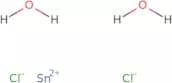
CAS :<p>Tin(II) chloride dihydrate is a white or pale yellow crystalline solid. It is soluble in water and has a relatively low melting point. Tin(II) chloride dihydrate is used as an acid catalyst for the preparation of esters from ethyl trifluoroacetate, and as an intermediate for synthesizing quinoline derivatives. Tin(II) chloride dihydrate can also be used to deactivate fatty acids by reacting with them in the presence of water. The reaction vessel is heated to about 300°C to evaporate the solvent and leave a residue of tin chloride, which can then be recovered by distillation. Tin(II) chloride dihydrate has been shown to have transport properties that are similar to those of other metal chlorides at comparable concentrations.</p>Formule :SnCl2•(H2O)2Degré de pureté :Min. 95%Couleur et forme :Colorless Clear LiquidMasse moléculaire :225.65 g/molSilver tetrafluoroborate
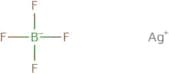
CAS :<p>Silver tetrafluoroborate (AgBF) is a chemical reagent that is used in analytical chemistry and structural analysis. It has shown to be a stable complex with organic molecules, such as fatty acids, and has been used to study the properties of these compounds. AgBF is an inorganic salt that can be synthesized by reacting silver nitrate and barium fluoride in the presence of trifluoroacetic acid. This compound has also been found to form stable complexes with organic molecules containing a hydroxyl group or nitrogen atom. The structure of AgBF has been determined through X-ray crystal structures and electron diffraction patterns. The molecule consists of two symmetric chains joined by a central disulfide bond.</p>Formule :AgBF4Degré de pureté :Min. 95%Couleur et forme :PowderMasse moléculaire :194.67 g/mol