Antifongiques
Les antifongiques sont des composés spécialement conçus pour arrêter, prévenir et éliminer la croissance des champignons. Dans cette catégorie, vous trouverez une large variété d'agents antifongiques essentiels pour la recherche et les applications thérapeutiques. Ces composés sont cruciaux pour traiter les infections fongiques et prévenir leur récurrence, ce qui en fait des outils vitaux tant dans les domaines médical qu'agricole. Les chercheurs et les professionnels de la santé peuvent explorer de nombreux antifongiques pour comprendre leurs mécanismes, optimiser leur efficacité et développer de nouveaux traitements pour combattre les souches de champignons résistantes. La vaste sélection d'antifongiques soutient les avancées continues dans la recherche sur les champignons et le développement de thérapies antifongiques efficaces.
897 produits trouvés pour "Antifongiques"
Trier par
Degré de pureté (%)
0
100
|
0
|
50
|
90
|
95
|
100
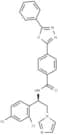
VNI
CAS :VNI is an effective inhibitor of CYP51. It suppresses sterol synthesis in Trypanosoma cruzi, exhibiting anti-Trypanosoma cruzi activity.Formule :C26H19Cl2N5O2Couleur et forme :SolidMasse moléculaire :504.37Chitin synthase inhibitor 12
Chitin synthase inhibitor 12: potent CHS blocker (IC50: 0.16 mM), broad-spectrum antifungal, effective against resistant strains. Useful in IFI research.Formule :C23H21ClFN3O5Couleur et forme :SolidMasse moléculaire :473.88ATPase-IN-5
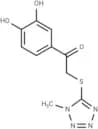
CAS :<p>ATPase-IN-5 (Compound 11) is an antifungal Pma1p (H+ -ATPase) inhibitor (IC50 = 12.7 μM) that inhibits the growth of Candida albicans and Saccharomyces cerevisiae.</p>Formule :C10H10N4O3SDegré de pureté :99.19%Couleur et forme :SolidMasse moléculaire :266.28Chitin synthase inhibitor 7
Compound 9c, a chitin synthase inhibitor, has an IC50 of 0.37 nM and is useful for studying fungal infections.Formule :C24H25N3O5Couleur et forme :SolidMasse moléculaire :435.47Antifungal agent 127
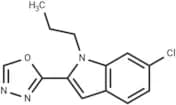
CAS :Antifungalagent 127 (Compound 6c) is an antifungal agent with potent inhibitory activity against Botrytis cinerea and Rhizoctonia solani.Formule :C13H12ClN3OCouleur et forme :SolidMasse moléculaire :261.707Ethaboxam
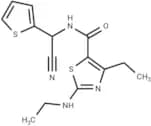
CAS :Ethaboxam is a β-tubulin inhibitor and antifungal agent used against oomycete pathogens.Formule :C14H16N4OS2Degré de pureté :99.37%Couleur et forme :SolidMasse moléculaire :320.43RMG8-8
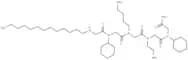
RMG8-8 shows the excellent efficacy against C. neoformans (1.56 μg/mL).Formule :C41H78N8O5Couleur et forme :SolidMasse moléculaire :763.11HDAC-IN-87
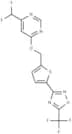
CAS :HDAC-IN-87 (Compound XII6) is a non-selective HDAC inhibitor with pIC50 values of 6.9 for HDAC4 and 5.8 for HDAC6. It exhibits fungicidal activity against P. sorghi and P. pachyrhizi. The acute oral LD50 in both male and female rats is greater than 500 mg/kg.Formule :C13H7F5N4O2SCouleur et forme :SolidMasse moléculaire :378.277Pyriofenone
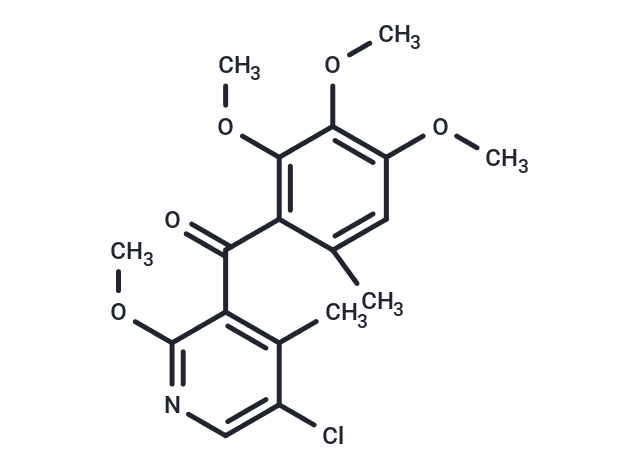
CAS :Pyriofenone (IKF-309) is an aryl phenyl ketone fungicide predominantly used to control powdery mildew on crops such as cereals, rice, fruit trees, and vegetables. It exhibits moderate efficacy against rice blast disease. Pyriofenone functions through prevention, residue activity, treatment, rainfastness, translaminar action, and fumigation.Formule :C18H20ClNO5Couleur et forme :SolidMasse moléculaire :365.81Antifungal agent 134
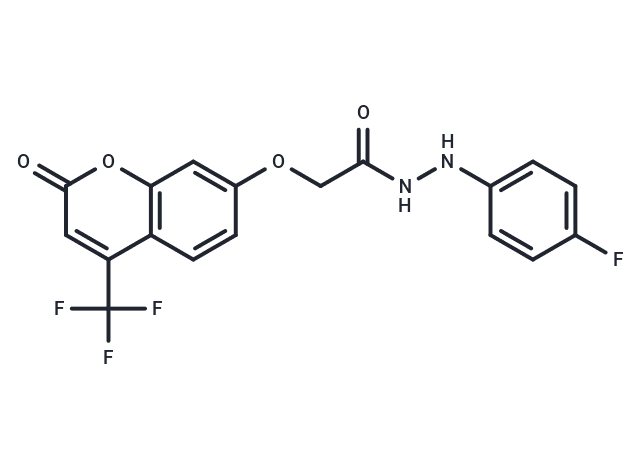
CAS :Antifungalagent 134 (Compound B13) is an antifungal agent effective against Botrytis cinerea, Alternaria solani, Fusarium graminearum, Rhizoctonia solani, Colletotrichum orbiculare, and Alternaria alternata with EC50 values of 3.24, 1.89, 1.70, 0.36, 4.27, and 1.50 μg/mL, respectively. It disrupts the fungal cell membranes and mitochondria, leading to substantial accumulation of reactive oxygen species (ROS). Additionally, Antifungalagent 134 exhibits significant herbicidal activity on field weeds such as Amaranthus retroflexus L and Abutilon theophrasti Medicus, and is applicable in crop disease and field weed research.Formule :C18H12F4N2O4Couleur et forme :SolidMasse moléculaire :396.29D75-4590
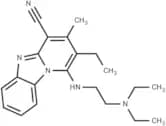
CAS :<p>D75-4590, a β-1,6-Glucan synthetase inhibitor, combats fungal infections by targeting cell walls.</p>Formule :C21H27N5Degré de pureté :98.56% - 98.85%Couleur et forme :SolidMasse moléculaire :349.474-Hydroxyvoriconazole
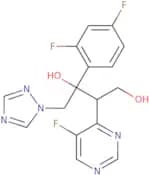
CAS :<p>Metabolite of voriconazole; sterol 14?-demethylase inhibitor</p>Degré de pureté :Min. 95%Tetraconazole
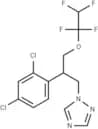
CAS :Tetraconazole is an agent of pesticides.Formule :C13H11Cl2F4N3OCouleur et forme :Liquid ViscousMasse moléculaire :372.142,7-Dihydroxynaphthalene
CAS :2,7-Dihydroxynaphthalene is a useful organic compound for research related to life sciences. The catalog number is T67338 and the CAS number is 582-17-2.Formule :C10H8O2Couleur et forme :SolidMasse moléculaire :160.17Rhizocticin A
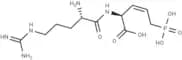
CAS :Rhizocticin A is a potential inhibitor of threonine synthase.Formule :C11H22N5O6PDegré de pureté :98%Couleur et forme :SolidMasse moléculaire :351.3Amphotericin A
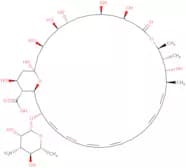
CAS :<p>Amphotericin A is a polyene macrolide antibiotic, which is derived primarily from the soil bacterium *Streptomyces nodosus*. This compound functions by binding to ergosterol, an essential component of fungal cell membranes. This binding creates pores in the membrane, increasing its permeability and ultimately leading to cell death. Unlike its more widely used counterpart Amphotericin B, Amphotericin A is less frequently utilized but is critical in the study and understanding of antifungal activity.</p>Formule :C47H75NO17Degré de pureté :Min. 95%Masse moléculaire :926.09 g/mol1-(6-Amino-3,5-difluoro-2-pyridinyl)-7-[3-[3-[[1-(6-amino-3,5-difluoro-2-pyridinyl)-3-carboxy-8-chloro-6-fluoro-1,4-dihydro-4-oxo-7- quinolinyl]amino]-2-hydroxypropoxy]-1-azetidinyl]-8-chloro-6-fluoro-1,4-dihydro-4-oxo-3-quinolinecarboxylic acid
CAS :<p>1-(6-Amino-3,5-difluoro-2-pyridinyl)-7-[3-[3-[[1-(6-amino-3,5-difluoro-2-pyridinyl)-3-carboxy-8-chloro-6-fluoro-1,4-dihydro-4-oxo-7-quinolinyl]amino]-2-hydroxypropoxy]-1-azetidinyl]-8-chloro-6-fluoro-1,4-dihydro-4-oxo-3-quinolinecarboxylic acid is a fluoroquinolone antibiotic, engineered through synthetic chemistry. It is derived from chemical sources involving complex organic synthesis, highlighting its intricate molecular architecture. Its mode of action is distinctive, as it inhibits bacterial DNA gyrase and topoisomerase IV, enzymes crucial for DNA replication and transcription. This interference with bacterial DNA processes results in bactericidal effects, effectively eliminating susceptible bacterial strains.</p>Formule :C36H24Cl2F6N8O8Degré de pureté :Min. 95%Masse moléculaire :881.52 g/mol