Antimicrobiens
Sous-catégories appartenant à la catégorie "Antimicrobiens"
- Antibiotiques(4.145 produits)
- Antifongiques(910 produits)
- Antiparasitaires(711 produits)
- Antiviraux(768 produits)
2429 produits trouvés pour "Antimicrobiens"
Ref: 3D-AR166960
Produit arrêtéPolymyxin B nonapeptide hydrochloride
CAS :Polymyxin B nonapeptide hydrochloride is a potent antibiotic compound derived from the bacterium *Bacillus polymyxa*. As a cationic polypeptide, it exhibits its antibacterial activity by interacting with the lipopolysaccharides and phospholipids in the bacterial cell membrane, leading to increased permeability and ultimately causing cell lysis. The compound is specifically effective against a broad range of Gram-negative bacteria, making it crucial in studying antibiotic resistance mechanisms.
Formule :C43H74N14O11•(HCl)xDegré de pureté :Min. 95%Masse moléculaire :963.14 g/molTropodithietic acid
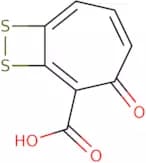
CAS :Tropodithietic acid is a bioactive compound, which is a potent antibacterial agent derived from certain marine bacteria, including the genus Phaeobacter. This antibiotic is characterized by its ability to disrupt quorum sensing, a mechanism that bacteria use for communication and coordination of group behaviors, including virulence. By interfering with this process, tropodithietic acid impedes bacterial colonization and biofilm formation, effectively inhibiting pathogenic activity.
Degré de pureté :Min. 95%Butirosin disulfate
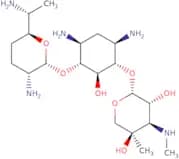
CAS :Butirosin disulfate is an aminoglycoside antibiotic, which is derived from a strain of *Bacillus circulans*. Its primary mode of action involves binding to the 30S subunit of the bacterial ribosome, leading to the inhibition of protein synthesis. This interaction results in the misreading of mRNA, ultimately causing bactericidal effects.
Formule :C21H45N5O20S2Degré de pureté :Min. 95%Masse moléculaire :751.7 g/molThiadiazin
CAS :Thiadiazin is a synthetic compound, belonging to the class of heterocyclic chemical substances, which is primarily derived from chemical synthesis processes involving sulfur, nitrogen, and carbon atoms. It is characterized by a five-membered ring structure containing both sulfur and nitrogen atoms, which contributes to its diverse chemical properties.
Formule :C12H22N4S4Degré de pureté :Min. 95%Masse moléculaire :350.6 g/molSofosbuvir impurity I
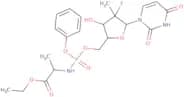
CAS :Sofosbuvir impurity I is an organic chemical impurity often associated with the active pharmaceutical ingredient (API) Sofosbuvir, which is used in the treatment of hepatitis C. This impurity arises during the manufacturing process of Sofosbuvir as a byproduct. It is crucial to monitor and identify such impurities to ensure the safety, efficacy, and quality of the final pharmaceutical product.
Formule :C21H27FN3O9PDegré de pureté :Min. 95%Masse moléculaire :515.4 g/molTolnifanide
CAS :Tolnifanide is a fungicidal product, which is a synthetic compound derived from chemical synthesis. It operates by interfering with the normal cellular function of fungi, inhibiting their growth and reproduction. This mode of action involves disrupting key processes within the fungal cells, rendering them unable to thrive in their host environment.
Formule :C15H15ClN2O4SDegré de pureté :Min. 95%Masse moléculaire :354.8 g/molPenciclovir diacetate
CAS :Penciclovir diacetate is an antiviral compound, which is synthesized as a prodrug derivative of penciclovir. This compound originates from chemical modification processes designed to improve the pharmacokinetic properties of its active metabolite. Once administered, penciclovir diacetate undergoes in vivo conversion to penciclovir, an active nucleoside analog. The mode of action involves selective inhibition of viral DNA polymerase after being phosphorylated to its triphosphate form, thereby impeding viral DNA synthesis and replication.
Formule :C14H19N5O5Degré de pureté :Min. 95%Masse moléculaire :337.33 g/molN-Acetyl glyphosate-13C2,15N
CAS :N-Acetyl glyphosate-13C2,15N is a stable isotope-labeled analog of the well-known herbicide glyphosate. This product is synthesized using isotopically enriched carbon and nitrogen sources. Its mode of action involves inhibiting the shikimate pathway by targeting the enzyme 5-enolpyruvylshikimate-3-phosphate synthase (EPSPS), crucial for aromatic amino acid biosynthesis in plants. This pathway is not present in animals, making it a valuable target for selective herbicidal action.
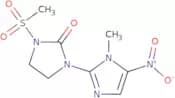
Formule :C5H10NO6PDegré de pureté :Min. 95%Masse moléculaire :214.09 g/molSatranidazole
CAS :Satranidazole is an antimicrobial agent that falls under the category of synthetic nitroimidazoles. It is derived from chemical synthesis and is designed to combat infections caused by specific organisms. The mode of action involves the reduction of the nitro group within the organism, creating reactive intermediates that disrupt DNA synthesis and lead to cell death. This mode of action is notably effective against protozoal infections and anaerobic bacterial infections.
Formule :C8H11N5O5SDegré de pureté :Min. 95%Masse moléculaire :289.27 g/molBalapiravir hydrochloride
CAS :Balapiravir hydrochloride is an antiviral agent, which is synthesized through chemical processes. It operates as a prodrug, meaning it is metabolized in the body to produce the active compound that inhibits viral replication. The mode of action of Balapiravir involves targeting the viral RNA polymerase, an essential enzyme for the replication of viral genomes. By inhibiting this enzyme, the drug effectively reduces viral load within the host, impairing the spread and establishment of the virus.
Formule :C21H31ClN6O8Degré de pureté :Min. 95%Masse moléculaire :531 g/mol(2RS,4S)-2-[[(phenylacetyl)amino]methyl]-5,5-dimethylthiazolidine-4-carboxylic acid (penilloic acids of benzylpenicillin)
CAS :(2RS,4S)-2-[[(Phenylacetyl)amino]methyl]-5,5-dimethylthiazolidine-4-carboxylic acid, commonly referred to as penilloic acids, is a hydrolytic degradation product of benzylpenicillin. It is derived through the enzymatic or chemical cleavage of the β-lactam ring of benzylpenicillin, which is a classic β-lactam antibiotic.
Formule :C15H20N2O3SDegré de pureté :Min. 95%Masse moléculaire :308.4 g/mol8-Methylpyrido[2,3-d]pyridazin-5(6H)-one
CAS :8-Methylpyrido[2,3-d]pyridazin-5(6H)-one is a heterocyclic compound used in the field of medicinal chemistry. This compound is synthesized through complex organic reactions involving pyridazine and pyridine derivatives. As a molecule, its primary mode of action involves interactions with specific biochemical pathways, potentially influencing enzymatic activity or receptor bindings, leading to modulation of biological activities.
Formule :C8H7N3ODegré de pureté :Min. 95%Masse moléculaire :161.16 g/molRef: 3D-QDA00407
Produit arrêtéCefotiam
CAS :Cefotiam is a broad-spectrum cephalosporin antibiotic, which is a beta-lactam compound derived from the mold Acremonium. It functions by inhibiting bacterial cell wall synthesis, particularly by targeting penicillin-binding proteins, which leads to cell lysis and death in susceptible bacteria. This mechanism of action makes it effective against various Gram-positive and Gram-negative bacteria.
Formule :C18H23N9O4S3Degré de pureté :Min. 95%Couleur et forme :PowderMasse moléculaire :525.62 g/molAntimicrobial compound 1
CAS :Antimicrobial Compound 1 is a broad-spectrum antimicrobial agent, which is derived from natural sources, specifically from marine bacteria with known potent antimicrobial properties. This compound acts by targeting and disrupting the synthesis of bacterial cell walls, specifically inhibiting peptidoglycan cross-linking, which ultimately leads to cell lysis and death due to osmotic instability. Such a mechanism offers a robust approach to tackling Gram-positive and Gram-negative bacteria.
Formule :C18H30BrNO2Degré de pureté :Min. 95%Masse moléculaire :372.3 g/molNatamycin
CAS :Natamycin is a polyene macrolide antifungal agent with action on fungal cell membranes by binding to sterols and is used for treating fungal infections and as a food preservative.
Formule :C33H47NO13Degré de pureté :Min. 95 Area-%Couleur et forme :PowderMasse moléculaire :665.73 g/molCyclosporin V
CAS :Cyclosporin V is an immunosuppressant medication with action on calcineurin inhibition and is used for preventing organ rejection in transplants and treating autoimmune diseases.
Formule :C63H113N11O12Degré de pureté :Min. 95%Couleur et forme :PowderMasse moléculaire :1,216.64 g/molDoxorubicin Impurity 2
CAS :Doxorubicin Impurity 2 is a chemical impurity of doxorubicin with no direct therapeutic action but used in research and quality control.
Formule :C19H12O6Degré de pureté :Min. 95%Couleur et forme :PowderMasse moléculaire :336.29 g/molNikkomycin Z from streptomyces tendae
CAS :Nikkomycin Z is an antifungal agent, which is a secondary metabolite isolated from the bacterium Streptomyces tendae. This compound functions as a competitive inhibitor of chitin synthase, an essential enzyme responsible for the synthesis of chitin, a vital component of the fungal cell wall. By inhibiting this enzyme, Nikkomycin Z disrupts the structural integrity of the fungal cell wall, leading to impaired growth and cell lysis in susceptible fungi.
Formule :C20H25N5O10Degré de pureté :Min. 95%Masse moléculaire :495.4 g/molErythromycin C
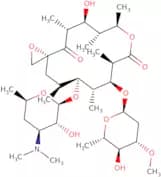
CAS :Erythromycin C is a macrolide antibiotic, which is a type of product derived from the bacterium *Saccharopolyspora erythraea*. It functions by binding to the 50S subunit of the bacterial ribosome, inhibiting protein synthesis through blocking translocation of peptidyl-tRNA. This mode of action effectively prevents bacterial growth and replication, making it a potent bacteriostatic agent.
Formule :C36H65NO13Degré de pureté :Min. 95%Masse moléculaire :719.9 g/molRef: 3D-AE22800
Produit arrêtéGentamicin C2 sulfate
CAS :Gentamicin C2 sulfate is an aminoglycoside antibiotic with action on bacterial protein synthesis inhibition and is used for treating severe bacterial infections.
Formule :C20H41N5O7Degré de pureté :(%) Min. 90%Couleur et forme :PowderMasse moléculaire :463.57 g/molDoripenem
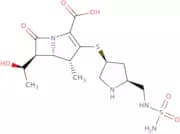
CAS :Doripenem is a carbapenem antibiotic with action on bacterial cell wall synthesis and is used for treating complicated bacterial infections like intra-abdominal infections and urinary tract infections.
Formule :C15H24N4O6S2Degré de pureté :Min. 95%Couleur et forme :White PowderMasse moléculaire :420.51 g/molRef: 3D-AD15636
Produit arrêtéCeftobiprole medocaril sodium
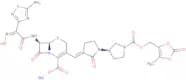
CAS :Ceftobiprole medocaril sodium is a broad-spectrum cephalosporin antibiotic, which is a synthetically derived prodrug of ceftobiprole. Upon administration, ceftobiprole medocaril is rapidly converted into its active form, ceftobiprole, by the body's endogenous esterases. The mode of action involves binding to penicillin-binding proteins (PBPs) in the bacterial cell wall, leading to the inhibition of cell wall synthesis and ultimately the death of the bacteria. This action is effective against a wide range of gram-positive and gram-negative bacteria, including methicillin-resistant Staphylococcus aureus (MRSA) and penicillin-resistant Streptococcus pneumoniae.
Formule :C26H26N8O11S2NaDegré de pureté :Min. 95%Masse moléculaire :713.65 g/molRef: 3D-FC159019
Produit arrêtéDicresulene Hydrate
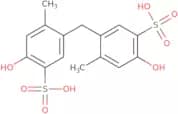
CAS :Dicresulene Hydrate is an anti-inflammatory compound, which is derived from synthetic sources. It functions primarily by inhibiting specific enzymes involved in the inflammatory response. This inhibition reduces the production of pro-inflammatory mediators, thereby mitigating inflammation and associated symptoms.Formule :C15H16O8S2•(H2O)xDegré de pureté :Min. 95%Couleur et forme :PowderMasse moléculaire :388.41 g/molSterigmatocystin
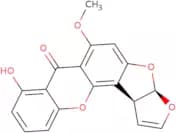
CAS :Sterigmatocystin is a mycotoxin, which is a secondary metabolite primarily produced by certain species of the fungi Aspergillus and Bipolaris. This compound exhibits its mode of action by interfering with DNA, RNA, and protein synthesis, ultimately disrupting cellular processes. As a precursor to the well-known aflatoxins, sterigmatocystin shares a similar structure and exhibits carcinogenic properties.
Degré de pureté :Min. 95%Leptomycin B
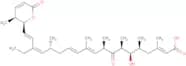
CAS :Leptomycin B is a bacterial secondary metabolite, which is derived from the bacterium Streptomyces sp. This compound is a potent nuclear export inhibitor with a mechanism of action that targets and inhibits the export receptor CRM1 (Chromosomal Maintenance 1), also known as Exportin 1. By binding irreversibly to CRM1, Leptomycin B prevents the nuclear export of proteins and RNA, disrupting the nuclear-cytoplasmic transport essential for cell function.
Formule :C33H48O6Degré de pureté :Min. 95%Masse moléculaire :540.73 g/molRef: 3D-FL75164
Produit arrêtéSpiramycin I
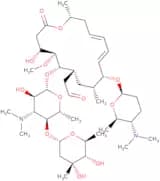
CAS :Spiramycin I is a macrolide antibiotic with action on bacterial protein synthesis inhibition and is used for treating toxoplasmosis and bacterial infections.
Formule :C43H74N2O14Degré de pureté :Min. 95 Area-%Couleur et forme :White PowderMasse moléculaire :843.05 g/molOxibendazole-amine hydrochloride
CAS :Oxibendazole-amine hydrochloride is a synthetic anthelmintic compound, which is a derivative of benzimidazole, known for its broad-spectrum efficacy against various helminths. It primarily acts by disrupting the polymerization of tubulin into microtubules, effectively impairing essential cellular structures and functions within parasitic worms, leading to their death.
Formule :C10H13N3O•HClDegré de pureté :Min. 95%Couleur et forme :PowderMasse moléculaire :227.69 g/molOleandomycin
CAS :Oleandomycin is a macrolide antibiotic, which is derived from the bacterium *Streptomyces antibioticus*. This antibiotic functions by binding to the 50S subunit of the bacterial ribosome, thereby inhibiting protein synthesis. The interruption of this essential process ultimately leads to the cessation of bacterial growth and replication.
Formule :C35H61NO12Degré de pureté :Min. 95%Couleur et forme :White PowderMasse moléculaire :687.86 g/molRef: 3D-AO16827
Produit arrêté




![(2RS,4S)-2-[[(phenylacetyl)amino]methyl]-5,5-dimethylthiazolidine-4-carboxylic acid (penilloic aci…](/_next/image/?url=https%3A%2Fstatic.cymitquimica.com%2Fproducts%2F3D%2Fthumb-webp%2FAAA50134.webp&w=3840&q=75)
![8-Methylpyrido[2,3-d]pyridazin-5(6H)-one](/_next/image/?url=https%3A%2Fstatic.cymitquimica.com%2Fproducts%2F3D%2Fthumb-webp%2FQDA00407.webp&w=3840&q=75)