Antimicrobiens
Sous-catégories appartenant à la catégorie "Antimicrobiens"
- Antibiotiques(4.138 produits)
- Antifongiques(907 produits)
- Antiparasitaires(703 produits)
- Antiviraux(766 produits)
2431 produits trouvés pour "Antimicrobiens"
Omaciclovir
CAS :Please enquire for more information about Omaciclovir including the price, delivery time and more detailed product information at the technical inquiry form on this page
Formule :C10H15N5O3Degré de pureté :Min. 95%Masse moléculaire :253.26 g/molOxpoconazole fumarate
CAS :Oxpoconazole fumarate is a systemic antifungal agent, which is a synthetic compound derived from chemical synthesis. It functions by inhibiting the biosynthesis of ergosterol, a critical component of fungal cell membranes, ultimately disrupting cell growth and replication. This inhibition interferes with the integrity and functionality of the fungal cell membrane, leading to cell death.
Formule :C42H52Cl2N6O8Degré de pureté :Min. 95%Masse moléculaire :839.8 g/molENOblock
CAS :ENOblock is a biochemical inhibitor, which is synthesized from specific small molecules with the capability to modulate metabolic pathways. This product is derived from a high-throughput screening aimed at identifying novel regulators of enzymatic processes and exhibits unique properties influencing nicotinamide adenine dinucleotide (NAD) metabolism.
Formule :C31H43FN8O3Degré de pureté :Min. 95%Masse moléculaire :594.74 g/molSPR741
CAS :SPR741 is an antimicrobial potentiator, which is derived from polymyxin B, an antibiotic sourced from the bacterium *Bacillus polymyxa*. Its mode of action involves permeabilizing the outer membrane of Gram-negative bacteria, allowing otherwise impermeable antibiotics to enter the bacterial cell. This potentiation effect significantly enhances the efficacy of co-administered antibiotics against resistant strains.
Formule :C44H73N13O13Degré de pureté :Min. 95%Masse moléculaire :992.1 g/mol8-Fluoro erythromycin
CAS :8-Fluoro erythromycin is a synthetic derivative of the macrolide antibiotic erythromycin. It is derived from the fermentation of *Streptomyces erythraeus*, a species known for producing erythromycin, which is chemically modified to include a fluorine atom at the eighth position. This modification enhances its pharmacokinetic properties, improving its stability and bioavailability compared to the parent compound.
Formule :C37H66FNO13Degré de pureté :Min. 95%Masse moléculaire :751.92 g/molTri-O-benzyl FR 900098
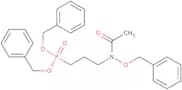
CAS :Tri-O-benzyl FR 900098 is a chemical compound, often referenced in biochemical research contexts. It is a synthetic derivative that originates from complex chemical synthesis, involving multiple benzylation steps to modify the original molecular framework. This structural transformation lends the compound unique chemical properties.
Formule :C26H30NO5PDegré de pureté :Min. 95%Masse moléculaire :467.49 g/molN'-Desmethyl azithromycin
CAS :N'-Desmethyl azithromycin is a semi-synthetic derivative antibiotic, which is derived from the chemical modification of azithromycin, a macrolide antibiotic sourced originally from the bacterium *Streptomyces erythreus*. It functions primarily by inhibiting bacterial protein synthesis, binding specifically to the 50S ribosomal subunit, which results in the prevention of transpeptidation and translocation processes during translation. This action effectively halts bacterial growth, rendering it bacteriostatic.
Formule :C37H70N2O12Degré de pureté :Min. 95%Masse moléculaire :734.96 g/molOxacillin sodium
CAS :Oxacillin sodium is a beta-lactam antibiotic with action on bacterial cell wall synthesis and is used for treating infections caused by penicillin-resistant Staphylococcus aureus.
Formule :C19H18N3NaO5SDegré de pureté :Min. 95%Couleur et forme :PowderMasse moléculaire :423.42 g/molSarecycline
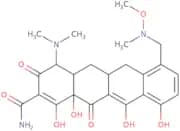
CAS :Sarecycline is a tetracycline-class antibiotic, which is derived from naturally occurring tetracycline antibiotics. Its mode of action involves inhibition of bacterial protein synthesis by binding to the 30S ribosomal subunit, thereby preventing the addition of amino acids to nascent peptide chains. This specific mechanism disrupts bacterial growth, making Sarecycline effective against certain strains of bacteria implicated in dermatological conditions.
Formule :C24H29N3O8Degré de pureté :Min. 95 Area-%Masse moléculaire :487.5 g/molAcepromazine hydrochloride
CAS :Acepromazine hydrochloride is a phenothiazine derivative tranquilizer, which is synthesized chemically. Its mode of action is primarily through antagonism of dopamine receptors in the central nervous system, leading to a sedative effect. Additionally, it exerts peripheral actions, including alpha-adrenergic blockade and diminished release of hypothalamic and hypophyseal hormones, contributing to vasodilation and other physiological effects.
Formule :C19H23ClN2OSDegré de pureté :Min. 95%Masse moléculaire :362.9 g/molViolacein
CAS :Violacein is a model system for studying the effects of hydroxyl groups on cell lysis. It is a fatty acid that contains nitrogen atoms and has antimicrobial properties. Violacein has been shown to cause the loss of mitochondrial membrane potential in HL-60 cells, which may be due to its ability to act as a multidrug efflux pump inhibitor. Violacein also exhibits antimicrobial activity against several bacterial strains, including MRSA and methicillin-sensitive Staphylococcus aureus (MSSA). In addition, violacein has been shown to induce cell lysis in vitro via the degradation of proteins and lipids in the cytoplasm.
Formule :C20H13N3O3Degré de pureté :Min. 95%Couleur et forme :PowderMasse moléculaire :343.3 g/molPazufloxacin
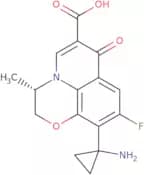
CAS :Pazufloxacin is an antibacterial agent, which is a synthetic derivative originating from the fluoroquinolone class of compounds. This source categorizes it alongside a group of broad-spectrum antibiotics known for their efficacy against a wide variety of bacterial pathogens. The mode of action of pazufloxacin involves the inhibition of bacterial DNA gyrase and topoisomerase IV. These are essential enzymes for bacterial DNA replication, transcription, repair, and recombination processes. By inhibiting these enzymes, pazufloxacin disrupts the bacterial DNA processes, ultimately leading to cell death.
Formule :C16H15FN2O4Degré de pureté :Min. 95%Masse moléculaire :318.3 g/molTebufenozide-hydroxymethyl
CAS :Tebufenozide-hydroxymethyl is an insect growth regulator, which is synthesized chemically to function as an agonist of the molting hormone, ecdysone, in target pest species. It operates by mimicking the effects of ecdysone, leading to premature and lethal molting in lepidopteran larvae. This disruption in the developmental cycle of the insects effectively suppresses their population by preventing them from reaching maturity and reproducing.
Formule :C22H28N2O3Degré de pureté :Min. 95%Masse moléculaire :368.5 g/mol6-(2-Chlorophenoxy)-5-fluoro-4(3H)-pyrimidinone
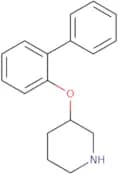
CAS :6-(2-Chlorophenoxy)-5-fluoro-4(3H)-pyrimidinone is a heterocyclic compound, which is a synthetic derivative developed for biochemical research. This compound is synthesized through a series of organic reactions, involving halogenation and cyclization techniques, typically conducted in a controlled laboratory setting. Its design incorporates specific structural features, such as the chlorophenoxy and fluoro groups, which are strategically positioned to enhance its binding affinity and specificity.
Formule :C10H6ClFN2O2Degré de pureté :Min. 95%Masse moléculaire :240.62 g/molCephalexin hydrochloride
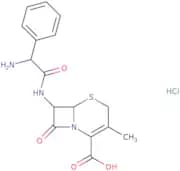
CAS :Cephalexin hydrochloride is a cephalosporin antibiotic, which is a type of beta-lactam antibiotic. It is derived from the fungus Acremonium, previously known as Cephalosporium, with a bactericidal mode of action. This compound works by inhibiting bacterial cell wall synthesis. Specifically, it binds to one or more of the penicillin-binding proteins (PBPs), which in turn disrupts the final stages of bacterial cell wall formation and results in cell lysis mediated through autolytic enzyme action.
Formule :C16H18ClN3O4SDegré de pureté :Min. 95%Masse moléculaire :383.9 g/molRef: 3D-JCA69559
Produit arrêtéGatifloxacin hydrate
CAS :Gatifloxacin hydrate is a fluoroquinolone antibiotic, which is synthesized chemically. It exerts its bactericidal effects primarily by inhibiting bacterial DNA gyrase and topoisomerase IV. These enzymes are crucial for bacterial DNA replication, transcription, and repair. By preventing these processes, gatifloxacin effectively halts bacterial cell division, ultimately leading to cell death.
Formule :C19H24FN3O5Degré de pureté :Min. 95%Masse moléculaire :393.4 g/mol3-Chloro-4-(3-chloro-2-nitrophenyl)pyrrole
CAS :3-Chloro-4-(3-chloro-2-nitrophenyl)pyrrole is a synthetic chemical compound, classified as an organochlorine derivative. This compound originates from the modification of pyrrole structures, which are heterocyclic aromatic compounds. The synthesis involves chlorination and nitration processes to enhance its potential activity and specificity.
Formule :C10H6Cl2N2O2Degré de pureté :Min. 95%Masse moléculaire :257.07 g/molCefquinome sulfate
CAS :Cefquinome sulfate is a cephalosporin antibiotic, which is a synthetic, broad-spectrum antimicrobial agent. It is derived from the beta-lactam family, specifically designed to combat Gram-positive and Gram-negative bacterial pathogens. The mode of action involves inhibiting bacterial cell wall synthesis. It achieves this by binding to penicillin-binding proteins (PBPs) within the bacterial cell wall, ultimately leading to cell lysis and death due to the interruption of necessary cell wall components.
Formule :C23H26N6O9S3Degré de pureté :Min. 95%Couleur et forme :White To Light (Or Pale) Yellow To Beige To Light Brown SolidMasse moléculaire :626.69 g/molβ-Lactoglobulin A from bovine milk
CAS :β-Lactoglobulin A is a whey protein found predominantly in bovine milk, characterized as a globular protein. It is sourced from the milk of cows and serves as a major component of whey, the liquid by-product of cheese production. The structure of β-Lactoglobulin A allows it to bind hydrophobic molecules, such as fatty acids and vitamins, which may facilitate their transport and absorption in the digestive tract.
Degré de pureté :Min. 95%Acetophos
CAS :Acetophos is an organophosphate insecticide, which is a synthetic chemical compound derived from phosphoric acid. It functions by inhibiting acetylcholinesterase, an essential enzyme in the nervous systems of insects. This inhibition leads to the accumulation of acetylcholine, causing continuous nerve impulses that result in the paralysis and eventual death of the pest.
Formule :C8H17O5PSDegré de pureté :Min. 95%Masse moléculaire :256.26 g/mol